

Daily School Cleaning Starts With a Clear Schedule
Daily school cleaning works best as a room-by-room checklist. Each day, wipe classroom desks and shared surfaces, empty trash, clean and restock restrooms, wipe cafeteria tables after meals, and remove spills and debris from hallways and gyms. Assign each task to a person and a time. Check busy areas again during the school day, then record what was done.
This routine helps keep learning spaces clean and catches missed tasks before the next school day.
I’m Ashley Cordova, vice president of Zia Building Maintenance, where I oversee daily operations for our family-owned Albuquerque janitorial business. Daily school cleaning calls for the same clear schedules and attention to detail that guide my work.
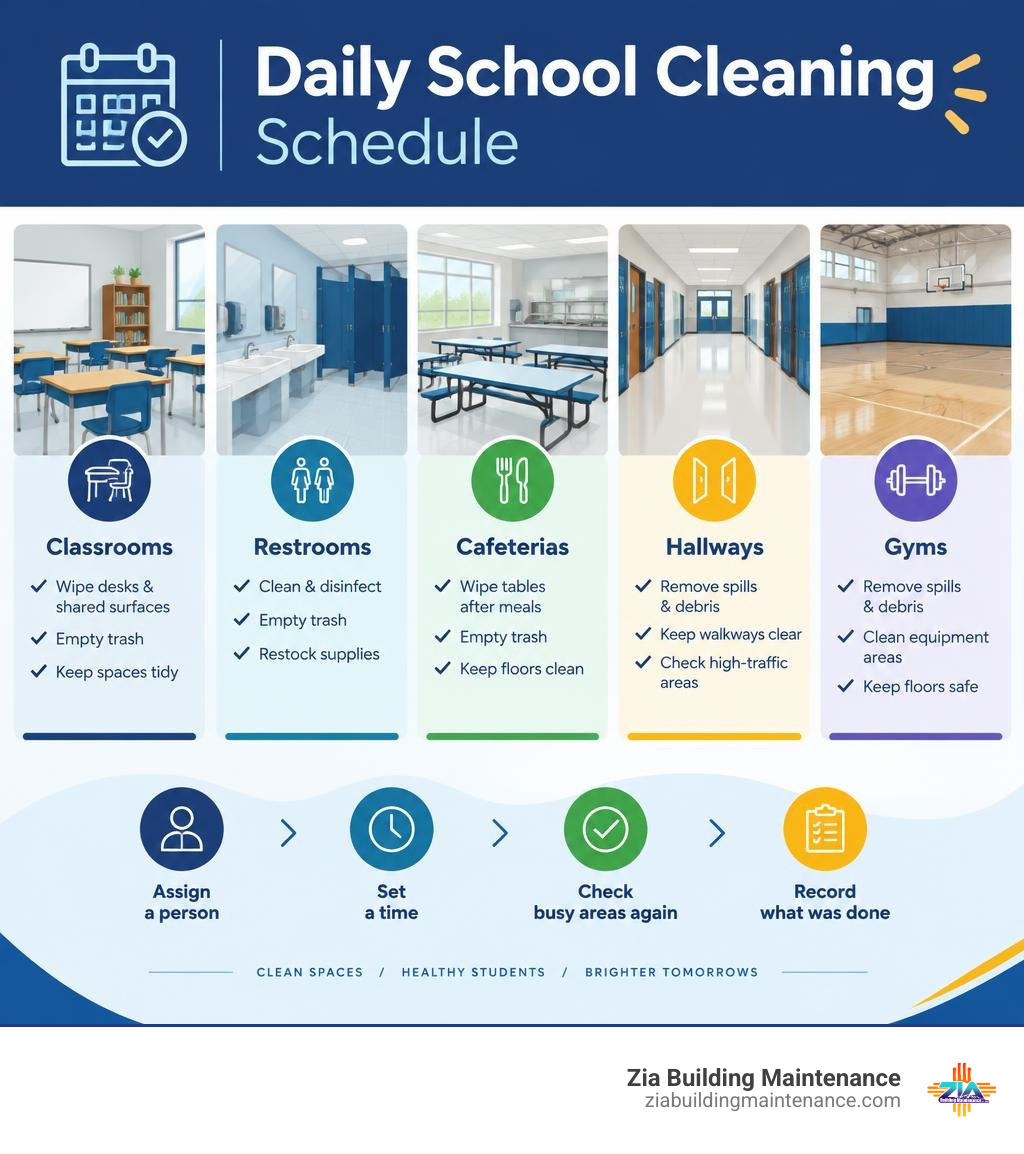
Daily school cleaning definitions:
Why Daily School Hygiene Matters for Health and Learning
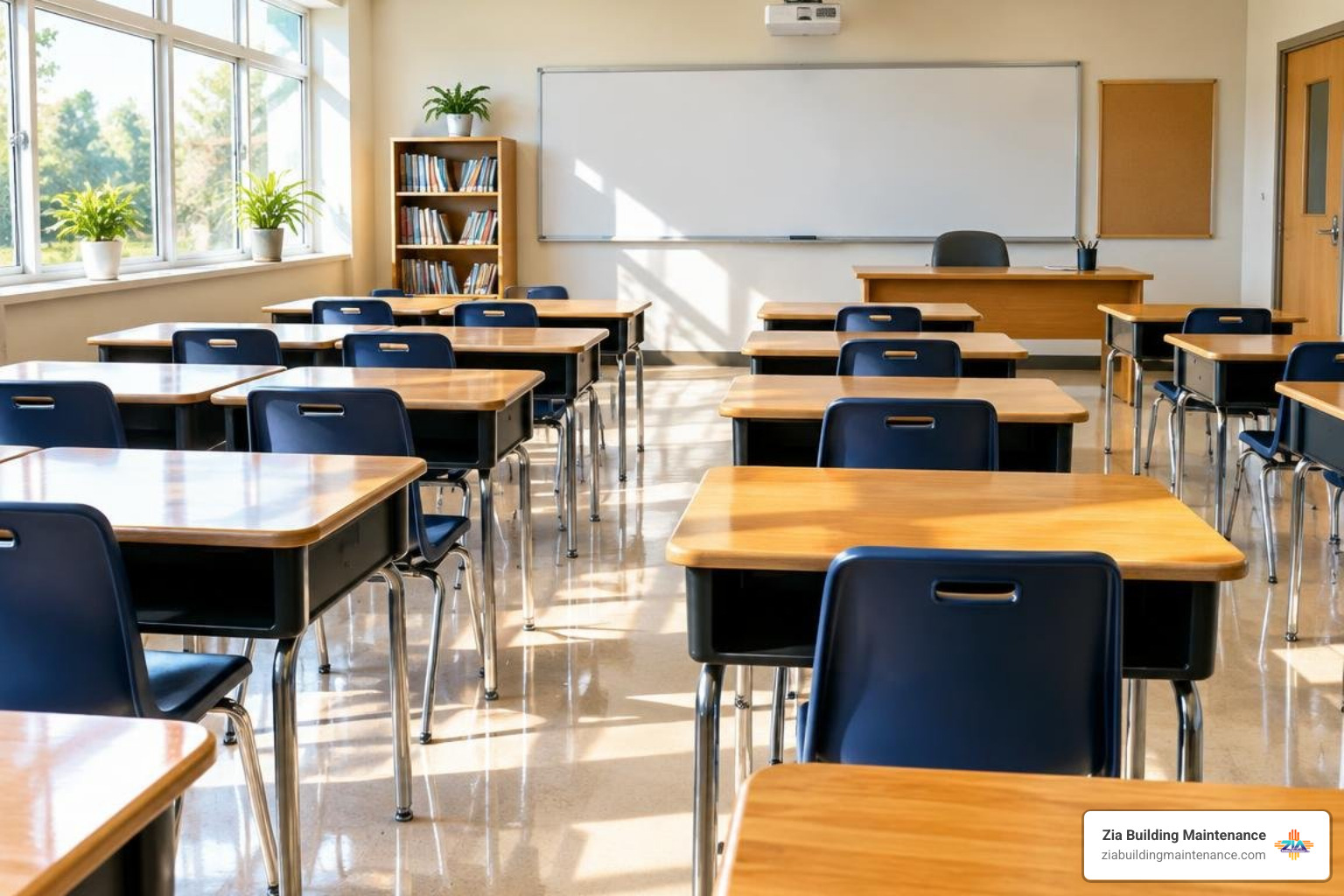
Schools bring hundreds of students, educators, and visitors together under one roof every morning. While this creates a vibrant learning environment, it also creates an ideal setting for viral and bacterial transmission. Germs and common viruses can live on hard surfaces for anywhere between four and 72 hours. An unwashed student desk or shared door handle can spread contaminants for days if left unaddressed.
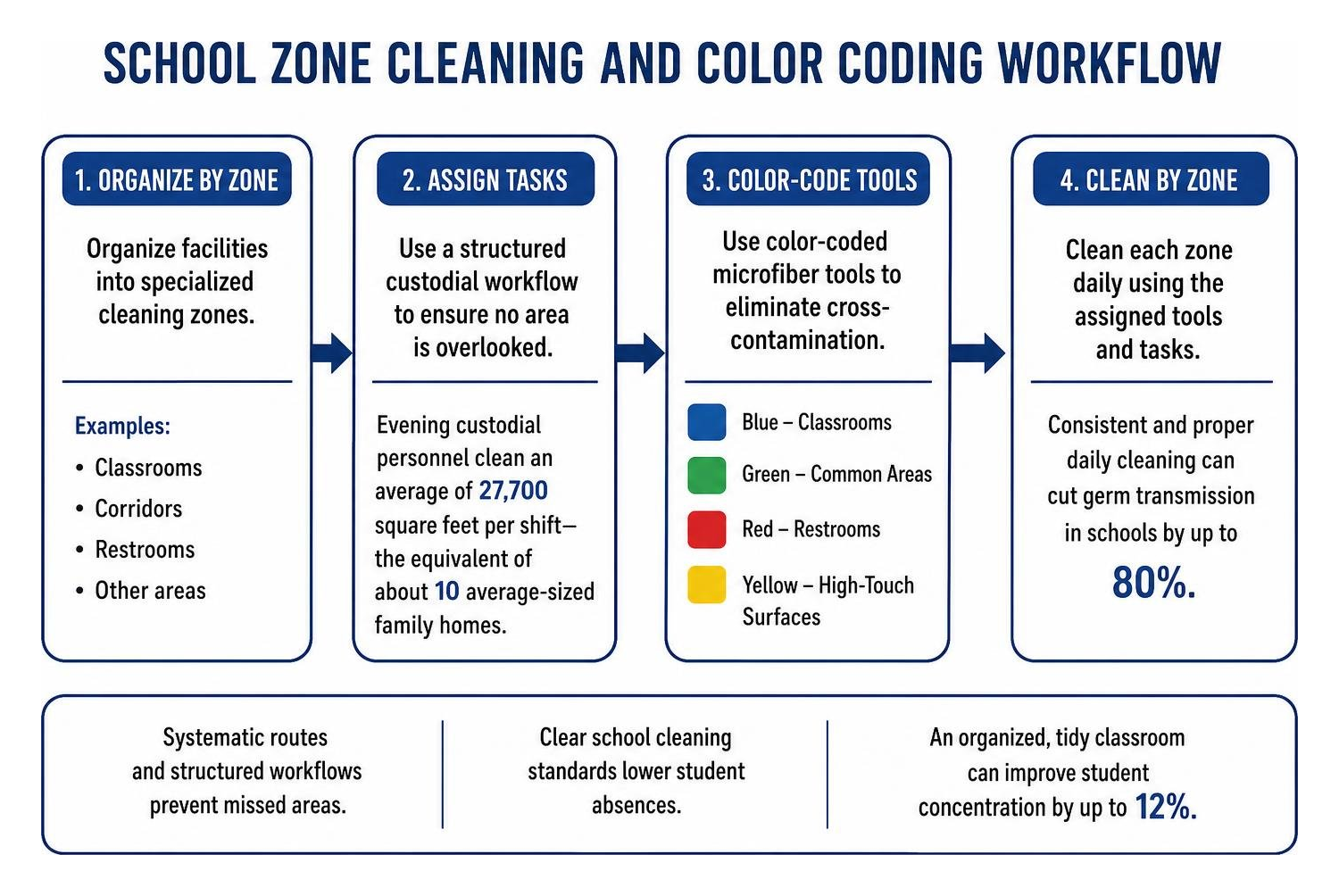
During the 2021/2022 academic year, approximately 8.5% of pupils missed at least 10% of their lessons due to illness. When kids miss school, their academic momentum slows down, and working parents face sudden child-care emergencies. According to the Centers for Disease Control and Prevention (CDC), consistent and proper daily cleaning can cut germ transmission in schools by up to 80%.
Understanding what makes a healthy school environment starts with the physical surfaces students interact with every hour. Maintaining clear school cleaning standards lowers student absences caused by seasonal respiratory and gastrointestinal illnesses. A clean classroom also delivers a noticeable cognitive boost: studies show that an organized, tidy learning space can improve student concentration by up to 12%.
wp:html
In educational hubs like Albuquerque, Rio Rancho, Corrales, and Los Ranchos, school facilities managers know that keeping buildings pristine requires structured workflows. Let’s look at how to organize daily operations across every major zone of your campus.
The Master Daily School Cleaning Checklist by Zone
Achieving true cleanliness across an entire campus requires a zone-by-zone custodial workflow. Evening custodial personnel clean an average of 27,700 square feet per shift—the equivalent of about 10 average-sized family homes every single night. To manage this workload without cutting corners, custodians rely on systematic routes, color-coded microfiber tools to eliminate cross-contamination, and structured task assignments.
Educational districts like the Taft City School District Operations Department organize facilities into specialized cleaning zones to make certain that no corridor, desk, or restroom is overlooked.
Classroom and Learning Space Care
Classrooms serve as the home base for learning, which makes them high-priority areas for daily hygiene. Establishing thorough classroom cleaning procedures ensures that dust, pencil shavings, sticky residues, and surface pathogens are cleared out daily.
- Desk and Table Sanitation: Wipe all student desks, tables, and teacher stations using an approved all-purpose cleaner and microfiber cloth, paying special attention to edges and drawer handles.
- Chalkboard and Whiteboard Maintenance: Erase daily work and wipe boards with designated board cleaners. Clean marker trays and vacuum chalk dust from ledges.
- Trash and Recycling Removal: Empty all wastebaskets, wipe down bin exteriors as needed, and replace liners.
- Stationery and High-Use Touchpoints: Disinfect pencil sharpeners, shared supply bins, and classroom staplers.
- Floor Care: Dust-mop hard surface floors from the corners inward toward the door. Vacuum area rugs and high-traffic carpet runners.
- Detailing: Dust window sills, wipe interior door window glass, and arrange loose chairs.
High-Touch Surface Disinfection in Daily School Cleaning
High-touch surfaces are the main vectors of illness in any school building. These surfaces require targeted disinfection, which differs from general surface cleaning. Understanding the science of school disinfection means selecting EPA-registered, low-VOC disinfectants that keep indoor air clean while neutralizing viruses and bacteria.
- Door Hardware: Clean and disinfect interior and exterior door knobs, push bars, and door frames.
- Electrical Fixtures: Wipe light switches, thermostat panels, and intercom buttons.
- Hydration Stations: Sanitize water fountains, bottle-filling stations, and basin push handles.
- Technology Assets: Wipe shared computer keyboards, mice, interactive whiteboard pens, and tablet screens using electronics-safe disinfectant wipes.
- Adherence to Dwell Time: Always allow disinfectant solutions to remain visibly wet on surfaces for the full manufacturer-recommended dwell time (typically 2 to 5 minutes) before wiping dry.
Restrooms and Locker Rooms Sanitization

Restrooms and locker rooms present the highest risk of viral and bacterial buildup. Maintaining clean school common areas and restrooms requires a strict multi-step sanitation process using color-coded red microfiber cloths reserved solely for sanitation fixtures.
- Fixture Disinfection: Spray and sanitize all toilets, toilet flush handles, urinals, sinks, and faucets with an EPA-registered hospital-grade disinfectant.
- Partitions and Walls: Wipe stall partitions, grab bars, door latches, and splash zones around urinals and sinks.
- Odor and Floor Sanitation: Use commercial touch-free water-vacuum systems or wet-mop floors with an enzymatic, pH-neutral floor sanitizer. Rotate mop water frequently to prevent spreading dirty water across tile grout.
- Supply Replenishment: Refill soap dispensers, paper towel holders, toilet paper rolls, and feminine hygiene dispensers.
- Mirror and Glass Polish: Clean and streak-free polish all bathroom mirrors.
Cafeterias and Common Areas Protocol
The cafeteria experiences heavy foot traffic and requires fast, thorough cleanups between meal rotations. Following established school cafeteria cleaning protocols prevents cross-contamination and maintains sanitary dining surfaces for students.
- Post-Meal Table Sanitization: Wash and sanitize every lunch table and bench between seating waves using food-contact-safe sanitizers.
- Food Prep Zones: Clean and sanitize all serving lines, tray slide rails, condiment stations, and cash register countertops.
- Mid-Day Trash Cycles: Empty overfilled trash cans after each lunch period to prevent pest attraction and foul odors.
- Spill and Floor Maintenance: Sweep food debris immediately and wet-mop with a slip-resistant degreasing solution.
- Main Hallways and Entrances: Sweep main hallways, empty hallway waste bins, and vacuum entryway walk-off mats to trap dirt at building entrances.
Gymnasiums, Libraries, and Specialty Facilities
Specialty spaces require custom cleaning approaches depending on their flooring types and specialized equipment. For instance, dedicated school library cleaning protects shared book shelves and computer carrels, while athletic facilities demand active sanitation against skin infections and sweat buildup.
- Gymnasium Hardwood Floors: Dust-mop gym floors with large microfiber sweeping mops to remove dust and grit that cause slip hazards.
- Athletic Equipment and Mats: Disinfect wrestling and gymnastics mats, weight training benches, and physical education equipment with broad-spectrum disinfectants.
- Bleachers and Seating: Sweep underneath pull-out bleachers and spot-clean drink spills from spectator seating.
- Library Maintenance: Dust book return bins, wipe reading tables, vacuum carpeted reading corners, and sanitize checkout counter terminals.
Cleaning, Sanitizing, and Disinfecting: Methods and Product Selection
Many facility checklists mix up cleaning, sanitizing, and disinfecting. These three processes represent distinct levels of germ removal and hygiene.
| Process | Primary Action | Target Microbial Reduction | Best Use Cases in Schools |
|---|---|---|---|
| Cleaning | Removes visible dirt, dust, and organic debris using soap, water, and friction | Removes germs mechanically without necessarily killing them | Daily floor sweeping, dusting window sills, wiping pencil marks |
| Sanitizing | Uses chemical agents to reduce bacteria to safe public health levels | Reduces bacteria by 99.9% within 30 to 60 seconds | Cafeteria tables, food prep surfaces, plastic toys |
| Disinfecting | Uses EPA-registered chemicals to destroy targeted viruses, fungi, and bacteria | Kills 99.999% of targeted pathogens when dwell times are met | Restroom toilets, sinks, door handles, nurse’s stations, water fountains |
For daily maintenance, select child-safe, low-VOC, fragrance-free cleaning products. High-fragrance or harsh aerosol chemicals can trigger asthma symptoms and allergic reactions in young students. Using color-coded microfiber cloths (e.g., Red for restrooms, Yellow for cafeteria food surfaces, Blue for glass, and Green for general classroom desks) prevents cross-contamination across campus zones.
Structuring Effective Cleaning Schedules Across the Academic Year
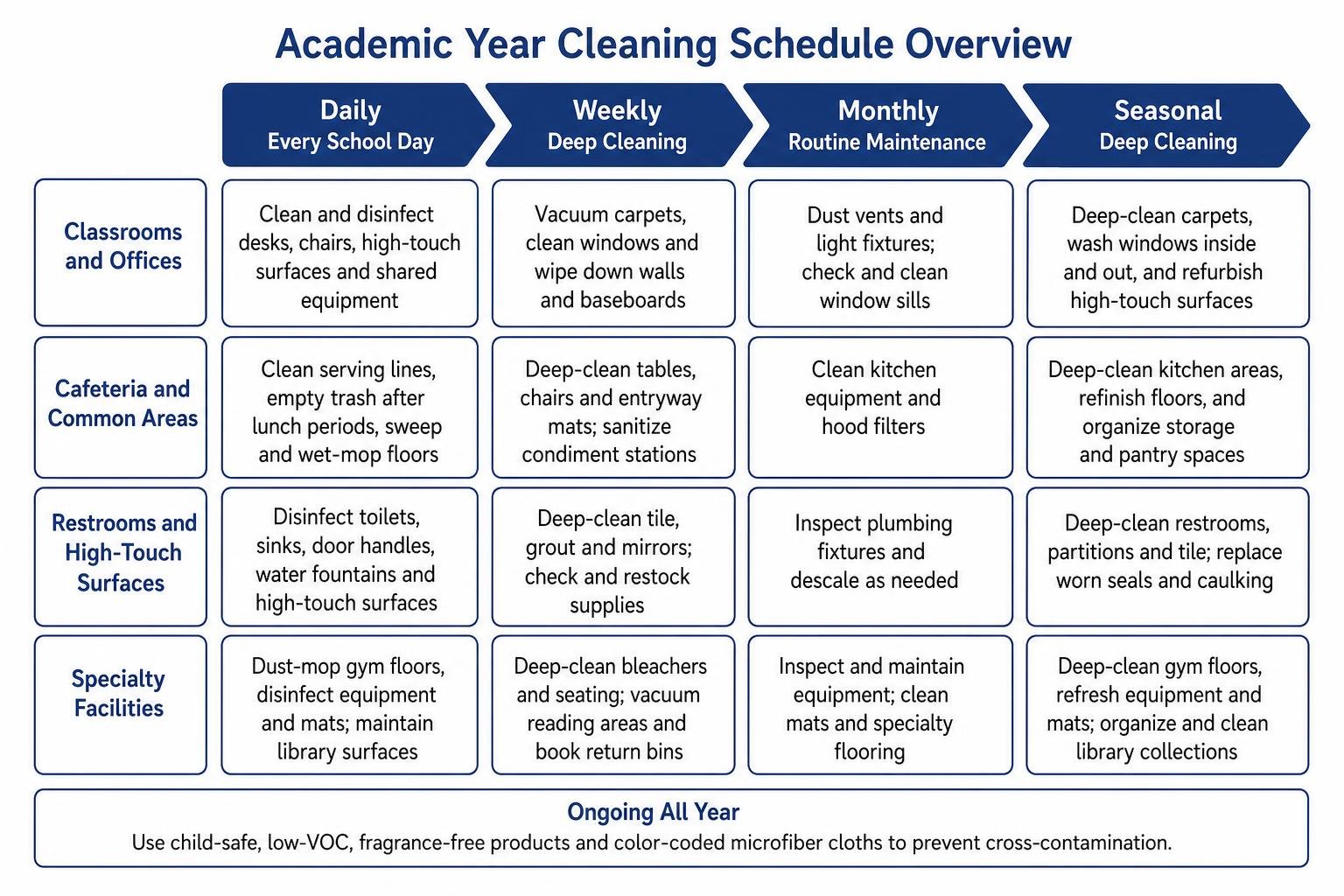
A reliable facility plan balances daily tasks with deeper weekly and monthly services. Reviewing the complete guide to a clean school environment helps school leaders connect day-to-day custodial operations with seasonal deep cleaning strategies scheduled during winter, spring, and summer breaks.
Managing Schedules for Daily School Cleaning and Routine Upkeep
Balancing daytime touch-ups with evening sanitization shifts keeps your building clean throughout the school day. Learn how to manage school janitorial staff effectively by building structured task workflows and digital inspection checklists:
- Morning Opening (6:30 AM – 8:00 AM): Unlock facility doors, check heating/cooling settings, inspect restrooms for overnight leaks, and stock entryway mats.
- Mid-Day High-Traffic Maintenance (10:30 AM – 1:30 PM): Service cafeterias between lunch shifts, restock hand soap and paper towels in busy restrooms, and respond to sudden spills or sick student calls.
- Afternoon Shift (2:00 PM – 4:00 PM): Empty exterior trash cans, sweep main corridors following student dismissal, and secure athletic areas.
- Evening Deep Sanitization (4:00 PM – 11:00 PM): Execute the complete classroom, restroom, and specialty room checklists, auto-scrub hallway floors, lock interior suites, and arm building security systems.
Shared Roles Among Custodial Staff, Teachers, and Students
Maintaining a spotless campus works best as a team effort across the entire school community. Evaluating modern school janitorial staffing models and addressing real-world high school cleaning challenges shows that shared habits keep classrooms tidy between custodial visits.
- Student Habits: Encourage a two-minute tidy at the end of the day where students pick up stray paper, discard lunch waste, and push in their chairs. Elementary classrooms can set up “Clean Corner” stations or host fun end-of-week cleanup challenges.
- Teacher Routines: Teachers can keep desks organized, encourage students to throw away scraps, and wipe down personal electronics and teacher stations.
- Custodial Teams: Janitors handle technical chemical dilution, commercial floor care, biohazard remediation, and heavy sanitation.
When to Hire Professional School Cleaning Services
While in-house staff manage daily upkeep, school facilities periodically need industrial equipment and commercial expertise. Over time, tile floors lose their protective wax, carpets trap deep-seated dust mites, and grout lines darken from continuous foot traffic.
Bringing in a trusted commercial cleaning provider is the right move when:
- VCT Floor Stripping, Waxing, and Polishing: Restoring high-gloss protection on tile hallways requires industrial floor machines. Review our tips on making your school floors shine to extend the life of your flooring.
- Deep Carpet Extraction: Commercial hot-water extraction removes deep allergens and ground-in dirt from libraries and administrative offices.
- Seasonal Deep Disinfection: During seasonal flu outbreaks or term breaks, electrostatic spraying covers hard-to-reach surfaces throughout gymnasiums and locker rooms.
- Staffing Shortages: When custodial vacancies leave shifts uncovered, partnering with professional school cleaning services keeps your facilities clean and compliant. Review key school cleaning contract terms to build a strong scope of work for your district.
Common School Cleaning Mistakes That Cause Health and Compliance Risks
Even dedicated cleaning crews can run into compliance or health issues when procedures are rushed. Watch out for these common cleaning missteps:
- Wiping Away Disinfectants Too Quickly: Spraying a disinfectant and immediately wiping it away doesn’t give the product enough contact time to kill viruses and bacteria. Always follow the required dwell time on the label.
- Cross-Contaminating Cleaning Cloths: Using the same cleaning rag on a restroom sink and then wiping a classroom desk transfers bacteria between rooms. Stick to a strict color-coded microfiber system.
- Mixing Incompatible Chemicals: Never mix bleach solutions with ammonia or acid-based bowl cleaners. This creates dangerous chloramine and chlorine gases that compromise indoor air quality.
- Neglecting HVAC Filters and Vent Covers: Overlooking supply and return air grilles allows dust and allergens to circulate through classrooms, triggering allergy and asthma flare-ups.
- Skipping OSHA Bloodborne Pathogen Standards: Cleaning bodily fluid spills requires dedicated PPE, biohazard cleanup kits, and proper disposal protocols to protect custodial personnel and students.
- Failing to Log Cleaning Passes: Without signed daily inspection logs or digital maintenance records, administrators cannot verify that high-traffic restrooms and common areas were sanitized as scheduled.
Frequently Asked Questions About Daily School Cleaning
How many square feet does an average school custodian clean each shift?
An evening school custodian cleans an average of 27,000 to 28,000 square feet per eight-hour shift. This workload includes detailing classrooms, scrubbing multi-stall restrooms, sweeping hallways, and servicing cafeteria areas.
What is the difference between sanitizing and disinfecting in a school setting?
Sanitizing lowers bacteria counts to safe public health levels (typically a 99.9% reduction) within 30 to 60 seconds, making it ideal for cafeteria lunch tables. Disinfecting uses EPA-registered solutions to kill 99.999% of targeted bacteria, viruses, and fungi on high-touch surfaces when allowed to sit for its full dwell time.
How often should high-touch surfaces be cleaned during peak illness seasons?
During peak winter flu and cold seasons, high-touch surfaces such as door knobs, stair railings, sink faucets, and water fountains should be sanitized at least twice daily—once during mid-day rounds and again during the evening custodial shift.
Keep Your School Clean, Safe, and Ready for Learning
A clean school environment directly supports student health, boosts attendance, and creates a welcoming atmosphere for teachers and families. Following a structured daily checklist by zone ensures that every classroom, hallway, and restroom gets the attention it needs.
For public, private, and charter schools across Albuquerque, Rio Rancho, Corrales, and Los Ranchos, Zia Building Maintenance delivers reliable commercial janitorial solutions backed by over three decades of family-owned service. Whether you need daily janitorial staffing, specialized floor stripping and waxing, or scheduled holiday deep cleanings, partner with us for comprehensive commercial cleaning services designed around your academic calendar. Contact our team today to build a custom cleaning plan for your campus!