

Why Educational Facility Cleaning Standards Matter More Than Ever in 2026
Educational facility cleaning is one of the most important — and most overlooked — factors in how well students learn, how often they show up, and how safe staff feel at work.
Here’s a quick summary of what you need to know:
- Daily cleaning of classrooms, restrooms, and hallways is the baseline minimum
- High-touch surfaces (desks, doorknobs, keyboards) need disinfection every single day
- Hospital-grade, EPA-approved disinfectants are the standard for schools in 2026
- Deep cleaning should happen during every major school break
- Green-certified, low-toxicity products are required or strongly recommended in many states
- Professional services reduce illness transmission, lower absenteeism, and support teacher retention
Schools aren’t like standard office buildings. They’re high-density environments where hundreds — sometimes thousands — of people share surfaces, restrooms, and air every single day. That density makes cleaning both harder and more critical.
A poorly cleaned school doesn’t just look bad. It puts students and staff at real health risk, can trigger licensing issues, and even affects enrollment when parents lose confidence in the facility.
I’m Ashley Cordova, Vice President of Zia Building Maintenance, a family-owned janitorial company serving New Mexico since 1989 — and educational facility cleaning has been a core part of our work for decades. I’ve seen how the right cleaning program transforms a school environment, and I’ll walk you through exactly what that looks like.
Know your Educational facility cleaning terms:
The Critical Role of Educational Facility Cleaning in Student Success
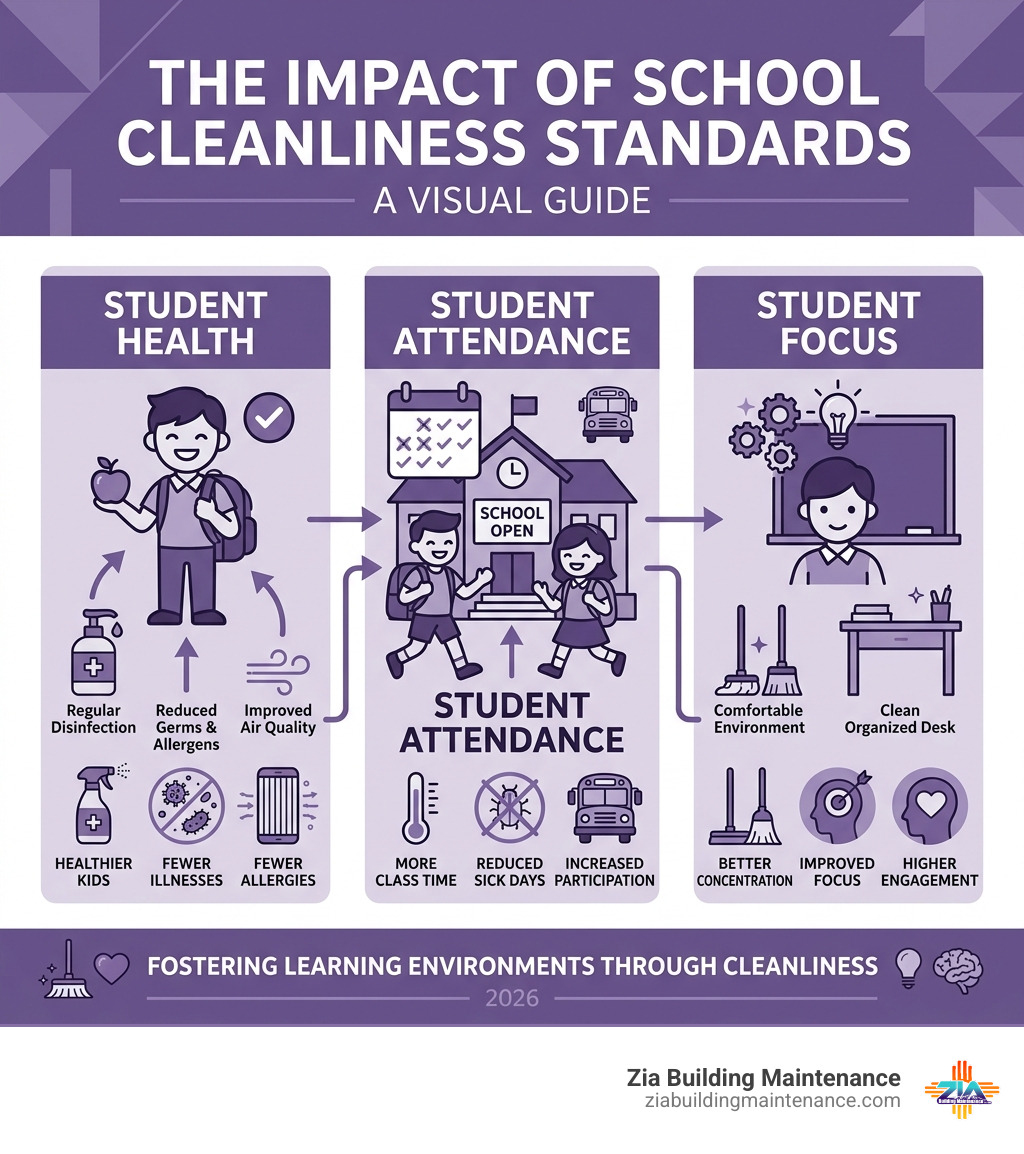
When we talk about student success, we often focus on textbooks and technology. But in April 2026, we know that the physical environment is just as vital. A clean school isn’t just about sparkling floors; it’s about creating a “cognitive sanctuary” where students can focus without the distraction of allergens or the threat of illness.
Research shows that professional cleaning can reduce illness transmission by up to 80% during peak flu seasons. When students are healthy, they stay in class. When they stay in class, academic performance rises. It’s a simple equation, but it requires a sophisticated approach to Educational facility cleaning.
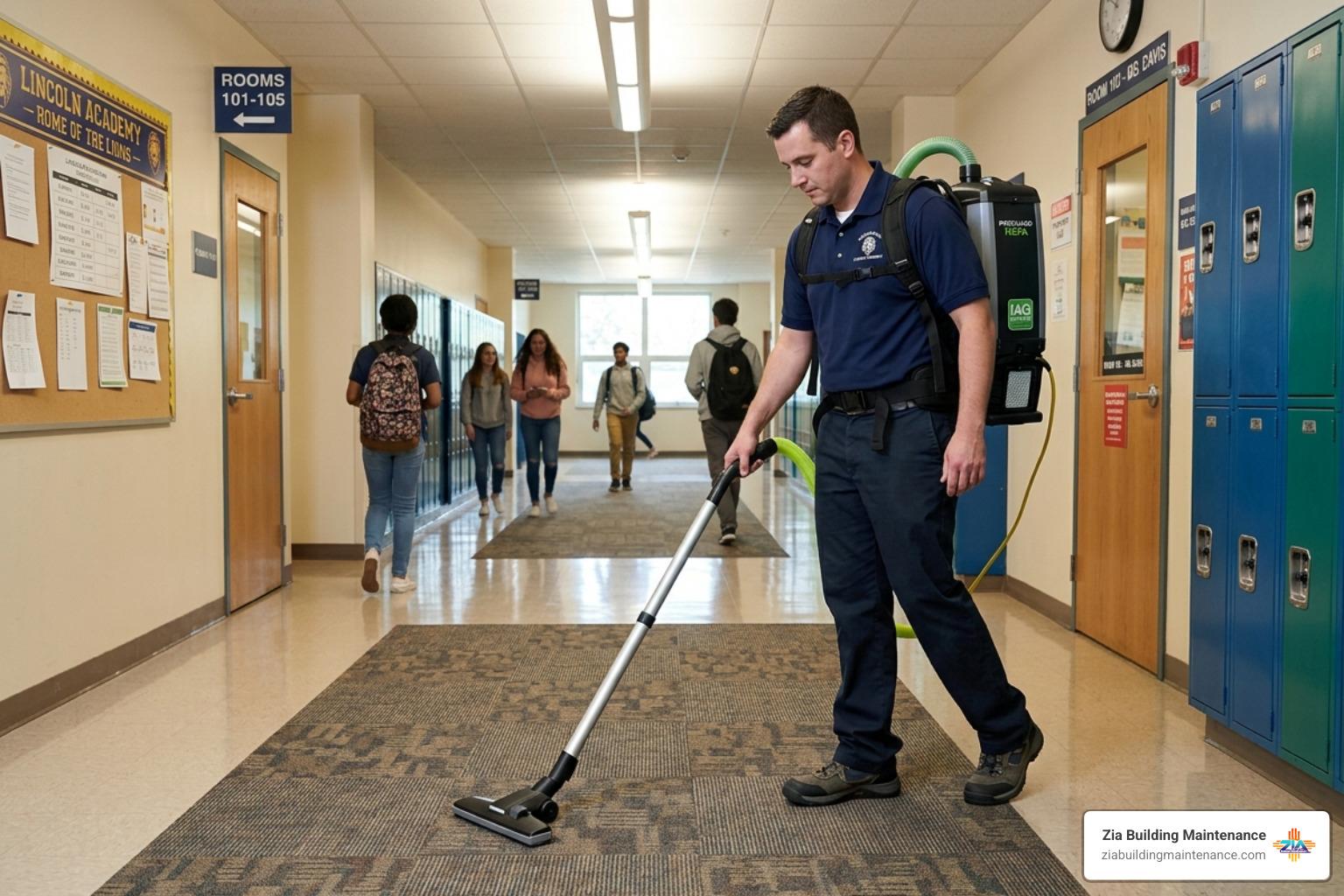
We utilize hospital-grade disinfectants that are proven to eliminate up to 99.97% of germs and bacteria. However, simply “spraying and wiping” isn’t enough. To prevent cross-contamination—the accidental spread of germs from a restroom to a classroom—we employ a color-coded microfiber system. These cloths are engineered to trap and remove 99% of bacteria and dirt, ensuring that a cloth used in a high-risk area never touches a student’s desk.
Furthermore, air quality is a major component of What Is A Healthy School Environment Anyway. By using HEPA backpack vacuums, we capture 99% of dust and airborne particles, which is essential for students with asthma or respiratory sensitivities. In Bernalillo County, adhering to these high health standards isn’t just a best practice; it’s a commitment to the community’s future.
Specialized Needs for Albuquerque Schools
Cleaning a school in the high desert of New Mexico presents unique challenges that you won’t find in the Midwest or the Coast. Our biggest adversary? The dust. From Downtown Albuquerque to the mesas of Rio Rancho, fine desert silt can infiltrate HVAC systems and settle on every surface, exacerbating seasonal allergies.
We focus heavily on dust mitigation to support the Top Public And Private Elementary Schools In Albuquerque. Our protocols include high-frequency dusting of vents and window sills and the use of entrance matting to trap grit before it hits the hallways. Local regulatory compliance also means being mindful of water usage and using products that are effective yet safe for our unique environment.
Impact on Teacher Retention and Morale
We are currently facing a significant challenge in education: there are approximately 100,000 fewer educators and childcare providers than before the COVID-19 crisis. In this competitive landscape, workplace safety and a professional atmosphere are key to keeping our best teachers.
No educator wants to work in a facility where the restrooms are neglected or the trash is overflowing. According to insights from Education Facilities | 4M Building Solutions, a clean environment directly affects teacher performance and institutional perception. When we provide a pristine workspace, we reduce teacher sick days and show the staff that their health and comfort are top priorities. It fosters a sense of pride that ripples through the entire student body.
Comprehensive School Cleaning Checklist by Area
A “one-size-fits-all” approach to Educational facility cleaning simply doesn’t work. Each zone of a school has a different “germ profile” and requires specific techniques.
Classroom and Laboratory Protocols
The classroom is the heart of the school, but with 20 to 30 students per room, it’s also a hotspot for high-touch surface contamination. Our daily focus includes:
- Shared Desks and Tables: Disinfecting surfaces every night using EPA-registered products.
- High-Touch Points: Wiping down doorknobs, light switches, and pencil sharpeners.
- Technology: Careful disinfection of computer keyboards and tablets.
- Whiteboard Restoration: Beyond daily erasing, whiteboards require restorative cleaning at least three times per year to prevent “ghosting” and staining, as noted in the Classroom Cleaning Frequency – Campus Operations guide.
- Floor Care: Daily vacuuming of traffic areas and monthly wall-to-wall HEPA vacuuming.
For more details, check out The A Guide To A Clean School Environment.
Cafeterias and High-Density Common Areas
The cafeteria is perhaps the most regulated area in any school. To ensure food safety and prevent accidents, we follow rigorous Navigating High School Cleaning Services Challenges And Best Practices.
- Table Sanitization: Tables must be sanitized after every single meal period to prevent cross-contamination.
- Floor Maintenance: Spills are common, so we prioritize slip-and-fall prevention through immediate mopping and the use of “wet floor” signage.
- Deep Cleaning: Monthly tasks include degreasing vent hoods and scrubbing the floors behind heavy kitchen equipment where food particles tend to hide.
- Restrooms: In high-traffic elementary schools, restrooms may need three to four touch-ups daily, including disinfecting touch surfaces and refilling soap and paper dispensers.
Innovations and Regulatory Standards in School Janitorial Services
The world of Educational facility cleaning is governed by strict standards. We don’t just “clean”; we comply. Our teams stay updated on CDC guidelines, OSHA certifications, and EPA standards. One of the most important tools in our arsenal is the EPA List N—a registry of disinfectants proven to kill pathogens like SARS-CoV-2 and the latest flu strains.
We also advocate for green-certified products. Currently, 11 states have incorporated EPA Safer Choice criteria into their school procurement laws. These products have lower chemical emissions, making them safer for students with chemical sensitivities and better for the long-term health of the building. You can find more about these standards in the Custodial Services Guide | Facilities Services.
Advanced Technology in Educational Facility Cleaning
In 2026, technology has transformed how we maintain campuses. It’s no longer just about a mop and bucket; it’s about data and precision.
- Autonomous Robots: We use AI-powered floor scrubbers that can navigate hallways independently. This allows our human staff to focus on detail-oriented tasks like disinfecting high-touch surfaces that machines can’t reach.
- Electrostatic Spraying: This technology places a positive charge on the disinfectant droplets, allowing them to wrap around curved surfaces (like the underside of a desk or a gym weight) for 360-degree coverage. It eliminates 99.9% of germs in hard-to-reach areas.
- Data-Driven Insights: Smart sensors can track foot traffic in restrooms, alerting our team when a particular area needs attention based on actual usage rather than just a set schedule.
Safety Protocols and Staff Training
Safety is our number one priority. Because our staff works around children and young adults, we implement rigorous safety protocols:
- Background Checks: Every team member undergoes a comprehensive background check before setting foot on a campus.
- PPE Requirements: Proper personal protective equipment is mandatory to protect both our staff and your students.
- Biomedical Waste Handling: We are trained in Universal Precautions for handling bodily fluids and biomedical waste, a critical skill in school environments.
- Specialized Training: Our “Core 4” process ensures every cleaner is an expert in the latest techniques, as discussed in 5 Top School Cleaning Services For Beginners.
Strategic Scheduling and Budget Management
Managing a school budget is a balancing act. We help administrators maximize their investment by creating tiered cleaning programs. This ensures that essential areas receive daily attention while more intensive tasks are scheduled during breaks to minimize disruption and cost.
Standard Frequencies for Educational Facility Cleaning
Understanding the “when” is just as important as the “how.” Here is a breakdown of how we typically structure a high-performing cleaning schedule for universities and K-12 schools, similar to the standards found in Your Guide To The Best Universities And Colleges In Albuquerque Nm.
| Area | Frequency | Tasks |
|---|---|---|
| Restrooms | 2-4x Daily | Disinfect touchpoints, mop floors, restock supplies. |
| Classrooms | Daily | Empty trash, disinfect desks, sweep/vacuum traffic areas. |
| Hallways | Daily | Dust mop and spot mop; weekly machine scrubbing. |
| Gyms/Locker Rooms | Daily | Sanitize equipment and benches; neutralize odors. |
| High Dusting | Monthly | Clean vents, light fixtures, and tops of lockers. |
| Carpets | Semesterly | Hot water extraction or deep shampooing. |
| Hard Floors | Annually | Full strip and wax or refinishing. |
Selecting the Right Partner for Educational Facility Cleaning
Many schools struggle with the choice between in-house custodial staff and outsourced services. While in-house staff provides a familiar face, the costs can be high—averaging $35,000 to $50,000 annually per custodian when benefits and equipment are factored in. Contracted services often range from $15,000 to $30,000 per facility, providing a more scalable and specialized solution.
When selecting a partner, look for:
- Experience: At Zia Building Maintenance, we’ve been serving Albuquerque for over 35 years.
- Customization: Avoid “cookie-cutter” plans. Your facility in Bernalillo has different needs than a campus in Rio Rancho.
- Accountability: Look for providers who use digital checklists and photo verification for quality assurance, as recommended by School and Educational Facility Janitorial Services | Janitorial Authority.
Frequently Asked Questions about School Cleaning
How does professional cleaning reduce student absenteeism?
Professional cleaning targets the “fomites”—surfaces where viruses live—such as doorknobs and shared keyboards. By using hospital-grade disinfectants and color-coded tools, we stop the cycle of transmission. When fewer germs are moving from student to student, fewer children get sick, leading to a direct increase in attendance rates.
What are the benefits of green cleaning in early childhood centers?
Young children are more sensitive to harsh chemicals because they are smaller and often spend time playing on the floor. Green cleaning uses low-VOC (Volatile Organic Compound) products that don’t leave behind irritating residues or strong scents. This creates a safer environment for developing lungs and reduces the risk of skin irritations.
How do schools maintain safety during after-hours cleaning?
We ensure safety through strict access control and staff identification. Our team members wear branded uniforms and ID badges at all times. Furthermore, we coordinate with school security to ensure all doors are locked and alarms are set after the cleaning shift is complete.
Conclusion
At Zia Building Maintenance, we believe that the foundation of a great education lies in the environment where it happens. Since 1989, our family-owned business has been dedicated to providing the Albuquerque area with dependable, high-quality janitorial services that go beyond the surface. Whether it’s a small preschool in Bernalillo or a large university campus in Downtown Albuquerque, we bring the same attention to detail and commitment to health.
Ready to transform your school into a safer, more productive learning environment? Request a quote for professional commercial cleaning services and let us help you set a new standard for your campus.