
How Office Cleaning Checklist Systems Boost Workplace Health and Hygiene
When we set out to build a comprehensive cleaning program, understanding the technical difference between surface care steps is essential. A great routine does not stop at clearing clutter or making a room smell fresh. It targets invisible pathogens that cause workplace illnesses.
Many people use the terms cleaning, sanitizing, and disinfecting interchangeably, but in professional janitorial care, they refer to distinct steps. Understanding these differences explains why the benefits of consistent office cleaning for managers extend far beyond basic visual tidiness:

| Process | Primary Action | Target Outcome | Required Action |
|---|---|---|---|
| Cleaning | Physical removal of dirt, debris, and organic matter using water and soap or detergent. | Lowers germ counts by physically washing them away; prepares surfaces for chemical treatment. | Must always occur before sanitizing or disinfecting. |
| Sanitizing | Application of chemicals or heat to lower germ levels to safe public health standards. | Reduces bacteria levels by roughly 99.9% on soft or food-contact surfaces. | Requires standard contact time (often 30 to 60 seconds). |
| Disinfecting | Application of EPA-registered chemical solutions specifically formulated to destroy pathogens. | Inactivates or kills 99.999% of microscopic viruses, fungi, and bacteria on hard surfaces. | Requires full chemical dwell time (typically 3 to 10 minutes wet contact). |
Understanding Chemical Dwell Time and Infection Prevention
The single largest technical failure in daily facility care is ignoring chemical contact time—often called “dwell time.” Most EPA-registered disinfectants require hard surfaces to remain visibly wet for 3 to 10 minutes to effectively neutralize targeted pathogens.
When someone sprays a disinfectant and immediately wipes it dry with a rag, they are simply cleaning the surface, not disinfecting it. Worse yet, moving that damp towel directly onto the next desk without proper dwell time or rag rotation can cause severe cross-contamination, spreading bacteria from surface to surface.
Impact on Air Quality and Employee Absenteeism
Workplace health depends on indoor air quality and airborne dust management just as much as surface wiping. Commercial vacuuming with HEPA filtration captures up to 99.97% of airborne dust, pollen, and allergens down to 0.3 microns, preventing these particles from recirculating through HVAC systems.
This high level of air and surface care pays immediate dividends during cold and flu season. The average office desk harbors 400 times more bacteria than a standard toilet seat, largely because workers frequently eat lunch at their workstations. Because flu viruses can survive on hard office surfaces for 24 to 48 hours, a single missed desk or break room table on Tuesday can translate into widespread employee absenteeism by Friday.
Core Facility Zones and Essential Tasks
To prevent task omission, we break down commercial facilities into functional physical zones. Utilizing the office cleaning checklist that covers everything your team keeps missing ensures that every square foot receives proper care based on foot traffic and risk levels.
High-Traffic Areas: Reception, Restrooms, and Break Rooms
Visitors form an opinion of your business within the first 30 seconds of walking through the door. A reception area must display pristine entry glass, spotless flooring, and dust-free seating. Switching out seasonal entry mats during inclement New Mexico weather prevents tracked-in mud and dirt from wearing down interior floor finishes.
Restrooms represent the most critically evaluated zone in any facility. Commercial washroom care must strictly follow a top-to-bottom gravity sequence to prevent recontaminating clean fixtures:
- Restock paper towels, toilet tissue, and hand soap supplies.
- High-dust light fixtures, partition tops, and vent covers.
- Clean and disinfect sinks, counter surfaces, and mirrors.
- Sanitize plumbing fixtures, toilets, urinals, and flush valves.
- Empty waste receptacles and replace liners.
- Mop floors from the farthest corner toward the doorway using clean disinfectant solution.
In break rooms, shared touchpoints like microwave door handles, refrigerator handles, coffee maker buttons, and sink faucet handles collect dense bacterial loads. We recommend establishing a strict Friday afternoon schedule to clean microwave interiors and dispose of unclaimed food in shared refrigerators before weekend odors take hold. For more facility planning tips, explore The Ultimate Office Cleaning & Maintenance Checklist.
How Office Cleaning Checklist Protocols Apply to Workstations
Individual cubicles and private offices require clear boundaries. Cleaning crews should focus on perimeter floor care, emptying desk-side trash and recycling bins, and disinfecting open desk surfaces.
Electronics such as computer monitors, keyboards, and mice require gentle treatment with dedicated microfiber cloths and non-abrasive, electronics-safe cleaners to prevent surface damage while removing skin oils and dust buildup.
Addressing Overlooked Germ Hotspots Across the Workspace
Certain high-touch areas naturally accumulate pathogens because dozens of hands touch them daily. Every comprehensive schedule must explicitly list these key items:
- Light switches and wall-mounted climate control panels
- Shared telephone handsets and conference room equipment
- Microwave handles, refrigerator door edges, and sink faucet levers
- Water fountain push buttons and bottle refill stations
- Elevator call buttons, stairwell push bars, and door handles
Task Frequencies: Daily, Weekly, Monthly, and Deep Cleans
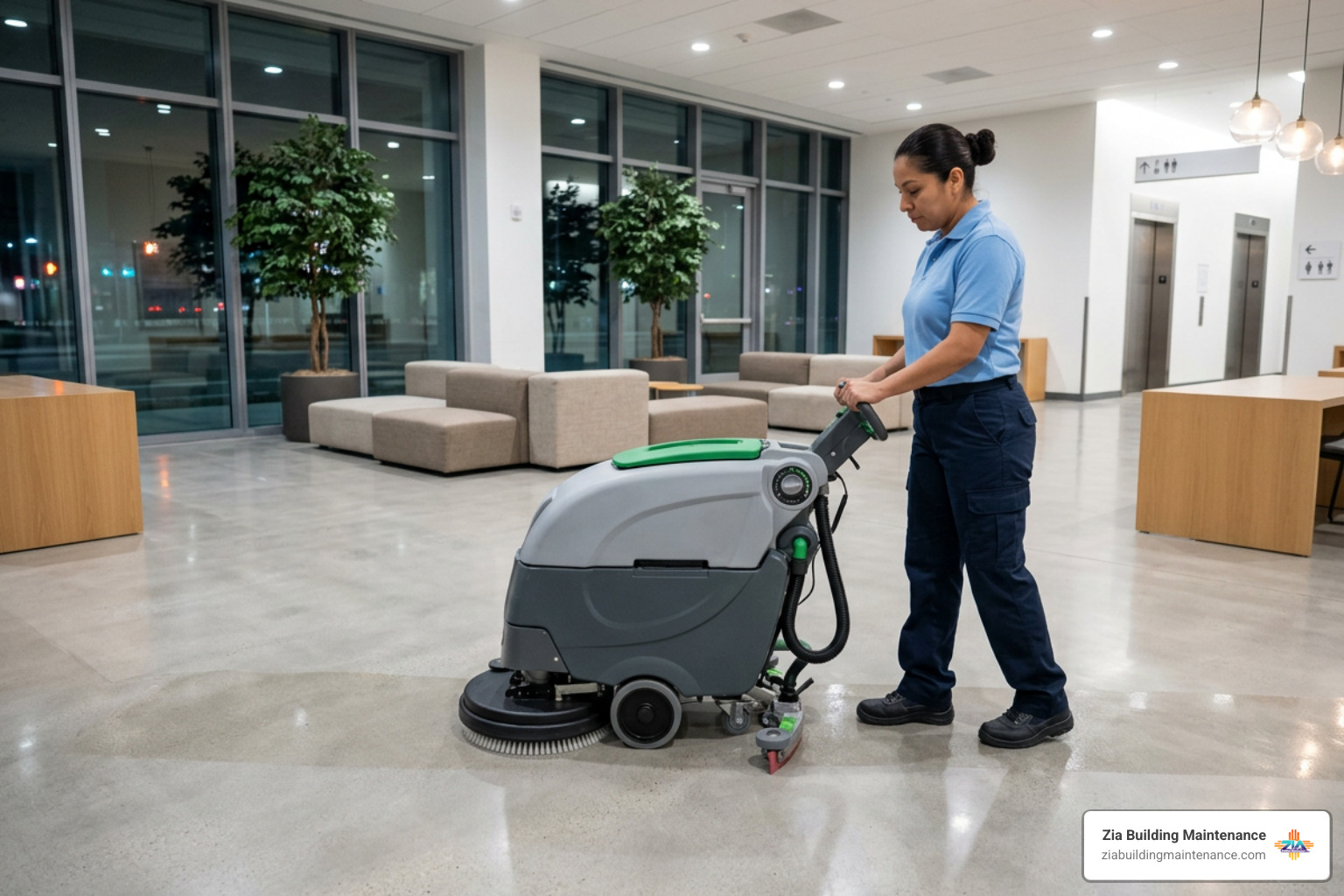
A successful facility care system balances routine maintenance with periodic deep cleaning. Reviewing our guide on office cleaning frequency explained for managers helps structure your scope of work into clear, manageable intervals.
Daily Maintenance Tasks vs. Weekly Detail Work
Daily tasks focus on surface sanitation, waste management, and high-traffic floor upkeep. Nightly routines cover emptying all trash and recycling bins, mopping tile or hard surface floors, vacuuming main walkways, disinfecting all washroom fixtures, and wiping common break room counters.
Weekly schedules address areas that collect dust and grime more slowly. These tasks include detail-vacuuming carpet edges along baseboards, wiping interior glass partitions and entrance doors, dusting mid-level surfaces like windowsills and filing cabinets, and polishing stainless steel fixtures.
Monthly Deep Cleaning and Periodic Floor Care
Monthly and quarterly maintenance preserves your building’s underlying physical assets. These long-term tasks protect high-value flooring and maintain healthy indoor air quality:
- High dusting light fixtures, open ceiling ductwork, and HVAC diffusers above 6 feet.
- Deep scrubbing tile grout lines and machine-buffing hard surface floors.
- Semi-annual or seasonal stripping and refinishing of hard flooring surfaces.
- Hot-water extraction deep cleaning for commercial carpets following IICRC standards.
- Detailed vacuuming of upholstered conference room chairs and fabric cubicle partitions.
Establishing these tiered schedules ensures that routine tasks and high-level deep cleaning work together seamlessly to maintain facility standards year-round.
How Office Cleaning Checklist Customization Adapts to Facility Types
No two facilities require the exact same approach. A small corporate office in Corrales may only require professional cleaning two to three nights per week, whereas a large enterprise facility in Albuquerque needs comprehensive nightly service.
Furthermore, medical offices demand specialized cleaning protocols that strictly comply with HIPAA, CDC sanitation guidelines, and OSHA bloodborne pathogen standards (OSHA 29 CFR 1910.1030). These environments require terminal disinfection protocols, microbicidal chemical application, and rigorous cross-contamination safeguards that go far beyond standard commercial scope.
Managing Checklist Execution: Accountability and Outsourcing
wp:html
/wp:html
wp:html
/wp:html
Creating a written task list is only half the battle; enforcing daily accountability is what maintains long-term quality. Modern janitorial management relies on digital tracking systems, QR code scans at specific zone checkpoints, and photo logs to verify task completion in real time.
In-House Cleaning vs. Professional Outsourcing
Industry surveys reveal that 46.42% of facility managers attempt to handle cleaning using internal staff. However, in-house cleaning often carries hidden costs, such as wasted employee time, inconsistent task execution, and lack of specialized training.
Outsourcing to professional janitorial providers eliminates these management headaches. Professional commercial cleaners bring industrial-grade equipment-such as commercial HEPA vacuums and floor auto-scrubbers-along with formal biohazard safety training and guaranteed replacement staffing. For an in-depth cost and service comparison, consult our Office Cleaning Versus Janitorial Service 2026 Guide.
Quality Assurance Auditing and Compliance Verification
A great tool for auditing your commercial cleaning provider is the “9:30 AM Restroom Test.” Inspecting washrooms one hour after morning arrival quickly reveals whether the nightly crew thoroughly cleaned corner floor edges, restocked paper products, and sanitized behind toilets, or simply emptied waste bins.
Property managers should also conduct unannounced monthly walkthroughs to check for physical compliance indicators:

- High Dust Accumulation: Inspect the tops of exit signs, cubicle panel dividers, and air diffusers.
- Baseboard Detail: Check carpet edges along walls for collected dust line buildup.
- Safety Documentation: Verify that an accessible Safety Data Sheets (SDS) binder is stored in the janitorial closet alongside clearly labeled GHS chemical bottles per OSHA 29 CFR 1910.1200 regulations.
Common Office Cleaning Mistakes and Solutions
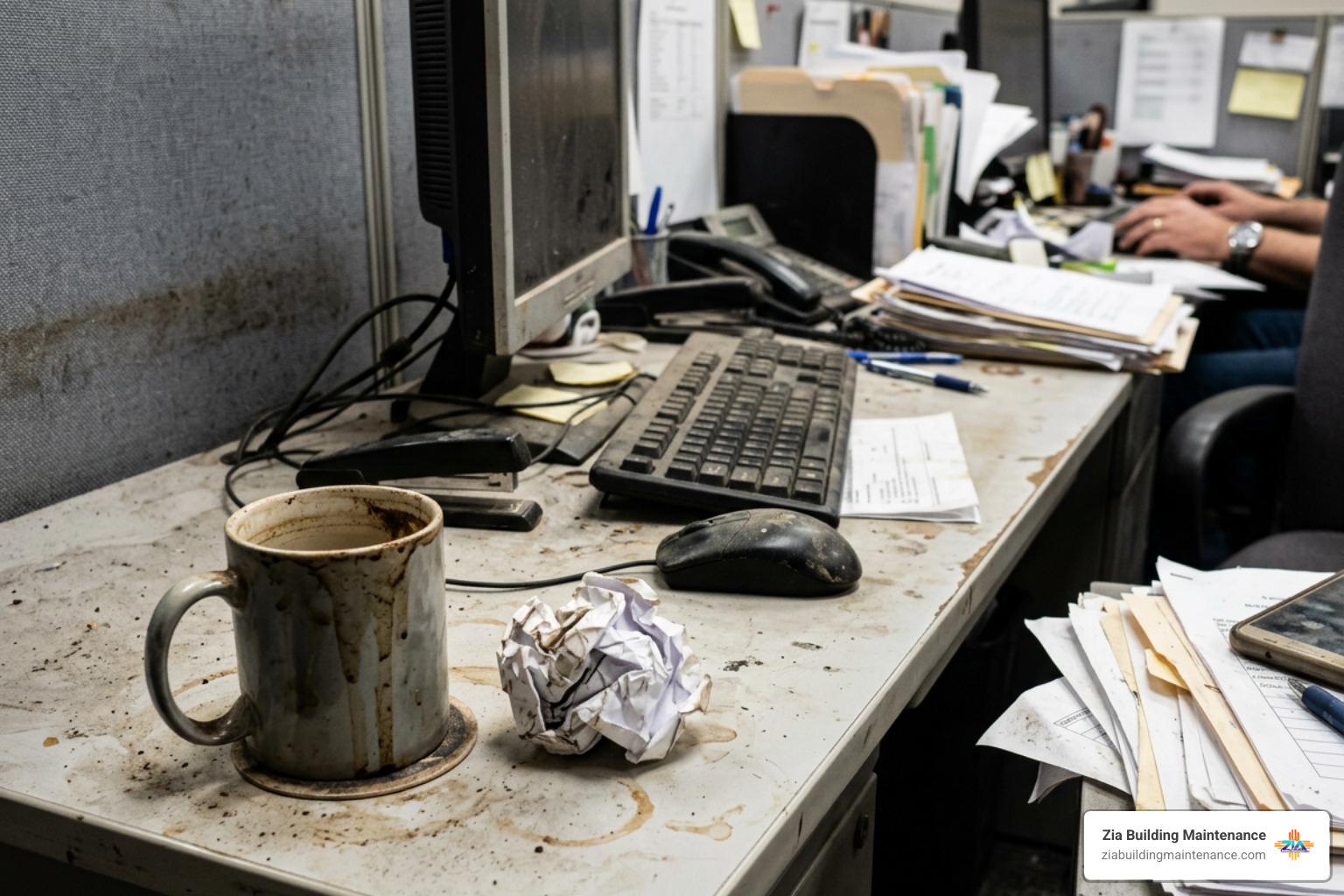
Even well-intentioned cleaning efforts can fail if basic operational errors go uncorrected. Understanding common office cleaning mistakes to fix in 2026 helps facility managers eliminate hidden hygiene risks.
Eliminating Visual Cleaning and Cross-Contamination
“Visual cleaning”—wiping down only what visibly looks dirty—is the single biggest pitfall in commercial janitorial care. Wiping down an apparently clean desk with a rag previously used in a washroom leaves dangerous bacterial reservoirs intact while spreading cross-contamination across office zones.
To solve this, commercial teams must enforce a strict color-coded microfiber cloth system:
- Red Microfiber: Dedicated exclusively to high-risk washroom fixtures, toilet bowls, and urinals.
- Yellow Microfiber: Reserved for washroom sinks, counters, and mirrors.
- Green Microfiber: Used strictly in kitchens, break rooms, and food preparation areas.
- Blue Microfiber: Designated for general dusting, office desks, and common area surfaces.
Chemical Safety and Equipment Maintenance Protocols
Proper chemical dilution ratios are critical for both worker safety and surface protection. Using overly concentrated cleaning chemicals leaves sticky chemical films that actually attract more dirt over time, while under-diluted solutions fail to disinfect.
Equipment maintenance is equally vital. Vacuums with clogged HEPA filters reduce suction efficiency and blow dust back into the air, while dirty mops spread dirty water across floor surfaces. Commercial cleaning equipment must be inspected, cleaned, and maintained on a rigid weekly routine.
Frequently Asked Questions About Office Cleaning Checklists
What is the single biggest error made during office cleaning?
The single largest error is practicing visual cleaning while ignoring chemical dwell time. Spraying a disinfectant and wiping it off immediately fails to kill targeted viruses and bacteria. Using dirty, non-color-coded rags across multiple office areas also spreads cross-contamination.
How long should completing a daily office cleaning checklist take?
Daily maintenance generally takes 15 to 30 minutes for small office suites under 2,000 square feet. For larger corporate facilities, execution typically ranges from 1 to 3 hours per daily shift depending on total square footage, layout complexity, and density of high-touch surfaces.
How often should office carpets and floors be deep cleaned?
High-traffic commercial carpets should undergo professional hot-water extraction deep cleaning every 3 to 6 months per IICRC guidelines, while low-traffic private offices can be cleaned semi-annually. Hard surface tile floors generally require deep scrubbing or stripping and refinishing once or twice per year.
Conclusion
A structured, zone-based How office cleaning checklist is an essential operational tool that directly protects employee health, elevates workplace morale, and preserves long-term building assets. By establishing clear daily, weekly, and monthly frequencies—and enforcing chemical dwell times and color-coded hygiene controls—facility leaders create an environment where teams truly thrive.
At Zia Building Maintenance, we have provided consistent, high-quality commercial cleaning and janitorial services across Albuquerque, Rio Rancho, Corrales, and Los Ranchos since 1989. As a trusted, family-owned business, our attention to detail guarantees a pristine, healthy workspace for your entire team.
Ready to elevate your facility’s cleanliness standards? Visit our Office Cleaning Services page today to request a customized cleaning schedule tailored specifically to your business needs!