

Benefits of Cleaning Cubicle Walls for Workplace Health
When facility managers evaluate workplace hygiene, they often concentrate on high-touch desk accessories, keyboards, and restroom door handles. However, cleaning cubicle walls is just as critical for maintaining indoor air quality and overall staff health. Because upholstered cubicle partitions are built with tactile, porous fabrics, they serve as passive filters in your office. Throughout the workday, they capture dust mites, pollen, outdoor particulate matter, and respiratory droplets.
Did you know that the average office workstation harbors up to 400 times more bacteria than a standard toilet seat? When employees cough, sneeze, or speak loudly near dirty partitions, viral particles land directly on these fabric fibers. Research shows that pathogens can spread to 40–60 percent of an entire office building within as little as two hours. Without regular cleaning, cubicle fabric slowly releases trapped dust mites and allergens back into the air every time someone bumps into or leans against the partition wall.
By prioritizing routine panel maintenance, facility managers across Albuquerque, Rio Rancho, Corrales, and Los Ranchos can achieve several distinct workplace benefits:
- Lower Employee Absenteeism: Eliminating trapped bacteria, dust mites, and viral droplets directly reduces office-wide contagion during flu and allergy seasons.
- Enhanced Indoor Air Quality (IAQ): Vacuuming and deep-cleaning acoustic panel fabric keeps airborne dust and particulate counts within healthy ranges.
- Extended Furniture Lifespan: Removing acidic soil, oils, and grime prevents permanent fiber discoloration and premature breakdown of partition materials.
- Professional Aesthetics: Removing coffee splatters, ink scuffs, and fingerprints creates an inviting, polished work environment for employees and visiting clients.
To learn more about how wall cleaning fits into comprehensive facilities care, explore our full guide on what is deep cleaning an office.
Comparing Fabric, Glass, and Hard-Surface Partitions
Not all cubicle walls are created equal. The exact methods and chemicals we use depend heavily on whether your office features fabric upholstery, High-Pressure Laminate (HPL), Solid Grade Laminate (SGL), Melamine Faced Chipboard (MFC), glass, or powder-coated metal framing.
Fabric cubicle walls usually carry hidden fabric care codes on manufacturer tags or technical documentation. Understanding these codes ensures you do not accidentally ruin partition textiles:
- Code W: Water-based cleaners or mild detergent suds are safe to use.
- Code S: Clean strictly with water-free dry-cleaning solvents.
- Code WS: Safe for either water-based cleaning products or mild solvent cleaners.
- Code X: Vacuum or light brushing only—do not apply any liquid solutions or water.
Hard-surface partitions present a completely different set of cleaning parameters. Solid Grade Laminate (SGL) is non-porous and water-impervious, making it simple to sanitize with standard antibacterial sprays. Conversely, Melamine Faced Chipboard (MFC) and High-Pressure Laminate (HPL) panels feature decorative surfaces glued over composite wood cores. Flooding these seams with excess water causes internal core swelling and permanent panel warping.
For specialized technical guidance on commercial partition materials, facility teams can review BPF Washroom Systems Maintenance Guidelines as well as the HPL Cubicle Cleaning Protocol.
| Partition Material | Key Characteristics | Primary Cleaning Method | Major Risks to Avoid |
|---|---|---|---|
| Fabric / Upholstery | Acoustic dampening, highly porous, traps dust & allergens | HEPA vacuuming & low-moisture detergent suds | Saturation, water rings, fabric shrinkage |
| High-Pressure Laminate (HPL) | Scratch-resistant surface over composite core | Damp microfiber cloth with neutral detergent | Flooding open seams, core swelling |
| Solid Grade Laminate (SGL) | Completely water-impervious, heavy-duty impact strength | Standard antibacterial sprays & damp wiping | Highly abrasive powders or wire pads |
| Glass / Architectural Acrylic | Sleek transparency, collects smudges & fingerprints | Non-streaking glass cleaner & microfiber | Scouring pads, ammonia on tinted films |
| Powder-Coated Metal Frames | Durable structural borders, prone to scuffs | Mild multi-surface cleaner & soft cloth | Acidic strippers, prolonged moisture exposure |
Step-by-Step Guide to Cleaning Cubicle Walls

Before jumping into the cleaning process, proper preparation is essential. Trying to clean around pinned memos, pushpins, and wall-mounted whiteboards is a recipe for missed spots and frustration.
Begin by clearing all vertical surfaces. Have employees remove photos, calendars, hanging file folders, and push pins. Next, shift desks, filing cabinets, and office chairs a few inches away from the partition bases to allow complete access to bottom trim and floor tracks. As you prepare the space, remember to follow high-to-low cleaning principles-if you need tips on tackling elevated office dust before starting on walls, check out our guide to dusting high areas like a pro.
Essential Supplies for Cleaning Cubicle Walls
Before beginning your DIY or maintenance routine, gather the following cleaning supplies and safety gear:
- Commercial vacuum cleaner equipped with a HEPA filter and a soft upholstery brush attachment
- Microfiber cloths (lint-free and color-coded)
- Mild laundry detergent or clear liquid dish soap
- Soft-bristle scrub brush or non-scratch sponge
- Baking soda and white distilled vinegar (for natural spot treatments)
- Isopropyl alcohol (70%) for glass and frame disinfection
- Bucket of warm water
- Portable floor drying fans or carpet blowers
The 5-Step Process for Cleaning Cubicle Walls
For standard fabric-covered panels (Code W or WS), follow this low-moisture, 5-step sequence to get professional results without over-soaking the inner panel structure:
- HEPA Vacuuming: Attach the soft upholstery brush to your vacuum. Starting at the very top of each panel, vacuum slowly in overlapping horizontal strokes down to the baseboard. This clears dry dust particles, skin cells, and pet dander before liquid is applied.
- Mix Low-Moisture Suds Solution: Pour 1/4 cup of mild laundry detergent into 1 quart of warm water in a clean bucket. Agitate the water vigorously with your hands or a whisk until a dense foam layer forms on top.
- Low-Moisture Suds Scrubbing: Dip your soft-bristle brush or sponge only into the foam suds-not into the liquid water beneath. Working from top to bottom, scrub the fabric in gentle, overlapping circular motions. The foam lifts trapped oils without soaking the interior backing.
- Damp Wipe Rinse: Wring out a clean microfiber cloth in fresh warm water until it is lightly damp (not dripping wet). Wipe down the fabric surface working top-to-bottom to collect detergent suds and suspended soil.
- Air Drying & Ventilation: Set up floor fans or increase HVAC ventilation across the cubicle aisles. Ensure all panels are 100% dry before employees re-attach paper, artwork, or desktop accessories.
wp:html
To incorporate wall maintenance into your facility routine, review our comprehensive office cleaning checklist.
Stain Removal Techniques for Fabric Cubicle Walls
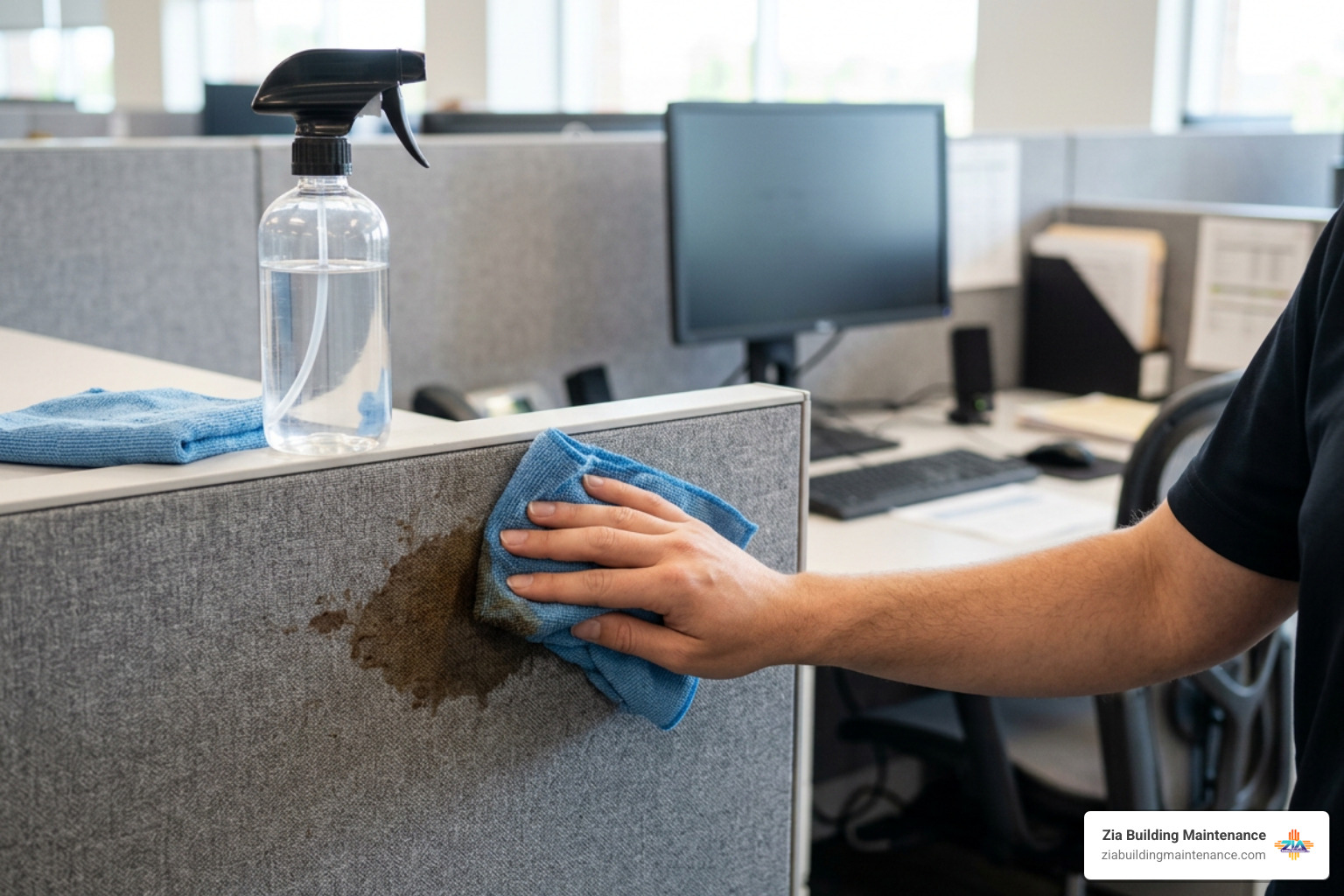
Accidental coffee spills, ink smears, and greasy food splatters are inevitable in busy office settings. The golden rule of spot removal is simple: never rub a fresh stain aggressively, as this pushes the pigment deeper into the fabric backing. Always blot gently working from the outer edge of the spot inward.
- Coffee and Tea Stains: Mix equal parts white distilled vinegar and warm water. Moisten a clean microfiber cloth with the solution and gently blot the stain. Follow up with mild detergent suds to clear residual odors, then blot dry.
- Ink and Ballpoint Pen Marks: Lightly dab a cotton ball soaked in 70% isopropyl alcohol directly onto the ink mark. The alcohol breaks down ink resins quickly. Blot immediately with a dry cloth to transfer the ink out of the fabric.
- Grease and Food Oil: Sprinkle a generous dusting of baking soda over the grease spot and let it sit for 15 to 20 minutes to absorb surface lipids. Vacuum away the dry baking soda, then spot-treat any remaining shadow with soapy detergent foam.
Always perform a quick spot-test on an inconspicuous, hidden area of the partition (such as behind a desk cable return) before applying any stain remover to verify colorfastness. Facility leaders looking for broader stain management protocols can check out our guide on spot cleaning commercial spaces.
Recommended Cleaning Frequency and Preventative Care
Establishing a structured cleaning schedule prevents severe soil accumulation and protects indoor air quality. Cleaning frequency should match foot traffic and room utilization:
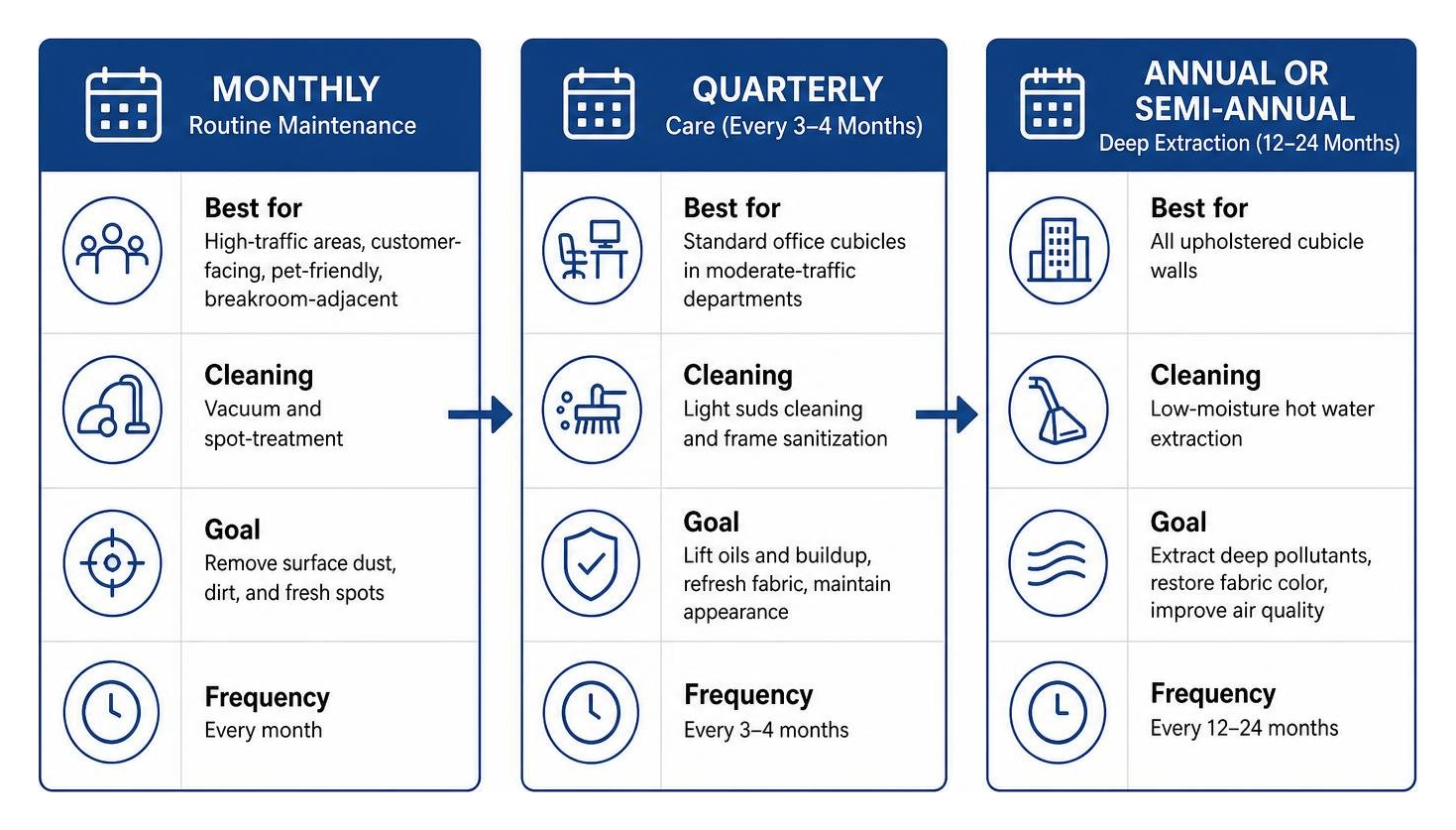
- Monthly Routine Maintenance: High-traffic office zones, customer-facing cubicles, pet-friendly workspaces, and breakroom-adjacent partitions should receive monthly vacuuming and spot-treatment.
- Quarterly Care (Every 3–4 Months): Standard office cubicles in moderate-traffic departments benefit from light suds cleaning and frame sanitization every three to four months.
- Annual or Semi-Annual Deep Extraction (12–24 Months): All upholstered cubicle walls should undergo professional low-moisture hot water extraction every 12 to 24 months to extract deep-seated pollutants and restore fabric color.
Preventative care is equally vital. Ensure office relative humidity remains below 50% to prevent fungal growth, and instruct staff to maintain clean desktop perimeters to prevent dust accumulation along partition bases.
DIY vs. Hiring a Professional Janitorial Service
While internal staff or in-house janitorial crews can handle routine dusting and small spot touch-ups, deep-cleaning large banks of fabric cubicle walls quickly becomes labor-intensive.
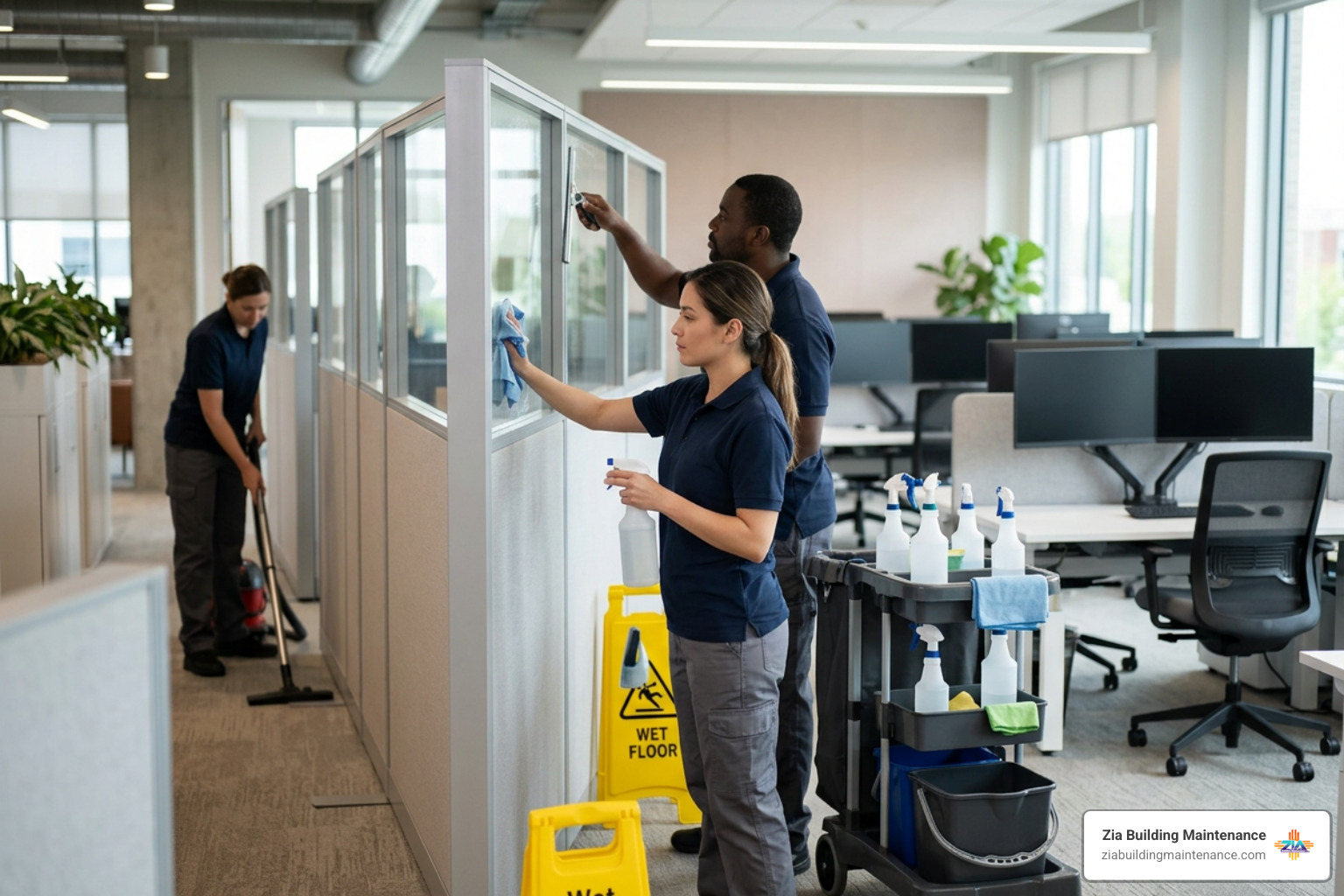
Professional commercial cleaners use specialized hot-water extractors and low-moisture encapsulation tools designed specifically for vertical upholstery. This equipment injects sanitizing solution deep into fabric fibers and instantly extracts water, dropping dry times to just a few hours and preventing mold formation. Furthermore, commercial teams utilize electrostatic spraying systems to apply hospital-grade disinfectants across complex partition layouts.
When managing cubicle maintenance, avoid these common DIY cleaning mistakes:
- Over-Saturating Fabric: Soaking fabric panels turns trapped inner core dust into liquid mud, causing dark water rings and lingering mildew odors.
- Using Chlorine Bleach: Applying bleach or harsh solvents on fabric walls leads to permanent bleaching spots, dissolved adhesive backings, and ruined material.
- Skipping Pre-Vacuuming: Applying liquid directly to unvacuumed fabric drives surface dust down into the foam cushion, making spots worse.
- Ignoring Frame & Trim Care: Cleaning the fabric while leaving dusty metal tracks and sticky plastic frames dirty results in quick re-soiling.
- Rehanging Decor While Wet: Pinning paper, photos, or metal hooks back onto damp fabric traps moisture and invites dark mold spots.
If your facility demands consistent quality without taking your internal team away from core tasks, consider partnering with a trusted professional cleaner. Review our complete office cleaning services ultimate guide to see how custom maintenance plans streamline facility management.
Frequently Asked Questions About Cleaning Cubicle Walls
Can you use bleach or steam cleaners on fabric cubicle walls?
No, you should avoid chlorine bleach on fabric cubicle walls. Bleach strips textile dyes, leaves unsightly pale rings, and breaks down flame-retardant fabric coatings.
Direct heat steam cleaners should also be used with extreme caution. Excessively high steam temperatures can melt synthetic panel fibers, dissolve structural fabric glues, and warp underlying composite frames. Stick to low-moisture detergent suds or specialized cold-water extraction systems instead.
How do you prevent mold and mildew on upholstered partitions?
Mold and mildew thrive in dark, humid, and poorly ventilated conditions. To prevent growth on upholstered cubicle walls:
- Avoid over-saturating panels with liquid water during cleaning.
- Position high-velocity floor drying fans facing wet fabric panels immediately after cleaning.
- Maintain workplace HVAC relative humidity between 30% and 50%.
- Promptly address roof, pipe, or window leaks near workstation pods.
- Treat minor moisture spots with a light mist of diluted white vinegar or 3% hydrogen peroxide after spot testing.
How do you safely clean glass and laminate cubicle frames?
For glass toppers and architectural acrylic dividers, spray a non-ammoniated glass cleaner directly onto a clean microfiber cloth (rather than spraying the glass directly to avoid runoff into panel seams). Wipe gently in S-patterns to prevent streaks.
For powder-coated aluminum trim, metal baseboards, and laminate caps, wipe surfaces with a damp microfiber cloth lightly sprayed with a neutral multi-surface disinfectant. Dry metal and laminate surfaces thoroughly with a towel to preserve protective paint finishes and keep hardware from corroding.
Conclusion
A well-maintained workspace supports productivity, protects employee health, and projects a professional image to every client who walks through your doors. By treating fabric partitions with low-moisture care, removing stains promptly, and keeping hard frames disinfected, facility managers can easily keep their office environments clean, fresh, and inviting.
At Zia Building Maintenance, we have provided dependable, detailed commercial janitorial care across Albuquerque, Rio Rancho, Corrales, and Los Ranchos since 1989. Whether your office requires routine partition maintenance, deep upholstery extraction, or comprehensive janitorial support, our family-owned team delivers consistently clean results tailored to your facility.
Ready to refresh your office partitions and elevate your workplace health? Explore our professional office cleaning services or contact Zia Building Maintenance today to request a customized quote!