Stop Ignoring Your Ceilings and Start Dusting High Areas Like a Pro
The Ceilings You’re Ignoring Are Quietly Hurting Your Building
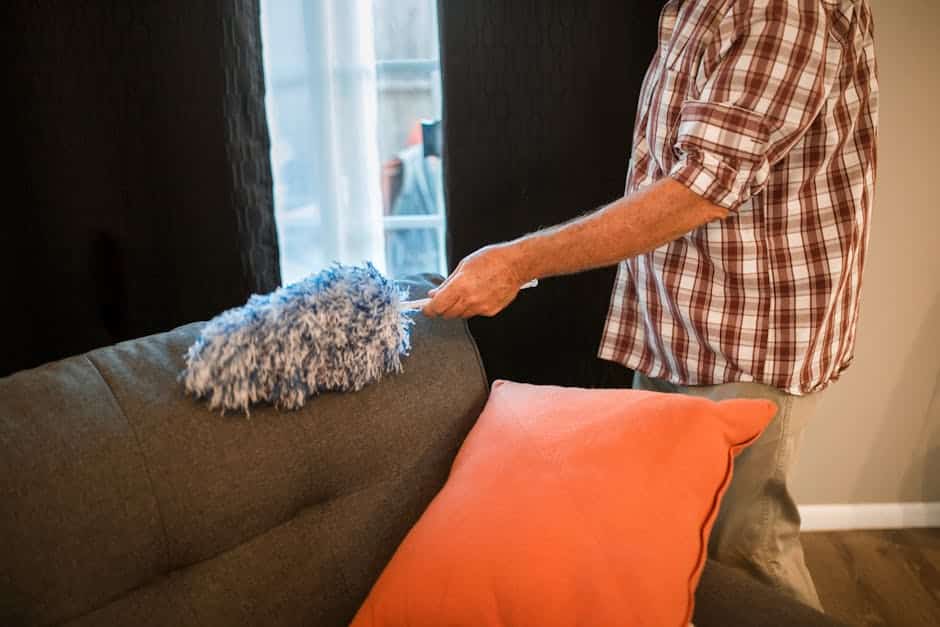
Dusting high areas is one of the most overlooked tasks in commercial facility maintenance — and it’s costing building managers more than they realize.
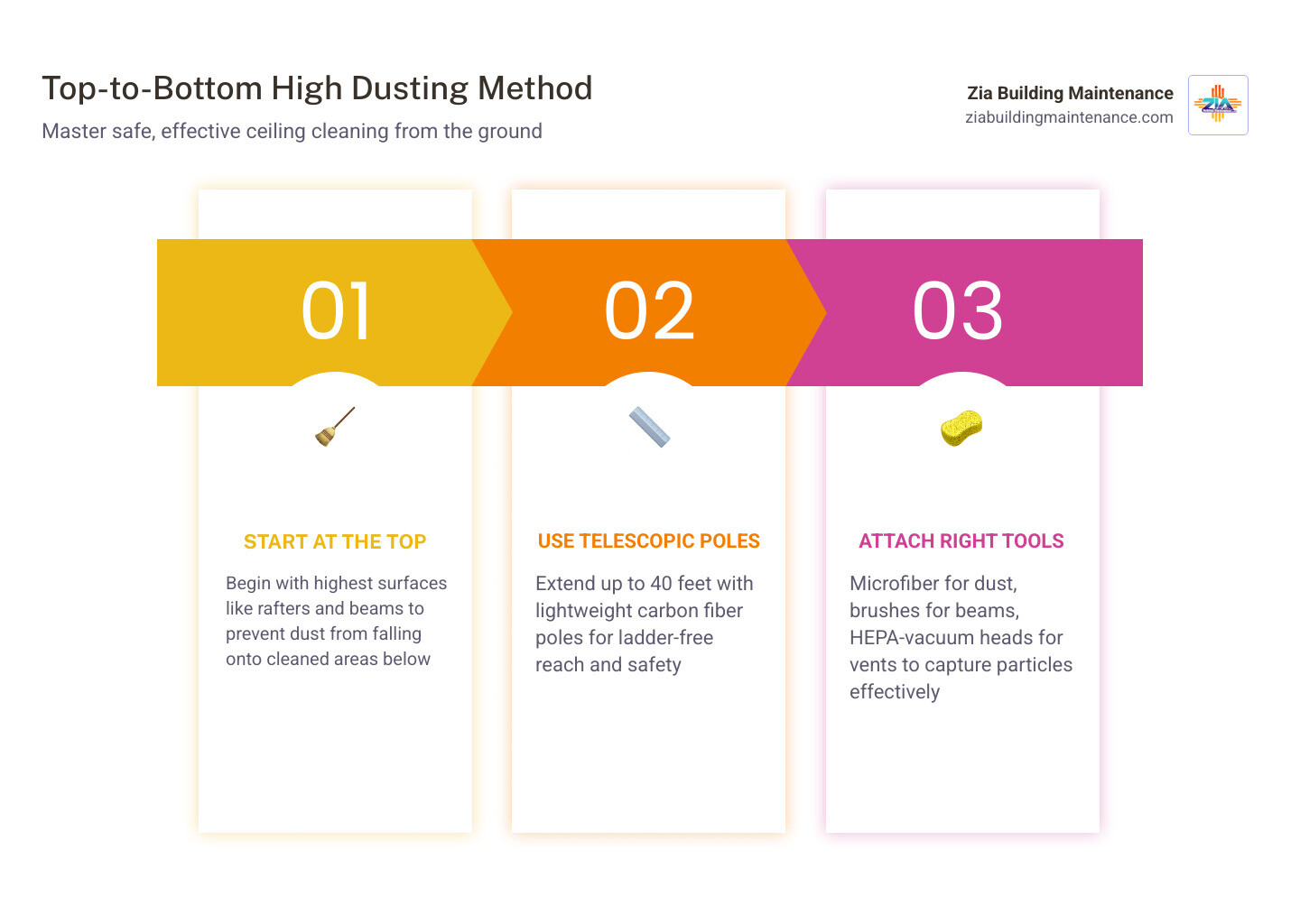
Here’s a quick breakdown of how to do it right:
- Start at the top — always clean from the highest point down
- Use telescopic poles — reach up to 40 feet from the ground, no ladder needed
- Attach the right tool — microfiber heads for general dust, brushes for beams, vacuum heads for vents
- Use HEPA-filtered suction — capture dust instead of just moving it around
- Work in sections — break large ceilings into manageable zones
- Wear PPE — gloves, safety glasses, and a dust mask every time
Most facility managers in places like Downtown Albuquerque are diligent about floors, restrooms, and high-touch surfaces. But look up — at the ceiling beams, vents, light fixtures, and rafters — and the story changes fast.
Dust doesn’t stay up there. Warm air rises, HVAC systems circulate, people move through the space — and those particles come right back down into the air your employees and visitors are breathing. Over time, heavy buildup near electrical fixtures can even become a fire hazard.
The good news? You don’t need scaffolding or a risky climb up a ladder. With the right tools and technique, dusting high areas is completely manageable from the ground.
I’m Ashley Cordova, Vice President of Zia Building Maintenance, and after more than three decades of serving New Mexico facilities alongside my family, I’ve seen how often dusting high areas gets skipped — and what happens when it does. In this guide, I’ll walk you through exactly how to approach it like a professional.
Why Dusting High Areas is Critical for Your Facility

When we walk into a lobby in Downtown Albuquerque or a warehouse in Rio Rancho, our eyes usually stay at eye level. However, the “out of sight, out of mind” philosophy is dangerous when it comes to facility health. Dusting high areas isn’t just about aesthetics; it’s a fundamental part of building safety and longevity.
Respiratory Health and Air Quality
Dust isn’t just dirt. It’s a cocktail of dead skin cells, fabric fibers, pollen, and outdoor pollutants. Because warm air rises, these lightweight particles are carried upward by convection currents and settle on the highest available surfaces—rafters, ceiling fans, and the tops of cabinets.
When your HVAC system kicks on, or even when there is heavy foot traffic, those high-level dust deposits are disturbed. They circulate through the air, leading to respiratory issues and allergies for your staff and clients. For a deeper dive into managing these particles, check out The Ultimate Anti Dust Guide. Maintaining clean high surfaces is a key component of meeting OSHA Safety Guidelines for Indoor Air Quality.
Fire Hazards and Electrical Safety
This is the part that surprises many property managers: dust is fuel. When thick layers of dust accumulate near light fixtures, electrical panels, or heat-producing machinery, they pose a legitimate fire risk. A single spark or an overheating bulb can ignite “dust bunnies,” which can spread fire rapidly across a ceiling. Regular dusting high areas keeps these ignition sources clear.
HVAC Efficiency
If your vents are covered in a grey “beard” of dust, your HVAC system is working harder than it needs to. This buildup restricts airflow and forces the motors to strain, leading to higher energy bills and premature equipment failure. By keeping these high-reach areas clean, you ensure your facility stays cool in the New Mexico heat without breaking the bank.
Essential Equipment for Professional High-Reach Cleaning
In the old days, dusting high areas meant renting expensive scaffolding or putting a janitor on a shaky 20-foot ladder. In April 2026, that is no longer the standard. Safety and efficiency now come from specialized ground-based systems.
The Power of SkyVac Systems
At Zia Building Maintenance, we recommend using industrial-grade vacuum systems designed specifically for high-reach tasks. These systems, like the SkyVac range, allow an operator to stand safely on the floor while cleaning up to 40 feet in the air.
| Feature | SkyVac 27 | SkyVac 30 | SkyVac 78 | SkyVac 150 |
|---|---|---|---|---|
| Ideal Use | Small Offices/Homes | Medium Commercial | Industrial/Large Scale | Heavy Duty/High Volume |
| Reach | Up to 30 ft | Up to 40 ft | Up to 40 ft | Up to 40 ft |
| Motor Power | 1500W Single | 1300W Single | 2200W Dual | 3300W Triple |
| Airflow (CFM) | 134 | 134 | 253 | 315+ |
| Weight | 17 lbs | 31 lbs | 80 lbs | Industrial Grade |
Carbon Fiber Poles: The Game Changer
The secret to reaching 40 feet without your arms falling off is carbon fiber. Unlike heavy steel or flexible aluminum, carbon fiber poles are incredibly lightweight (some sections weigh as little as 11 oz) and rigid. This rigidity allows for precise control when you’re maneuvering a brush around a delicate light fixture high above a lobby floor. For more on how these tools have evolved, see this Long Reach Dusting Guide for High Areas | Clean Direct.
Step-by-Step Techniques for Safe Ground-Level Cleaning
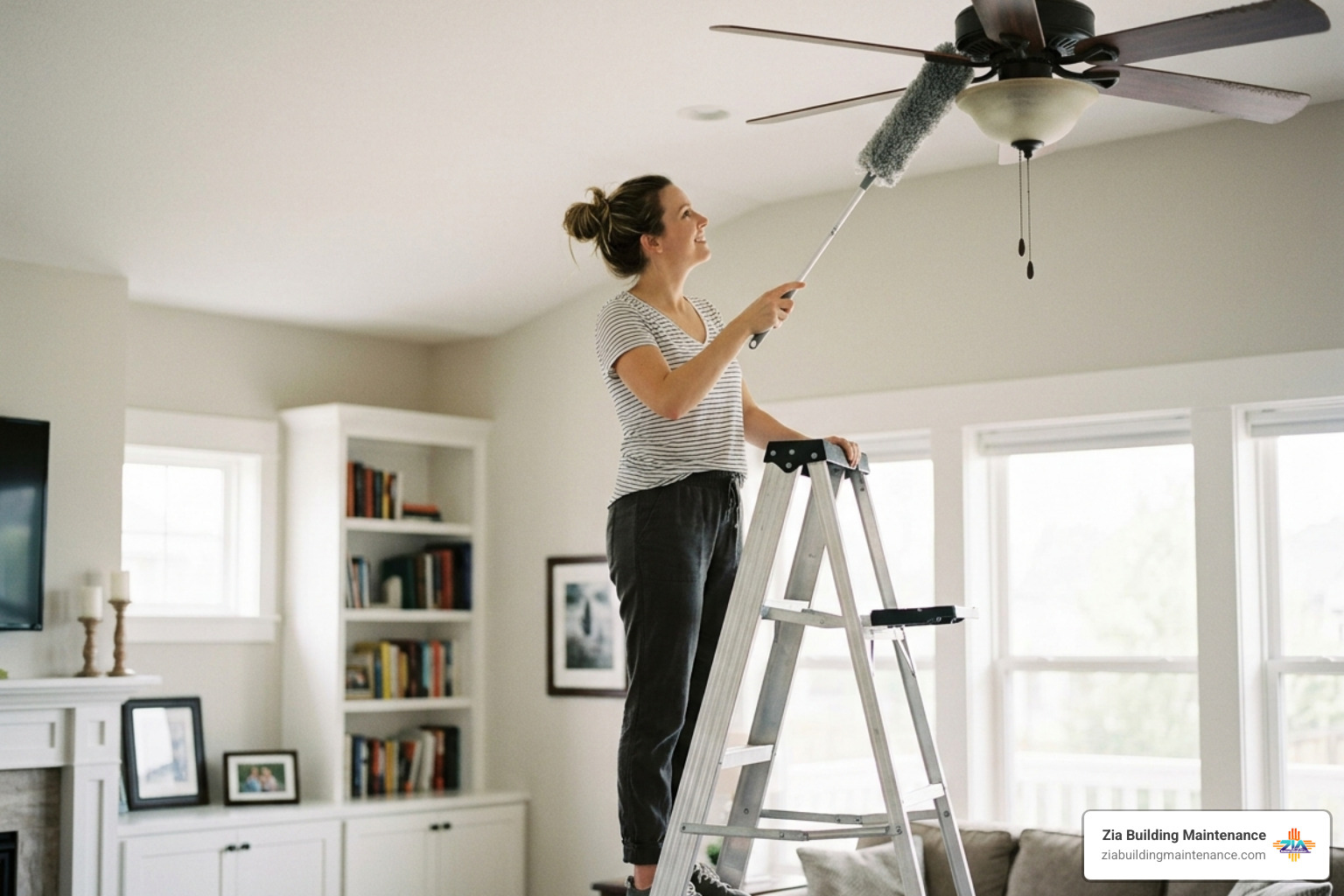
Knowing how to use the equipment is just as important as having it. If you don’t follow a systematic approach, you’ll likely end up cleaning the same dust twice.
The Top-to-Bottom Method
This is the golden rule of cleaning. Always start at the absolute highest point. Gravity is going to pull some dust down, regardless of how good your vacuum suction is. By starting at the ceiling and working down to the mid-level ledges, and finally the floors, you ensure that you aren’t dropping debris onto a surface you just finished cleaning. This is often one of the 3 Spaces Most Neglected During Cleaning.
Ladder-Free Safety and PPE
Safety isn’t just about avoiding falls; it’s about protecting your body while you work. Even when staying on the ground, you should wear:
- Safety Glasses: To protect your eyes from falling debris.
- Dust Mask/Respirator: To avoid inhaling fine particulates stirred up during the process.
- Gloves: For better grip on the telescopic poles.
High Reach Dusting Tutorial
To see these techniques in action, watch this professional demonstration of high-reach cleaning:
Mastering the Art of Dusting High Areas with Vacuum Systems
While manual dusters have their place, vacuum integration is superior for commercial environments. A high-CFM (Cubic Feet per Minute) vacuum captures the dust at the source, preventing it from redistributing throughout the room.
When cleaning rafters and beams, we use a “sweeping” motion with the vacuum head. For heavy industrial buildup, dual-motor systems like the SkyVac 78 provide the 253 CFM airflow necessary to lift heavy clumps of dust that have sat undisturbed for years. If you’re looking for a partner to handle this specialized work, Zia Building Maintenance: Specialized High Dusting Solutions can help.
Selecting Attachments for Dusting High Areas
One size does not fit all. Different surfaces require different tools to ensure a truly clean finish:
- Microfiber Sleeves: Best for flat ledges and tops of cabinets where you want to “grab” the dust.
- Angled Brushes: Perfect for the tops of ceiling fan blades and the “elbows” of HVAC ducting.
- Pipe Cleaners: Curved brushes designed to wrap around sprinkler pipes and electrical conduits.
- Radiator Brushes: Slim brushes that can get inside narrow vents.
Neglecting these specific attachments is one of the common Missed Areas In Office Disinfection Routines.
Maintenance and Frequency for Commercial Spaces
How often should you be dusting high areas? It depends on your environment.
- Annual Deep Cleaning: Every facility, regardless of type, should have a “floor-to-ceiling” deep clean at least once a year. This targets the areas that aren’t visible to the naked eye.
- Monthly High-Traffic Maintenance: In lobbies, retail spaces, and gyms, dust accumulates faster. These areas should be checked monthly.
- Biannual Low-Traffic Cleaning: Storage areas and mechanical rooms can usually go six months between cleanings.
Don’t forget that your equipment needs love too. After every job, we recommend:
- Filter Care: Clean or replace HEPA filters to maintain suction power.
- Pole Inspection: Check carbon fiber sections for cracks or worn locking mechanisms.
- Brush Sanitization: Wash microfiber heads and brushes to prevent cross-contamination. This is especially important when moving between High Touch Areas Often Missed During Disinfection.
Frequently Asked Questions about High-Level Dusting
How often should I perform high dusting in a commercial building?
For most professional offices in Albuquerque and Bernalillo, an annual deep clean is the baseline. however, with the 2026 FIFA World Cup bringing over 6 million visitors to host cities across the U.S., facilities in the Southwest are expecting much higher foot traffic. More people means more skin cells, more fabric fibers, and more dust. If your facility is hosting events or seeing increased tourism, we recommend moving to a quarterly high-dusting schedule to maintain air quality and a “World Cup ready” appearance.
Is it safe to use carbon fiber poles near electrical fixtures?
This is a critical safety point: Standard carbon fiber is electrically conductive. You must exercise extreme caution when cleaning near exposed wires or high-voltage equipment. If you are working in an environment with sensitive electrical components, look for specialized non-conductive glass fiber poles or ensure your team is trained in risk management and maintains safe distances from live sources.
Can I effectively remove dust from 40-foot ceilings without a ladder?
Yes! Modern systems like the SkyVac 78 or 150 are designed specifically for this. By using lightweight, rigid telescopic poles, a single technician can clean rafters, vents, and beams 40 feet up while keeping both feet firmly on the ground. This eliminates the need for expensive lift rentals and significantly reduces the liability associated with ladder work.
Conclusion
At Zia Building Maintenance, we believe that a building isn’t truly clean until it’s clean from the floor to the rafters. As we look forward to the economic boost and excitement of the 2026 FIFA World Cup, the pressure on New Mexico businesses to maintain pristine environments has never been higher.
Whether you are managing a historic building in Downtown Albuquerque or a modern warehouse in Rio Rancho, dusting high areas is an investment in your building’s health, your employees’ safety, and your professional image. Don’t wait for a tenant complaint or a fire marshal’s warning to look up.
If you’re ready to elevate your facility’s cleanliness standards without the risk of ladders, we’re here to help. Our family has been keeping New Mexico clean since 1989, and we have the specialized tools to reach those spots you’ve been ignoring. Contact us today for our Commercial Cleaning Services and let’s get your facility sparkling from top to bottom.
Video Schema: High Reach Dusting Tutorial
{
  "@context": "https://schema.org",
  "@type": "VideoObject",
  "name": "High Reach Dusting Tutorial",
  "description": "A comprehensive guide on how to use telescopic poles and vacuum systems for safe, ground-level high dusting in commercial buildings.",
  "thumbnailUrl": "https://img.youtube.com/vi/EHMsYgwBbNk/hqdefault.jpg",
  "uploadDate": "2024-01-01",
  "contentUrl": "https://www.youtube.com/watch?v=EHMsYgwBbNk",
  "embedUrl": "https://www.youtube.com/embed/EHMsYgwBbNk"
}