

Effective Floor Cleaning Starts With the Right Method
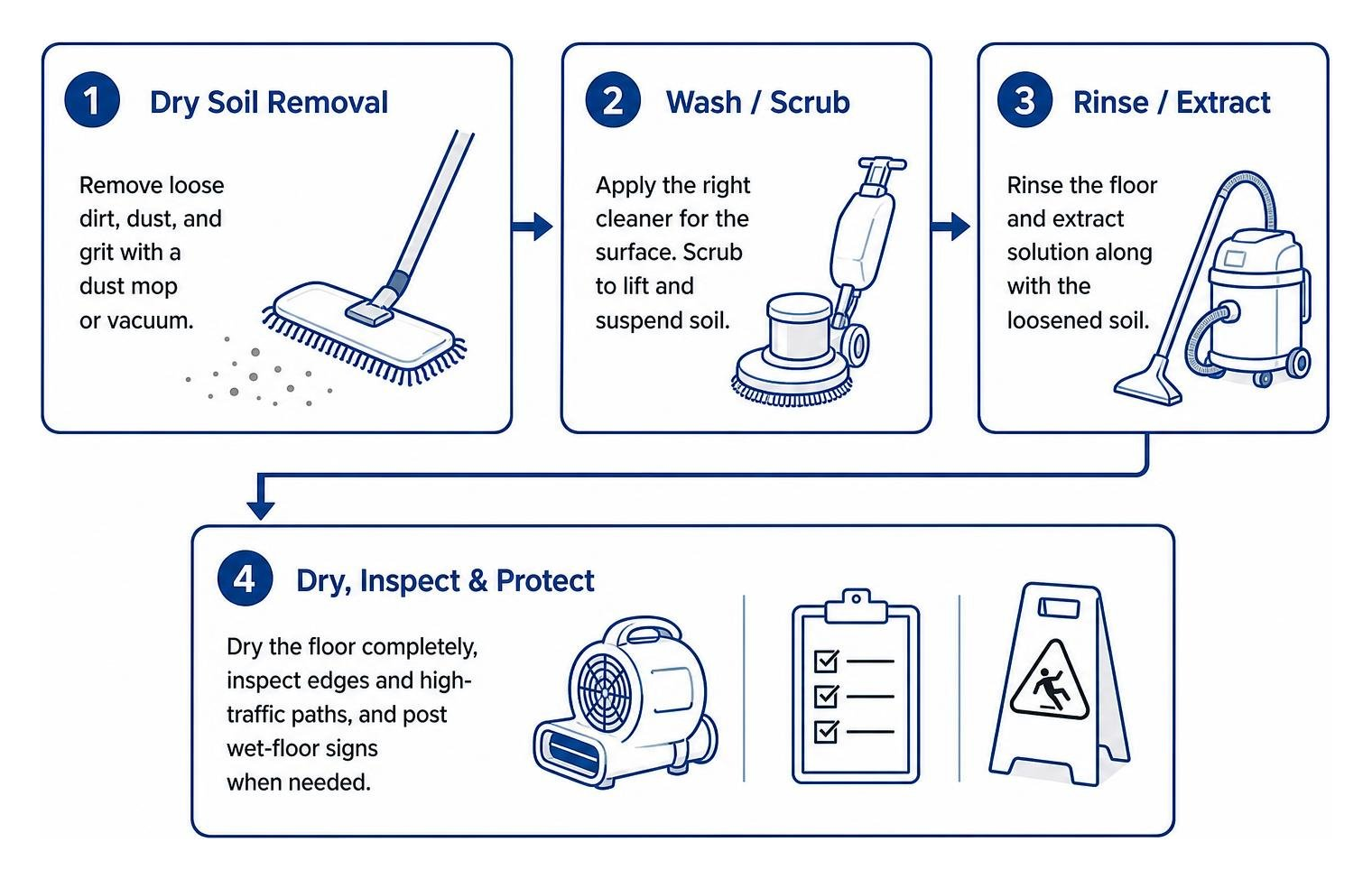
Effective floor cleaning removes grit before it scratches the surface, uses a cleaner that matches the flooring material, and leaves the area dry enough to reduce slip risks. For most facilities, the basic routine is simple:
- Remove dry soil first with a vacuum, sweep, or microfiber dust mop.
- Use a properly diluted, low-residue cleaner approved for the floor’s finish.
- Scrub or mop with controlled moisture, then collect dirty water instead of spreading it.
- Dry the floor, inspect edges and high-traffic paths, and post wet-floor signs when needed.
Regular care protects appearance, traction, indoor hygiene, and the life of the flooring itself. It also lowers the damage caused by tracked-in grit. Well-planned indoor and outdoor entrance matting can capture about 80% of dirt brought into public and office buildings, reducing the soil that reaches the main floor.
The right approach depends on the surface. Hardwood needs minimal moisture and pH-neutral products. Tile may need focused grout cleaning. Natural stone requires stone-safe cleaners rather than acids. Vinyl and VCT often depend on routine cleaning plus protection of their finish. Modern wet-dry vacuums, auto-scrubbers, and robotic mops can help by separating clean solution from recovered dirty water, but technology still needs correct setup, maintenance, and surface compatibility.
I am Ashley Cordova, Vice President of Zia Building Maintenance, a family-owned New Mexico janitorial company serving local facilities since 1989. My work overseeing operations, finances, and sales has shown me that dependable floor cleaning comes from clear standards, careful supervision, and teams that notice the details.
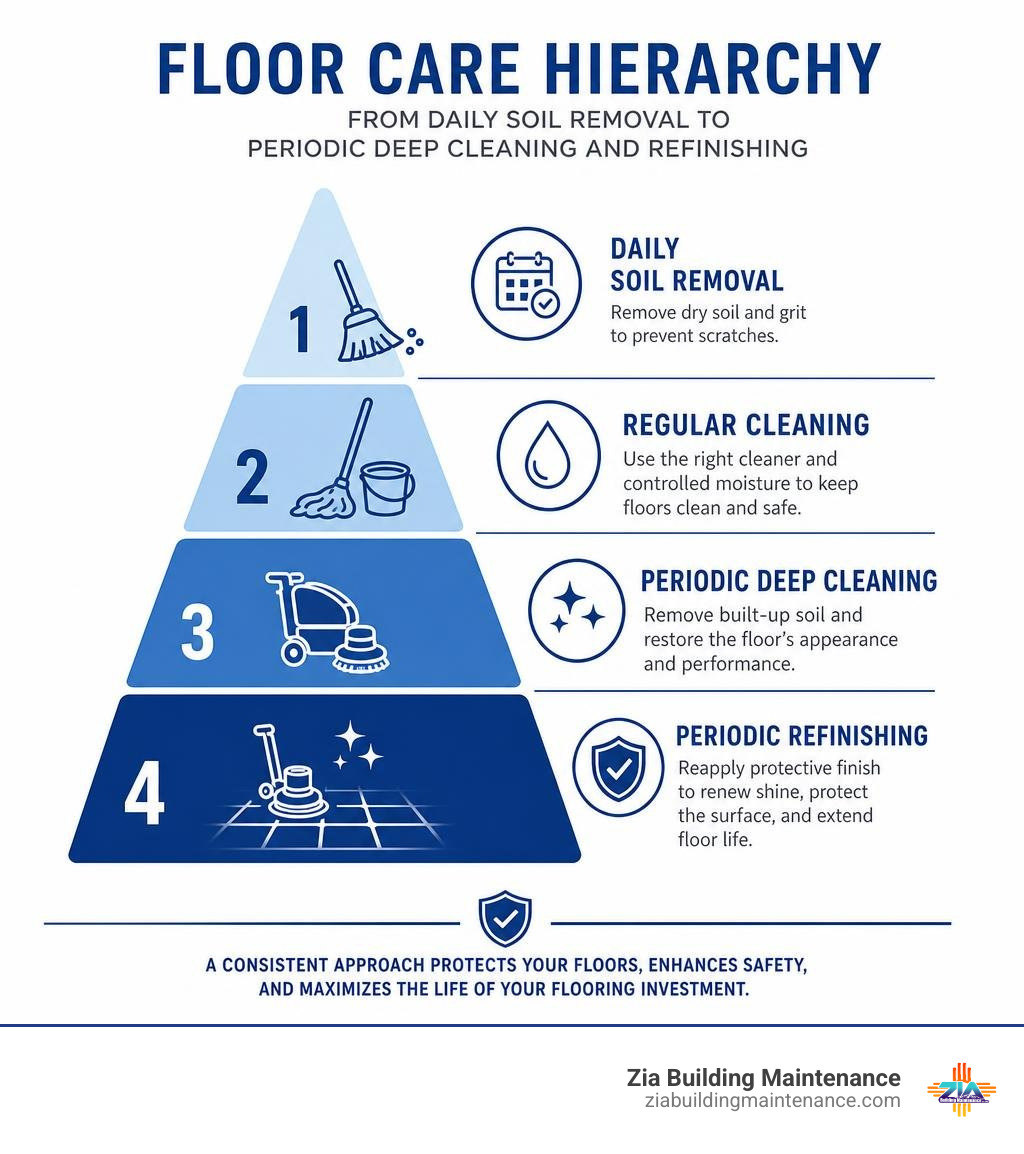
Primary Reasons for Maintaining Regular Floor Cleaning Schedules
Floors endure more physical abuse than almost any other architectural surface in a facility. When sand, fine gravel, and urban dust settle onto bare floors, foot traffic grinds those hard particles directly into the protective finish. This constant abrasive friction cuts microscopic grooves into the sealant, dulling the sheen and creating tiny crevices that trap stubborn grime. Establishing a preventative maintenance schedule preserves the friction coefficient needed for safe traction while preventing premature asset replacement.
Beyond protecting the structural finish, consistent floor hygiene plays a vital role in indoor air quality. Dust, pollen, biological residue, and degraded microplastics settle onto walking surfaces throughout the day. Every time footsteps or carts pass over these uncleaned areas, settled particles become airborne again for building occupants to inhale. Understanding why having dirty floors harms your business helps facility managers protect both brand reputation and employee wellness.
Addressing soil early also prevents slip-and-fall hazards caused by oily residues or loose particulate matter. Bad practice during cleaning—such as leaving soapy chemical films behind or using overly wet mops—is a leading contributor to accidental slip injuries. Implementing structured protocols for cleaning dirty floors keeps commercial and residential spaces sanitary, visually sharp, and compliant with safety standards.
Surface-Specific Cleaning Protocols for Hard Floors
Different floor substrates react distinctively to mechanical agitation, moisture, and chemical pH levels. Applying an acidic cleaner to an acid-sensitive limestone floor will etch the surface, while using high-pH alkaline strippers on finished hardwood will destroy the polyurethane coat. Selecting compatible chemistry, dilution levels, and machine pad coarseness is essential for effective floor maintenance.
| Floor Substrate | Optimal Chemical pH | Primary Cleaning Method | Pad Color / Tool Type | Key Moisture & Chemical Restrictions |
|---|---|---|---|---|
| Solid & Engineered Hardwood | Neutral (6.5 – 7.5) | Electrostatic dust mop; misted microfiber damp mop | White buffing pad / Microfiber pad | Never use excess water, steam, or acidic/ammonia solutions. |
| Ceramic & Porcelain Tile | Mild Acidic to Alkaline (6.0 – 9.0) | High-pressure rotary extraction; targeted grout scrubbing | Green scrubbing pad / Nylon brush | Avoid unsealed grout saturation; rinse thoroughly after scrubbing. |
| Natural Stone (Marble, Travertine) | Strictly Neutral (7.0 – 7.5) | Damp microfiber mopping; stone-safe extraction | Tan cleaning pad / Soft microfiber | Never apply acidic or citrus-based cleaners; avoid harsh abrasives. |
| Luxury Vinyl Plank (LVP / LVT) | Neutral to Mild Alkaline (7.0 – 8.5) | Auto-scrubber with neutral detergent; microfiber spray mop | Red spray-buff pad / Microfiber pad | Avoid abrasive steel wool; keep solution temperatures moderate. |
| Vinyl Composition Tile (VCT) | Neutral for daily (7.0); High Alkaline for stripping (11.0+) | Dust mopping, damp mopping, periodic high-speed burnishing | Tan buffing pad (daily) / Black pad (stripping) | Maintain protective polymer wax; prevent standing water along seams. |
Daily and Long-Term Hardwood Floor Cleaning Protocols
Hardwood floors require precise moisture management. When you clean sealed hardwood, you are interacting with the top protective sealant—typically a clear polyurethane barrier—rather than raw timber. Dust mop or sweep daily using an electrostatic microfiber head kept flat against the floor. Lifting the pad repeatedly drops captured abrasive grit, dragging it across the finish. To clean your wooden floors like a professional floor care expert, always follow the wood grain when wiping or mopping.
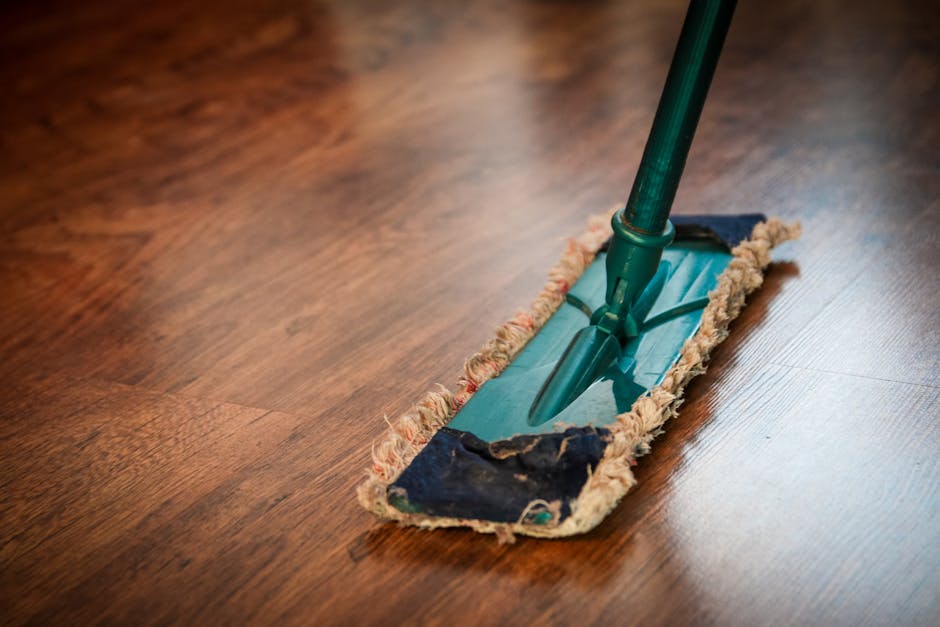
For weekly cleaning, use a spray mop paired with a specialized pH-neutral wood cleaner or a vacuum with the beater bar disengaged to avoid scratching. Polish should be applied every 2 to 4 months depending on foot traffic to fill micro-abrasions and refresh the surface luster. Because a typical solid wood floor can only be sanded and refinished 4 to 6 times across its operational lifespan—roughly every 7 to 10 years—diligent routine maintenance is essential to avoid costly, premature wood sanding.
Substrate Guidelines for Tile, Natural Stone, and Commercial Vinyl
Ceramic and porcelain tiles are durable, but their cementitious grout lines are porous and absorb oils, soil, and dirty wash water. Standard mopping often pushes slurry into these recessed joints, causing deep discoloration and bacterial odor. Utilizing a specialized commercial tile cleaning service ensures that deep mechanical scrubbing and pressurized fluid extraction lift embedded contaminants without degrading grout integrity.
Natural stone surfaces such as marble, granite, and travertine require extra care. Acidic substances like vinegar or citrus solutions react chemically with the calcium carbonate in stone, causing irreversible surface etching. Always use stone-safe, pH-neutral detergents.
For commercial resilient floors, facility managers need clear SOPs on how to clean luxury vinyl plank flooring and keep it looking brand new. Similarly, mastering how to not ruin your new VCT floor care routine requires establishing a balanced routine of daily dust mopping, neutral damp cleaning, and scheduled top-coating to maintain a resilient barrier against heavy commercial foot traffic.
Advanced Technologies and Modern Maintenance Equipment
Modern floor maintenance has evolved beyond the traditional single-bucket mop, which often redeposits suspended soil across floors. Facilities now rely on auto-scrubbers and advanced multi-chamber extractors that continuously lay down fresh solution while squeegees and vacuum motors extract dirty wastewater in a single pass.
Indoor environmental safety has also improved through better chemical controls. Certain legacy pine- or citrus-scented cleaning agents contain volatile monoterpenes that react with ambient ozone, generating indoor respiratory irritants comparable to outdoor traffic pollution. In response, modern operations frequently adopt low-VOC neutral formulas or chemical-free sanitization technologies. Units like the Roomba® Electro Plus 5-in-1 Disinfecting Vacuum + Mop utilize electrolyzed tap water to eliminate 99.99% of common germs and bacteria without harsh synthetic fumes. Modern automated machines also integrate heated self-drying roller systems (operating between 140°F and 185°F) to prevent mildew, damp odors, and bacterial buildup on mop heads between shifts.
Smart Wet-Dry Floor Washers and Autonomous Robotic Systems
Compact wet-dry floor washers have changed day-to-day cleaning in light commercial spaces and residential properties by combining vacuum suction and motorized mopping into one lightweight machine. Advanced units like the Tineco FLOOR ONE S9 Master wet-dry vacuum cleaner feature smart sensors that automatically detect mess concentration, adjusting water flow and suction power in real time while mopping with continuous 126°F hot water.
For tight layouts and low-clearance furnishings, machines such as the Dreame H12 Pro FlexReach wet and dry vacuum offer full 180-degree lie-flat designs and anti-tangle scraper blades that cut through trapped pet hair and stringy debris. In autonomous maintenance, units like the eufy E25 | HydroJet™ Robot with All-in-One Cleaning Station – eufy US deliver hands-free consistency using downward roller mopping pressure, automated obstacle mapping, and self-cleaning docks that wash and dry the roller after every pass.
Professional Floor Cleaning Versus DIY Equipment Capabilities
While residential cordless washers and domestic tools are great for daily touch-ups, commercial facilities need industrial-grade equipment to handle heavy wear and deep soil. High-capacity commercial auto-scrubbers, multi-jet rotary extractors, and high-speed burnishers provide the mechanical agitation, chemical dwell control, and suction power needed to pull deep soil out of porous flooring.
Independent laboratory testing shows that professional extraction methods achieve an average of 96% common allergen removal from hardwood floors and 94% from commercial carpets, far exceeding the capabilities of manual dust mops. Investing in a recurring professional floor care service gives businesses access to heavy-duty equipment, focused edge-and-stair detailing, and high-velocity air movers that dry floors quickly to minimize downtime.
wp:html
/wp:html
Establishing a Facility Floor Care and Safety Program
A comprehensive floor care program focuses on preventing soil from entering the building in the first place. About 80% to 90% of all dirt found inside a commercial facility is tracked in directly from the outside on pedestrian footwear. Implementing the “15-foot rule”—installing a continuous 15-foot combination of outdoor scraper mats and indoor absorbent wiper mats at all main entrances—captures approximately 80% of incoming dirt, significantly reducing ongoing cleaning labor.
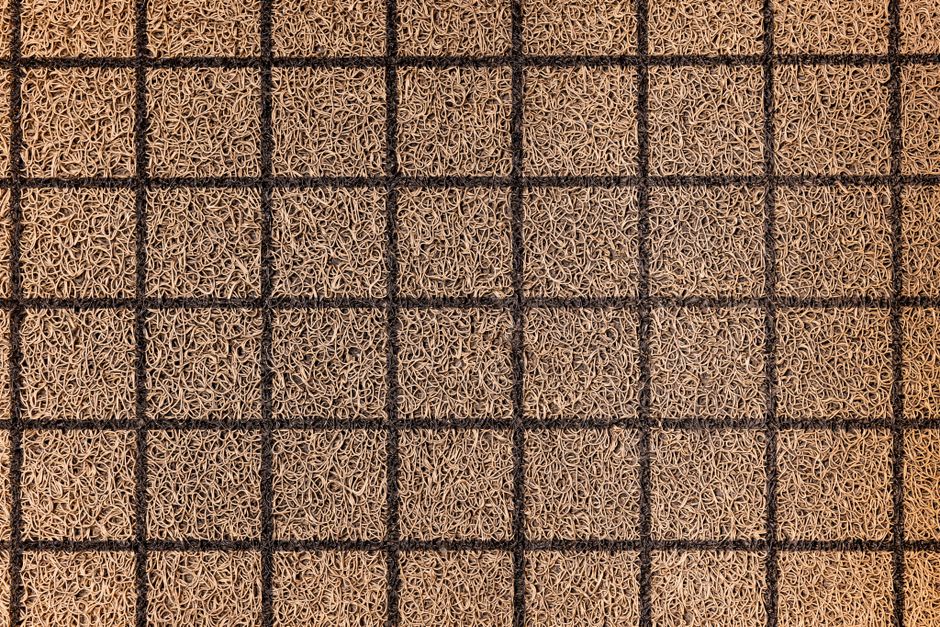
To protect your flooring assets and maintain OSHA walking-working surface safety standards, build your preventative maintenance program around these practical steps:
- Deploy Multi-Zone Entrance Systems: Place coarse scraper mats outside entryways and moisture-trapping wiper mats inside to stop abrasive soil at the door, leveraging the proven role of floor matting in building maintenance.
- Establish Tiered Cleaning Schedules: Set clear daily routines (dust mopping, spill response), weekly tasks (machine scrubbing, high-speed buffing), and periodic restorative deep cleans (extracting, stripping, and resealing).
- Enforce Safety Protocols: Require visible, high-visibility wet-floor warning signs during all liquid cleaning operations, and leave signs up until surfaces are completely dry.
- Control Chemical Dilution: Use automated chemical dispensing systems to avoid overdosing cleaning concentrates, which leaves slippery, dirt-attracting residues on floor surfaces.
- Conduct Regular Supervisor Audits: Schedule frequent quality checks across high-traffic corridors, corners, and baseboards to catch soil buildup before it causes permanent finish damage.
Frequently Asked Questions About Commercial and Residential Floor Care
How often should high-traffic commercial floors undergo deep extraction?
High-traffic commercial spaces—such as retail lobbies, medical clinics, and school hallways—typically benefit from mechanical deep extraction or intensive auto-scrubbing every 1 to 3 months. In moderate-traffic corporate offices, deep cleaning every 6 months is usually sufficient, provided daily dust control and spot cleaning are consistently maintained.
What is the most effective way to prevent streaks and film on hard floor surfaces?
Streaking and hazy residue are almost always caused by using dirty mop water or applying too much chemical concentrate. To keep hard floors clear and streak-free:
- Use separate clean-water and dirty-water recovery systems.
- Stick to rinse-free, pH-neutral cleaning solutions mixed strictly to the manufacturer’s dilution ratios.
- Change microfiber mop pads frequently rather than spreading trapped grime across rooms.
- Buff dry with a clean microfiber pad if working on high-gloss or polished surfaces.
Can steam cleaners or standing water damage sealed hardwood and laminate?
Yes. Never use household steam mops or excessive standing water on hardwood, engineered wood, or laminate floors. High-pressure steam can force moisture past protective surface finishes and deep into tongue-and-groove seams. This trapped moisture causes wood fibers to swell, resulting in cupping, warping, peeling finishes, and adhesive delamination that usually voids the flooring manufacturer’s warranty.
Conclusion
A well-maintained floor protects your physical assets, keeps occupants safe, and makes a strong first impression on every visitor who steps through your doors. By combining preventative entrance matting, surface-appropriate chemical cleaners, modern dual-tank extraction equipment, and structured maintenance schedules, property managers can extend floor lifespan and control long-term replacement costs.
For facilities throughout Albuquerque, Rio Rancho, Corrales, and Los Ranchos, our team at Zia Building Maintenance delivers dependable, high-quality janitorial and specialized floor care services backed by over three decades of local experience. When routine cleaning is no longer enough to restore your commercial vinyl or hard surfaces, revive your floors the essential guide to stripping and waxing offers the perfect roadmap to restore that brilliant, protective shine. Contact us today to establish a customized floor care plan designed around your facility’s unique operational needs.