

Identifying Wood Types and Finishes Before Cleaning
To safely clean wood floors without causing damage, remove dry surface grit daily with an electrostatic microfiber dust mop, vacuum weekly using a soft felt brush attachment with beater bars turned off, and damp mop monthly using a lightly misted pH-neutral wood cleaner wiped strictly along the wood grain. Never use excess standing water, steam mops, or acidic solutions like vinegar.
Before applying any cleaning product to natural timber, you must understand the anatomical differences in your flooring. Solid hardwood consists of continuous planks milled from single pieces of timber, whereas engineered hardwood features a real wood veneer atop cross-layered structural plywood. Choosing the wrong cleaning formulation or over-saturating boards can cause permanent damage, especially if you ignore 6 Mistakes to Avoid When Choosing Hardwood Floors, Reno Experts Say. Because professional hardwood installation averages nearly $5,000, protecting that wear layer through proper identification is essential.
Modern wood flooring is generally categorized into three broad protective categories:
- Surface Finishes (Polyurethane, Polyacrylic, Moisture-Cure): Modern synthetic coatings that form a non-porous clear shield over the wood grain. They tolerate light moisture and require neutral, residue-free liquid cleaners.
- Penetrating Oil and Wax Finishes: Traditional finishes where natural oils penetrate deep into the wood fibers, topped with a protective paste or liquid wax. These surfaces cannot tolerate water and must be cleaned using solvent-based cleaners or buffing techniques.
- Factory UV-Cured Aluminum Oxide Finishes: Common on modern pre-finished solid and engineered planks, offering high abrasion resistance but requiring no-rinse, film-free cleaning agents to avoid persistent hazing.
Identifying Surface Finishes vs Penetrating Wax
To clean safely, you must determine whether your floor is protected by a modern surface barrier or a traditional wax finish. You can determine this by performing two simple tests in an out-of-the-way corner:
- The Smudge Test: Rub your bare finger firmly across the wood grain. If a dull smudge appears that can be buffed clear with a soft cloth, the floor has a paste or liquid wax finish. Modern polyurethane will not smudge.
- The Scratch and Solvent Test: As detailed in the NOFMA WOOD FLOOR CARE GUIDE, place a few drops of mineral spirits on a clean rag and gently rub an inconspicuous spot. If a slight yellowish or brownish wax residue transfers to the cloth, you are dealing with a penetrating wax finish. If nothing transfers and water beads cleanly on the board, you have a surface-sealed polyurethane finish.
Differences in Solid Hardwood, Engineered Wood, and Laminate
Maintaining solid timber differs significantly from managing engineered materials and synthetic laminates. While engineered hardwood offers superior dimensional stability in dry climates like our high-desert New Mexico environment, its sanding lifecycle depends on wear-layer depth (typically 3mm to 4mm for a single refinish, or 4.5mm+ for multiple refinishes).
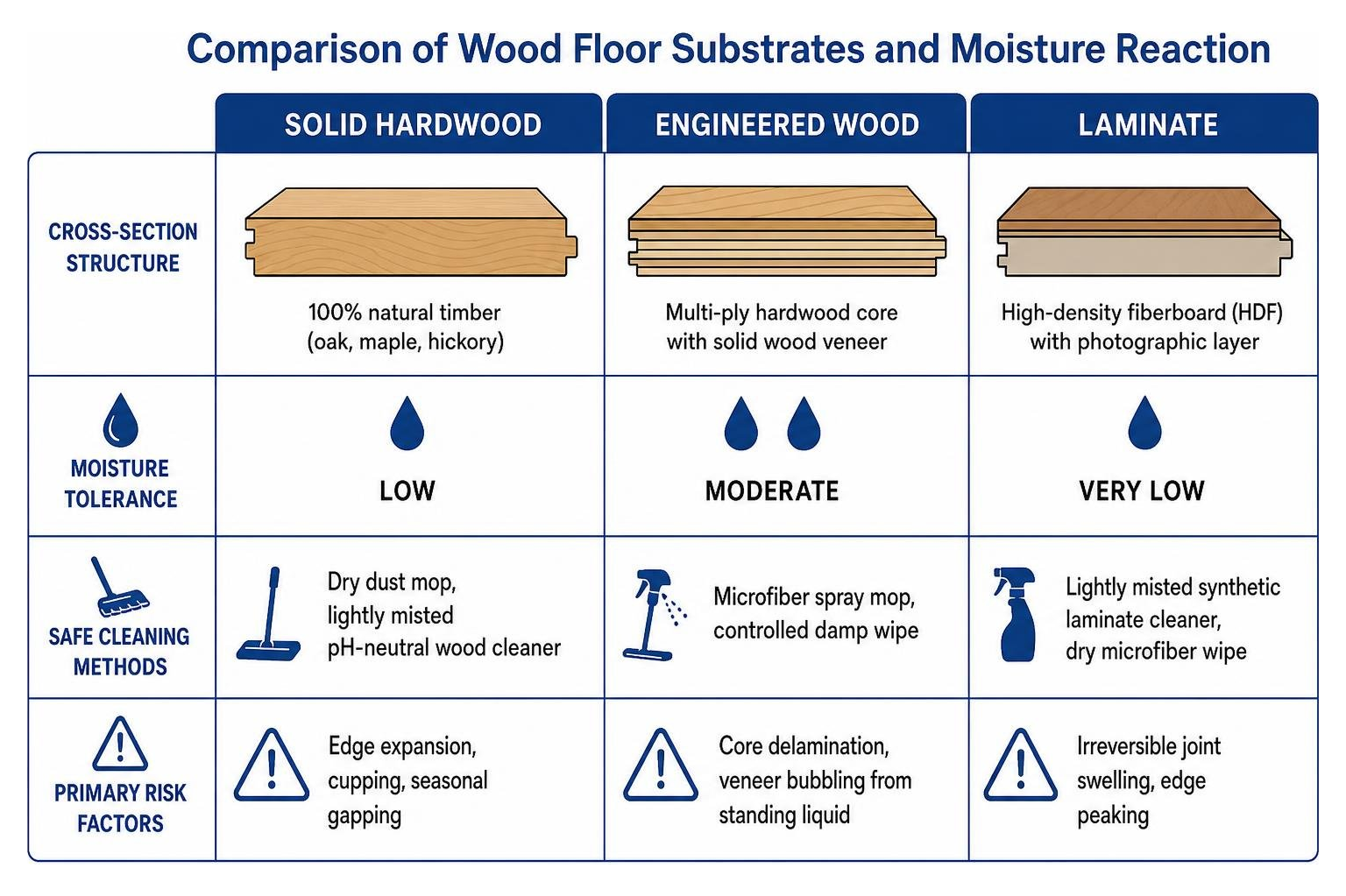
| Flooring Type | Core Composition | Moisture Tolerance | Safe Cleaning Methods | Primary Risk Factors |
|---|---|---|---|---|
| Solid Hardwood | 100% natural timber (oak, maple, hickory) | Low | Dry dust mop, lightly misted pH-neutral wood cleaner | Edge expansion, cupping, seasonal gapping |
| Engineered Wood | Multi-ply hardwood core with solid wood veneer | Moderate | Microfiber spray mop, controlled damp wipe | Core delamination, veneer bubbling from standing liquid |
| Laminate | High-density fiberboard (HDF) with photographic layer | Very Low | Lightly misted synthetic laminate cleaner, dry microfiber wipe | Irreversible joint swelling, edge peaking |
Complete Guide to Floor Cleaning Wood Surfaces Without Damage
Achieving pristine floors without damaging finishes requires strict moisture management and balanced cleaning chemistry. Understanding What’s the Best Way to Clean My Floor? starts with eliminating high-moisture mops. Water is the primary enemy of timber; standing water seeps through micro-gaps between planks, saturating the core and leading to warped boards.
wp:html
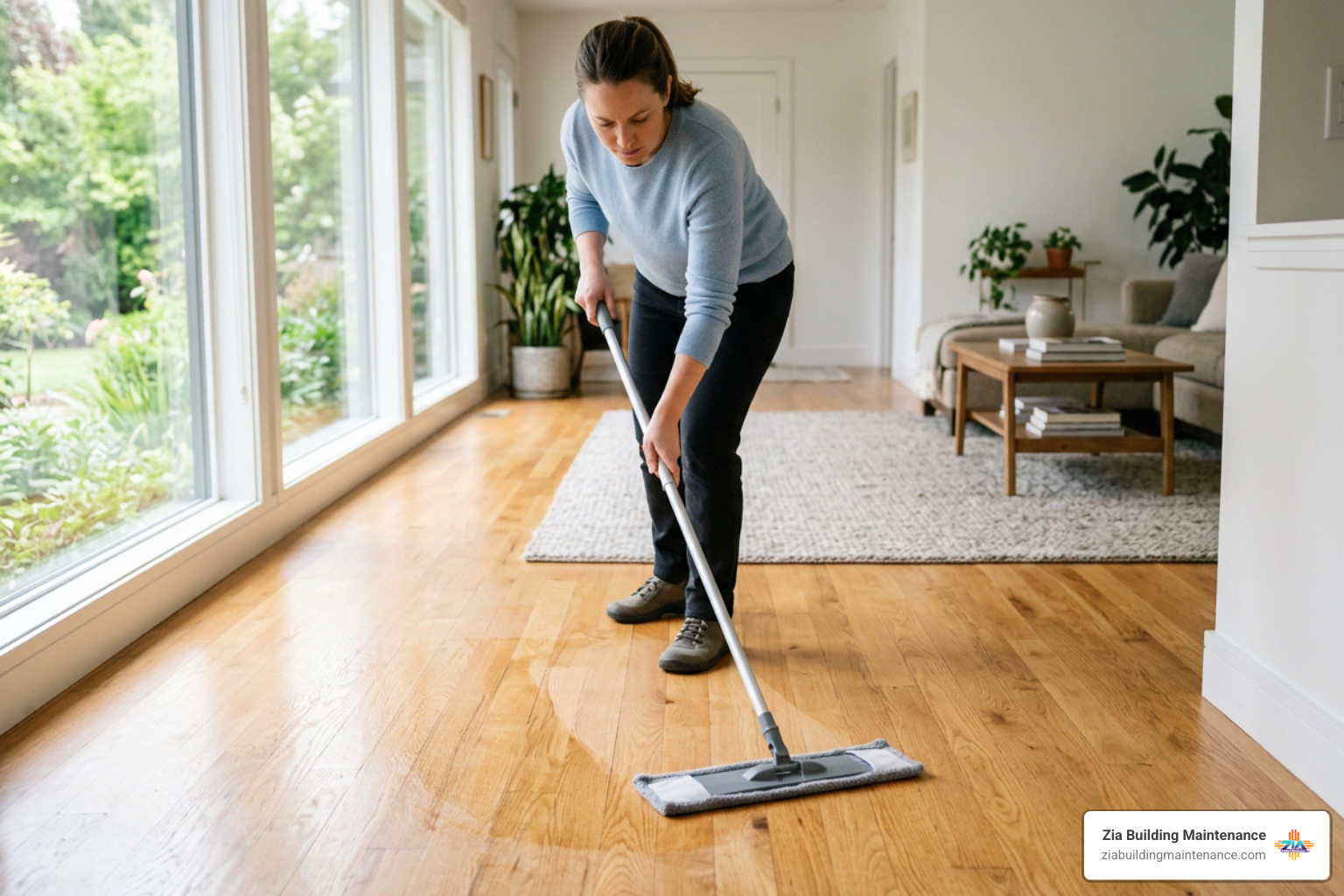
For routine deep cleaning, employ an overlapping “S-pattern” across 3-foot by 4-foot sections. Always glide your microfiber flat mop parallel to the direction of the wood grain. This sweeping motion lifts loosened particulate from microscopic grain crevices rather than pushing grit across boards.
Essential Equipment for Floor Cleaning Wood and Engineered Planks
Equipping your maintenance kit with the proper tools prevents accidental scratches:
- Microfiber Dust Mops: Electrostatic fibers capture fine sand, pet hair, and airborne particulate without needing aerosol dust attractants.
- Soft-Floor Attachment Vacuums: Canister or upright vacuums with rubberized wheels and dedicated felt or horsehair brush attachments (disengage rotating beater bars completely).
- Controlled Spray Mops: Integrated spray dispensers distribute a measured, atomized mist directly onto the floor, eliminating liquid puddling.
- Automated Robot Mops: When using robotic appliances, ensure you run approved, low-foaming formulas such as Bona Wood Floor Cleaner for Mopping Robots 2.5L. With 1 litre of concentrated robot cleaner diluted at a 1:20 ratio, you can maintain between 1,000 and 5,000 m² of flooring safely.
Selecting Safe Commercial and Everyday Wood Cleaning Solutions
Avoid generic all-purpose cleaners, dish soaps, and DIY vinegar mixtures. Acetic acid in white vinegar chemically etches protective polyurethane, degrading the finish over time. Instead, select professional pH-neutral solutions formulated to evaporate cleanly without leaving soap scum.
Top industry formulations evaluated in The Best Way to Clean Hardwood Floors: Tested & Reviewed include:
- Hardwood Floor Cleaner | Minwax® – A pre-diluted, no-rinse solution engineered for polyurethane-finished and laminated wood that leaves no residue.
- Zep Home Pro Hardwood Floor Cleaner – Dries Quick & Leaves No Residue – Zep Inc. – A professional, quick-drying formulation safe for varnished, acrylic, and polyurethane-treated architectural wood and baseboards.
Step-by-Step Hardwood Floor Care and Stain Remediation
Establishing a structured cleaning routine prevents abrasive grit from acting like sandpaper on your floor’s clear coat. When businesses or homeowners face neglected spaces, discovering Everything You Need to Know About Floor Cleaning Service helps establish a reliable balance between daily care and scheduled deep restoration.

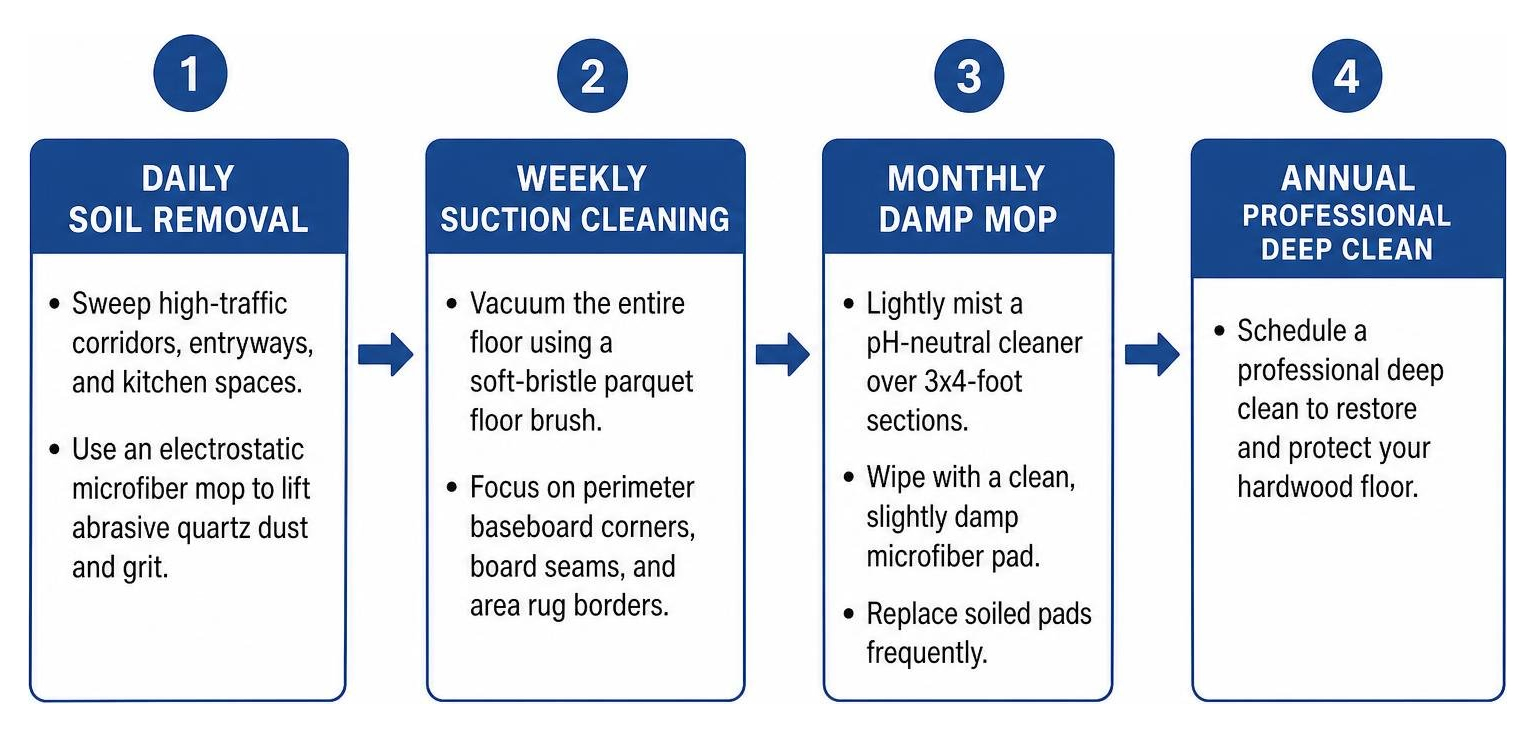
Daily and Weekly Floor Cleaning Wood Maintenance Routines
- Daily Soil Removal: Sweep high-traffic corridors, entryways, and kitchen spaces with an electrostatic microfiber mop to lift abrasive quartz dust and grit.
- Weekly Suction Cleaning: Vacuum the entire floor using a soft-bristle parquet floor brush, focusing on perimeter baseboard corners, board seams, and area rug borders.
- Monthly Controlled Damp Mop: Lightly mist a pH-neutral cleaner over manageable 3×4-foot sections. Wipe with a clean, slightly damp microfiber pad, replacing soiled pads frequently to avoid redepositing grime.
Removing Scuffs, Pet Stains, and Embedded Grime
Accidents and wear marks require targeted remediation techniques:
- Black Heel Scuffs: Apply a nickel-sized drop of pH-neutral wood cleaner directly to a dry microfiber cloth and buff the scuff along the grain. For stubborn rubber transfers on waxed floors, a light rub with mineral spirits will lift the mark without abrading the timber.
- Candle Wax and Chewing Gum: Place an ice cube inside a sealed plastic bag over the deposit for 5 to 10 minutes until brittle. Gently pop the hardened mass off using the edge of a plastic putty knife, then wipe the area with a damp microfiber cloth.
- Dark Water Spots and Pet Urine: On penetrating wax finishes, dark spots indicate mineral oxidation within wood fibers. Lightly sand the isolated spot along the grain with 100 to 120-grit sandpaper, treat with an oxalic acid solution (1 ounce oxalic acid crystals mixed into 1 quart warm water) to lift the dark stain, allow to dry completely, and blend with matching touch-up stain and paste wax.
Professional Hardwood Restoration vs. DIY Maintenance
While residential spray mops manage everyday surface dust, they cannot extract deeply embedded soils, skin cells, and allergens compacted into board seams over months of foot traffic.
Professional cleaning systems utilize specialized commercial auto-scrubbers equipped with counter-rotating cylindrical brushes. These soft-bristle machines inject a precise, pH-balanced cleaning solution into the grain while high-velocity vacuum squeegees immediately extract 99% of the liquid within milliseconds. This process prevents moisture intrusion into the subfloor while extracting deeply settled contaminants. In fact, professional hardwood cleaning removes an average of 96% of common household allergens, providing clean indoor environments that DIY mopping cannot match.
To protect this deep clean, consider the Role of Floor Matting in Building Maintenance. Strategic walk-off mats capture coarse debris at commercial entryways before it can scratch your timber surfaces.
Frequently Asked Questions About Wood Floor Cleaning
Can you use steam cleaners or wet string mops on hardwood?
No. Steam cleaners force pressurized, superheated moisture deep into wood seams, micro-fissures, and clear coats. This can cause thermal shock, finish hazing, edge swelling, and board cupping, which typically voids manufacturer warranties. Similarly, traditional string mops deposit standing water on the floor, risking structural damage.
How often should wood floors be deep cleaned versus swept?
High-traffic wood floors should be dust-mopped daily and vacuumed weekly. Routine damp cleaning with a pH-neutral cleaner should occur bi-weekly to monthly depending on foot traffic, while professional mechanical extraction should be performed every 6 to 12 months.
How do you prevent scratches and dulling after cleaning?
Affix heavy-duty felt protection pads to all furniture legs, replace hard plastic chair casters with non-marking grey rubber wheels, and never drag heavy items across the floor. Placing walk-off entry mats inside and outside exterior doorways is essential; see Why Floor Mats Are a Necessity for Keeping the Office Clean to learn how proper mats capture grit before it abrades floor finishes.
Conclusion
Preserving the character and durability of your wood floors requires using the right cleaning chemistry, proper tools, and strict moisture control. By avoiding harsh acidic chemicals, keeping saturated wet mops off your boards, and maintaining a steady dust-removal schedule, you can protect your wood flooring investment for decades.
When everyday traffic causes built-up soil, embedded allergens, or dulling films, our team at Zia Building Maintenance is ready to help. As a family-owned Albuquerque company serving New Mexico since 1989, we deliver dependable janitorial care with meticulous attention to detail.
Ready to restore the natural luster of your facility’s floors? Reach out to revitalize your hardwood and commercial floors with professional floor care today.