

Key Engineering Differences and Types of High Rise Window Systems
When you look at a commercial skyline, the glass appears seamlessly uniform. Beneath that sleek surface, however, high-rise window engineering relies on complex structural physics. Unlike a standard house window that sits passively inside a small framed opening, a high rise window system acts as an integral component of the building’s structural envelope.
Standard residential windows rely on basic gravity loads and simple perimeter caulking. In contrast, multi-story glass systems must endure continuous wind loads, structural deflections, floor-to-floor live-load movements, and intense thermal expansion. If a residential frame shifts slightly, a door might stick. If a high-rise glazing frame shifts improperly, an entire insulated glass unit can shatter or lose its airtight perimeter seal.
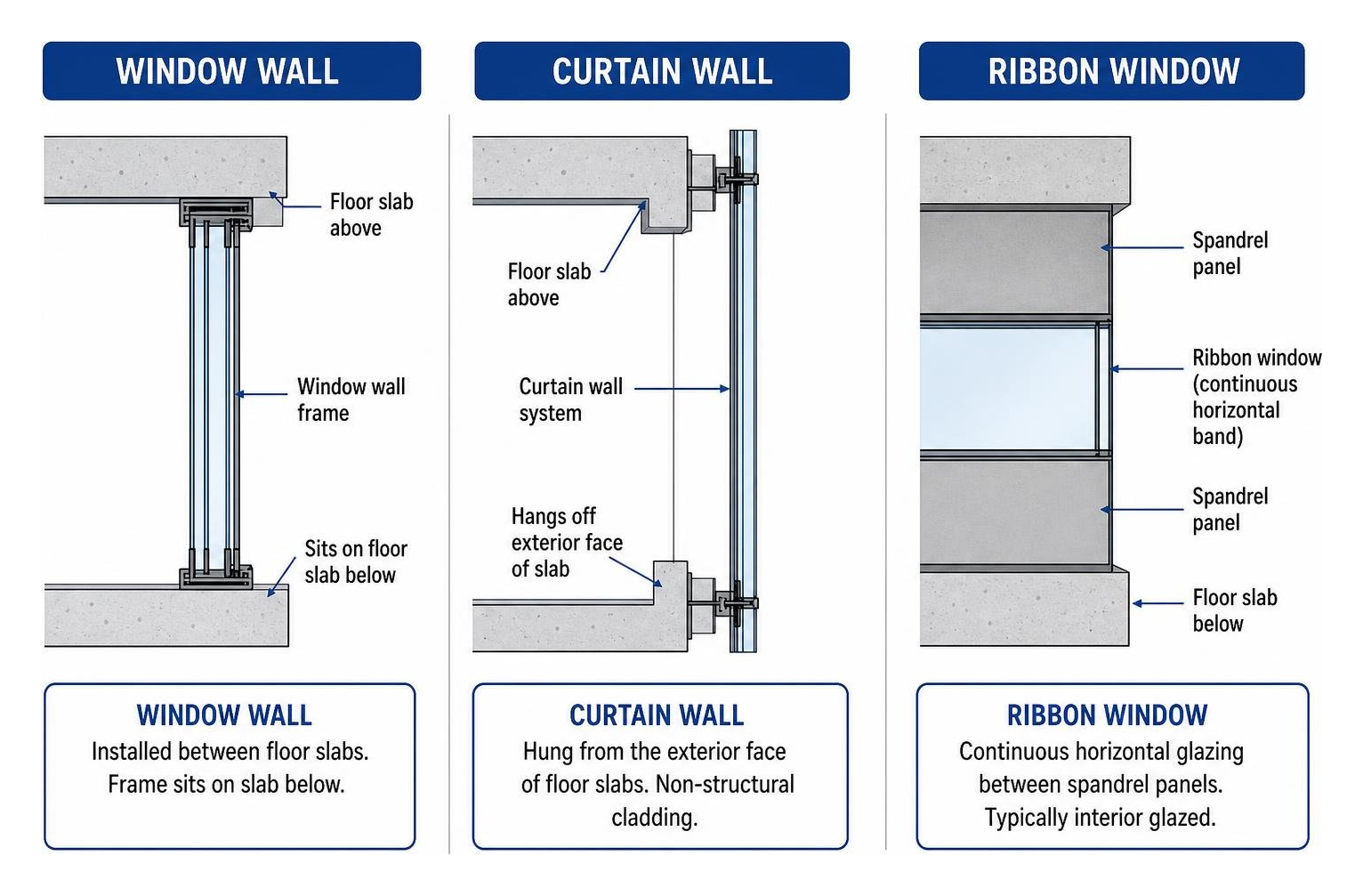
To manage these forces, architects and structural engineers specify three primary commercial framing systems:
- Window Wall Systems: These systems are installed directly between structural concrete floor slabs. The weight of the window rests on the floor slab below, making them exceptionally popular for multi-family residential high-rises and hotels. By placing frame joints within the slab edges, window walls naturally prevent acoustic transfer between floors while streamlining project schedules.
- Curtain Wall Cladding: Unlike window walls, curtain walls are non-structural cladding systems hung from the exterior face of the building’s floor slabs. The entire glass grid hangs like a curtain on the exterior, carrying no dead load weight from the building itself. Curtain walls deliver a continuous, uninterrupted all-glass aesthetic across expansive building facades, but they require specialized exterior crane access and swing stage installation.
- Ribbon Window Configurations: Ribbon windows are long horizontal bands of continuous glazing set between structural spandrel panels. As highlighted in standard specifications for Window Wall and Ribbon Window Systems – Kawneer, interior-glazed ribbon configurations allow maintenance crews and technicians to service panels safely from inside the floor plate, dramatically reducing long-term upkeep expenses.
When air seals within these complex frameworks degrade over time, cold air rapidly penetrates the perimeter, creating severe indoor comfort issues during cold months. You can read more about how seal degradation creates cold interior drafts in our guide on Draft-y Windows Winter.
Minimal-Sightline and Frameless High Rise Window Options
Modern architecture leans heavily toward maximizing daylight and offering sweeping, unobstructed views. Achieving expansive views at extreme elevations requires specialized engineering to balance delicate visual sightlines with immense structural strength.
Minimal-sightline systems—such as ClearView minimal windows or the minimal windows® highline | Keller minimal windows system—rely on hidden frame depths rather than wide frontal face profiles to manage structural loads. Think of the aluminum extrusion like an architectural I-beam: by extending the depth of the frame deep into the wall pocket, manufacturer engineers can reduce the visible static post center facing width down to a ultra-slim 22 mm without sacrificing lateral stiffness.
These continuous, minimal-sightline systems feature impressive technical capabilities:
- Massive Panel Dimensions: Fixed glass panels can reach up to 18 m² of uninterrupted surface area, while sliding leaves can span up to 8.5 m² (or up to 12 m² depending on regional engineering approvals). Individual sliding leaves can comfortably weigh up to 1,000 kg while remaining whisper-quiet during operation.
- Structural Silicone Glazing (SSG): By using high-strength structural silicone instead of bulky exterior mechanical pressure plates, SSG systems bond the glass directly to the internal aluminum framing. This creates a smooth exterior glass surface that sheds rainwater instantly and eliminates exposed frame edges where dirt collects.
Structural Integrity Under Wind Load, Rain, and Thermal Stress
As building height increases, atmospheric pressure changes dramatically. Buildings extending above 30 floors experience severe lateral wind pressure that generates immense positive loads on the windward side and strong negative suction on the leeward side.
Without a robust, elastomeric air seal, this wind pressure acts as an engine that forces rainwater past the outer gaskets. Modern high-rise window designs mitigate this through sophisticated water-diverting pressure equalization chambers built directly inside the mullions, paired with thermal break technology. Polyamide thermal breaks separate the interior and exterior aluminum profiles, stopping heat from transferring directly through the conductive frame.
Advanced systems, like the MetroView® 4-SSG Window Wall – Kawneer Window Wall Solutions, achieve overall frame U-factors between 0.20 and 0.35, while triple-glazed minimal systems reach extraordinary thermal transmission coefficients down to Uw ≥ 0.70 W/m²K. These thermal barriers prevent internal frame sweating, protect interior drywall from water damage, and ensure the building envelope meets strict modern energy codes.
For property managers looking to preserve their building envelope, keeping these exterior glass surfaces clean and clear of corrosive contaminants is vital. Explore our comprehensive services for professional window washing to keep your property looking pristine.
Common Aging Window Failures and Why Patented Air Seals Solve Them
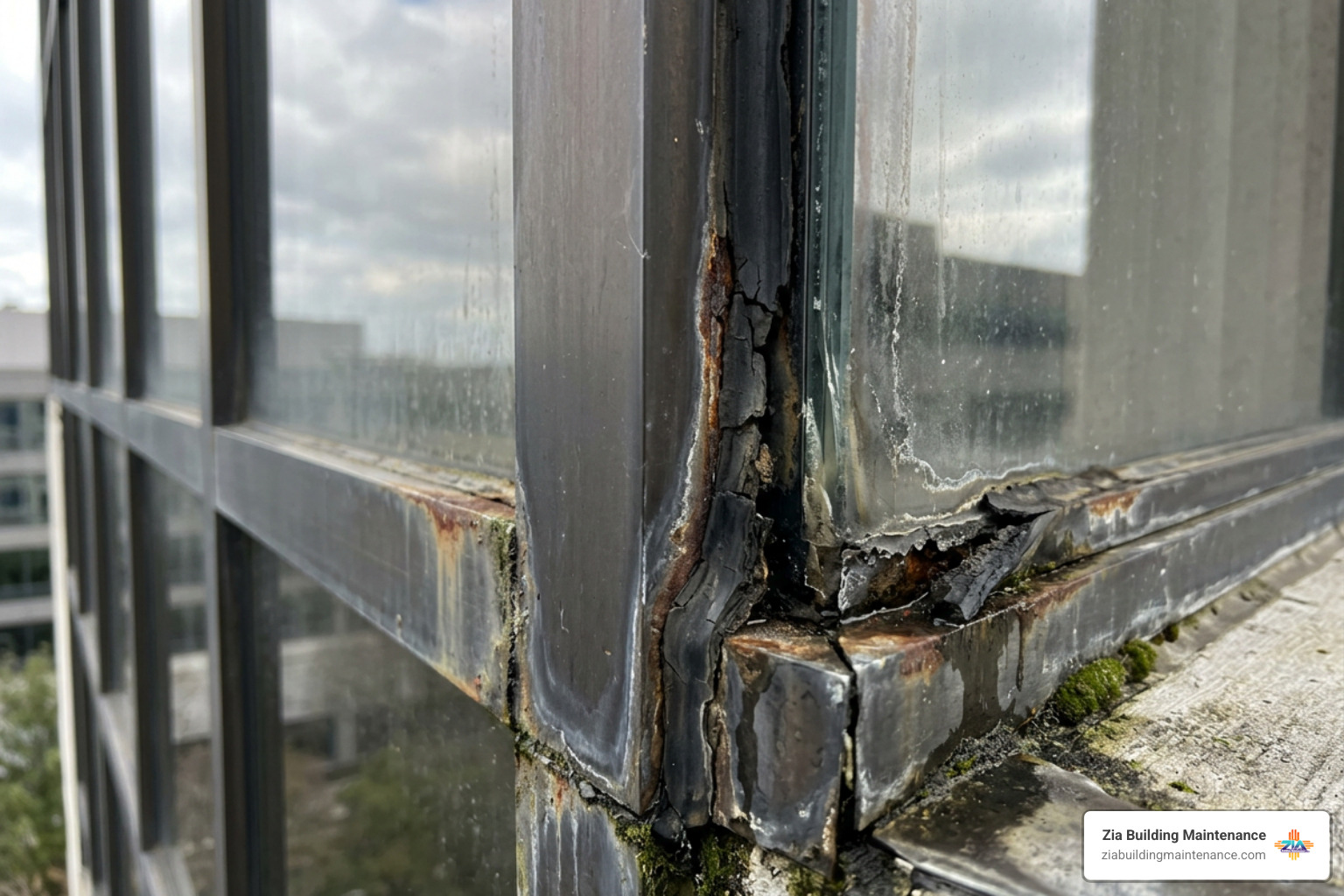
If your commercial building was constructed a few decades ago, your high-rise window seals are likely reaching the end of their operational lifespan. Over years of exposure to solar radiation, environmental pollutants, and daily thermal expansion and contraction cycles, factory rubber gaskets turn brittle and shrink.
When a high rise window air seal fails, several costly problems emerge:
- Persistent Water Intrusion: Microscopic gaps in the perimeter seals allow wind-driven rain to enter internal wall cavities, causing unseen structural corrosion and interior drywall damage.
- Thermal Infiltration & Drafts: Unsealed perimeters allow conditioned indoor air to blow out while unconditioned outdoor air leaks in, forcing building mechanical systems to work overtime.
- Seal Fogging and Condensation: Broken insulated glass unit (IGU) seals allow moisture to enter the cavity between panes, leaving permanent white calcium stains inside the glass unit.
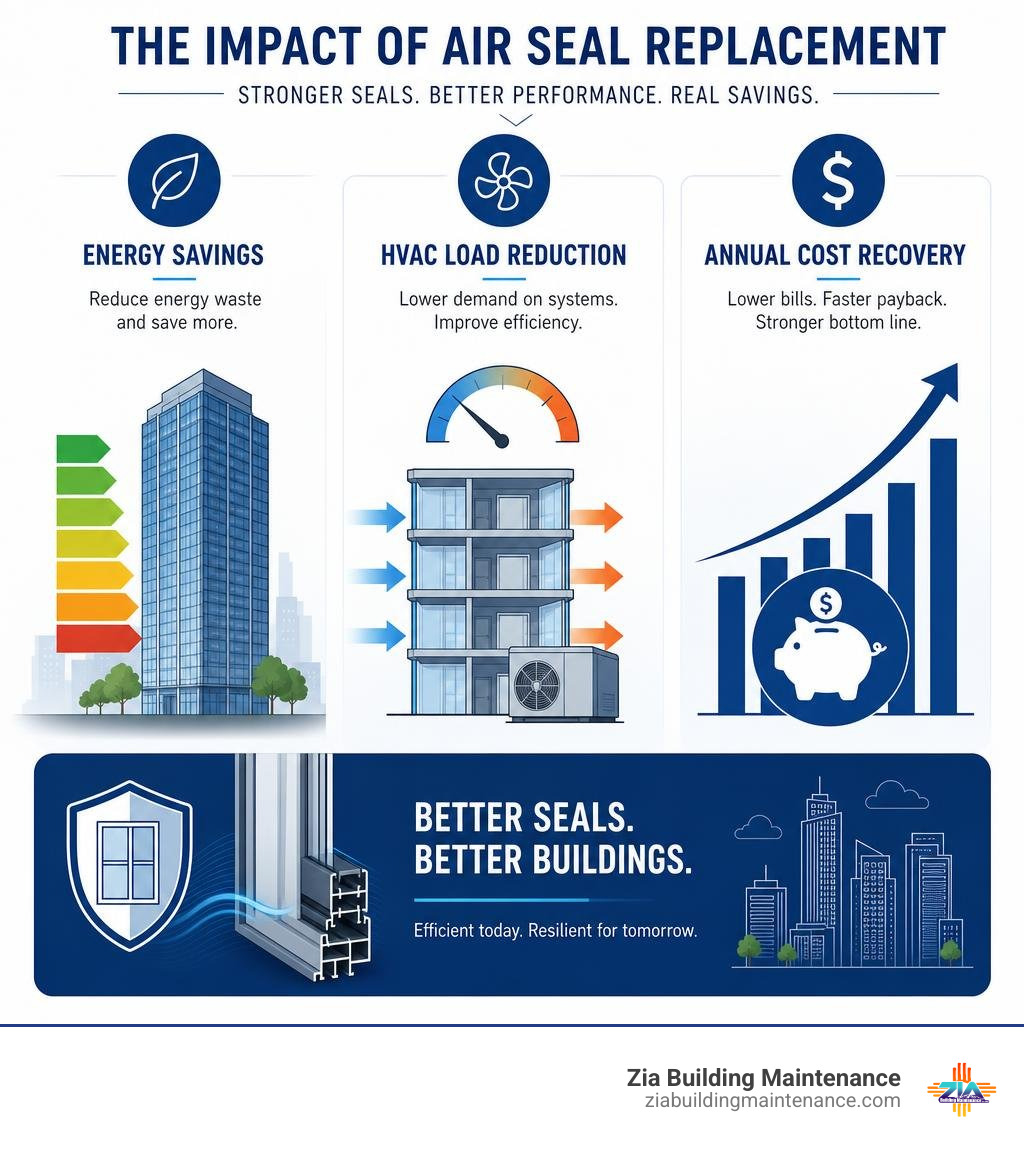
Upgrading compromised windows or retrofitting modern patented air seals delivers immediate financial paybacks. According to research on High‑Rise Window Replacement | San Francisco & Oakland | AFR Windows, installing high-performance window systems can reduce overall building HVAC loads and energy costs by 15% to 30%. In fact, replacing old single-pane windows can generate direct annual energy savings between $101 and $583 per replaced window unit.
Need expert help evaluating your facility’s exterior window seals? Contact our expert team at Zia Building Maintenance today to schedule a comprehensive building envelope inspection.
High Rise Window Air Seal Degradation and Acoustic Insulation
A compromised air seal does more than let in cold drafts—it breaks your building’s sound barrier. Air leaks act as direct pathways for sound waves, allowing street-level traffic, low-frequency construction hums, and elevated wind noise to flood interior spaces.
Patented multi-point compression air seals solve this by maintaining continuous pressure along the entire frame perimeter, closing the micro-gaps that allow sound infiltration. High-performance high-rise systems incorporating multi-layer acoustic lamination achieve Sound Transmission Class (STC) ratings up to 40, delivering sound insulation equivalent to a 35 to 45 dB noise drop. This acoustic attenuation keeps high-rise offices and luxury residential units quiet, productive, and comfortable.
Logistical and Code Compliance Challenges for Glass Replacement
Executing a window retrofitting or glass replacement project on an occupied multi-story building requires careful planning. You cannot simply pull up with a pickup truck and unbolt a window frame on the 20th floor.
Key logistical factors include:
- Crane Access & Public Sidewalk Protection: Setting up mobile cranes demands street-closure permits, pedestrian sidewalk canopies, and strict swing-radius safety zones.
- Swing Stage Staging: External rigging requires dedicated roof anchor points, counterweight rigs, and drop zones to safely maneuver heavy glass panels along the building facade.
- Phased Interior Execution: Contractors must work floor-by-floor or stack-by-stack inside active tenant spaces, using dust containment barriers to minimize disruption to daily business operations.
- Code Compliance & Structural Assessment: Modern glass replacements must strictly comply with local building energy standards, ASTM structural deflection guidelines, and wind load codes. Professional structural engineering assessments are mandatory to confirm that existing concrete floor edges can safely support modern, heavy glass panels.
Safety Standards, RDS Equipment, and Exterior Maintenance Protocols
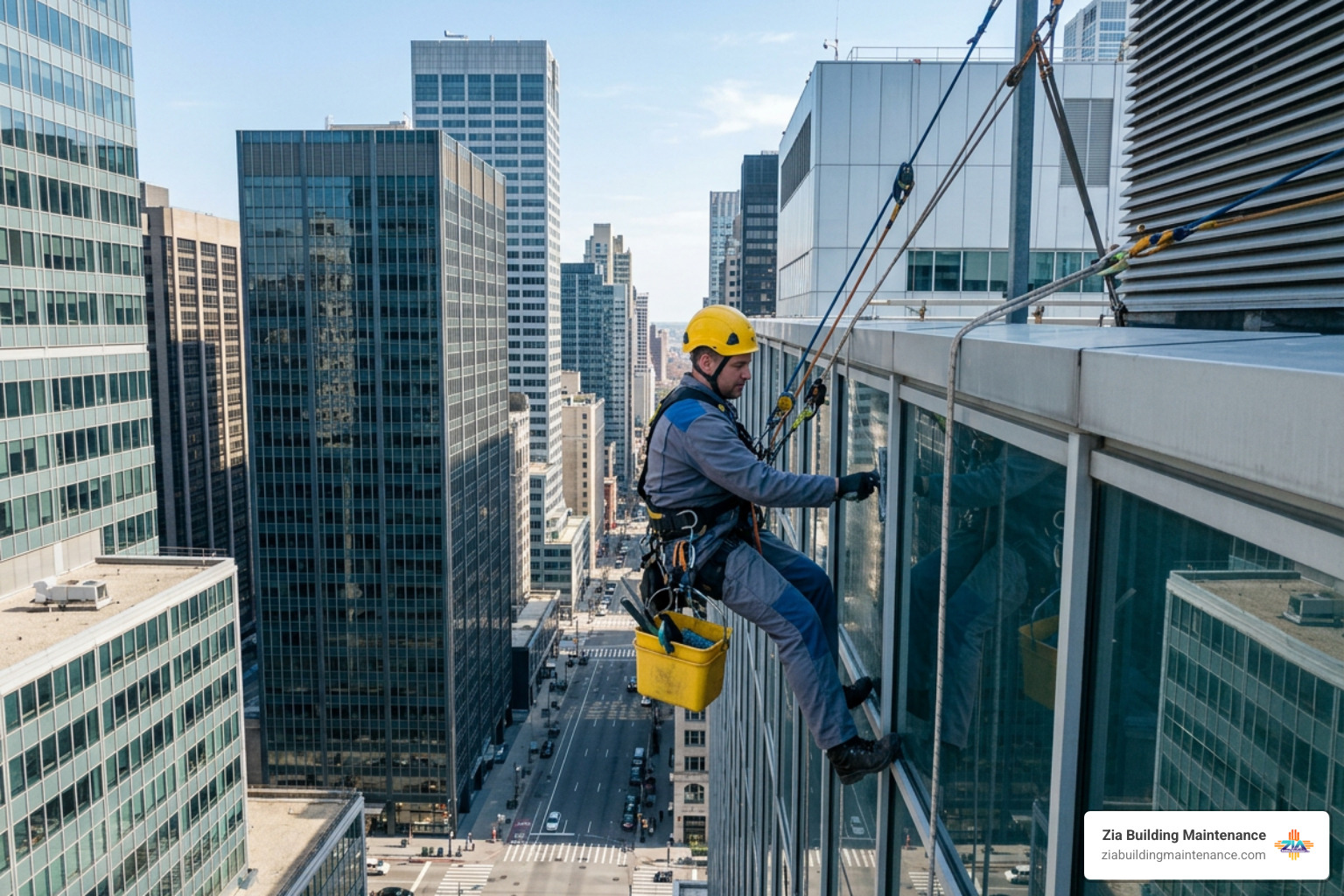
Maintaining elevated commercial glass demands strict adherence to rigorous safety standards. Working hundreds of feet in the air leaves zero margin for error. Exterior glass inspection and maintenance relies on specialized equipment and rigorous technical training.
To comply with federal OSHA regulations, building owners and window maintenance contractors must maintain clear documentation for structural roof anchor points and equipment certifications.
| Safety Factor | Standard Mandate | Operational Purpose |
|---|---|---|
| Roof Anchors | OSHA 1910.27 / ANSI I-14.1 | Independent structural anchors rated to 5,000 lbs per technician drop |
| Technician Training | SPRAT / IWCA RDS Certification | Rigorous hands-on training for controlled descents, self-rescue, and rigging safety |
| Suspension Gear | Two-Point & Four-Point Chairs | Ergonomic, padded high-rise chairs with side tool clips that prevent technician fatigue |
While Society of Professional Rope Access Technicians (SPRAT) certification provides extensive training for complex industrial rope access, standard high-rise window maintenance typically utilizes certified Rope Descent Systems (RDS) under International Window Cleaning Association (IWCA) guidelines. Technicians utilize two-point or four-point suspension chairs equipped with back support and integrated tool lanyards to prevent equipment drops.
For a deeper look into elevated maintenance safety protocols, review our detailed article on Don’t Look Down: A Comprehensive Guide to Skyscraper Window Cleaning.
Best Practices for Exterior High Rise Window Cleaning and Care
Keeping high-rise glass clean isn’t just about preserving mountain views—it’s essential for preventing permanent glass etching and structural material degradation. Environmental pollutants, mineral-laden dust, and acidic rainwater chemically react with exposed glass surfaces over time, causing hard water spotting and seal corrosion.
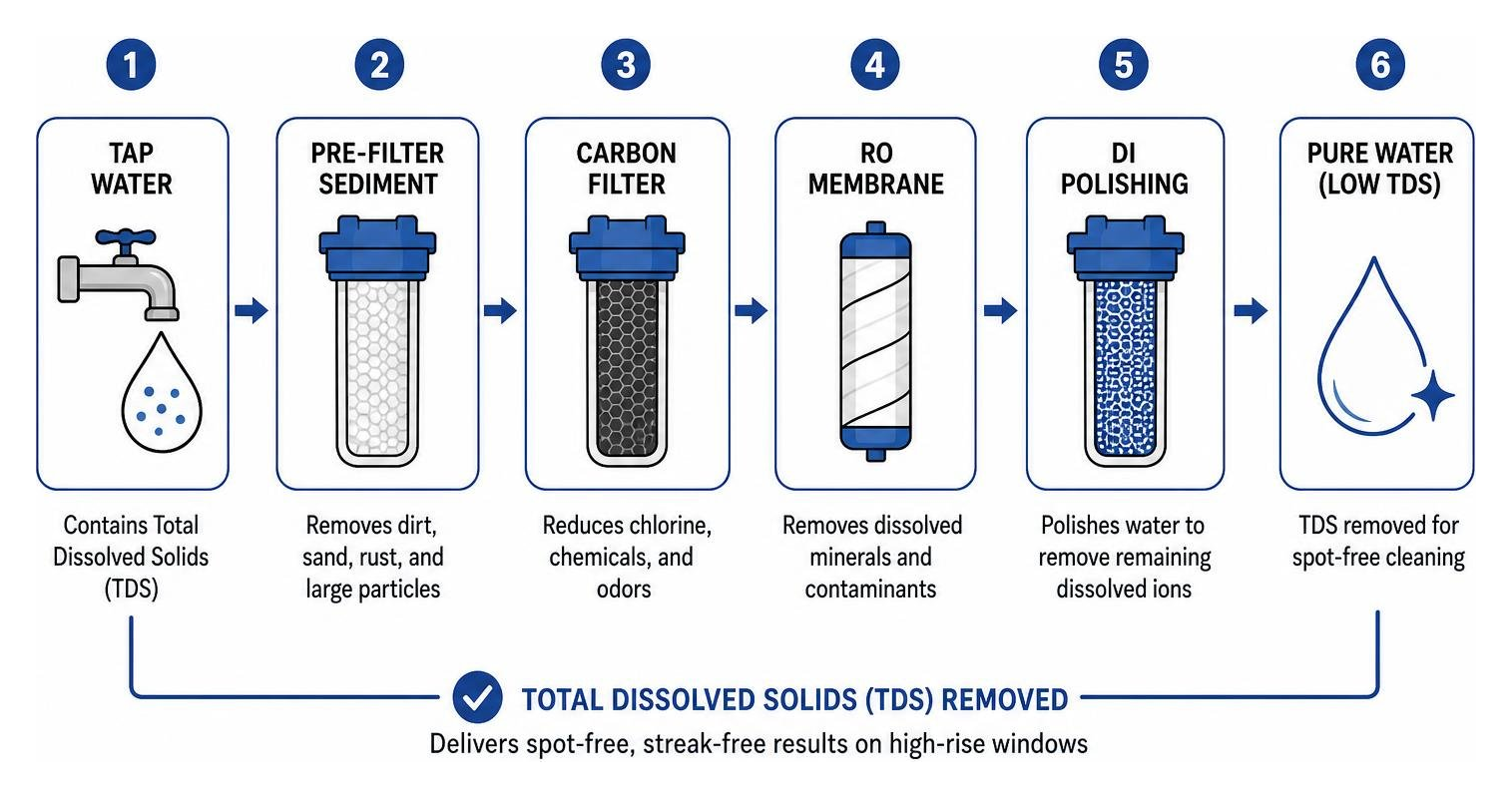
Industry-standard care practices include:
- Pure Water Technology: Using deionized pure water filtration systems with Total Dissolved Solids (TDS) levels under 100 guarantees spot-free drying without leaving sticky chemical residues behind. Learn more about advanced water purification methods in our guide on water fed window cleaning.
- Routine Sealant and Joint Inspections: Technicians should systematically inspect exterior perimeter caulking and structural silicone joints during every cleaning cycle to spot cracking, shrinking, or seal separation early.
- Hot Water Power Washing: Removing stubborn urban pollution buildup and carbon deposits from non-glass spandrel panels requires controlled hot water pressure washing to protect delicate surface finishes. Check out our technical guide on A Professional Guide to Commercial Window Cleaning and Hard Water Stain Removal for details on restoring damaged exterior glass surfaces.
- Routine Facade Maintenance: Implementing a scheduled cleaning plan protects delicate framing materials and prevents atmospheric grime from breaking down protective powder coatings. For step-by-step cleaning protocols, visit our guide on facade glass cleaning.
wp:html
/wp:html
wp:html
/wp:html
Ready to establish a reliable maintenance schedule for your commercial building? Partner with Zia Building Maintenance today for dependable, professional exterior building maintenance services.
Frequently Asked Questions about High-Rise Window Performance
What makes high-rise window systems different from standard residential windows?
High-rise window systems are engineered to withstand severe lateral wind loads, structural building deflections, floor-to-floor live-load movements, and high thermal stress. Unlike residential windows that sit simply inside framed wall openings, high-rise glazing uses heavy structural aluminum framing, specialized structural silicone glazing (SSG), and pressure-equalized drainage systems to handle high-elevation environments safely.
How do patented air seals help reduce energy bills and urban noise in high-rises?
Patented air seals maintain continuous multi-point compression along the frame perimeter, eliminating the microscopic gaps where conditioned air leaks out and sound waves enter. Closing these gaps reduces overall facility HVAC energy costs by 15% to 30% while delivering noise reduction up to 35–45 dB for a quiet interior environment.
What safety certifications are required to clean and inspect high-rise windows?
High-rise exterior window maintenance requires strict compliance with federal OSHA standards (such as OSHA 1910.27 and 1910.140). Maintenance crews must use certified Rope Descent Systems (RDS) and hold credentials from recognized industry organizations like SPRAT (Society of Professional Rope Access Technicians) or IWCA (International Window Cleaning Association). All roof anchorage points must undergo certified annual inspections and five-year load testing.
Elevate Your Building’s Performance and Value
Your building’s glass envelope is its first line of defense against the elements. Upgrading compromised perimeters with modern patented air seals or advanced unitized glass systems protects your structural assets, slashes monthly utility expenses, and maintains a quiet, attractive environment for tenants.
At Zia Building Maintenance, we’ve delivered top-tier commercial janitorial and window maintenance services across Albuquerque, Rio Rancho, Corrales, and Los Ranchos since 1989. As a trusted, family-owned business, our focus on dependability and attention to detail ensures your property remains clean, clear, and fully compliant with all safety standards.
Don’t wait for minor air leaks to turn into costly structural water damage. Reach out to Zia Building Maintenance today to learn how our experienced team can enhance your property’s value and keep your commercial facade looking its best.