

Why Hard Water Stains Are a Serious Problem for Commercial Windows
Commercial window cleaning hard water stain removal is one of the most stubborn maintenance challenges facing Albuquerque business owners and facility managers today.
Here’s a quick answer if you need it now:
How to remove hard water stains from commercial windows:
- Identify the severity — surface deposits (Stage 1) vs. etched minerals (Stage 2)
- Start mild — apply a commercial glass-safe descaling solution with proper dwell time
- Agitate carefully — use a non-abrasive pad or #0000 steel wool with lubrication
- Rinse with purified water — deionized or reverse osmosis water prevents new deposits
- Repeat or escalate — heavy or etched stains may require professional-grade acids or mechanical polishing
- Prevent recurrence — redirect sprinklers, apply hydrophobic coatings, and schedule regular professional cleaning
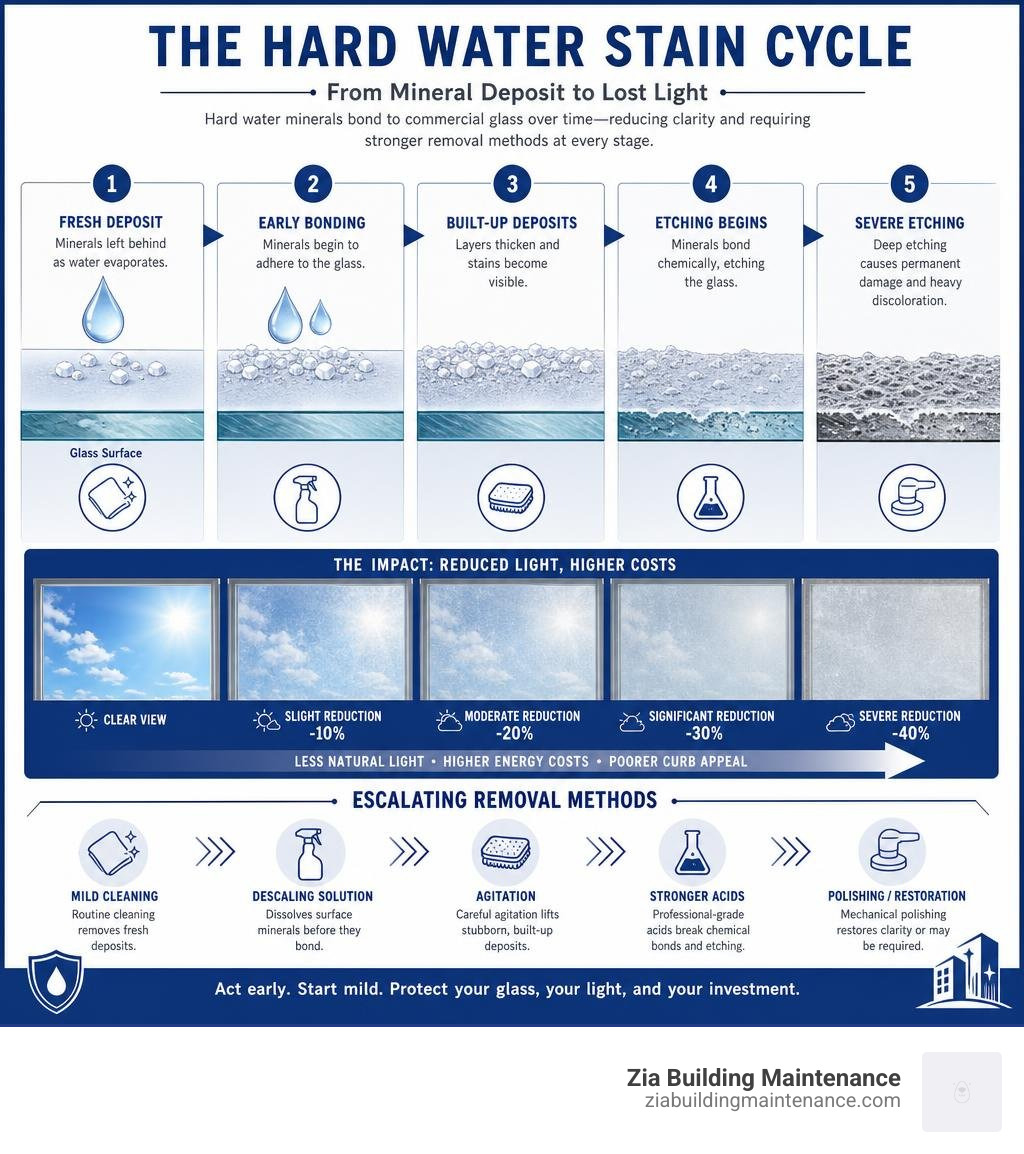
Those cloudy, white patches on your storefront glass are not just dirt. When water evaporates on glass, it leaves behind dissolved minerals — primarily calcium and magnesium. Over time, those minerals bond chemically to the glass surface, making them impossible to remove with standard window cleaning alone.
The problem compounds quickly. Stains that could have been handled with a mild acid solution in week one may require professional mechanical polishing by month six — or glass replacement entirely.
And the stakes are real. Hard water stained windows can reduce the natural light entering your facility by up to 40%, which affects energy costs, employee comfort, and how your building looks to every client who walks through the door.
I’m Ashley Cordova, Vice President of Zia Building Maintenance, a family-owned commercial cleaning company serving New Mexico since 1989 — and commercial window cleaning and hard water stain removal is one of the most common issues our clients ask us about. In this guide, I’ll walk you through everything you need to know to protect your glass, restore clarity, and keep stains from coming back.
Commercial window cleaning hard water stain removal terms you need:
The Science of Commercial Window Cleaning Hard Water Stain Removal
To understand why these spots are so incredibly stubborn, we have to look at glass on a microscopic level.
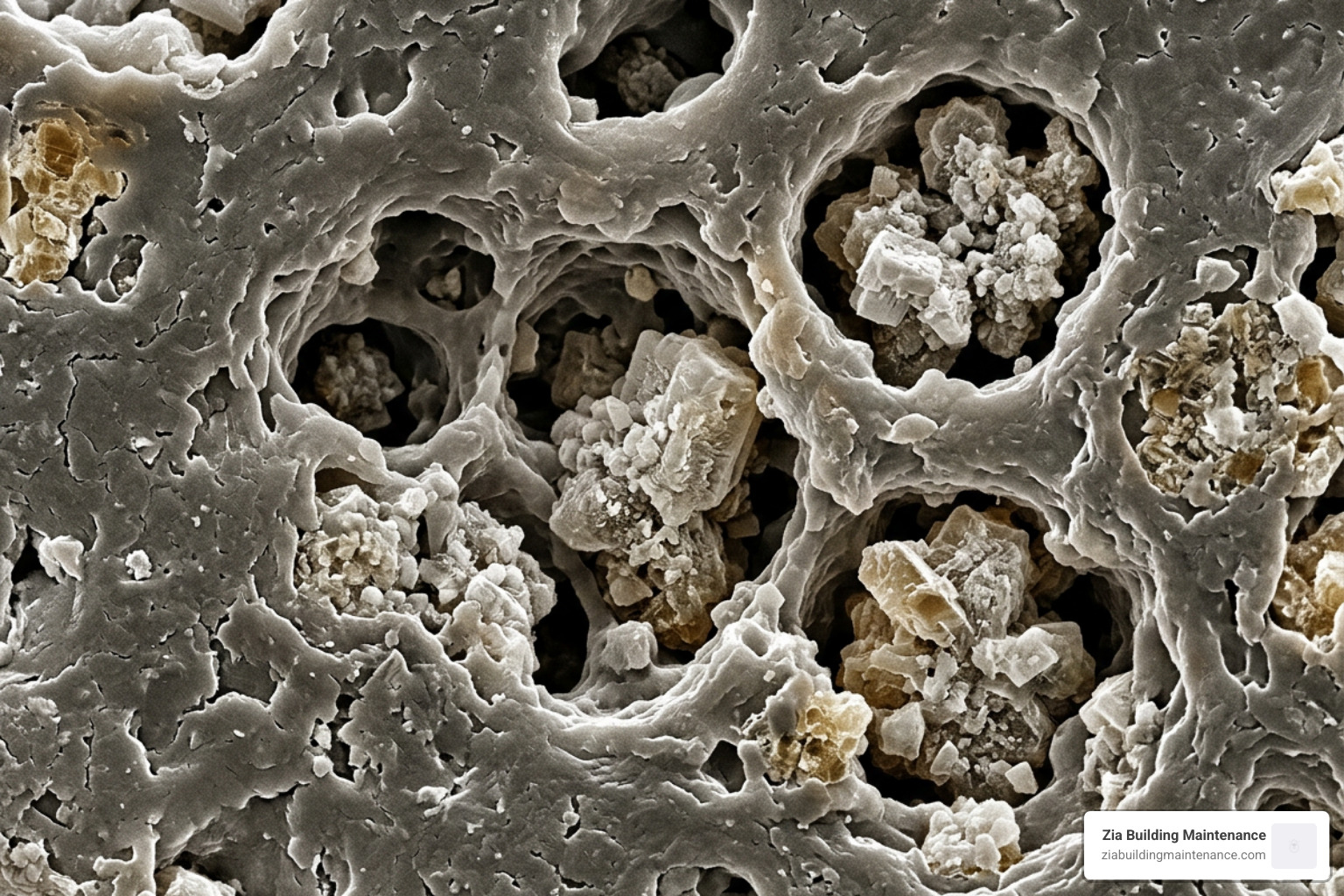
To the naked eye, a pane of commercial float glass looks perfectly flat, smooth, and solid. In reality, glass is highly porous. It is full of microscopic valleys, peaks, and pores. When hard water hits your windows, it pools in these tiny microscopic pores. As the water evaporates, it leaves behind dissolved mineral salts—primarily calcium carbonate and magnesium.
This is not a simple layer of dust sitting on top of the glass; it is a chemical reaction. The alkaline minerals in the water form an ionic bond with the silica in the glass substrate. Over time, heat from the Albuquerque sun bakes these minerals, fusing them directly into the glass. If you want to dive deeper into the chemistry of how these bonds develop, you can learn more about mineral bonding stages.
Understanding Glass Porosity and Mineral Bonding
When mineral-laden tap water or irrigation runoff dries on your windows, the calcium and magnesium ions chemically bind with the silicon dioxide molecules. This is why standard household glass cleaners cannot touch them. Standard cleaners are formulated to cut through organic soils like grease, fingerprints, and pollen, but they lack the chemistry required to break down ionic mineral bonds.
For property owners in areas with high water hardness, using unfiltered municipal water for building maintenance can quickly ruin exterior facades. If you are attempting in-house touch-ups, we highly recommend reviewing these more tips on streak-free glass to avoid making mineral deposits worse.
Stage 1 vs. Stage 2 Glass Corrosion
Professional window cleaners categorize hard water damage into distinct stages. Identifying the stage of your windows is critical because treating them with the wrong method can cause permanent scratching:
- Stage 1 (Surface Deposits): At this level, the minerals are sitting on the surface and inside the shallowest pores of the glass. The glass itself is not damaged yet. You can identify Stage 1 spots because they feel slightly raised when you run a fingernail over them. They can generally be dissolved using mild acids or light abrasive polishes.
- Stage 2 (Etched Mineral Bonds): This occurs when the alkaline minerals have sat on the glass long enough to chemically corrode the surface. The minerals have literally eaten into the silica, leaving micro-etchings. If you scrape your fingernail across the spot and it feels like a dip or a scratch rather than a bump, you are dealing with Stage 2 damage.
- Stage 3 (Permanent Corrosion): At this point, the structural integrity of the glass surface is compromised. The glass appears cloudy, white, and completely dull. No chemical cleaner can restore Stage 3 glass; it must either be professionally resurfaced using heavy rotary polishing tools and cerium oxide, or completely replaced.
How Hard Water Stains Differ from Regular Dirt and Grime
It is a common point of confusion for property managers: “We just had our windows washed last week, so why do they still look dirty?”

Regular window dirt consists of loose, non-bonded particulate matter: atmospheric dust, vehicle exhaust soot, pollen, bird droppings, and organic matter. These particles sit loosely on the surface of the glass. Because they do not share a chemical bond with the silica, they are easily suspended in a soapy solution and swept away with a squeegee.
Hard water stains, on the other hand, are crystalline structures. When water containing high concentrations of dissolved minerals evaporates, the minerals crystallize. This process of mineral crystallization creates a hard, chalky scale that acts like a cement, anchoring itself to the porous glass. If you are struggling with a cleaning crew that cannot seem to tell the difference, check out our guide to finding reliable window washers.
The Chemical Composition of Mineral Deposits
The white, crusty rings you see on your exterior windows are primarily made of:
- Calcium Carbonate (Lime): The most common mineral deposit, which leaves a bright white, chalky residue.
- Calcium Silicate: A highly stubborn compound that forms when calcium reacts with the silica in the glass itself. This is incredibly difficult to remove because it is chemically similar to the glass.
- Alkaline Minerals & Metal Oxides: Runoff from concrete, brick, or metal window frames can introduce iron, copper, and sulfur, which can stain the glass yellow, brown, or green.
To understand how professionals approach these complex chemical bonds without destroying your building’s exterior, you can read about restoring windows to original condition.
Why Standard Window Cleaning Fails on Hard Water
Most commercial window cleaning solutions are neutral or slightly alkaline detergents. They are designed to emulsify grease and lift dirt. However, because hard water deposits are highly alkaline, an alkaline soap will do absolutely nothing to dissolve them.
Furthermore, standard cleaning tools like squeegees simply glide right over the crystallized mineral deposits, leaving behind ugly streaks and potentially tearing the rubber blade. Attempting to scrub these spots off with standard window scrubbers will only exhaust your cleaning staff without producing results. If you are trying to budget for proper restorative services, take a look at our price guide for professional window cleaning.
Professional Methods and Products for Restoring Commercial Glass
When a professional crew tackles commercial window cleaning hard water stain removal, they use a highly calculated, progressive cleaning approach. We always start with the mildest possible method and work our way up to stronger chemical or mechanical solutions. This minimizes the risk of damaging the glass, frames, or surrounding landscaping.
To give you an idea of how professional products compare, here is a breakdown of common industry solutions:
| Method / Product | Active Ingredients | Best For | Risk Level | Safety Precautions Required |
|---|---|---|---|---|
| Mild Acids (Bio-Clean, Unger RubOut) | Citric / Sulfamic Acid, mild abrasives | Stage 1 surface spots, light maintenance | Low | Basic gloves and eye protection |
| Industrial Descalers (Winsol Crystal Clear 550) | Buffered Ammonium Bifluoride / Acid blend | Heavy Stage 1 & Stage 2 mineral bonds | High | Full PPE, respirator, glass pre-wetting |
| Acid-Free Restoration (EnviRestore) | Proprietary non-acidic chelating agents | Historic glass, sensitive metal frames | Low | Standard commercial safety gear |
| Mechanical Polishing (Cerium Oxide) | Rare earth mineral powder | Stage 2 etching, light surface scratches | Medium | Mask (avoid dust inhalation), constant water lubrication |
Why Commercial Window Cleaning Hard Water Stain Removal Requires Acidic Solutions
Because mineral deposits are alkaline, we must use acids to neutralize and dissolve the chemical bonds. For light staining, mild organic acids like phosphoric, citric, or gluconic acid are highly effective. They break down the calcium carbonate without posing a severe hazard to the technician or the building’s facade.
For severe, heavy mineral buildup, professionals may use stronger, industrial-grade acids. These chemical agents require strict safety protocols, including protective eyewear, chemical-resistant gloves, and respirators. The solution must be applied with precise “dwell time”—allowing the acid to sit on the stain long enough to dissolve the mineral bonds, but rinsing it off before it can damage the glass or surrounding metal frames. To learn more about the advanced techniques used by industry veterans, explore the secrets of professional window cleaning.
Mechanical Abrasion and Polishing Techniques
When chemical dissolution isn’t enough, we turn to mechanical abrasion. This must be done with extreme care. Using the wrong abrasive pad can instantly ruin a commercial window pane.
- Super-Fine Steel Wool (#0000): This is a staple in the professional window cleaner’s toolkit. Grade #0000 steel wool is softer than glass, meaning it can scrape away mineral deposits without scratching the surface, provided the glass is kept wet and lubricated.
- Cerium Oxide Polishing: For etched Stage 2 stains, we use a slurry of cerium oxide powder mixed with water. Applied with a variable-speed rotary polishing tool and a felt pad, this compound gently polishes away a microscopic layer of the glass, smoothing out micro-etchings and restoring optical clarity.
- Non-Abrasive Pads: Specialized nylon pads designed specifically for glass are used to agitate chemical descalers without leaving swirl marks.
Specialized Tools and Pure Water Technology
The commercial window cleaning industry has evolved significantly over the past decade. Today, professional crews rely on highly advanced, specialized equipment to achieve flawless results safely and efficiently.
If you want to ensure you are hiring a company with the right gear, check out our guide to choosing professional window cleaners.
Waterfed Poles and Deionization Systems
One of the greatest advancements in modern window cleaning is the Pure Water System. This technology uses a multi-stage filtration process—typically combining sediment filters, carbon filters, reverse osmosis (RO) membranes, and deionization (DI) resin tanks—to strip tap water of all dissolved solids.
Standard tap water in Albuquerque, Rio Rancho, and Corrales often has a Total Dissolved Solids (TDS) level of 200 to over 300 parts per million (ppm). A pure water system filters this down to exactly 0 ppm.
When we pump 0 ppm water up a carbon-fiber waterfed pole to a specialized brush head, the pure water acts like a magnet, actively attracting and dissolving dirt and light mineral deposits on the glass. Because there are zero minerals left in the water, the windows dry completely spot-free without the use of squeegees. This system allows technicians to safely clean windows up to 3 to 4 stories high while keeping their feet firmly on the ground, eliminating ladder-related fall risks. To see why this approach is superior to traditional bucket-and-rag methods, read about how to stop looking for a window cleaner and see clearly.
Professional Equipment vs. DIY Risks
While DIY guides on the internet often recommend using household vinegar or baking soda, these solutions are rarely practical or safe for commercial properties.
- Glass Scratching: Using household abrasive sponges, razor blades incorrectly, or coarse steel wool will permanently scratch commercial glass, leading to thousands of dollars in replacement costs.
- Chemical Burns: Applying strong, over-the-counter acid cleaners without proper training can cause chemical burns to the technician, strip anodized coatings off aluminum window frames, and kill surrounding landscaping.
- Fall Hazards: Trying to clean high-reach commercial windows on a ladder without professional safety harnesses or waterfed pole systems is highly dangerous.
To see our team in action using professional-grade tools and safety equipment, watch this quick demonstration:
wp:html
/wp:html
wp:html
/wp:html
Prevention Strategies for Commercial Property Managers
The most cost-effective way to deal with commercial window cleaning hard water stain removal is to prevent the stains from forming in the first place.
Proactive maintenance not only protects your glass but also keeps your utility bills in check. According to the U.S. Department of Energy, heat gains and losses through windows can account for 25-30% of HVAC-related energy usage. Clean, scale-free glass allows natural light to enter your building efficiently, which can reduce artificial lighting costs and improve passive solar heating in the winter. If you are planning your facility’s maintenance budget, review our guide to commercial window cleaning costs.
Adjusting Irrigation and Sprinkler Systems
In the arid climate of Albuquerque, Rio Rancho, and Los Ranchos, commercial sprinkler systems are the number one cause of exterior window staining.
- Sprinkler Overspray: When automatic sprinklers misfire or are blown by wind patterns, they spray mineral-heavy well or municipal water directly onto ground-floor windows. The hot sun dries the water instantly, baking the minerals into the glass.
- Wind & Rain Runoff: Ensure your irrigation heads are adjusted to spray away from building facades.
- Pre-Cast Concrete Leaching: Rainwater running off pre-cast concrete or masonry facades can leach highly alkaline calcium hydroxide from the mortar and deposit it directly onto the windows below. Regular facade sealing can prevent this leaching process.
Hydrophobic Glass Sealants and Protective Coatings
Once we have successfully restored your commercial windows to their original, crystal-clear condition, we highly recommend applying a professional hydrophobic glass sealant.
These protective coatings work by filling in the microscopic pores of the glass, creating an ultra-smooth, water-repelling barrier. When water hits a treated window, it cannot pool in the pores; instead, it beads up and rolls off, taking surface dust with it.
Brands like Glass Defender offer coatings that can protect glass from scratching and mineral bonding for 10 to 20 years. This simple preventative step dramatically reduces future cleaning times and keeps your building looking pristine between scheduled cleanings.
Frequently Asked Questions about Commercial Hard Water Stains
Here are some of the most common questions we receive from property managers in the Albuquerque metro area regarding commercial glass maintenance.
Can hard water stains cause permanent damage to commercial glass?
Yes. If left untreated, the alkaline minerals in hard water will chemically react with the silica in the glass, causing permanent etching and structural damage. Over time, the glass will become physically pitted and structurally weakened, requiring complete—and highly expensive—window replacement. Regular professional maintenance is a fraction of the cost of replacing commercial storefront glass.
Why is rainwater runoff a major cause of window staining?
While pure rainwater is naturally soft, it becomes highly acidic as it falls through the atmosphere and collects pollutants. When this water hits your building’s roof, concrete parapets, or metal trim, it dissolves and leaches minerals (like calcium from concrete or iron from metal frames). As this mineral-heavy runoff flows down the glass facade, it leaves behind dense, difficult-to-remove mineral tracks.
When is the best time of year to schedule hard water removal?
The end of winter or early spring is the absolute best time to schedule restorative window cleaning. Winter storms, heating system condensation, and idle dust accumulate on exterior glass over the colder months. Booking a professional cleaning in the spring ensures your building is prepped for the high-visibility summer season and prevents winter-accumulated minerals from baking into the glass under the intense summer sun.
Conclusion
Maintaining clean, spot-free windows is one of the easiest ways to boost your commercial building’s curb appeal, protect your real estate investment, and provide a bright, welcoming environment for your employees and clients.
If you want to read more about keeping your commercial property looking its absolute best, check out our comprehensive guide on uncovering top commercial window cleaning in your area.
Partnering with Experts for Commercial Window Cleaning Hard Water Stain Removal
At Zia Building Maintenance, we have been serving the Albuquerque, Rio Rancho, Corrales, and Los Ranchos communities since 1989. As a trusted, family-owned business, we understand that every commercial property has unique needs.
Our highly trained technicians utilize state-of-the-art pure water systems, waterfed poles, and glass-safe restoration products to remove even the most stubborn Stage 2 hard water stains safely and efficiently. We pride ourselves on our consistent, high-quality service and meticulous attention to detail.
Don’t let cloudy, stained windows dull your business’s professional image. Schedule your professional window cleaning service today and let our family help your business shine bright!