

Why Proper Luxury Vinyl Plank Flooring Cleaning Is More Important Than You Think
Luxury vinyl plank flooring cleaning done right is simple: sweep or vacuum daily, damp-mop weekly with a pH-neutral cleaner, wipe spills immediately, and avoid steam mops, wax, and ammonia-based products.
Here’s a quick-reference summary:
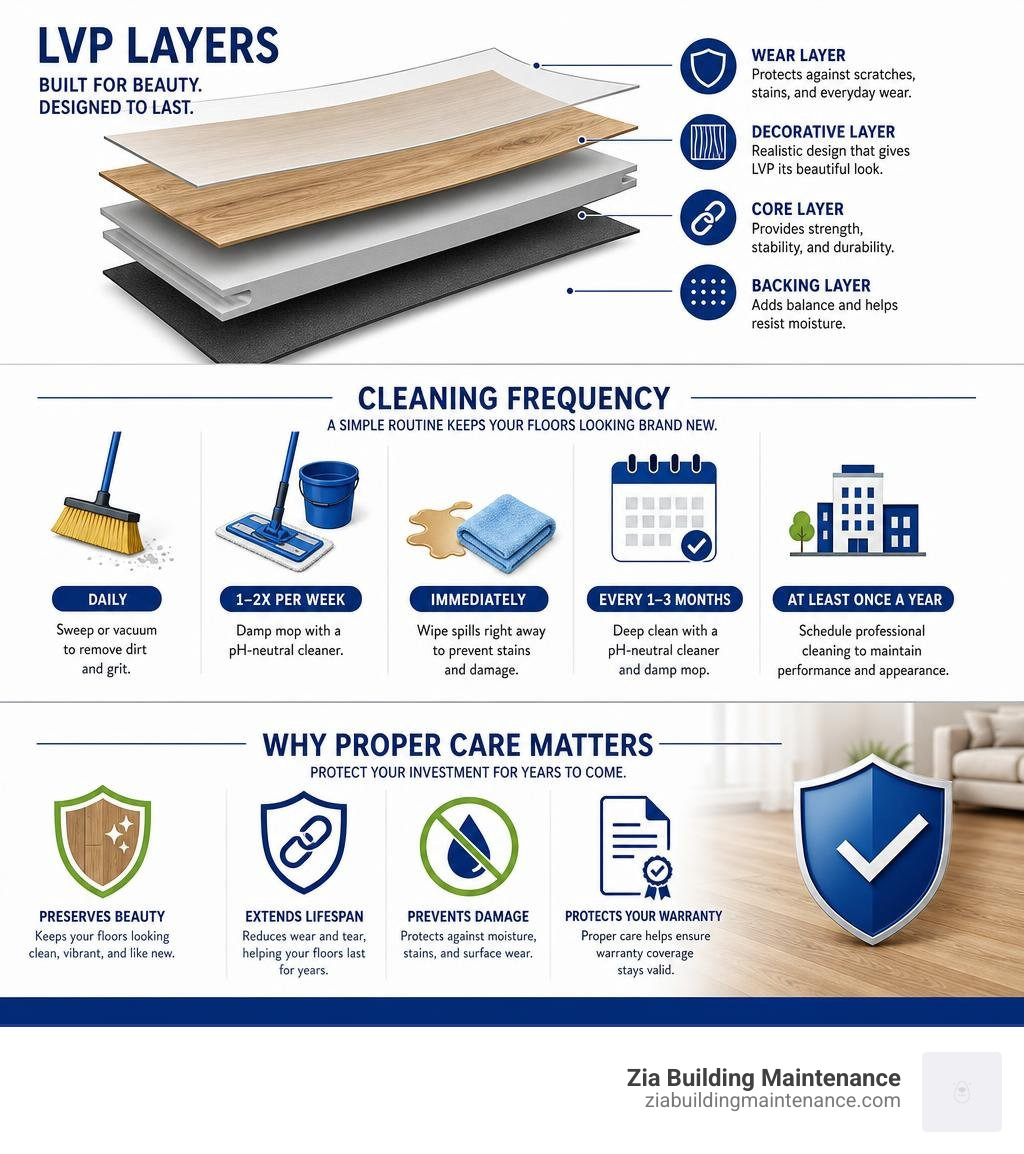
| Task | Frequency | Best Tool/Product |
|---|---|---|
| Sweep or vacuum | Daily | Soft-bristle broom or vacuum on hard-floor setting |
| Damp mop | 1-2x per week | Microfiber mop + pH-neutral cleaner |
| Spot clean spills | Immediately | Damp microfiber cloth |
| Deep clean | Every 1-3 months | pH-neutral cleaner, damp mop |
| Professional cleaning | At least once a year | Certified floor cleaning service |
LVP has taken over. More than 70% of home renovation projects now feature luxury vinyl plank flooring — and it’s easy to see why. It’s durable, water-resistant, affordable, and looks great. With proper care, it can last 15 to 25 years.
But here’s the problem: most people are cleaning it wrong.
The average home collects up to 40 lbs of dirt, dust, and allergens every year. That grit sits on your floors and works like sandpaper against the wear layer every time someone walks across the room. Add the wrong mop, the wrong cleaner, or too much water — and you’re quietly damaging the floor you paid good money for.
This guide will show you exactly how to clean and protect your LVP floors the right way.
I’m Ashley Cordova, Vice President of Zia Building Maintenance, a family-owned commercial cleaning company serving New Mexico since 1989 — and luxury vinyl plank flooring cleaning is something our crews handle across facilities throughout Albuquerque every week. If you manage a commercial space with LVP and want a team that gets the details right, reach out to us here.
The Golden Rules of Luxury Vinyl Plank Flooring Cleaning
To understand why luxury vinyl plank (LVP) requires specific care, you have to look at how it is built. LVP is not a solid piece of plastic. It is a highly engineered, multi-layered sandwich:
- Underlayment (Bottom Layer): Provides cushioning and sound absorption.
- Core Layer: Made of Wood Plastic Composite (WPC) or Stone Plastic Composite (SPC) to provide rigid structural integrity.
- Decorative/Print Layer: The high-definition photo that gives the floor its realistic wood or stone appearance.
- Wear Layer (Top Layer): A clear, protective polyurethane coating that shields the design from scratches, stains, and scuffs. This wear layer ranges from a basic 6 mil to a heavy-duty 20+ mil (commercial-grade).
When you are performing luxury vinyl plank flooring cleaning, you are not actually cleaning vinyl; you are cleaning and protecting that ultra-thin wear layer.
Many people assume that because LVP is “water-resistant” or “waterproof,” they can drench it with a soaking-wet string mop. This is a critical mistake. While the planks themselves may resist moisture, excess water can easily seep through the seams between the planks. Once water gets underneath, it can destroy the subfloor, ruin the adhesive, warp the planks, and create a perfect breeding ground for mold and mildew.
Furthermore, using the wrong chemicals can permanently etch, dull, or strip the wear layer. If you use harsh chemicals or steam mops, you will likely void your manufacturer’s warranty. Most major US flooring manufacturers explicitly state that steam cleaners and non-pH-neutral chemicals void their coverage.
For a deeper look at how to protect commercial-grade installations, check out our guide on How to Clean Commercial Vinyl Floors Like a Pro. For more general tips on maintaining the structural integrity of your floors, you can also read How to Clean Luxury Vinyl Plank (LVP) Flooring.
Safe Tools and Products for LVP Floors
Using the right tools is half the battle. If you use abrasive scrubbers or heavy vacuums with aggressive brush rolls, you will scratch the wear layer, leaving a cloudy, dull appearance that cannot be easily buffed out.

Here are the tools you should have in your cleaning closet:
- Microfiber Mop: A flat-head microfiber mop is the absolute best tool for LVP. Microfiber is incredibly gentle, highly electrostatic (it grabs dust instead of pushing it around), and holds onto just enough moisture to clean without saturating the floor.
- Soft-Bristle Broom: Perfect for daily sweeping to remove abrasive grit.
- Vacuum Cleaner (with Hard Floor Setting): You can vacuum your LVP floors, but you must turn off the beater bar (the rotating brush roll). A spinning beater bar can scratch the wear layer and leave permanent marks.
- Spray Bottle: Instead of dunking a mop into a bucket of water, keep your cleaning solution in a spray bottle. Mist the floor lightly as you go to control the amount of moisture.
For household routines, we recommend checking out Easy Steps to Clean Vinyl Plank Flooring at Home to establish a safe, scratch-free habit.
Recommended Products for Luxury Vinyl Plank Flooring Cleaning
When selecting chemical cleaners, look for solutions that are specifically formulated for LVP or are certified pH-neutral.
- Bona Hard-Surface Floor Cleaner: Widely recognized as one of the safest options. It dries quickly, leaves no residue, and is pH-neutral.
- Zep Neutral pH Floor Cleaner: An excellent, cost-effective option for both residential and large-scale commercial cleaning.
- Distilled White Vinegar (Occasional Use): If you prefer a DIY approach, you can mix one cup of distilled white vinegar with one gallon of warm water. The mild acidity of vinegar helps break down grease and grime without leaving a soapy film. However, do not use this daily; over time, even mild acids can slightly dull a high-gloss finish.
- Plain Warm Water: Often, a microfiber mop lightly dampened with plain warm water is all you need for weekly maintenance.
For more product recommendations and direct manufacturer guidelines, read How to Clean Vinyl Plank Flooring – Lowe’s.
Cleaning Tools and Methods to Avoid
To protect your flooring investment, keep these common culprits far away from your LVP:
- Steam Mops: High heat and pressurized moisture are LVP’s worst enemies. The heat can warp the vinyl, cause the decorative layer to delaminate, and melt the adhesive holding the planks down.
- Abrasive Scrubbers & Steel Wool: These will instantly scratch and ruin the wear layer.
- Wax and “Mop-and-Shine” Products: LVP has a factory-applied polyurethane finish that does not need wax. Applying wax or polish will only build up a sticky, cloudy layer that traps dirt and is incredibly difficult to remove.
- Ammonia & Bleach: These harsh, highly alkaline chemicals can permanently discolor and eat away at the polyurethane wear layer.
- Dish Soaps & Laundry Detergents: These products contain heavy surfactants that leave a dulling residue on the floor, making it look dirty even right after you’ve mopped.
To learn more about what not to do with resilient flooring, check out our article on How to Not Ruin Your New VCT Floor Care Routine.
Step-by-Step Guide to Cleaning Your LVP Floors
The secret to extending your floor’s lifespan by up to 50% is establishing a consistent routine.
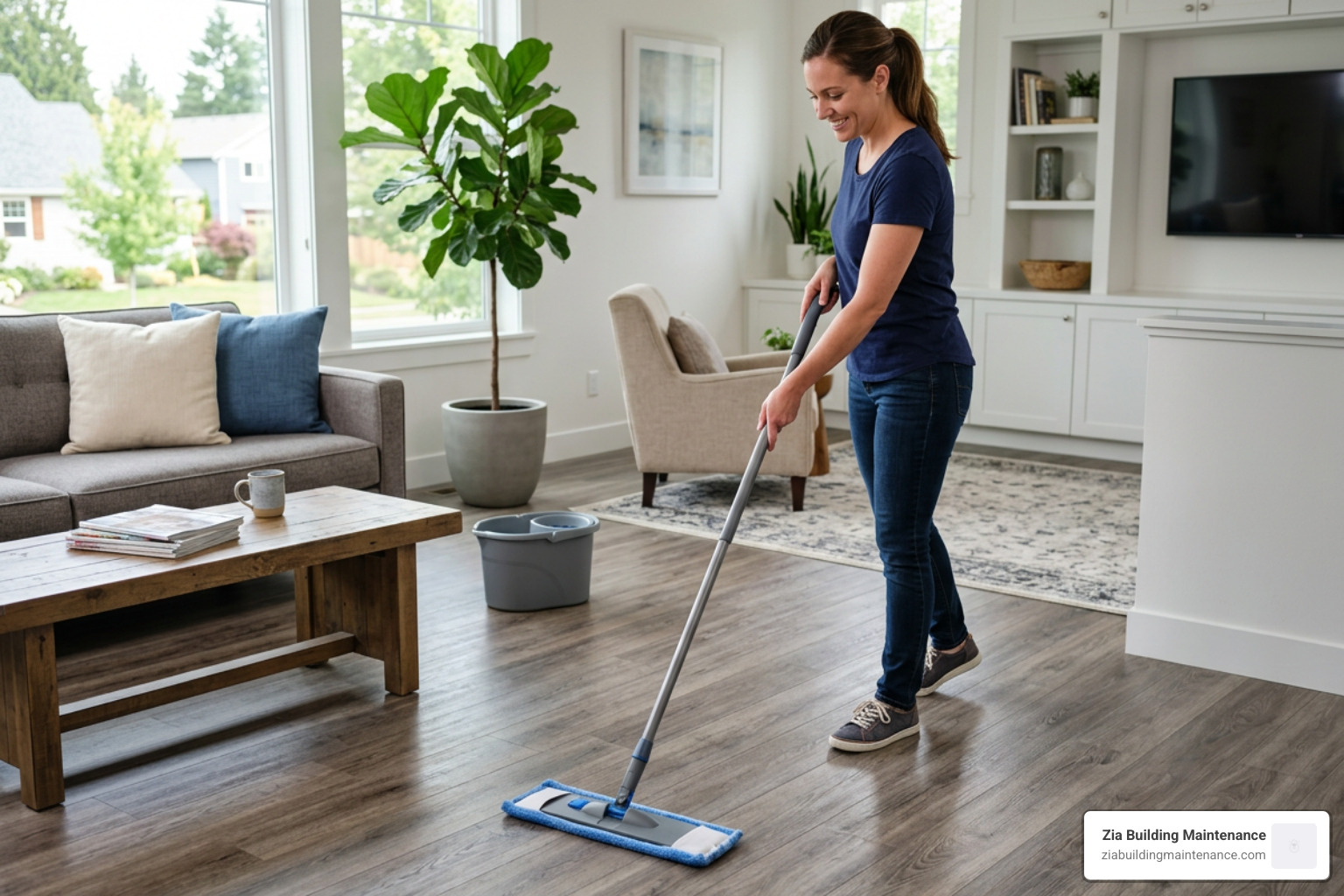
Here is a comparison of how you should structure your cleaning routines:
| Routine Type | Frequency | Core Tasks |
|---|---|---|
| Dry Maintenance | Daily | Sweep with soft-bristle broom or dust mop; vacuum on hard-floor setting. |
| Damp Mopping | 1–2 times per week | Mist with pH-neutral cleaner; wipe with a damp microfiber mop. |
| Deep Cleaning | Every 1–3 months | Detailed edge cleaning; residue removal; thorough damp mopping. |
| Professional Care | Annually | High-extraction cleaning to pull embedded dirt out of the textures. |
Step-by-Step Luxury Vinyl Plank Flooring Cleaning Process
When it is time for a thorough clean, follow this exact process to avoid scratching your floors or leaving a cloudy residue:
- Dry Clean First (Every Single Time): Never apply wet cleaning solutions to a dusty floor. If you do, you are simply turning dust into abrasive mud and dragging it across the floor, creating micro-scratches. Sweep or vacuum thoroughly first.
- Prepare Your Cleaning Solution: Fill a spray bottle with your chosen pH-neutral cleaner, or dilute your cleaner in a bucket of warm water according to the label instructions.
- Mop with a Damp (Not Wet) Microfiber Mop: If using a bucket, wring the mop out until it is barely damp to the touch. If using a spray bottle, lightly mist a small 4×4 foot section of the floor and run your microfiber mop over it in long, smooth strokes.
- Work Your Way Out: Always start at the far corner of the room and work your way toward the exit so you don’t step on wet areas.
- Rinse and Repeat: If your mop head gets visibly dirty, rinse it in clean water or swap it out for a fresh microfiber pad. Otherwise, you are just spreading dirty water around.
- Dry the Floor: If there is any standing moisture left behind, run a dry microfiber towel or dry mop pad over the area. LVP should dry within a few minutes of mopping.
For a detailed breakdown of how homeowners often get this wrong, read Luxury Vinyl Plank Flooring Cleaning: Stop Cleaning Your LVP Floors Wrong – TheFlooringidea.
How to Handle Spills, Stains, and Pet Accidents
Accidents happen — especially if you have kids or pets running around your Albuquerque home. The key to preventing permanent stains is acting fast.
- Pet Urine and Accidents: Clean up the liquid immediately. Use an enzymatic cleaner safe for hard surfaces to break down the uric acid crystals. This eliminates the odor completely so your pet isn’t tempted to return to the same spot.
- Food & Beverage Stains (Wine, Juice, Sauce): Blot the spill immediately. For dried-on food, apply a paste made of equal parts baking soda and warm water. Rub it gently in a circular motion with a soft microfiber cloth, then wipe clean with a damp cloth. (Note: Baking soda is a mild abrasive, so use a very light touch).
- Scuff Marks: Rubber-soled shoes can leave ugly black scuffs. You can often remove these simply by rubbing them with a clean tennis ball on the end of a broom handle. For stubborn scuffs, spray a tiny amount of WD-40 onto a microfiber cloth, rub the scuff away, and then thoroughly clean the area with a pH-neutral cleaner to remove any oily residue.
- Ink, Marker, or Nail Polish: Dampen a clean cloth with a small amount of rubbing alcohol or mineral spirits. Gently dab the stain (do not scrub wildly, as this can spread the pigment). Once the stain is gone, wipe the area down with a damp cloth.
For further industrial guidelines on stain removal and chemical compatibility, review the MILLIKEN LVT CARE & MAINTENANCE technical sheet.
How to Prevent Damage and Extend Your Floor’s Lifespan
While regular luxury vinyl plank flooring cleaning keeps your floors looking beautiful, preventative maintenance is what keeps them alive for 20+ years.
- Use Felt Pads on Furniture: Heavy chairs, tables, and couches will scratch or dent LVP if they are dragged across the room. Attach high-quality felt pads to the bottom of all furniture legs, and replace them every six months as they collect grit.
- Place Entryway Mats: Place heavy-duty, non-staining walk-off mats at every entrance to trap dirt, moisture, and road salt before it ever touches your LVP. Warning: Avoid mats with rubber or latex backings, as these can chemically react with the vinyl and cause permanent yellow staining. Use breathable, non-slip rugs instead.
- Trim Pet Nails: Keep your dogs’ and cats’ nails clipped. Large dogs running across LVP can easily gouge the wear layer if their claws are too long.
- Control Indoor Humidity: Keep your home or commercial facility’s humidity levels between 35% and 65%. Extreme dry climates (like our beautiful but arid New Mexico weather) or high humidity can cause planks to expand or contract, weakening the seams.
For more tips on protecting your floors in the Southwest climate, read Make Your Albuquerque Floors Look Brand New Again.
Professional Deep Cleaning vs. DIY Maintenance
Even with diligent daily sweeping and weekly mopping, DIY methods eventually hit a limit. LVP often features realistic wood-grain textures with deep valleys and ridges. Over time, microscopic dirt particles and cleaning residues settle into these valleys. Standard mopping simply passes over them, leaving the dirt trapped.
Professional floor cleaning services use specialized equipment like auto-scrubbers and high-volume extraction systems. These systems apply heated, pH-balanced cleaning solutions to loosen dirt from deep within the textures and immediately vacuum the dirty water away before it can seep into the seams.
In fact, regular professional cleaning can remove an average of 96% of common household allergens from vinyl floors, making it a must-have service for commercial spaces, schools, healthcare facilities, and homes with sensitive family members.
If your commercial space has high-traffic vinyl flooring that has lost its luster, or if you need a complete restoration, read Revive Your Floors: The Essential Guide to Stripping and Waxing to see how professional care can save you thousands of dollars in replacement costs.
wp:html
/wp:html
wp:html
/wp:html
Frequently Asked Questions about LVP Care
Can I use a steam mop on luxury vinyl plank floors?
No. You should never use a steam mop on LVP. The combination of intense heat and moisture under pressure can warp the vinyl planks, melt the adhesives holding them together, cause the decorative layer to peel (delaminate), and completely void your manufacturer’s warranty. Stick to a damp microfiber mop and a pH-neutral cleaner.
Why do my LVP floors look dirty or cloudy after mopping?
Cloudiness is almost always caused by soap residue. If you use dish soap, pine-scented cleaners, or “mop-and-shine” products, they leave behind a thin film of surfactants. This film acts like a magnet for dirt, making your floors look cloudy and dirty again almost immediately. To fix this, mop your floors with a mixture of 1 cup of distilled white vinegar per gallon of warm water to strip away the residue, then switch to a no-rinse, pH-neutral cleaner.
How do I restore the shine to my dull LVP floors?
First, perform a deep clean using a diluted vinegar solution to strip away any soapy buildup. If the floor is still dull, it may be due to micro-scratches in the wear layer. Do not apply floor wax! Instead, use a specialized LVP restorer product recommended by your flooring manufacturer, or contact a professional commercial floor care service to safely restore the finish.
Conclusion
Keeping your luxury vinyl plank floors looking brand new doesn’t require a lot of effort — it just requires the right habits. By committing to daily dry sweeping, using gentle pH-neutral cleaners, avoiding damaging tools like steam mops, and protecting your floors from heavy furniture, you can easily enjoy beautiful, resilient floors for decades to come.
At Zia Building Maintenance, we have spent nearly four decades perfecting floor care across Albuquerque, Rio Rancho, Corrales, and Los Ranchos. Whether you manage a busy commercial office, a retail store, or an industrial facility, our team has the training, advanced equipment, and attention to detail to keep your LVP floors looking spotless.
Let us handle the dirty work so you can focus on running your business. Get a free quote for our commercial janitorial services today!