

How to Clean Commercial Vinyl Floors Like a Pro
Why Commercial Vinyl Floor Cleaning Matters More Than You Think
Commercial vinyl floor cleaning done right keeps your floors looking sharp, extends their lifespan, and protects your investment in high-traffic spaces.
Quick answer — how to clean commercial vinyl floors:
- Sweep or dry mop daily to remove loose dirt and debris
- Damp mop with a neutral pH cleaner — never use ammonia, bleach, or wax
- Spot clean spills immediately to prevent staining and water seepage
- Deep clean monthly using a single-disc buffer or floor scrubber with a vinyl-safe solution
- Dry the floor quickly after mopping to prevent moisture damage under planks or seams
- Schedule professional restoration periodically to maintain shine and surface integrity
Vinyl flooring is one of the most popular choices for commercial spaces — from retail stores and schools to healthcare facilities and office lobbies. It’s durable, affordable, and looks great. But here’s the catch: it only stays that way with consistent, proper care.
The wrong cleaner, too much water, or a missed deep clean can dull the finish, weaken adhesive bonds, or cause damage that’s expensive to fix. In busy environments — like the high-foot-traffic corridors of Downtown Albuquerque — that wear adds up fast.
Most facilities managers already know cleaning matters. What trips people up is how to clean vinyl correctly, what products are safe, and how often to do it at scale.
This guide covers all of it.
I’m Ashley Cordova, Vice President of Zia Building Maintenance, a family-owned janitorial company serving New Mexico since 1989 — and commercial vinyl floor cleaning is one of the services our teams handle every day across Albuquerque’s busiest facilities. I’ll walk you through exactly what works, what doesn’t, and how to build a maintenance routine that keeps your floors looking professional year-round.
Understanding Commercial Vinyl Flooring Types
To master commercial vinyl floor cleaning, we first have to understand what we are standing on. Not all vinyl is created equal, and as of April 2026, the variety of textures and compositions in New Mexico offices is wider than ever.
Commercial vinyl is generally categorized into four main types:
- Luxury Vinyl Tile (LVT): These are individual tiles that often mimic stone or ceramic. They are highly durable and popular in high-end retail and lobbies.
- Luxury Vinyl Plank (LVP): Similar to LVT but shaped like wood planks. Luxury vinyl planks (LVP) can last up to 25 years when well-maintained.
- Sheet Vinyl: This comes in large rolls, creating fewer seams. It’s a favorite for healthcare settings because it’s easy to sanitize and offers fewer places for bacteria to hide.
- Vinyl Composition Tile (VCT): The traditional “checkered” floor seen in many older schools and grocery stores. VCT is porous and requires a specific Commercial Vct Cleaning Service that includes regular stripping and waxing.
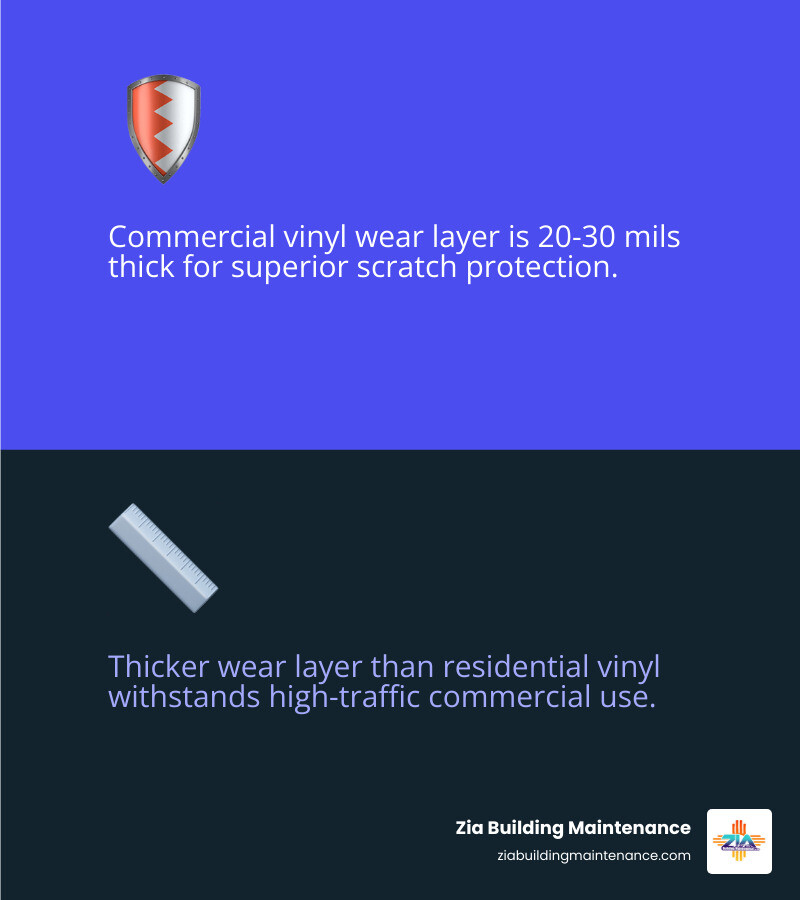
The “wear layer” is the most critical part of your floor’s anatomy. This is the top transparent coating that protects the design from scratches and scuffs. In a commercial setting, this layer is significantly thicker than residential versions — usually between 20 to 30 mils.
Differences in Maintenance Needs
One of the biggest mistakes we see is treating all vinyl the same. For example, modern LVT and LVP often come with a factory-applied polyurethane coating. This means they are “no-wax” floors. If you try to apply a traditional wax to these, it won’t bond correctly, leading to a cloudy, peeling mess.
Conversely, VCT is very porous. Without a proper finish, it will soak up dirt and stains like a sponge. This is Why One Size Fits All Floor Cleaning Fails For Commercial Buildings. Each material has a different relationship with moisture and chemicals. While sheet vinyl is nearly waterproof if the seams are heat-welded, LVT planks have tiny gaps where excessive water can seep through, causing the adhesive to fail or the subfloor to rot.
The Ultimate Guide to Commercial Vinyl Floor Cleaning
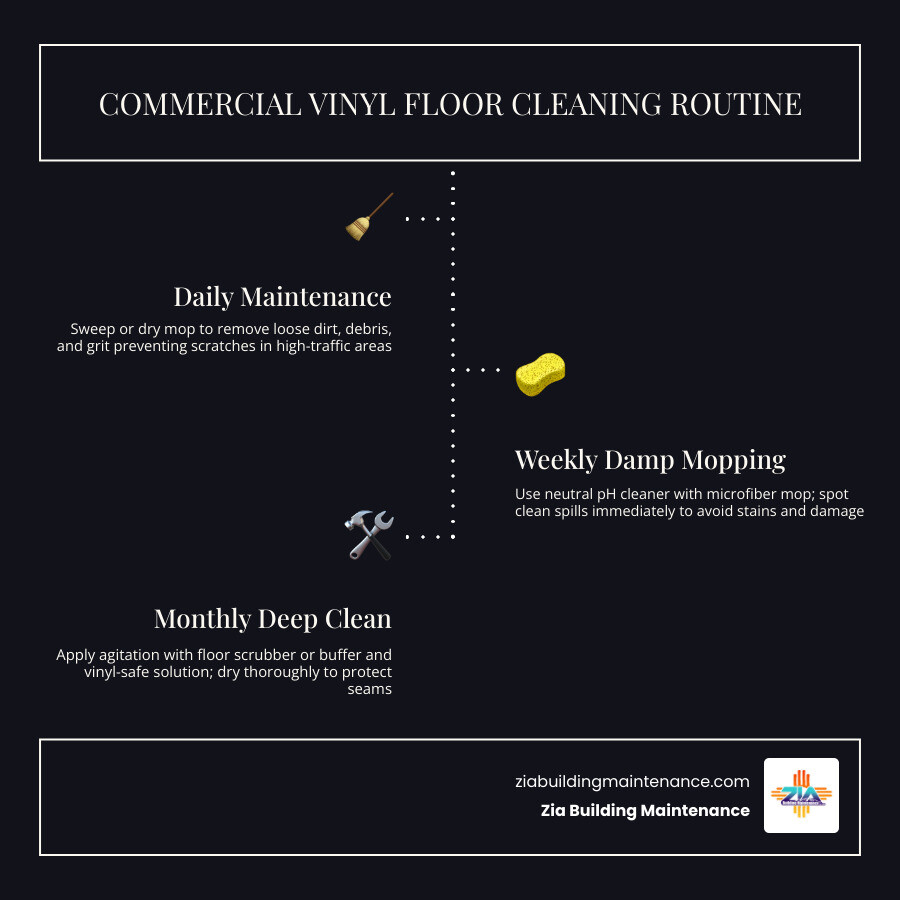
If you want your facility to shine, you need a systematic approach. We break our Floor Care Service into three distinct phases: daily maintenance, weekly upkeep, and monthly deep cleaning.
The golden rule of commercial vinyl floor cleaning is using a neutral pH cleaner. Vinyl is sensitive to high-alkaline or highly acidic chemicals. Over time, harsh cleaners will eat away at the wear layer, leaving the floor looking dull and “chalky.”
Daily Routines for Commercial Vinyl Floor Cleaning
In a city like Albuquerque, dust and grit are our biggest enemies. The fine sand from the Rio Grande Valley acts like sandpaper under the shoes of your employees and customers. If that grit isn’t removed daily, it will grind the finish right off your vinyl.
- Dry Mopping/Sweeping: This must be done at least once a day. We recommend using launderable microfiber flat mops. These are far more effective than traditional brooms at capturing fine dust.
- Microfiber Technology: Statistics show that launderable microfiber flat mops have a life expectancy of 300-500 laundry cycles. They are designed to “grab” particles rather than just pushing them around.
- Spill Response: In Cleaning Dirty Floors, we always emphasize that the faster you catch a spill, the less likely it is to become a permanent stain.
Deep Cleaning Techniques for Commercial Vinyl Floor Cleaning
Sometimes, a daily mop isn’t enough. Dirt can get trapped in the micro-textures of the vinyl, especially in “safety” or non-slip varieties.
- Apply Solution: Use a concentrated neutral cleaner. Concentrated floor care products can reduce chemical and water use by 40 percent when the right dilution systems are used.
- Dwell Time: Let the solution sit on the floor for 4 to 10 minutes. This gives the chemicals time to break the bond between the dirt and the floor.
- Agitation: Use a rotary machine or a low-speed single-disc buffer with a white or red scrubbing pad. This mechanical action reaches into the textures that a flat mop misses.
- Recovery: Immediately pick up the dirty water with a wet-dry vacuum or an automated scrubber. If the water dries on the floor, you’ve just moved the dirt around!
- Rinse: Even “no-rinse” cleaners can benefit from a quick pass with clean water to ensure no residue is left behind to attract new soil.
For older VCT floors that have lost their luster, you may need to Revive Your Floors with a professional stripping and waxing.
Essential Equipment and Safe Cleaning Solutions
To clean like a pro, you need the right kit. Gone are the days of the heavy cotton string mop and a yellow bucket — those often leave more dirt than they remove.
Modern Tools for Efficiency
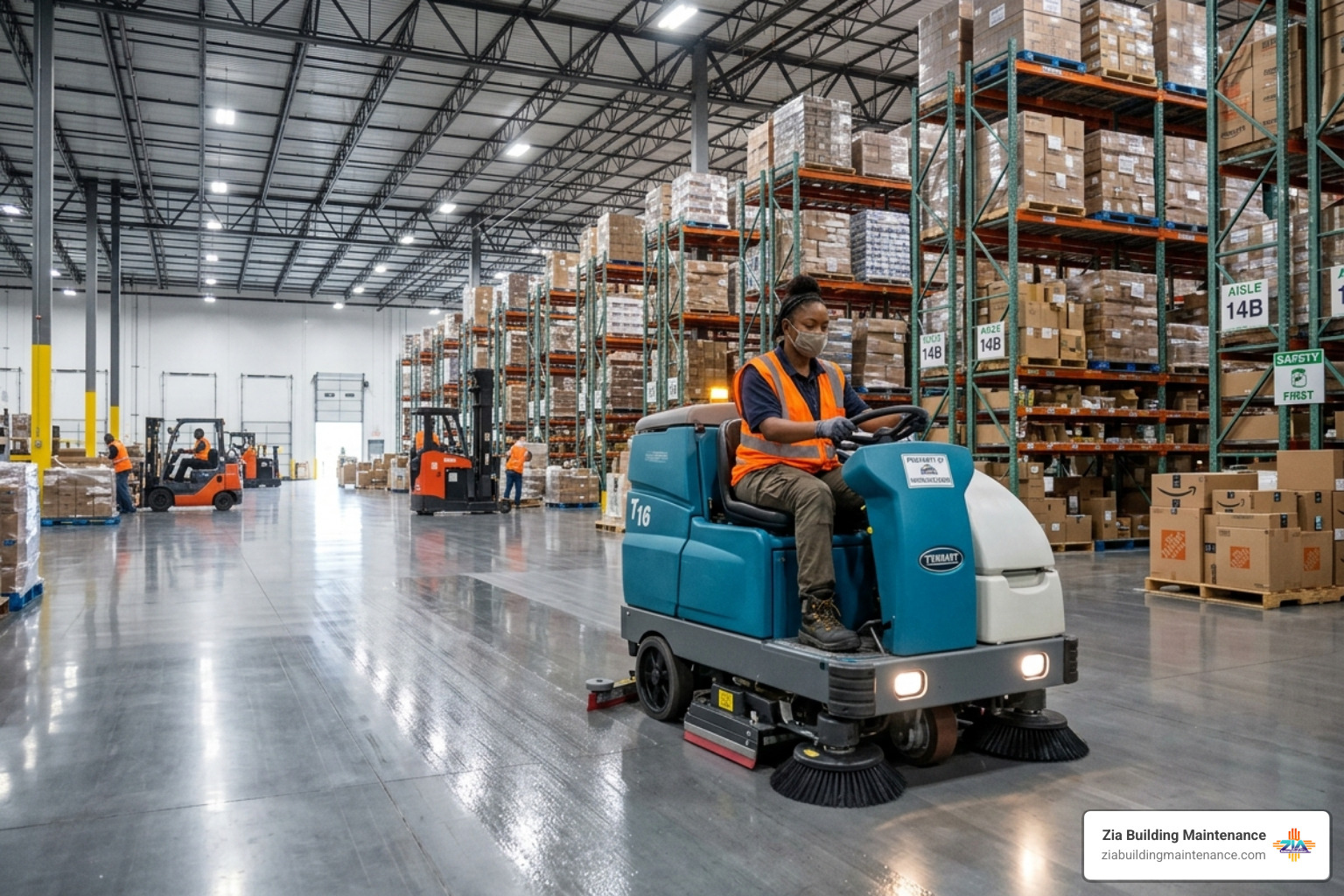
For larger spaces in Albuquerque or Rio Rancho, manual mopping is simply too slow and ineffective. We use automated floor scrubbers because they apply clean solution, scrub the floor, and vacuum up the dirty water in a single pass.
| Feature | Manual Mopping | Automated Scrubber |
|---|---|---|
| Dirt Removal | Pushes dirt into corners | Lifts and removes dirt |
| Water Usage | High (often leaves puddles) | Controlled and efficient |
| Drying Time | 10-20 minutes | 1-2 minutes |
| Labor Cost | High | Low (faster coverage) |
| Sanitation | Cross-contamination risk | Consistent clean water application |
Using the right tools isn’t just about speed; it’s about the science of Whats The Best Way To Clean My Floor. For instance, laundry-free single-use microfiber pads result in a 44 percent reduction in disinfectant and cleaning solution usage compared to laundered microfiber. This is a huge win for both the environment and your maintenance budget.
Common Mistakes and Tough Stain Removal
Even with the best intentions, we see plenty of “DIY” commercial cleaning go wrong. Here are the top mistakes to avoid:
- Over-Wetting: Flooding a vinyl floor is a recipe for disaster. Water can seep into the seams of LVT or LVP, causing the planks to warp or the glue to release.
- Steam Mops: We strongly advise against using steam mops on commercial vinyl. The intense heat can permanently damage the wear layer and melt the adhesives holding the floor down.
- Harsh Chemicals: Avoid ammonia, bleach, and “mop-and-shine” products. Ammonia can crack the vinyl over time, and shine-enhancing products often create a waxy buildup that turns yellow and traps hair and dust.
Why Having Dirty Floors Harms Your Business goes beyond aesthetics — it’s about safety. A floor with a chemical film is a slip-and-fall hazard.
Specialized Spot Treatment
Sometimes, general commercial vinyl floor cleaning isn’t enough for specific accidents. Here is how we handle the “tough stuff”:
- Scuff Marks: You’d be surprised how well a simple tennis ball or a rubber eraser works! For larger areas, a bit of jojoba oil or WD-40 on a cloth can lift the scuff (just be sure to clean up the oil immediately so no one slips).
- Ink and Makeup: Use a small amount of isopropyl alcohol on a clean white cloth. Rub gently from the outside of the stain inward.
- Food, Rust, or Grass Stains: Create a paste of baking soda and water. Let it sit for a few minutes, then gently scrub with a soft nylon brush.
- Paint or Crayon: Use a small amount of mineral spirits. Always test this in an inconspicuous corner first to ensure it doesn’t discolor your specific floor.
By using these targeted methods, you can ensure your Albuquerque Floor Cleaning Services make your tiles sparkle like new without damaging the surface.
Establishing a Professional Maintenance Schedule
A floor is an investment. If you want that 25-year lifespan for your LVP, you can’t just clean it when it “looks dirty.” By the time you can see the dirt, the damage to the wear layer is already happening.
We help our clients Make Their Albuquerque Floors Look Brand New Again by setting up a predictable schedule:
- Daily: Sweep/Vacuum (no beater bar!) and damp mop high-traffic zones.
- Weekly: Full damp mop of all areas and buffing of high-traffic “lanes.”
- Monthly: Deep scrub with a machine and pH-neutral cleaner.
- Quarterly/Bi-Annually: Professional restoration, which may include a top-coat refresh or deep extraction of textured surfaces.
Pro-Tip: Don’t forget the power of entrance mats! Placing high-quality mats at every entrance to your building can trap up to 80% of the dirt and moisture before it ever touches your vinyl.
The Role of Professional Services
While your in-house team can handle the daily sweeping, there are significant Benefits Of A Professional Office Floor Cleaner. Professional teams like ours at Zia Building Maintenance have access to industrial-grade equipment — like truck-mounted vacuums and 4-jet gecko tools — that reach deep into the crevices of LVT where standard mopping fails.
We also bring the expertise to recognize when a floor needs more than just a wash. Sometimes, a “dirty” floor is actually a floor with a damaged finish that needs a professional “scrub and recoat” to restore its protective barrier.
Frequently Asked Questions about Commercial Vinyl Floor Cleaning
Can I use a steam mop on commercial vinyl?
No! We highly recommend avoiding steam mops. The high heat can weaken the adhesive bonds between the vinyl and the subfloor, and it can also cause the vinyl planks to warp or the wear layer to peel. Stick to damp mopping with warm (not boiling) water.
How often should high-traffic vinyl floors be deep cleaned?
For most retail and office spaces in Albuquerque, a professional deep clean should be performed monthly. However, in healthcare settings or high-traffic schools, you may need a deep scrub every two weeks to maintain hygiene standards.
Is it necessary to wax luxury vinyl plank (LVP)?
Generally, no. Most modern LVP is designed as a “no-wax” floor. Adding wax can create a dull, smeary appearance and makes future maintenance much harder. If your LVP has lost its shine, it likely needs a professional deep cleaning to remove microscopic soil or a specific manufacturer-approved “refresher” coating.
Conclusion
Commercial vinyl floor cleaning doesn’t have to be a headache. By understanding your specific flooring type, using neutral pH cleaners, and staying consistent with daily grit removal, you can keep your facility looking professional for decades.
At Zia Building Maintenance, we’ve been perfecting the art of floor care in New Mexico for over 35 years. We understand the unique challenges of our local environment — from the dry Albuquerque heat to the seasonal dust storms. Whether you are managing a small office in Bernalillo or a large retail space in Rio Rancho, our family-owned team is here to provide the dependable, detail-oriented service you deserve.
Ready to see your floors transform? Request a quote for professional commercial cleaning today and let us help you put your best foot forward.