TL;DR:
- Post-construction office cleaning involves multi-phase removal of construction debris, dust, and residues for safe occupancy. It demands industrial equipment, precise scheduling, and separate budgeting from routine cleaning to prevent surface damage and indoor air quality issues.
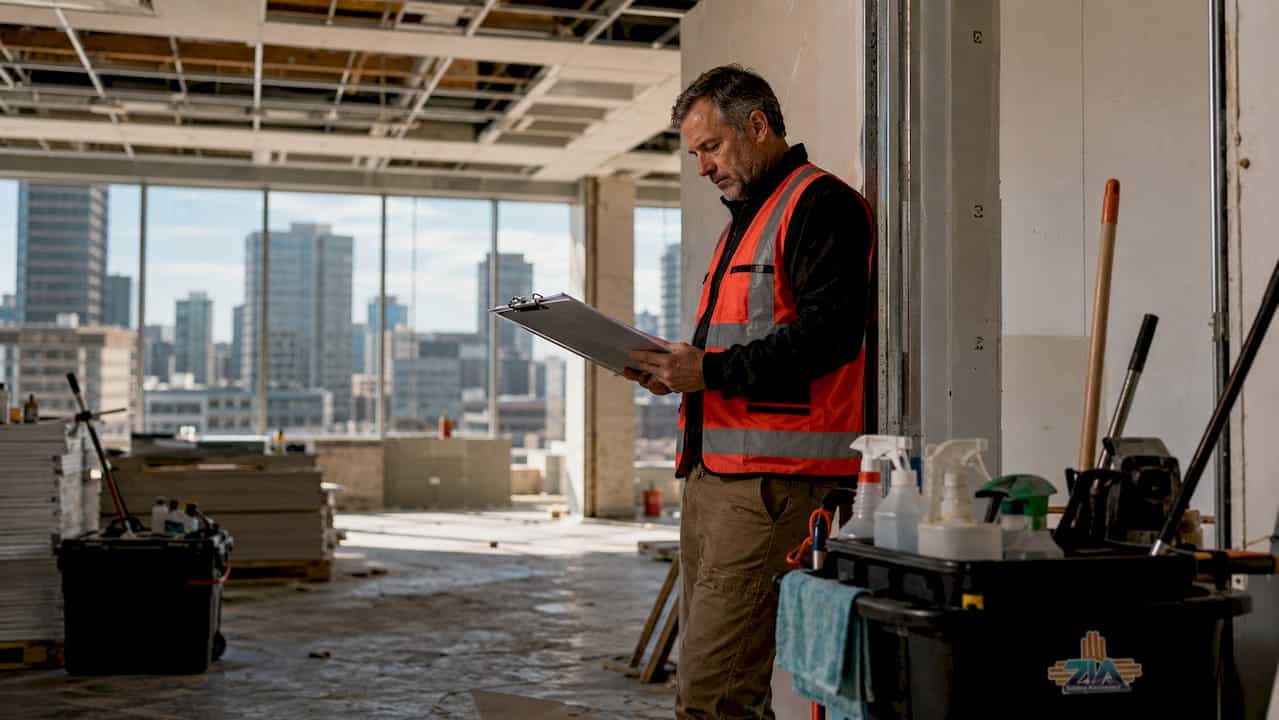
Post-construction office cleaning is the comprehensive removal of construction-related dust, debris, adhesive residues, and fine particles to prepare a newly built or renovated office space for safe occupancy. The industry term for this process is “post-construction cleanup,” and it differs fundamentally from standard janitorial work or move-in cleaning. It requires industrial-grade equipment, multi-phase scheduling, and trained crews who understand construction site conditions. For construction project managers and business owners, understanding this distinction protects your budget, your building’s surfaces, and the health of everyone who works inside.
What does post-construction office cleaning include?
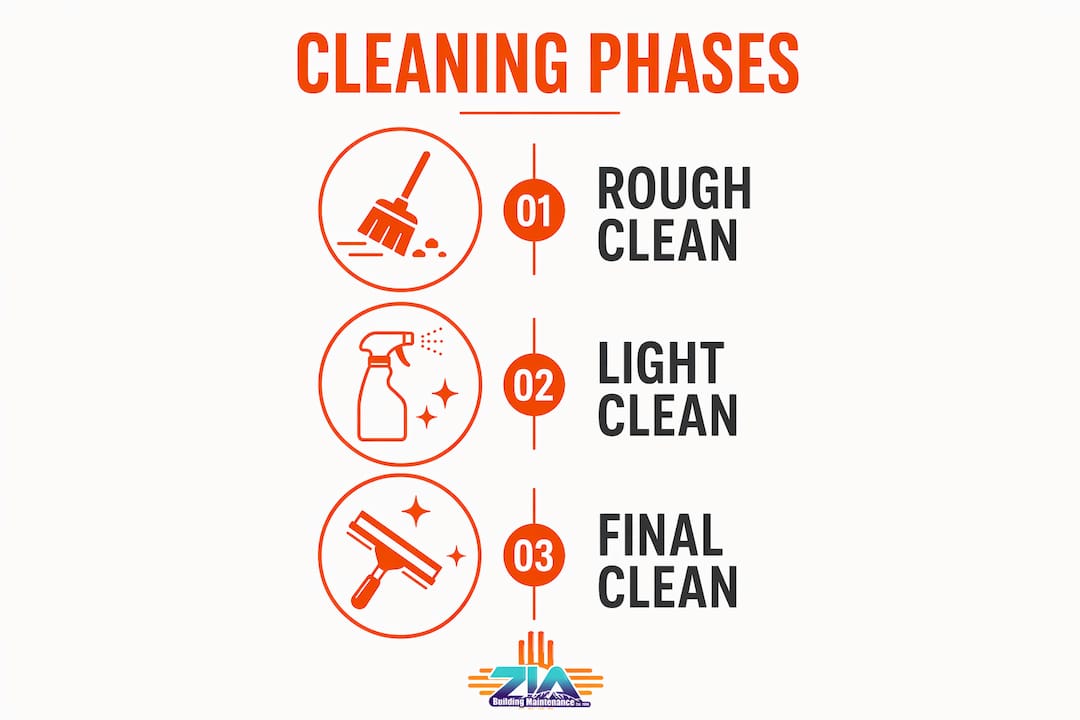
Post-construction office cleaning follows a strict three-phase model: Rough Clean, Light Clean, and Final Clean. Each phase targets a different type of residue and occurs at a specific point in the construction timeline.
Phase 1: Rough clean
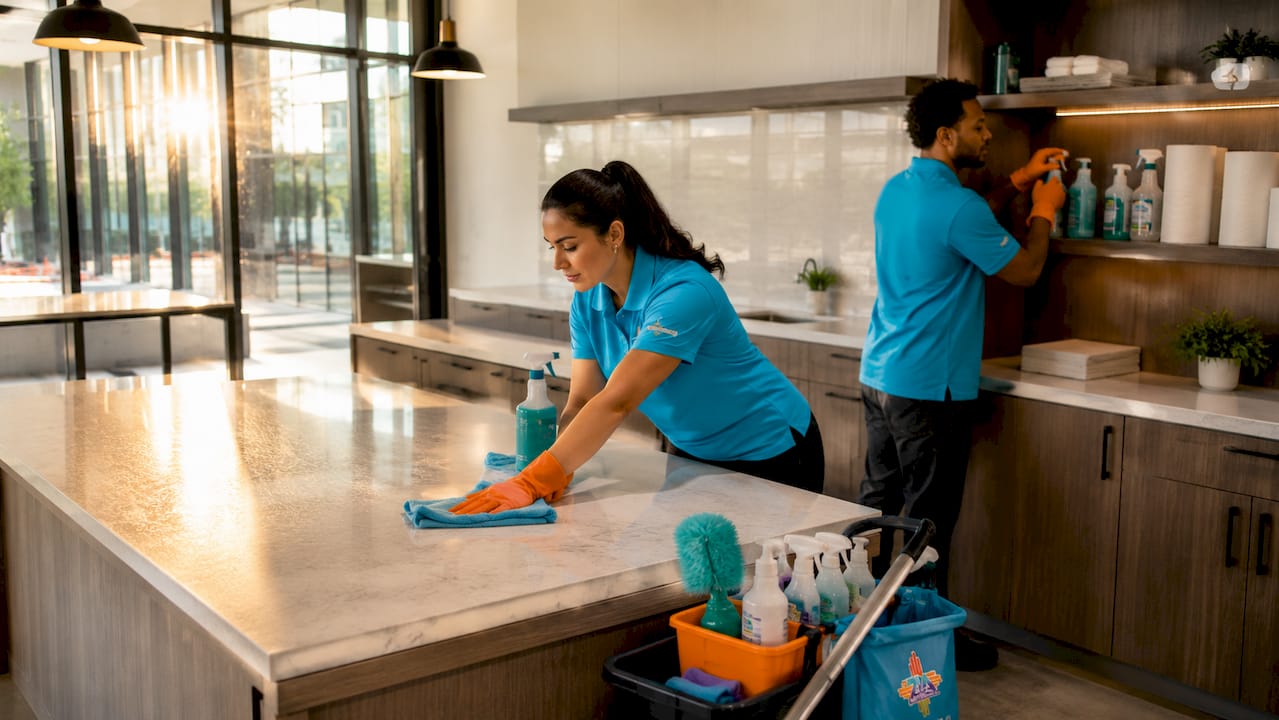
The Rough Clean happens while construction is still wrapping up or immediately after the last trade leaves. Crews remove large debris including lumber scraps, drywall chunks, packaging materials, and adhesive drips. This phase also covers sweeping and vacuuming concrete floors, clearing window sills, and removing protective coverings from fixtures. The goal is to clear the space so the next phase can address finer contamination.
Phase 2: Light clean
The Light Clean targets the fine particles that the Rough Clean cannot address. Drywall dust, sawdust, and joint compound residue settle on every horizontal surface, inside cabinets, and along baseboards. This phase uses industrial HEPA-filtered vacuums and multi-pass wiping to extract particles without smearing them. HVAC vents are sealed or filters are replaced during this phase to prevent dust recirculation through the air system.
Phase 3: Final clean
The Final Clean occurs 24–72 hours before occupancy, according to industry standards. Crews polish glass, detail fixtures, clean interior windows, wipe down all surfaces a final time, and address any touch-up areas flagged during a walkthrough. This phase produces the move-in-ready condition that business owners expect on opening day.
Pro Tip: Schedule the Light Clean at least 48 hours before the Final Clean. Airborne dust settles after cleaning and will reappear on surfaces if you rush the final phase.
Coordination with the construction schedule matters as much as the cleaning itself. Cleaning crews need confirmed access windows, and the Final Clean must not begin while trades are still active in the space.
How is post-construction cleaning different from standard office cleaning?
Post-construction cleanup and standard office cleaning share almost no overlap in method, equipment, or scope. Understanding the difference prevents costly mistakes.
| Factor | Post-construction cleanup | Standard office cleaning |
|---|---|---|
| Dust type | Drywall, concrete, and adhesive particles | Everyday particulates and surface grime |
| Equipment | Industrial HEPA vacuums, multi-pass systems | Standard vacuums and mops |
| Phases | Three structured phases tied to construction milestones | Routine scheduled visits |
| Cost premium | 30–60% higher than move-in cleaning | Base rate |
| HVAC attention | Filter replacement and vent sealing required | Filter swap on routine schedule |
| Surface risk | High risk of smear damage from improper methods | Low risk with standard tools |
The core problem with applying standard cleaning methods to a post-construction site is physical chemistry. Drywall dust smears into a chalky paste when wiped with a damp cloth, clogging mop heads and scratching finished surfaces. Industrial HEPA-filtered vacuums extract the particles dry before any wet cleaning begins.
Common mistakes project managers make include:
- Asking the general contractor’s crew to handle the deep clean
- Scheduling move-in cleaning before post-construction cleanup is complete
- Using standard janitorial staff without specialized equipment
- Skipping HVAC filter replacement after construction ends
- Rushing the Final Clean before airborne dust has settled
Combining or confusing these two services wastes budget and risks surface damage. The right sequence is post-construction cleanup first, then a separate move-in clean once the space is certified clear.
What are the best practices for effective post-construction office cleaning?
Effective post-construction office maintenance depends on timing, equipment selection, and clear communication between cleaning crews and construction teams.
Schedule around dust resettlement. The 48-hour rule between the Light Clean and Final Clean is not optional. Airborne particles take time to fall. Skipping this window guarantees visible dust on surfaces the day employees arrive.
Protect the HVAC system first. Before any cleaning begins, seal HVAC vents with plastic sheeting or replace filters. Construction dust drawn into ductwork re-contaminates cleaned spaces and creates indoor air quality problems that persist for weeks. After the Light Clean, replace filters again with fresh units rated for fine particulates.
Match cleaning agents to surface type. New flooring, painted drywall, and glass each require different cleaning solutions. Abrasive cleaners scratch polished concrete. Alkaline solutions damage certain wood finishes. Professional crews carry surface-specific products and test in inconspicuous areas before full application.
Use industrial vacuums exclusively. Standard shop vacuums lack the filtration to capture superfine construction particles. They exhaust fine dust back into the air. Industrial vacuums with true HEPA filters capture particles down to 0.3 microns, which covers the range produced by drywall sanding and concrete cutting.
Verify compliance with safety standards. Cleaning crews working on active construction sites must follow OSHA 29 CFR 1926 construction phase safety standards. These differ from the routine janitorial standards under OSHA 1910. Project managers should confirm that any cleaning contractor carries the appropriate certifications and personal protective equipment.
Pro Tip: Request a professional post-construction cleanup walkthrough before signing off on the Final Clean. A structured inspection catches missed areas in corners, above ceiling tiles, and inside mechanical rooms.
Avoiding damage to new surfaces is as important as removing debris. Specialty cleaning methods protect your investment in new finishes and prevent warranty issues with flooring or fixture manufacturers.
What should project managers expect for cost and timeline?
Cost and timeline vary significantly based on project size, surface finish complexity, and the number of cleaning phases required.
| Project factor | Typical range |
|---|---|
| Mid-size commercial project cost | $15,000–$200,000 |
| Price per square foot | $0.25–$0.80 depending on surface finish |
| Cost premium vs. move-in cleaning | 30–60% higher |
| Final Clean timing before occupancy | 24–72 hours |
| Dust resettlement wait between phases | Minimum 48 hours |
The wide cost range reflects real differences in scope. A 2,000-square-foot office suite with standard finishes sits at the lower end. A multi-floor commercial build-out with polished concrete, glass partitions, and exposed ductwork sits at the upper end.
General contractors typically deliver only a “broom-swept” condition at project handover. That means large debris is removed, but fine dust, adhesive residue, and HVAC contamination remain. The responsibility for thorough post-construction cleanup falls on the building owner or tenant. Business owners who assume the contractor’s handover clean is sufficient consistently face delays and additional costs when they discover the true condition of the space.
Budget for post-construction cleanup as a separate line item from the start of your project. Treating it as an afterthought leads to rushed scheduling, inadequate crews, and a space that is not genuinely ready for occupancy. Contracting a professional cleaning firm with documented post-construction experience gives you a clear scope of work, phase-by-phase accountability, and a final inspection standard tied to occupancy requirements.
Key Takeaways
Post-construction office cleaning is a specialized, multi-phase process that requires industrial equipment, strict scheduling, and separate budgeting from standard move-in cleaning.
| Point | Details |
|---|---|
| Three-phase structure | Rough, Light, and Final Clean each target different residue types at specific construction milestones. |
| 48-hour resettlement rule | Wait at least 48 hours between the Light Clean and Final Clean to prevent dust reappearing on surfaces. |
| HVAC protection is non-negotiable | Replace filters and seal vents before cleaning begins to stop dust from recirculating through the air system. |
| Contractors only broom-sweep | General contractors deliver a broom-swept handover; thorough cleanup is the owner’s separate responsibility. |
| Budget separately | Mid-size projects range from $15,000–$200,000; post-construction cleanup costs 30–60% more than standard cleaning. |
What I’ve learned from watching post-construction cleanups go wrong
The most common failure I see is timing. A project manager schedules the cleaning crew for the same day the last trade walks out. The crew does a solid job on visible debris, but airborne drywall dust is still settling for the next 48 hours. The client walks in two days later and sees a film of white powder on every horizontal surface. They blame the cleaning company. The real problem was the schedule.
The second failure is HVAC neglect. Construction dust drawn into ductwork before filters are replaced will circulate through the building for weeks after move-in. Employees report headaches and respiratory irritation. The building owner pays for duct cleaning on top of the original post-renovation cleaning cost. Sealing vents before the first phase of cleaning costs almost nothing compared to that outcome.
The third failure is the contractor assumption. Business owners frequently expect general contractors to deliver a fully clean space. Understanding this delineation between broom-swept and truly clean is the single most important thing a project manager can know before handover day. Build the post-construction cleanup contract before construction ends, not after you see the condition of the space.
Effective post-construction cleaning also safeguards indoor air quality in ways that protect employee health from day one. That is not a secondary benefit. It is the primary reason to take this process seriously.
— Ashley
Professional office cleaning services that handle post-construction work
Zia Building Maintenance has served commercial clients in Albuquerque since 1989, earning the title of the #1 office cleaning service in South Valley for 2025. The team brings industrial-grade equipment, phase-by-phase scheduling, and surface-specific cleaning protocols to every post-construction project.

Whether you are managing a new office build-out or a full-floor renovation, Zia Building Maintenance coordinates directly with your construction timeline to deliver each cleaning phase at the right moment. The team handles HVAC protection, debris removal, fine dust extraction, and final detailing so your space is genuinely ready for occupancy. For professional office cleaning in Albuquerque tailored to post-construction needs, contact Zia Building Maintenance to request an estimate.
FAQ
What is post-construction office cleaning?
Post-construction office cleaning is the multi-phase removal of construction debris, fine dust, adhesive residues, and HVAC contamination from a newly built or renovated office space. It uses industrial-grade equipment and follows a Rough Clean, Light Clean, and Final Clean sequence before occupancy.
What does post-construction cleaning include?
Post-construction cleaning includes debris removal, HEPA vacuum extraction of fine dust, surface wiping, window and fixture cleaning, HVAC filter replacement, and a final polish completed 24–72 hours before move-in.
How long does post-construction office cleaning take?
Timeline depends on project size and scope. A minimum 48-hour wait between the Light Clean and Final Clean is required to allow airborne dust to settle, so plan for at least two to three days of active cleaning across phases for a mid-size office.
Who is responsible for post-construction cleaning?
General contractors are responsible only for a broom-swept handover. Thorough post-construction cleanup, including dust removal, HVAC protection, and final detailing, is the building owner’s or tenant’s separate responsibility to arrange and fund.
How much does post-construction office cleaning cost?
Mid-size commercial projects typically range from $15,000 to $200,000, with pricing from $0.25 to $0.80 per square foot depending on surface finish. Post-construction cleanup costs 30–60% more than standard move-in cleaning due to specialized equipment and labor requirements.