
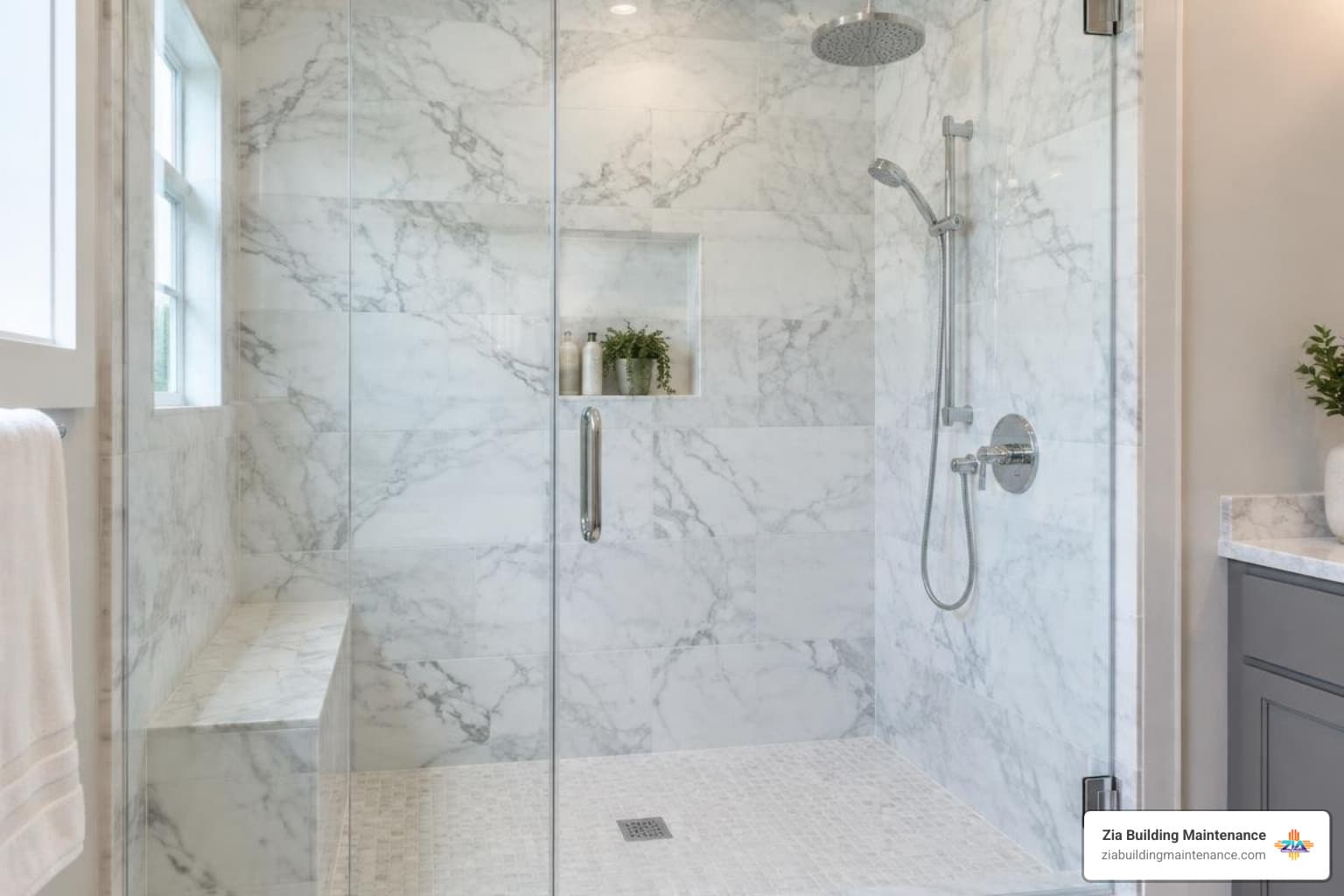
What Is the Best Cleaner for a Marble Tile Shower?
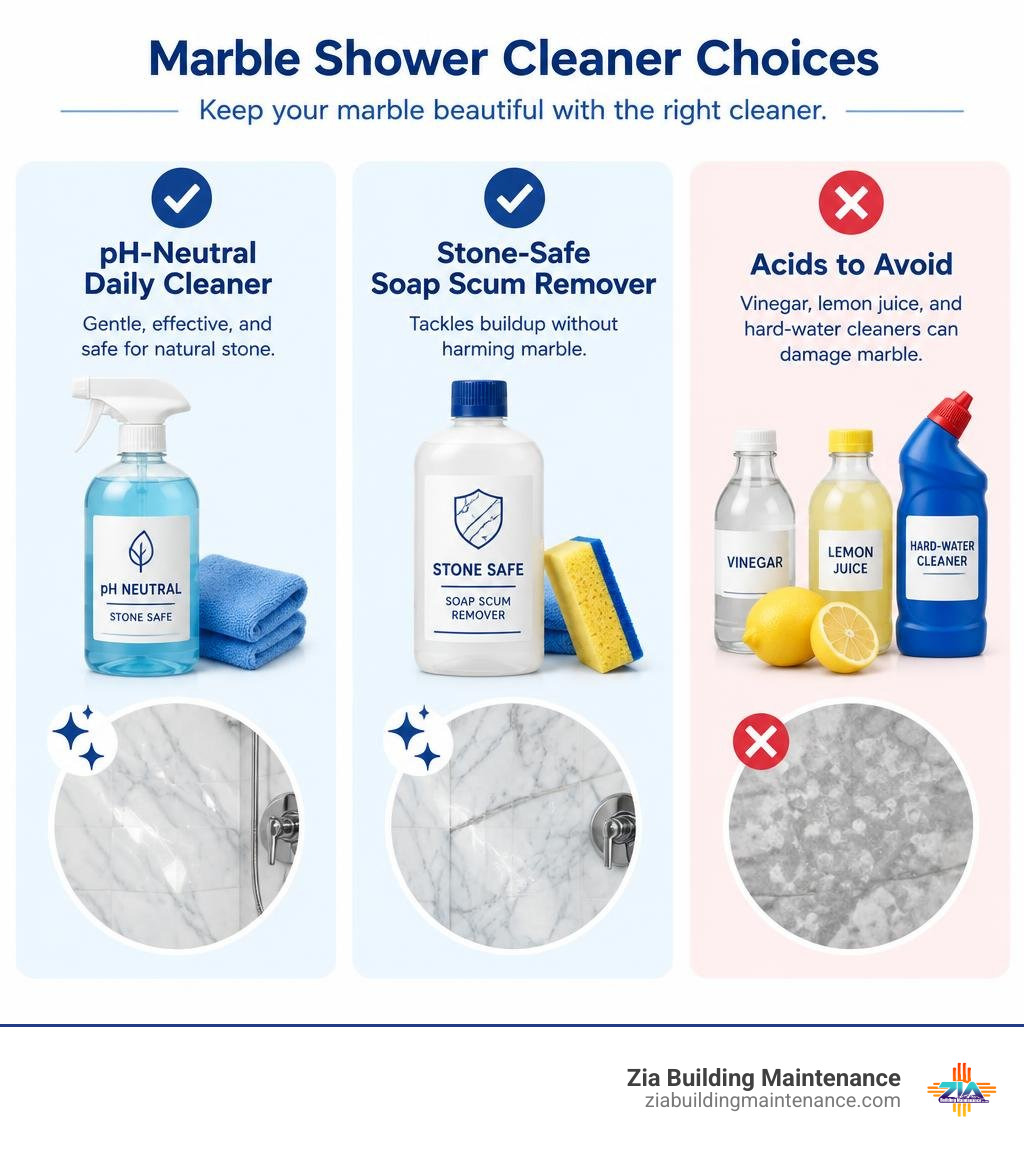
The best cleaner for a marble tile shower is a pH-neutral, non-abrasive cleaner labeled safe for natural stone. For everyday care, use a soft cloth or sponge, rinse the tile, and dry it to limit water spots. For stubborn soap scum, choose a non-acidic remover specifically labeled safe for marble. Skip vinegar, lemon juice, and standard hard-water cleaners: acids can leave dull marks on the stone.
The products in this guide serve different needs, from routine cleaning to heavier buildup. The label matters more than a promise to make your shower shine.
I’m Ashley Cordova, vice president of Zia Building Maintenance, where I oversee daily operations for our Albuquerque commercial cleaning team. My experience managing consistent, detail-focused cleaning informs this guide to finding the best cleaner for marble tile shower surfaces.
Why Marble Showers Require Specialized Cleaners (And What to Avoid)
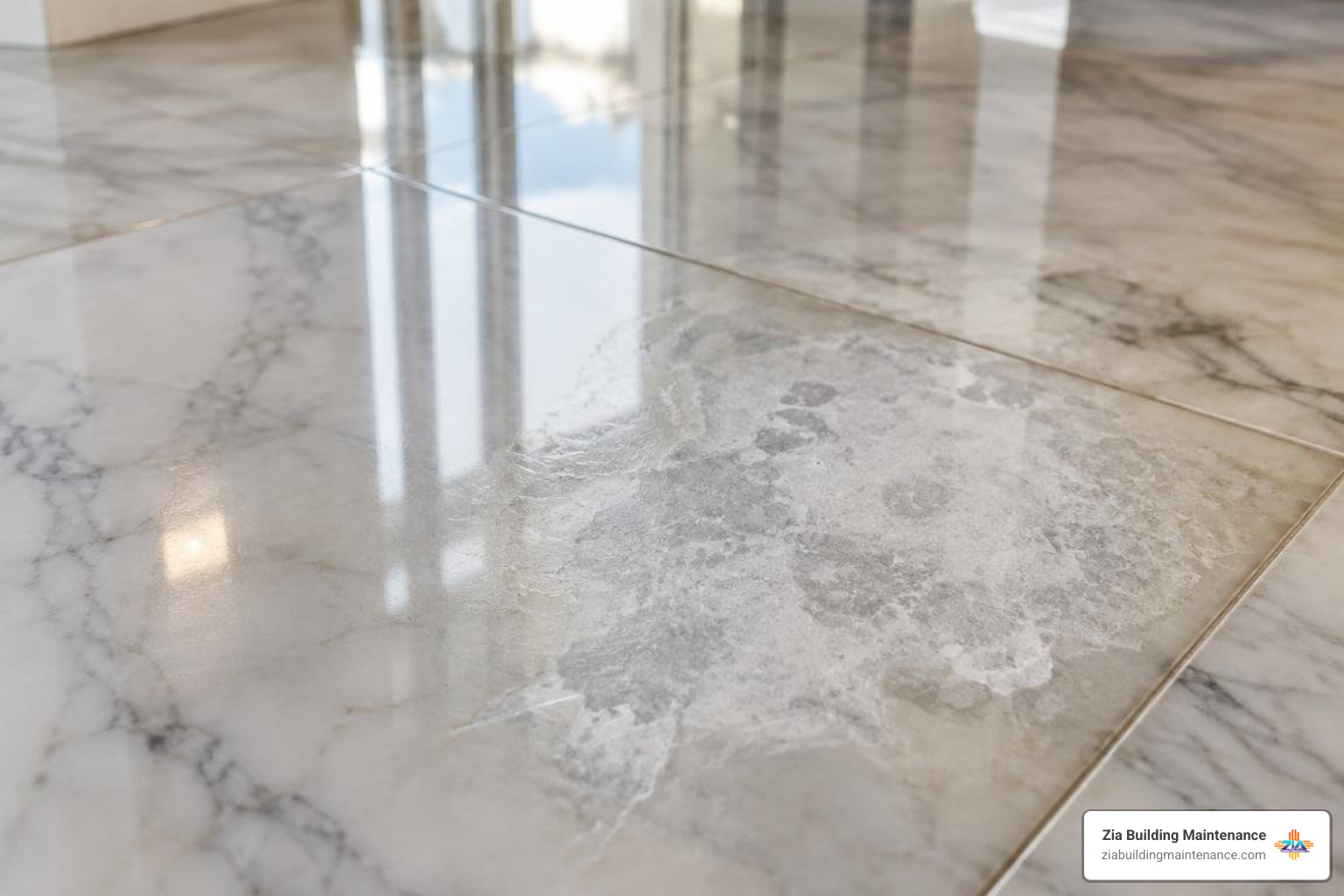
Marble elevates any bathroom with classic beauty, but it is chemically very different from glazed ceramic or porcelain. Marble is a metamorphic rock composed primarily of calcium carbonate. Because calcium carbonate is an alkaline base mineral, it chemically reacts immediately upon contact with acids.
When acidic liquids touch marble, they dissolve the microscopic top layer of the stone in a reaction known as chemical etching. Etching strips away the factory polish, leaving dull, rough, cloudy spots that look like permanent water rings. Roughly 20% of residential stone restoration work is required specifically because someone used an inappropriate cleaner on their stone.
To keep marble shower walls and floors in pristine condition, avoid these common culprits:
- Vinegar and Citrus Juices: Standard DIY cleaning advice frequently suggests white vinegar or lemon juice for bathroom scum. On marble, these acids cause instant surface etching.
- Traditional Bathroom Descalers: Commercial products designed to eliminate limescale often rely on strong sulfamic, phosphoric, or hydrochloric acids. While great for porcelain tubs, they ruin natural stone instantly.
- Bleach and Ammonia: Regular household bleach and high-alkaline ammonia can break down penetrating stone sealers, leaving your tiles defenseless against water and oil intrusion.
- Abrasive Scouring Pads & Powders: Wire brushes, green scouring pads, and gritty abrasive cleansers leave micro-scratches across polished marble surfaces.
Understanding these material vulnerabilities helps prevent common bathroom cleaning mistakes that compromise high-end surfaces.
wp:html
Top Reviews: Finding the Best Cleaner for Marble Tile Shower Surfaces
Selecting the right formulation depends on whether you are managing everyday body oils, breaking down heavy soap scum, or applying a dual-action protective seal.
| Product | Primary Benefit | pH Level | Form | Concentrate Yield |
|---|---|---|---|---|
| StoneTech Klenz-All | Heavy-duty soil & degreasing | 10.5–11.3 (Alkaline) | Concentrate | Up to 64 gal / container |
| MB-3 Soap & Mineral | Tough soap scum & minerals | Non-acidic chelation | Liquid / Concentrate | 1:2 dilution ratio |
| Miracle Sealants Cleaner | Everyday routine maintenance | 7.0 (pH-Neutral) | Ready-to-Use / Conc. | Ready-to-use spray |
| Clean-X Marble & Granite | Soil repel & surface protection | pH-Balanced | Spray | Ready-to-use spray |
StoneTech Klenz-All: Best Cleaner for Marble Tile Shower Deep Cleaning
When shower floors and lower wall tiles accumulate months of embedded grime, body oils, and heavy residue, a gentle daily spray will not cut through the buildup. StoneTech Klenz-All offers industrial-grade cleaning power using an alkaline formulation that loosens deep-seated organic soils without acidic reactions.
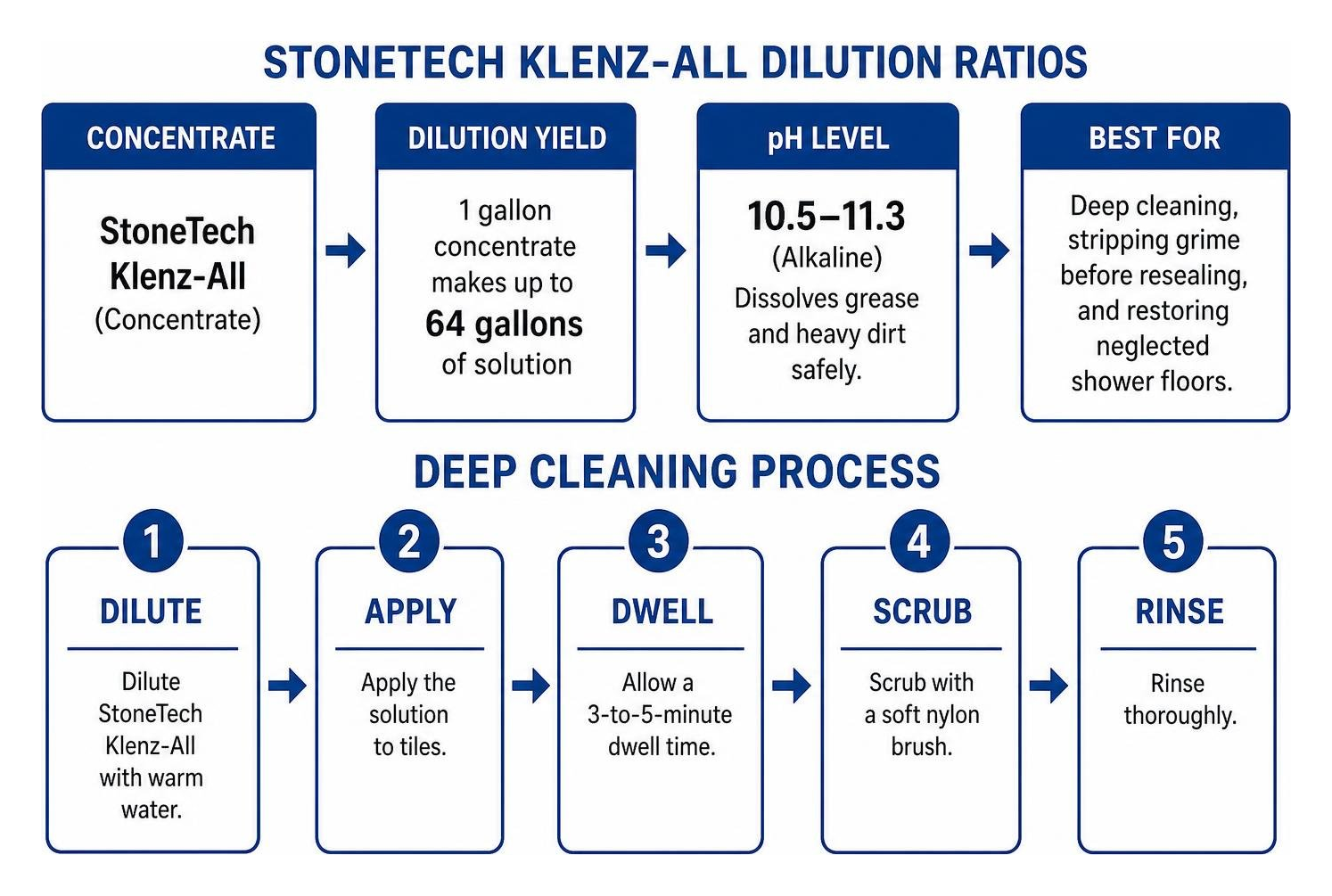
Because it utilizes an alkaline chemistry (pH 10.5 to 11.3 depending on dilution), it dissolves grease and heavy dirt safely. One gallon of StoneTech Klenz-All concentrate makes up to 64 gallons of ready-to-use cleaning solution, making it exceptionally cost-effective for large homes or commercial facilities in Albuquerque and Rio Rancho. Reviewing professional stone and tile cleaner specifications demonstrates how proper dilution rates allow you to tailor the cleaning strength from light degreasing to restorative stone prep.
- Best For: Deep cleaning, stripping grime before resealing, and restoring neglected shower floors.
- Application: Dilute with warm water, apply to tiles, allow a 3-to-5-minute dwell time, scrub with a soft nylon brush, and rinse thoroughly.
MB-3 Soap & Mineral Remover: Best for Stubborn Soap Scum and Hard Water
Soap scum forms when the fatty acids in bar soap bond with dissolved calcium and magnesium in tap water, creating an insoluble white crust. Most commercial descalers use acids to dissolve this mineral crust—a disaster for marble. MB-3 Soap & Mineral Deposit Remover solves this challenge through non-acidic chelating agents that target the crust without touching the calcium carbonate structure of the marble.
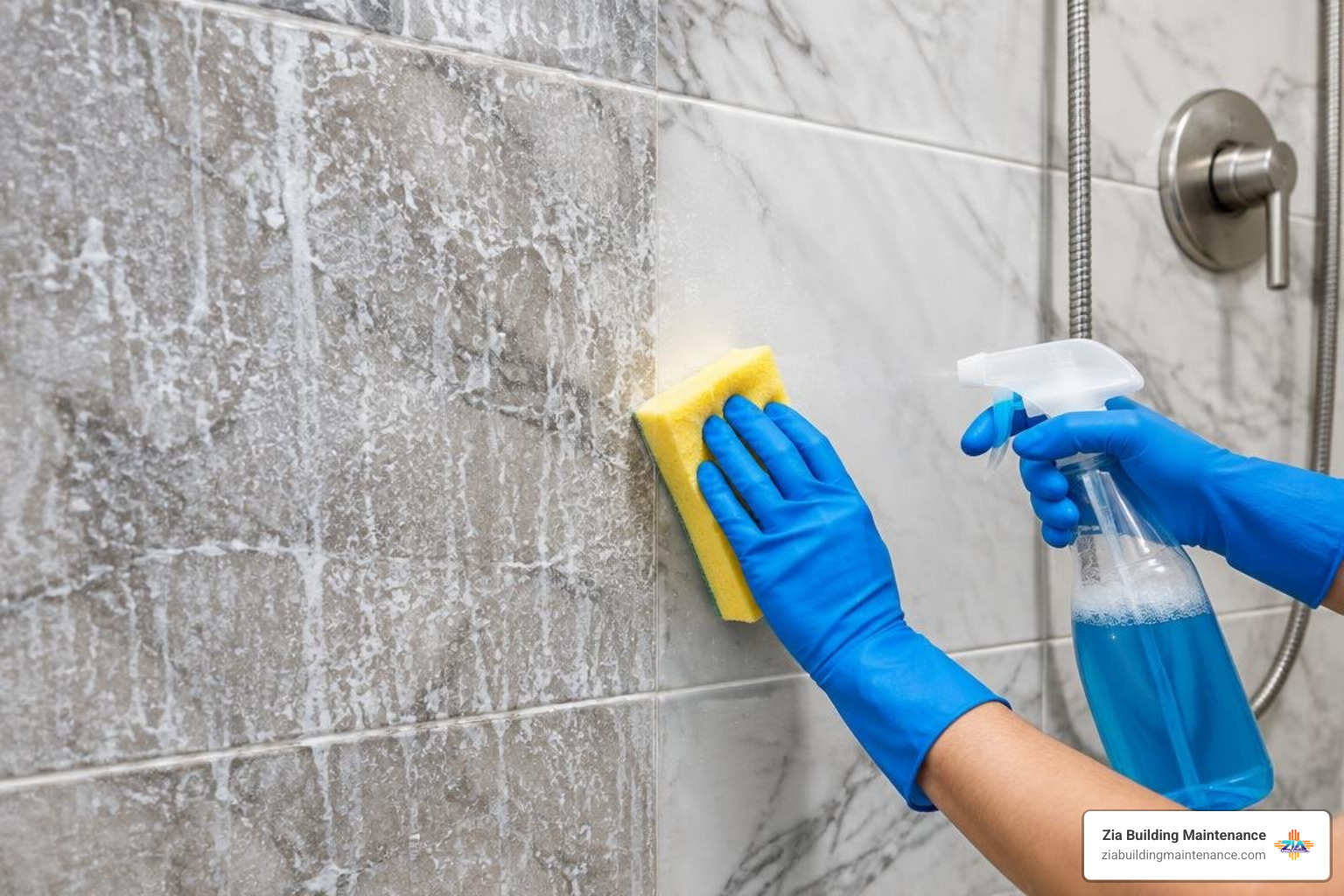
MB-3 is engineered specifically for natural stone environments. It breaks down years of mineral accumulation on shower walls, glass doors, and fixtures without scratching. You can find comprehensive MB-3 stone-safe soap scum cleaner details outlining its exact dilution ratios (typically 1 part MB-3 to 2 parts warm water for heavy soap scum).
- Best For: Removing thick soap scum, hard water haze, and mineral rings on marble shower pans.
- Application: Spray diluted mixture, allow it to dwell without drying on the stone, agitate lightly with a non-scratch pad, and rinse completely with clear water.
Miracle Sealants Tile & Stone Cleaner: Best Cleaner for Marble Tile Shower Daily Maintenance
For routine weekly washdowns, maintaining a balanced surface chemistry prevents premature sealer breakdown. Miracle Sealants Tile & Stone Cleaner is a 100% pH-neutral (pH 7.0), non-toxic, and odor-free cleaner formulated for regular care on sealed and polished natural stone.
Unlike generic multi-surface sprays that leave sticky surfactant films behind, this cleaner evaporates cleanly without streaking or dulling high-gloss marble finishes. According to Miracle Sealants tile and stone cleaner technical data, it can be used indoors on polished marble, limestone, and travertine walls without degrading protective impregnating sealers.
- Best For: Weekly maintenance, mist-and-wipe cleaning, and maintaining polished stone shine.
- Application: Spray directly onto marble shower walls, wipe clean with a plush microfiber cloth, and squeegee dry.
Clean-X Marble & Granite Cleaner: Best Dual-Action Cleaner and Protectant
If you want to cut down on regular cleaning time, Clean-X Marble & Granite Cleaner combines routine cleaning agents with an advanced nano-protective barrier. Each time you clean, the solution leaves behind a microscopic, water-repellent barrier that causes shower water and mineral residues to bead up and roll toward the drain.
By preventing moisture from resting directly against the porous stone, this dual-action spray extends the lifespan of your baseline penetrating seal. Explore Clean-X surface care technology to see how surface-barrier chemistry prevents soap scum from anchoring into micro-pores.
- Best For: Busy households and commercial facilities wanting to reduce weekly scrubbing time.
- Application: Spray onto clean marble, spread evenly across the tile with a microfiber towel, and buff dry for a streak-free, water-shedding finish.
If you manage a business or commercial property in Albuquerque, Corrales, or Los Ranchos, maintaining stone showers across locker rooms or hospitality suites requires structured care. Discover how our bathroom cleaning service delivers consistent, stone-safe sanitation for facilities of all sizes.
Step-by-Step Guide: How to Clean Marble Shower Walls, Floors, and Grout
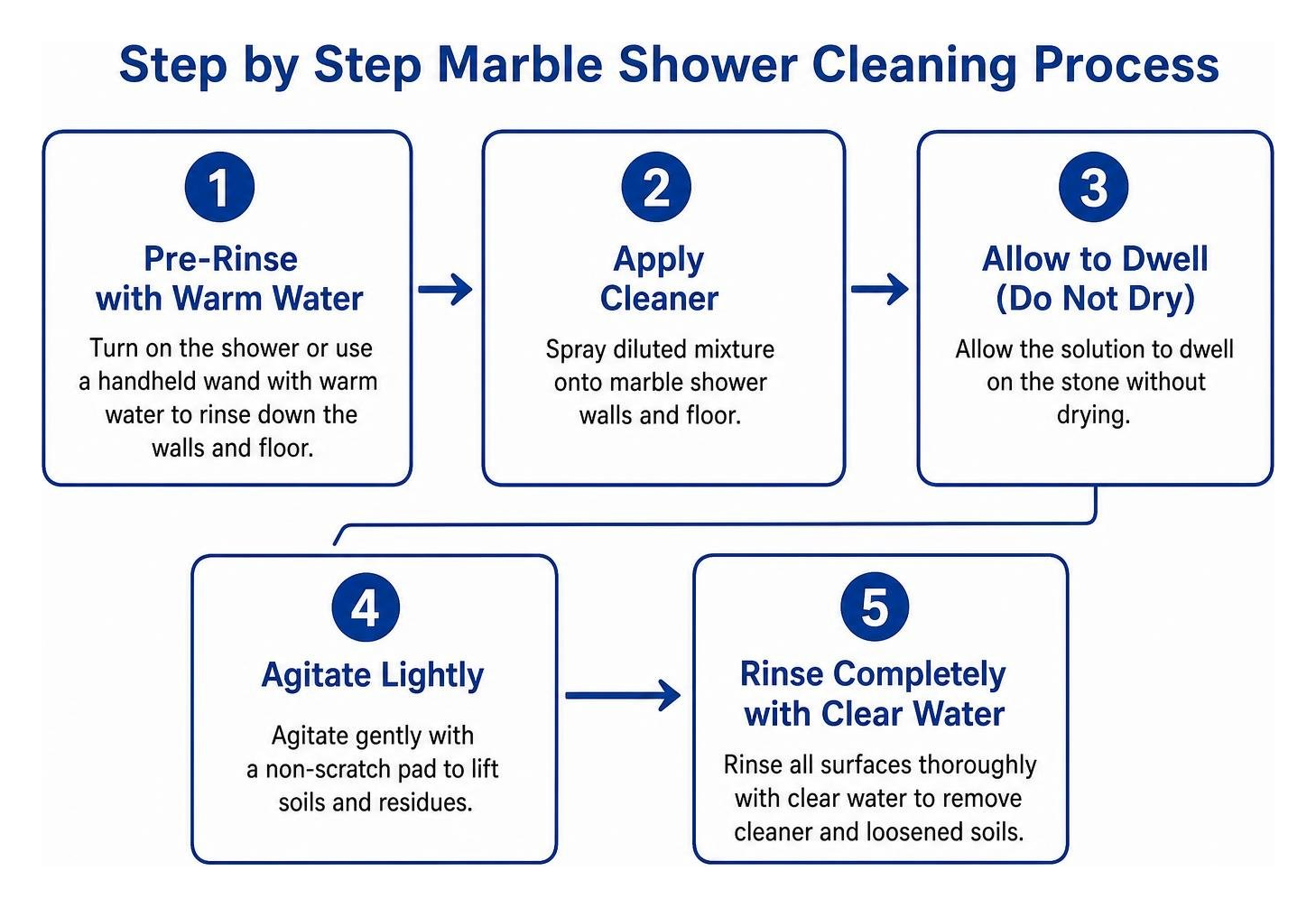
Cleaning natural stone requires proper technique to ensure soils are lifted rather than ground into the stone. Follow this professional workflow:
Step 1: Pre-Rinse with Warm Water
Turn on the shower or use a handheld wand with warm water to rinse down the walls and floor. This loosens topical hair, dust, and light grit, preventing surface abrasion during wiping.
Step 2: Apply Your Stone-Safe Cleaner
Spray your chosen pH-neutral or stone-safe alkaline cleaner evenly across the marble tiles, working from bottom to top on vertical walls to avoid streak marks.
Step 3: Allow Proper Dwell Time
Let the cleaning solution dwell on the stone for 3 to 5 minutes. The chemical surfactants need time to lift emulsified body oils and break down scum. Never let the cleaner dry completely on the surface.
Step 4: Gentle Agitation and Grout Cleaning
Use a clean microfiber cloth or a soft sponge for polished wall tiles. For grout lines, use a soft-bristle nylon brush. Avoid aggressive steel wire or stiff bristle brushes that could scratch the adjacent tile edges. Master proper technique by reviewing our guide on how to clean grout the right way.
Step 5: Thorough Rinse and Squeegee Dry
Rinse all surfaces completely with clean water to remove suspended soils. Immediately run a flexible rubber squeegee down the walls and finish by buffing the stone dry with a lint-free microfiber towel. Eliminating standing water prevents mineral spotting and keeps grout dry.
Need assistance tackling neglected tile across your facility? Zia Building Maintenance provides comprehensive commercial tile cleaning services backed by more than three decades of local janitorial expertise.
Marble Shower Sealing and Long-Term Maintenance Schedule
Even polished marble contains natural microscopic pores. In high-humidity shower enclosures, water and dissolved minerals seep into these pores, leading to subsurface discoloration, mold roots, and accelerated deterioration.
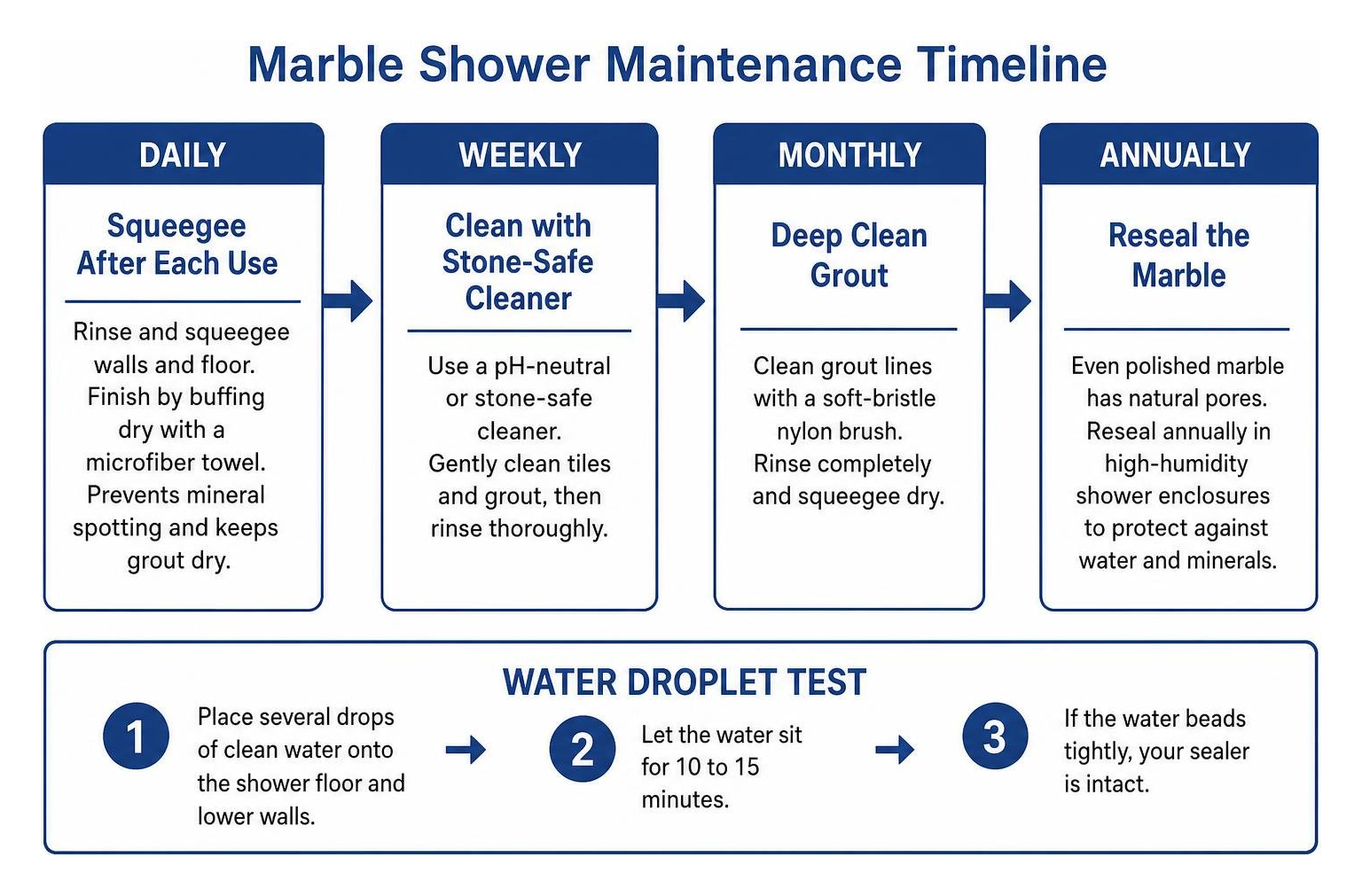
The Water Droplet Test
To verify if your marble shower requires resealing:
- Place several drops of clean water onto the shower floor and lower walls.
- Let the water sit for 10 to 15 minutes.
- If the water beads tightly, your sealer is intact.
- If the stone beneath the droplets darkens, moisture is penetrating the surface, and resealing is necessary.
Industry standards recommend resealing residential marble showers every 6 to 12 months, while Rock Doctor suggests resealing natural stone every 12 to 18 months depending on stone porosity and usage frequency. Commercial installations in athletic clubs or boutique hotels often benefit from quarterly sealing intervals.
Daily Maintenance Habits
- Squeegee After Every Shower: Removing excess water eliminates up to 80% of soap scum and hard water deposit buildup.
- Run Ventilation Fans: Leave bathroom exhaust fans running for 20 minutes after showering to lower relative humidity and prevent mold growth in caulked joints. If you spot discoloration around silicone seals, learn actionable techniques from our guide on cleaning mold off bathtub caulking.
Frequently Asked Questions About Marble Shower Cleaning
Can you use vinegar or baking soda on marble shower tile?
Never use vinegar on marble; its high acidity (pH 2.4 to 3.0) immediately dissolves calcium carbonate, causing permanent surface etching. Baking soda is mildly alkaline (pH ~8.3), which makes it chemically safe, but its granular structure is abrasive. If scrubbed aggressively across polished marble, baking soda can dull high-gloss finishes. If you want safe, natural cleaning formulas, check out our DIY natural tile and grout cleaner guidelines.
How do you remove stubborn hard water stains without etching marble?
To safely remove hard water stains, use a non-acidic chelating remover like MB-3 or a specialized stone polishing paste designed specifically for calcium removal. These formulas bond to external mineral crusts without reacting with the stone’s base structure. Apply the solution, let it dwell for 5 minutes, and buff gently with a white non-scratch pad.
How often should marble shower tile and grout be cleaned?
Squeegee walls daily after use. Perform a light washdown once a week using a pH-neutral spray. A deeper clean with an alkaline stone degreaser should be conducted monthly or quarterly, followed by checking sealer integrity via the water droplet test.
What should I do if my marble shower tile already looks dull or etched?
Light superficial etching can often be removed using a specialized marble polishing compound and a microfiber pad. However, deep chemical burns caused by acidic cleaners like toilet bowl cleaners or vinegar require professional diamond honing and mechanical restoration to re-polish the stone surface. For persistent grout stains, check our advice on finding the best tile grout whitener for stone-safe options.
Conclusion and Professional Stone Care Advice
Maintaining a marble tile shower does not require complicated chemicals—it requires the right chemistry. By pairing a pH-neutral daily cleaner with non-acidic soap scum removers and consistent squeegee habits, you protect your stone investment from costly etching and water damage.
Since 1989, Zia Building Maintenance has provided dependable janitorial and commercial cleaning services across Albuquerque, Rio Rancho, Corrales, and Los Ranchos. Whether you are maintaining luxury commercial suites or athletic facility locker rooms, our experienced team delivers detail-driven care that keeps natural stone surfaces pristine. For more product strategies, read our guide on finding the best shower and tub cleaner for tough scum to keep every bathroom in your facility looking its best.