

DIY Natural Tile and Grout Cleaner That Actually Works
Why Choose a Natural Tile and Grout Cleaner?
Natural tile and grout cleaner solutions work surprisingly well — and you probably already have everything you need in your kitchen or pantry.
Quick Answer: Best Natural Tile and Grout Cleaner
| Method | Best For | Rating |
|---|---|---|
| Baking soda + hydrogen peroxide | Deep cleaning and whitening | 9/10 |
| Baking soda + hydrogen peroxide + dish soap | Showers and vertical surfaces | 9/10 |
| Baking soda + hydrogen peroxide + castile soap + lemon oil | All-purpose restoration | 5/5 |
| Baking soda + water | Light maintenance cleaning | 7/10 |
| Vinegar + water | Not recommended for grout | 3/10 |
Grout is porous. That means it traps dirt, grease, and moisture over time — and regular mopping simply doesn’t reach it. The result is grout that looks dark, dingy, or even black, even when the tiles themselves are clean.
The good news? A few simple, non-toxic ingredients can restore grout to its original color without harsh chemicals, expensive products, or professional equipment.
That matters especially in homes with kids, pets, or anyone sensitive to chemical fumes. In busy spaces like kitchens and bathrooms — whether in a family home or a commercial facility in Downtown Albuquerque — clean grout isn’t just about looks. It’s about hygiene and safety.
I’m Ashley Cordova, Vice President of Zia Building Maintenance, a family-owned janitorial company serving New Mexico since 1989 — and through years of overseeing professional floor and tile care, I’ve seen what works and what doesn’t when it comes to finding a reliable natural tile and grout cleaner. In this guide, I’ll walk you through the best DIY recipes, application methods, and maintenance habits to keep your tile looking its best.
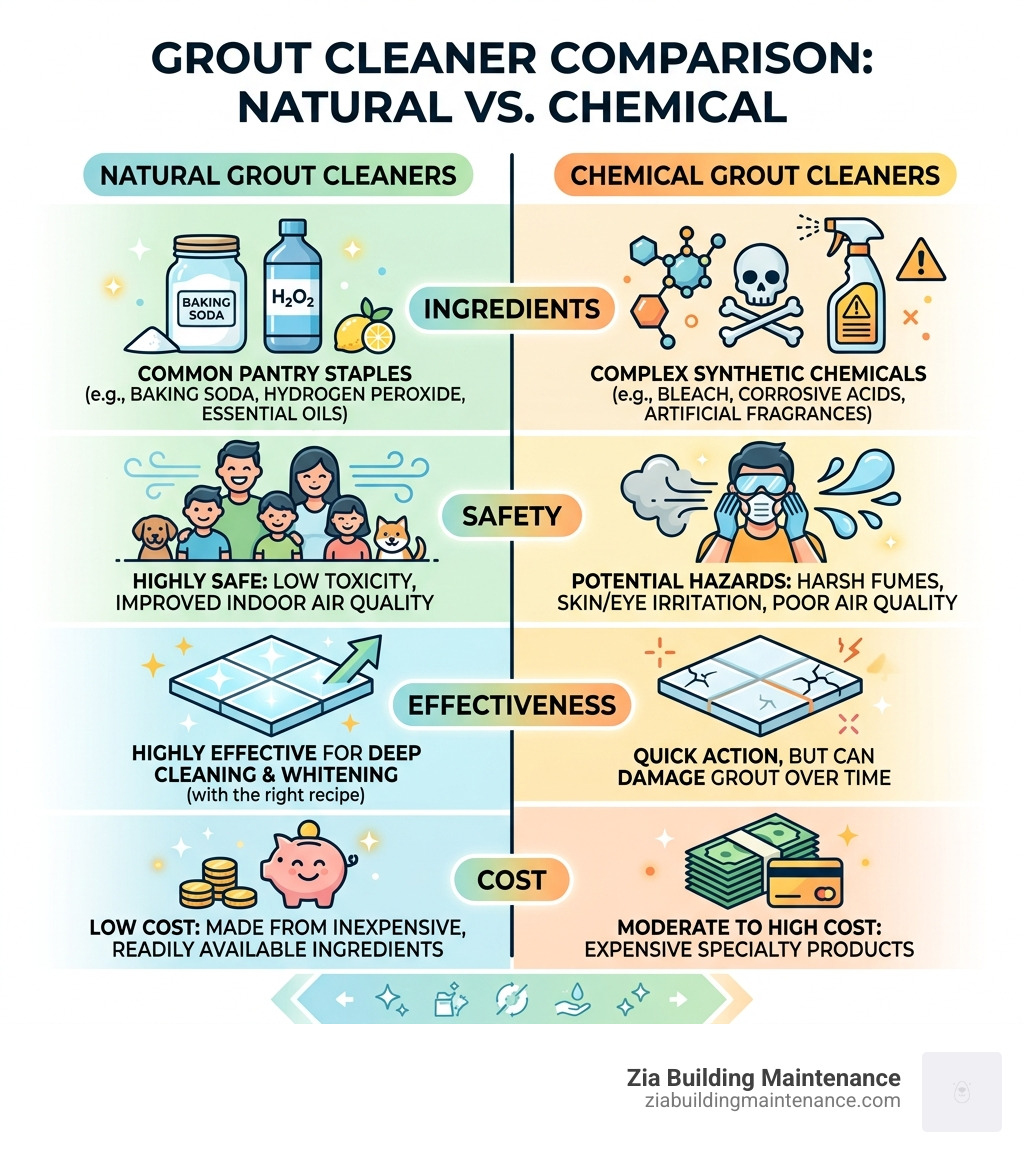
Choosing a natural tile and grout cleaner isn’t just a trend for 2026; it’s a practical decision for the longevity of your home and the health of your family. Traditional commercial cleaners often rely on high concentrations of bleach or synthetic fragrances that can linger in the air long after the scrubbing is done. In Albuquerque, where we spend plenty of time indoors during the windy spring months, maintaining high indoor air quality is essential.
Natural cleaners are biodegradable and typically made from pantry staples like baking soda and hydrogen peroxide. This makes them incredibly cost-effective. Instead of spending $15 on a specialized bottle of “extra-strength” chemicals, you can whip up a batch of highly effective cleaner for pennies. Furthermore, why having dirty floors harms your business or home goes beyond aesthetics; built-up grime can harbor bacteria and allergens. By using a natural DIY grout cleaner that works great, you ensure a deep clean without introducing new toxins into your environment.

The Ultimate Natural Tile and Grout Cleaner Paste
Through extensive testing and research, one recipe consistently stands out as the “gold standard” for DIY grout restoration. This paste combines the abrasive power of baking soda with the oxidizing strength of hydrogen peroxide.
The “Power Paste” Recipe:
- 1/2 cup Baking Soda: Provides gentle abrasion to lift surface dirt.
- 1/4 cup Hydrogen Peroxide: Acts as a natural whitener and disinfectant.
- 1 tsp Castile Soap (or dish soap): Helps cut through grease and helps the mixture stick.
- 5-10 drops Lemon Essential Oil: Adds a fresh scent and extra grease-cutting power.
| Ingredient | Purpose | Effectiveness Rating |
|---|---|---|
| Baking Soda | Scrubbing power | 5/5 |
| Hydrogen Peroxide | Whitening/Disinfecting | 5/5 |
| Castile Soap | Grease removal | 4/5 |
| Lemon Oil | Scent/Solvent | 3/5 |
Safety for Pets and Children in Albuquerque Homes
If you live in Downtown Albuquerque or the surrounding North Valley, you know how much dust and dirt can be tracked in. If you have a “floor-licking” pet—like the famous corgis mentioned in many DIY circles—using a non-toxic natural tile and grout cleaner is non-negotiable.
Standard cleaners can leave behind caustic residues that irritate paws or cause illness if ingested. Natural recipes are non-caustic and safe for the whole family. When cleaning dirty floors, the peace of mind knowing your toddler can crawl across the tile safely is worth the extra few minutes of mixing your own solution.
The Best Homemade Natural Grout Cleaner Recipes
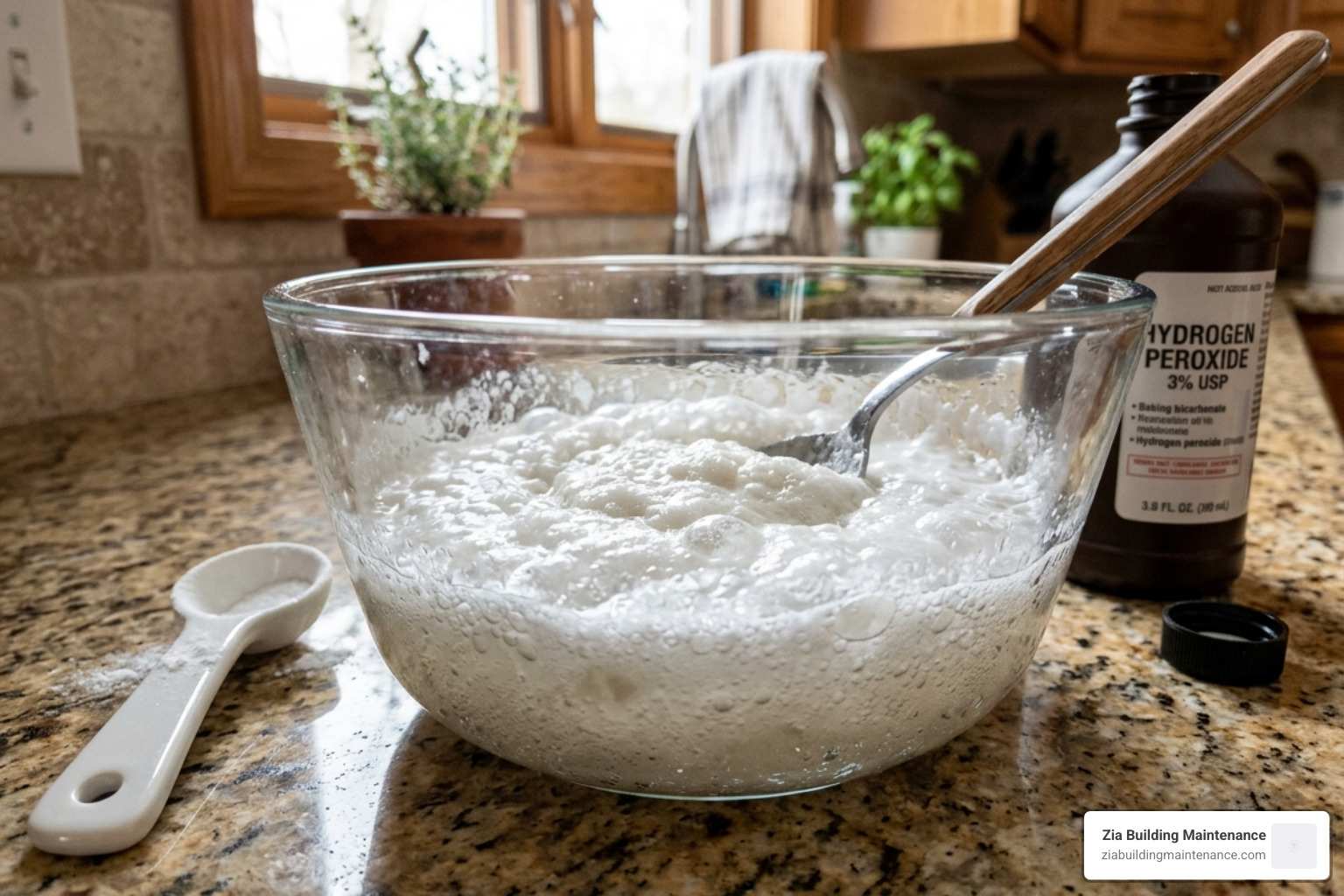
When it comes to floor care service, we’ve found that the best results come from ingredients that create a chemical reaction to lift stains. Hydrogen peroxide is essentially “oxygen bleach.” When mixed with baking soda, it creates a bubbling, foamy reaction that gets deep into the pores of the grout.
A popular DIY grout cleaner recipe with baking soda involves mixing 7 cups of water, 1/2 cup of baking soda, 1/3 cup of lemon juice, and 1/4 cup of vinegar. While this is great for general tile cleaning, for the grout lines themselves, a thicker paste is usually more effective as it stays where you put it.
Whitening with a Natural Tile and Grout Cleaner
If your white grout has turned a depressing shade of grey or brown, you need dwell time. According to The Coconut Mama, applying a hydrogen peroxide and baking soda paste and letting it sit for 15–20 minutes allows the oxygen to break down organic stains. This oxidation process “bleaches” the stain away naturally without the respiratory irritation caused by chlorine bleach.
Heavy-Duty Scrub for High-Traffic Areas
For commercial spaces or busy Albuquerque kitchens, sometimes you need a bit more “oomph.” Adding washing soda or borax to your mix can handle stubborn grime that a commercial VCT cleaning service might encounter in high-traffic hallways. Borax is particularly good at softening hard water, which helps the other cleaning agents work more effectively.
Step-by-Step Guide: How to Clean Grout Naturally
Ready to get to work? Follow these steps for the best results.
- Prep the Area: Sweep or vacuum the floor thoroughly. You don’t want to be scrubbing loose hair or dust into your grout lines.
- Mix Your Paste: Combine your baking soda, hydrogen peroxide, and a dash of soap until it reaches the consistency of watery shaving cream.
- Apply: Use a spoon or a gloved finger to spread the paste along the grout lines.
- Dwell Time: Let it sit for at least 5–10 minutes. For heavy staining, go for 20 minutes.
- Scrub: Use a stiff-bristled grout brush or an old toothbrush. Work in circular motions.
- Wipe and Rinse: Use a damp microfiber cloth to wipe away the paste. Follow up with a quick mop using plain water to ensure no “chalky” baking soda residue remains.
Knowing what’s the best way to clean my floor often comes down to this simple combination of chemistry and elbow grease.
Applying Your Natural Tile and Grout Cleaner to Floors and Walls
Cleaning bathroom walls or shower stalls presents a unique challenge: gravity. To make your natural tile and grout cleaner stick to vertical surfaces, increase the amount of liquid soap (like Castile soap) in your recipe. This creates a more “foamy” or “tacky” texture that won’t immediately slide down to the drain. Wellness Mama suggests using a spray bottle for a 1:1 vinegar and water mix as a pre-treatment, but for the actual scrub, the thick paste is king.
Removing Mold and Mildew Naturally
Bathrooms in Rio Rancho and Bernalillo can still struggle with mildew despite our dry climate, especially in poorly ventilated master showers. Hydrogen peroxide is a fantastic mold killer. Unlike bleach, which often just “whitens” the mold while leaving the roots alive in porous grout, peroxide penetrates and kills the spores. For an extra boost, add a few drops of tea tree oil, which has natural antifungal properties. Spray a 1:1 mix of peroxide and water on the area, let it sit for 45 minutes, then rinse. This is a staple tip from Grit for maintaining a healthy, mold-free home.
Essential Tools and Maintenance Tips for 2026
While the cleaner does the chemical work, the right tools do the mechanical work. In 2026, we have more options than ever.
- Grout Brushes: Look for nylon bristles. They are stiff enough to move dirt but won’t scratch your tile.
- Electric Brushes: If you have a large area, a handheld electric cleaning brush can save your wrists.
- Drill Attachments: For the ultimate “Cinderella” hack, use a brush attachment on a power drill. It turns a two-hour job into a twenty-minute one.
- Microfiber Cloths: These are essential for the final wipe-down to grab the tiny particles of baking soda.
If you find that the DIY route is too much for your schedule, there are Albuquerque floor cleaning services that will make your tiles sparkle like new by using professional-grade versions of these same principles.
Why to Avoid Vinegar and Bleach on Grout
It might be tempting to reach for the vinegar or bleach, but be careful. Grout is typically cement-based, which makes it alkaline. Vinegar is highly acidic (pH ~2). While it’s great for glass, using it repeatedly on grout can actually corrode the material over time, leading to crumbling and the need for expensive re-grouting.
Bleach is another common mistake. As noted by Our Oily House, bleach can weaken the bond between the tile and the grout. It also creates toxic fumes that are dangerous in small, enclosed bathrooms. Stick to the peroxide-based natural tile and grout cleaner for a safer, more sustainable result.
Sealing Grout to Prevent Future Stains
Once your grout is sparkling clean and completely dry, you must seal it. Grout is a sponge; if you don’t seal it, it will start absorbing dirty mop water the very next day.
We recommend resealing grout every 6–12 months in high-traffic areas like showers and kitchens. In less-used guest bathrooms, you can wait up to 2 years. This creates a moisture barrier that makes future cleaning as simple as a quick wipe. Think of it like a guide to stripping and waxing—it’s the protective layer that preserves all your hard work.
Frequently Asked Questions about Natural Grout Cleaning
Can natural cleaners whiten deeply stained grout?
Yes! The key is the combination of baking soda and hydrogen peroxide. The peroxide acts as a natural bleaching agent, while the baking soda provides the abrasive “scrub” needed to lift the surface layer of grime. For deep stains, a 20-minute dwell time is essential to allow the oxidation process to work.
How often should I clean and seal my grout in Albuquerque?
In areas like Downtown Albuquerque where dust can be high, we recommend a deep clean every 6 months. Regular maintenance cleaning (mopping with a pH-neutral cleaner) should happen weekly. Seal your grout at least once a year to keep it from absorbing the unique New Mexico “red dirt” that can permanently stain porous surfaces. The benefits of a professional office floor cleaner often include this type of scheduled maintenance to prevent long-term damage.
Is it safe to use these DIY recipes on natural stone?
Caution is required here. Natural stones like marble, granite, and travertine are very sensitive to acids. While baking soda is generally safe, you should never use vinegar or lemon juice on natural stone, as it will “etch” (eat away) the surface, leaving permanent dull spots. For stone, stick to a pH-neutral cleaner or a very diluted mix of Castile soap and water. This is a classic example of why one size fits all floor cleaning fails.
Conclusion
Restoring your floors with a natural tile and grout cleaner is one of the most satisfying home maintenance tasks you can perform. It’s cheap, safe for your family, and incredibly effective at bringing back that “like-new” sparkle.
At Zia Building Maintenance, we pride ourselves on being Albuquerque’s trusted experts in floor care since 1989. Whether you are a homeowner tackling a weekend project or a business owner looking for a commercial tile cleaning service, we are here to help. Our family-owned team understands the specific challenges of New Mexico environments, from the sand in Rio Rancho to the high-traffic demands of Downtown Albuquerque. Clean floors aren’t just our job—they’re our legacy.