Don’t Let Your Dental Chair Upholstery Go Down the Drain
Why a Proper Dental Chair Clean Protects Your Practice — and Your Patients
Dental chair clean protocols are non-negotiable in any dental office. Here’s a quick summary of what proper cleaning looks like:
Quick Reference: How to Clean a Dental Chair
- Daily — Wipe all surfaces with warm soapy water between every patient. Use EPA-registered disinfectants on contaminated areas only.
- Barriers — Apply disposable barrier film to high-touch surfaces (headrest, armrests, controls) before each patient. Remove and replace between patients.
- Waterlines — Flush dental unit waterlines for 2 minutes at the start of each day, and 30 seconds between patients.
- Disinfectants — Use non-chlorine, low-alcohol (under 20%) disinfectants on upholstery. Always follow with a soapy water wipe to remove residue.
- Weekly — Deep clean crevices, disinfect suction lines, and polish upholstery with a conditioner like beeswax to replenish moisture.
- Avoid — High-alcohol cleaners, bleach on upholstery, abrasive scrubbers, and phenol-based products. These crack and yellow vinyl fast.
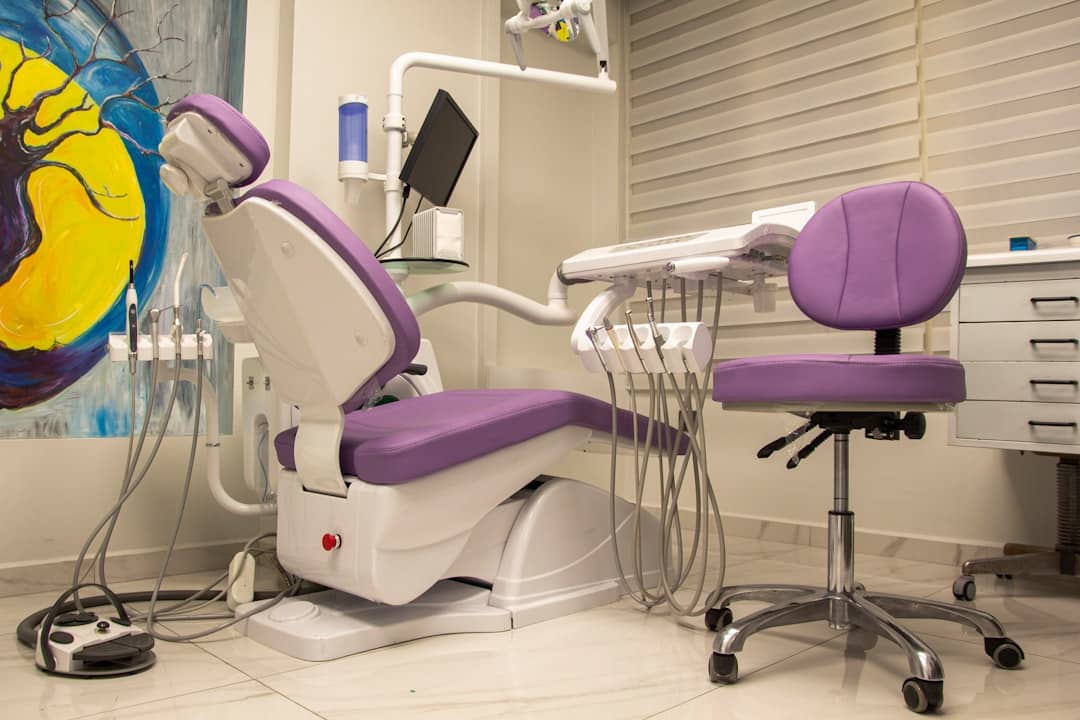
Your dental chair is one of the hardest-working — and most expensive — pieces of equipment in your operatory. Patients in Albuquerque dental offices spend the bulk of their visit sitting in it. What they see and feel shapes how they judge your practice.
Cracked upholstery. Yellowed vinyl. A chair that smells like chemical buildup. These aren’t just aesthetic problems. They signal to patients that something may be off with your infection control standards.
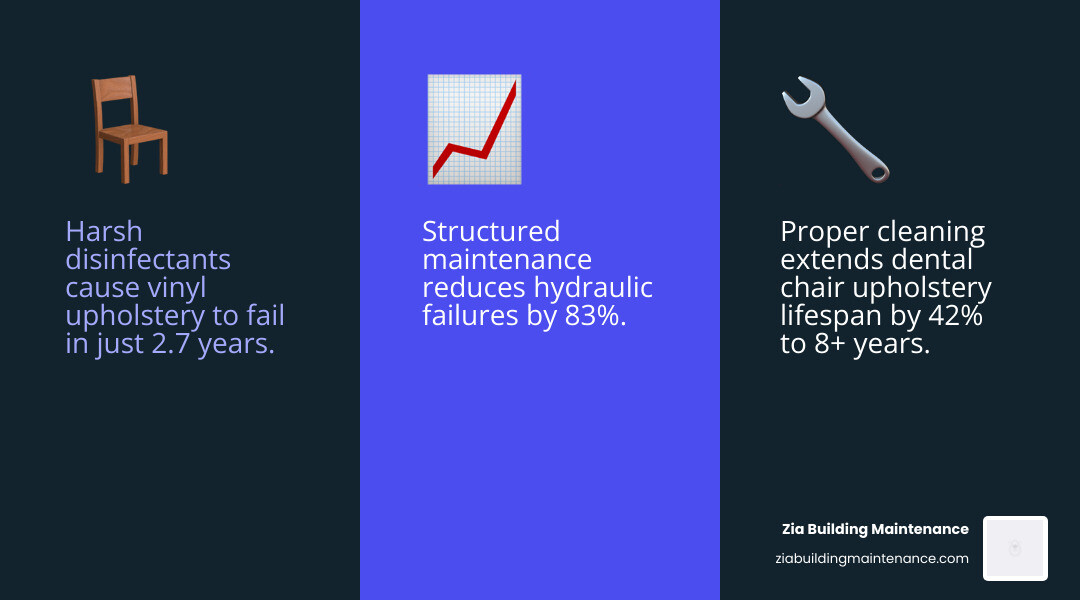
Here’s the hard truth: most upholstery damage is self-inflicted. Research shows that vinyl cleaned only with harsh disinfectants fails in as little as 2.7 years on average. But with the right cleaning approach, that same material can last 8 years or more — a 42% lifespan extension.
And it’s not just the upholstery. Dental practices with structured maintenance protocols experience 83% fewer hydraulic failures. Hydraulic seal problems alone account for 45% of all dental chair repairs. The cost of ignoring routine care adds up fast.
Getting your dental chair cleaning right isn’t complicated. But it does require consistency, the right products, and knowing what not to do.
I’m Ashley Cordova, Vice President of Zia Building Maintenance, a family-owned commercial cleaning company serving Albuquerque since 1989 — and keeping dental office environments clean and compliant is a core part of what we do every day. In this guide, I’ll walk you through everything your team needs to know to keep your dental chair clean, protected, and performing for years to come.
Key dental chair clean vocabulary:
- professional medical office cleaning
- dentist office cleaning services
- dental office cleaning services cost
The Essential Daily Protocol for a Dental Chair Clean
In the environment of a Rio Rancho or Albuquerque dental clinic, it’s tempting to take shortcuts. However, establishing a rigid daily dental chair clean protocol is the foundation of infection control. According to Effective Tips To Maintain Dental Chairs For Hygiene, scientific cleaning methods are vital for both treatment safety and equipment longevity.
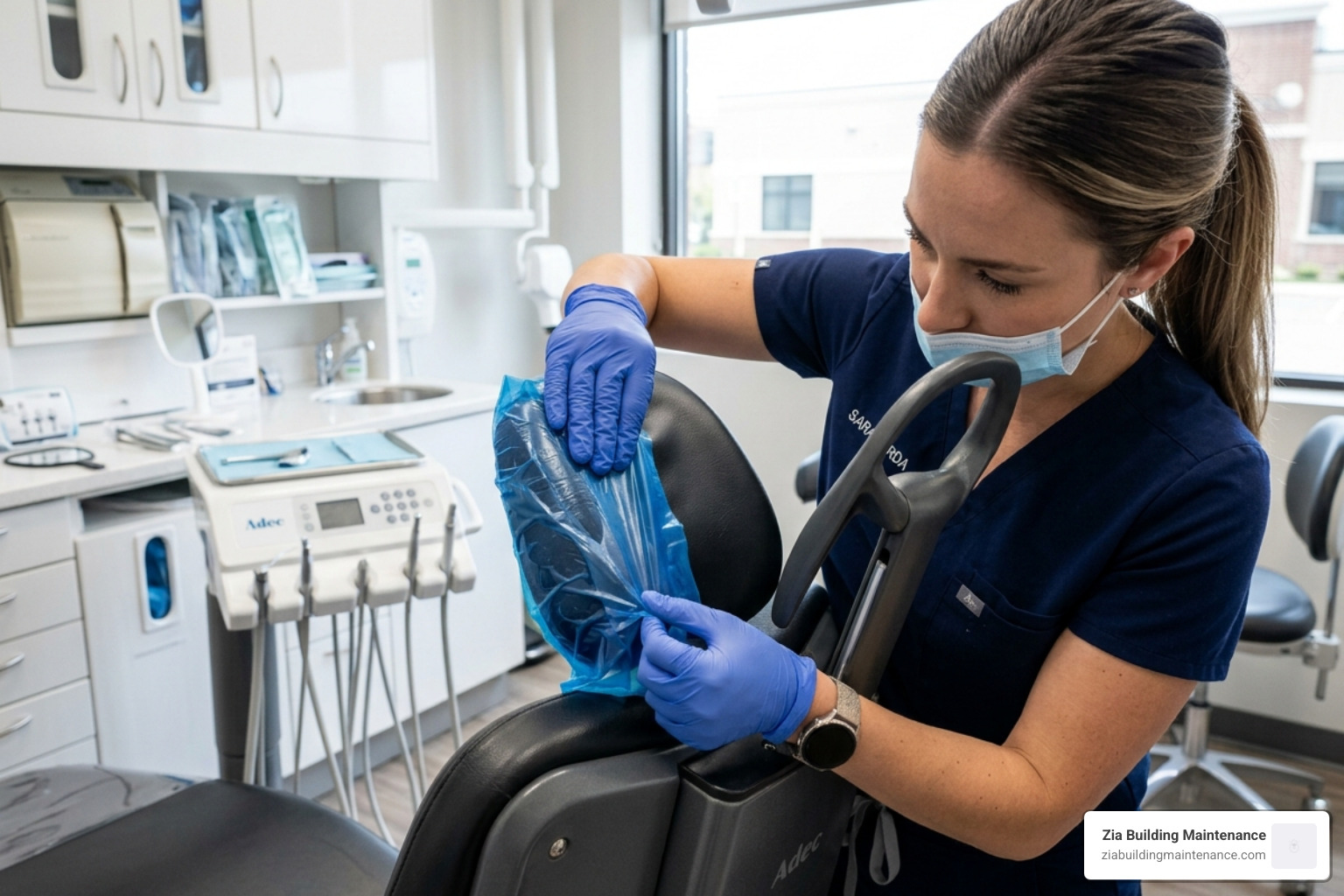
Every morning should start with a systematic check. We recommend testing all chair functions—raise, lower, tilt—to ensure the hydraulic system is operating smoothly before the first patient arrives. But the real work happens in the waterlines and on the surfaces.
Morning Startup and Between-Patient Turnaround
Before the first patient is seated, your team must address the dental unit waterlines (DUWLs). Overnight, bacteria can colonize these lines. A 2-minute morning flush with distilled or RO water is the industry standard to purge stagnant water.
Between patients, the clock is ticking, but asepsis cannot be compromised. The turnaround should follow these steps:
- Remove Barriers: Carefully peel off all used barrier films from the headrest, armrests, and touchpads.
- Surface Wipe: Use a soft cloth dampened with warm, soapy water to remove physical debris, saliva, and sweat.
- Flush Lines: Perform a 30-second flush of the handpiece and air/water syringe lines to prevent cross-contamination between patients.
- Re-apply Barriers: Once surfaces are dry, apply fresh barrier film. This “barrier technique” is the most effective way to protect the chair’s upholstery from chemical damage, as it reduces the need for harsh disinfectants on the vinyl itself.
Evening Shutdown and Deep Cleaning
As the sun sets over the Sandia Mountains and you wrap up your day in Downtown Albuquerque, the evening shutdown begins. This is when we tackle the areas that were bypassed during the daytime rush.
First, suction lines need attention. We advise drawing a vacuum system sanitizing solution through the hoses. Some practices find success running disinfectant through these lines and letting it sit overnight to maximize biofilm removal. Don’t forget the solids collector; checking and cleaning this filter daily prevents clogs and maintains suction power.
Finally, documentation is key. Keeping a log of when the dental chair clean was performed, any visible wear noticed, and when filters were changed ensures your practice remains compliant with New Mexico health standards and manufacturer warranties.
Choosing the Right Disinfectants and Cleaning Agents
Not all cleaners are created equal. In fact, using the wrong product is the leading cause of premature equipment failure. We often see beautiful chairs in Bernalillo offices ruined by “over-cleaning” with the wrong chemicals.
| Cleaner Type | Safety Rating | Best Use Case |
|---|---|---|
| Warm Soapy Water | High | Daily cleaning; removing residue |
| 10% Bleach Solution | Moderate | Blood spills; non-upholstered surfaces |
| Alcohol (>20%) | Low | Emergency disinfection only; dries out vinyl |
| Phenols | Avoid | Causes yellowing and permanent damage |
As noted in Are you cleaning the operatory chairs correctly? | Dentistry IQ, many dental assistants unknowingly damage chairs by using standard disinfectant wipes as their primary cleaning tool. These wipes often contain high levels of alcohol or bleach that strip the essential oils from vinyl upholstery.
Safe Products for Dental Chair Clean Longevity
To achieve that 42% lifespan extension, your primary tool should be a neutral detergent mixed with warm water (typically a 1:9 ratio). This allows the material to “breathe” and prevents the buildup of sticky residues that harbor bacteria.
If you must use a disinfectant due to contamination, look for EPA-registered, hospital-grade products with low alcohol content (under 20%). Always use a microfiber cloth rather than a paper towel to avoid micro-scratches on the surface. A pro tip we share with our Albuquerque clients: always follow a disinfectant wipe with a damp water wipe to remove chemical salts that cause yellowing.
Chemicals to Avoid to Prevent Upholstery Cracking
If your chair’s vinyl feels stiff or looks like it has “spider-web” cracks, it’s likely a victim of chemical abuse. Avoid these at all costs:
- Isopropyl Alcohol: Repeated use causes vinyl to lose its elasticity, leading to cracks within 2.7 years.
- Abrasive Scrubbers: Never use scouring pads. They destroy the protective topcoat of the upholstery.
- Phenols and Acetone: These can melt certain plastics and cause permanent discoloration.
Mechanical Maintenance: Hydraulics, Waterlines, and Filters
While we often focus on the “visible” dental chair clean, the mechanical “gut” of the chair is just as important.
Hydraulic seal failures account for 45% of all chair repairs. However, practices that implement monthly maintenance—including checking for leaks and ensuring the pressure is between 0.6-0.8 MPa—see an 83% reduction in these failures.
Managing Dental Chair Clean Waterlines and Suction Systems
Waterline safety is a major focus for 2026. The CDC guidelines for heterotrophic bacteria are ≤500 CFU/mL, but many manufacturers now recommend a more stringent target of <200 CFU/mL.
To keep your water clean:
- Shock Treatments: Perform these weekly or monthly depending on your water quality tests.
- Filter Changes: Replace your water filter every 3 months and your air filter every 6 months.
- Lubrication: Regularly lubricate pivot points and moving mechanical parts to reduce friction and prevent the “jerky” movements that can unnerve patients.
When to Repair vs. Replace Your Dental Equipment
Every piece of equipment has a sunset. While a well-maintained chair can last 15 to 20 years, there comes a point where the cost of keeping an old chair running exceeds its value.

We use the 15-20% Rule: If the annual repair costs for a single chair exceed 15-20% of its replacement value (typically $1,500 to $6,000), it’s time to shop for a new one.
Beyond the numbers, consider these factors:
- Parts Availability: If the manufacturer no longer supports your model, a small $50 part failure could lead to weeks of downtime.
- Aesthetics: If the upholstery is cracked beyond repair, it becomes a biohazard that cannot be truly sanitized.
- Total Cost of Ownership: A 2025 analysis found that practices using structured, professional maintenance reduced total ownership costs by 23% over a 10-year period, saving up to $8,000 per chair.
Frequently Asked Questions about Dental Chair Maintenance
How often should I deep clean the upholstery?
You should perform a surface dental chair clean with mild soap and water daily. However, once a week, we recommend a deeper “conditioning” clean. Using a light coat of beeswax or a manufacturer-approved upholstery polish helps replenish the oils lost during daily disinfection. This routine is what separates a chair that lasts 3 years from one that lasts 8 or more.
What is the best way to handle blood spills?
For heavy contamination or blood, the protocol changes. Use a 1:10 dilution of bleach and water (1 part bleach to 9 parts water). Apply it to a cloth, wipe the area, and allow a contact time of 1 to 3 minutes. Crucially, you must rinse the area with clear water and dry it immediately after the contact time to prevent the bleach from eating into the vinyl.
Can I use household cleaners on my dental chair?
Generally, no. Household cleaners like Windex or Formula 409 often contain ammonia or alcohol levels that are too high for dental-grade vinyl. Furthermore, using unapproved cleaners can void your manufacturer warranty. Stick to neutral detergents and products specifically labeled for medical upholstery.
Conclusion
At Zia Building Maintenance, we understand that a clean dental office is about more than just empty trash cans; it’s about protecting your investment and your reputation in the Albuquerque community. Whether you are operating a boutique practice in Rio Rancho or a high-volume clinic in Bernalillo, the way you handle your dental chair clean matters.
Consistent, high-quality care—from the morning waterline flush to the evening upholstery inspection—ensures your practice remains a professional, safe space for every patient who walks through your door.
If you’re looking for a partner to help maintain the highest standards of hygiene in your facility, we’re here to help. As a family-owned business since 1989, we pride ourselves on the dependable service and attention to detail that New Mexico dental professionals rely on.
More info about dental office cleaning
Final Maintenance Checklist:
- [ ] Daily: Soap/water wipe and barrier replacement.
- [ ] Daily: Morning (2 min) and Between-patient (30 sec) waterline flush.
- [ ] Weekly: Suction line shock treatment and upholstery polishing.
- [ ] Monthly: Inspect hydraulic seals and check water bacteria levels.
- [ ] Quarterly: Replace water filters and schedule professional inspection.