
What Is Building Site Cleaning — and Why Does It Matter?
Building site cleaning is the process of removing construction debris, dust, and hazardous materials from a worksite — at every phase of a build — so the space is safe, compliant, and ready for occupancy.
Here’s a quick overview of what it covers:
| Phase | When | What Happens |
|---|---|---|
| Rough Clean | 75-90% completion | Large debris, drywall scraps, and waste removed |
| Final Clean | 100% completion | Fine dust, windows, floors, fixtures cleaned thoroughly |
| Touch-Up Clean | After punch list | Scuffs and dust from returning trades addressed |
It’s not a single event. It’s an ongoing process that runs from groundworks all the way through to handover.
And skipping it — or leaving it until the last minute — is expensive. Projects lose thousands every week to inspection failures, last-minute emergency cleans, and delayed handovers. A site that hasn’t been maintained throughout a build takes roughly twice as long to clean at the end.
Think about this scenario: you’re 48 hours from a client walkthrough. You step inside and see a fine white haze on every surface, smudged windows, and boot prints pressed into the brand-new flooring. That’s not just a cleaning problem — that’s a reputation problem.
Building site cleaning matters because:
- A dirty site is a dangerous site — debris and dust create real safety hazards
- Unannounced inspections on a dirty site can shut your project down
- Mud tracked onto public roads is a legal liability
- A dusty space at handover undermines every bit of craftsmanship your crew put in
I’m Ashley Cordova, Vice President of Zia Building Maintenance — a family-owned commercial cleaning company serving New Mexico since 1989 — and building site cleaning is one of the most high-stakes services we provide. In this guide, I’ll walk you through everything you need to know to get it right, from the rough clean all the way to move-in day.
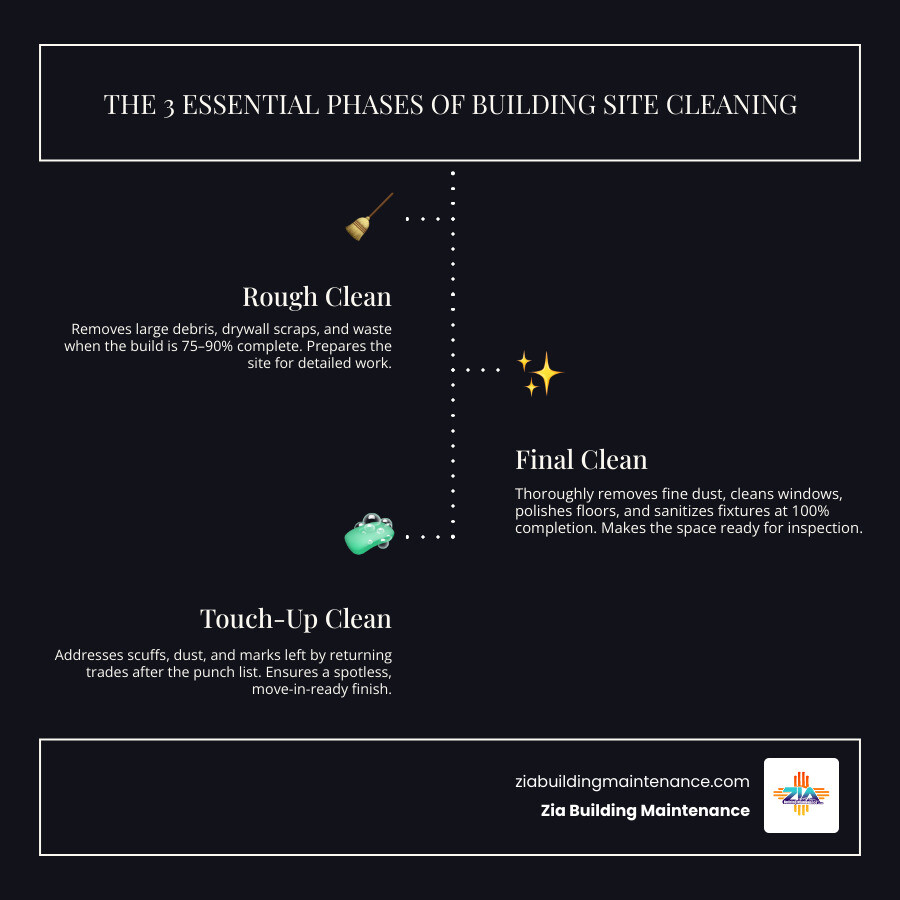
The Three Essential Phases of Building Site Cleaning
When most people think of post-construction cleaning, they picture a single cleaning crew showing up at the very end with mops and buckets, magically transforming a dusty shell into a polished masterpiece. In reality, trying to clean a multi-month or multi-year build in one single pass is a recipe for disaster.
At Zia Building Maintenance, we approach building site cleaning as a structured, three-phase process. This systematic approach ensures that safety hazards are eliminated early, subsequent trades can do their work without wading through filth, and the final handover goes off without a single hitch. For more details on commercial transitions, check out our guide to post-construction office cleaning.
wp:html
/wp:html
wp:html
/wp:html
Phase 1: The Rough Clean (75-90% Completion)
The rough clean takes place while the project is still very much an active construction zone, typically when the framing, plumbing, electrical, and drywall installation are mostly finished, but before the delicate finishing details are added.
During this phase, our primary goal is safety and preparation. We focus heavily on:
- Debris Removal: Gathering and discarding large construction waste, such as lumber offcuts, metal studs, packaging materials, and drywall scraps.
- Safety Prep: Sweeping up heavy dust and loose aggregates to prevent slips, trips, and falls for the incoming finishing trades.
- Prep for Deep Cleaning: Vacuuming subfloors so that adhesive, carpet, or tile can be installed on a completely clear surface.
Without a thorough rough clean, your painters, floor installers, and cabinet makers will be working in a dirty environment, which inevitably leads to dust getting trapped under finishes or paint adhering poorly. To understand what goes into deep preparation on a broader scale, see our breakdown of what is included in deep commercial cleaning.
Phase 2: The Final Clean (100% Completion)
This is where the magic happens. The final clean occurs when all major construction activities are finished. The trades have packed up their heavy tools, and the building is structurally complete.

During the final clean, our specialized crews perform a meticulous, floor-to-ceiling deep clean. This phase includes:
- Fine Dust Elimination: Wiping down walls, ceilings, baseboards, doors, and frames to capture the fine white haze that settles everywhere.
- Detailed Window Cleaning: Removing stickers, protective films, plaster splashes, and paint overspray from new glass panes and frames without scratching them.
- Floor Care and Polishing: Sweeping, vacuuming, and executing professional floor care, whether that involves tile grout scrub-downs, hardwood buffing, or carpet extraction.
- Fixture Detailing: Cleaning light fixtures, ceiling fans, and utility vents where construction dust loves to hide and accumulate.
For projects requiring specialized finalization standards, you can read more about industry-best practices on BuildSite Clean.
Phase 3: The Touch-Up Clean (Post-Punch List)
You might think that once the final clean is done, you’re ready to hand over the keys. However, there’s a catch: the “punch list.”
After the final clean, inspectors and architects will walk the site and identify minor issues—a missed spot of paint, a loose cabinet hinge, or a cracked outlet cover. When the trades return to fix these minor snags, they inevitably track in fresh dirt, leave new boot prints, and kick up a fresh layer of drywall dust.
The touch-up clean (sometimes called a “sparkle clean”) is a rapid, highly detailed pass completed just before the client walkthrough. We wipe down the newly touched-up areas, buff out any fresh scuffs, and ensure the entire space is truly move-in ready. If you are dealing with a recently remodeled space in the Albuquerque metro area, you can learn more about how our post-renovation cleaning Albuquerque pros can handle the mess.
Why Construction Dust Requires Specialized Equipment
One of the most dangerous mistakes a general contractor or facility manager can make is treating construction dust like ordinary household dust. They are entirely different beasts.
The Health Hazards of Fine Construction Dust
Construction dust is not just unsightly; it is a complex, toxic cocktail of materials. It consists of:
- Silica Particles: Kicked up from cutting concrete, stone, brick, and mortar. Breathing in crystalline silica can cause permanent lung damage and silicosis.
- Drywall Dust: Composed of gypsum and mica, which heavily irritates the respiratory tract.
- VOCs and Chemical Residues: Left behind by paints, sealants, adhesives, and varnishes.
- Metal Shavings and Wood Fibers: Sharp, abrasive materials that can damage both human lungs and delicate HVAC systems.
| Dust Type | Key Components | Health Risks | Equipment Required |
|---|---|---|---|
| Regular Dust | Skin cells, pollen, pet dander | Mild allergies | Standard commercial vacuum, microfiber cloths |
| Construction Dust | Silica, gypsum, metal shavings, VOCs | Silicosis, respiratory damage, eye irritation | HEPA-filtered vacuums, dust suppression systems, PPE |
Why Standard Janitorial Tools Fail at Building Site Cleaning
If you hand a standard commercial vacuum or a broom to a regular janitorial crew, they won’t clean the construction dust—they will simply redistribute it.
Standard vacuum filters are not fine enough to trap microscopic silica or drywall particles. The vacuum will suck the dust in through the nozzle and blast it right back out through the exhaust, suspending it in the air to settle on surfaces again a few hours later. Furthermore, the highly abrasive nature of construction dust will quickly burn out the motors of standard cleaning machines.
Professional building site cleaning requires specialized industrial equipment:
- HEPA-Filtered Vacuums: Certified to trap 99.97% of particles down to 0.3 microns, ensuring the dust is actually captured and removed from the property.
- Specialized Sweepers and Scrubbers: Designed to handle heavy aggregates without throwing dust clouds into the air.
- Dust Suppression Systems: Using controlled water application or air scrubbers to keep fine particles from migrating during the clean.
For a look at how professional standards are maintained globally, you can read about specialized UK site cleaning standards.
The Risks of Skipping Professional Post-Construction Cleaning
When construction budgets run tight and deadlines loom, some project managers look for areas to cut costs. Skipping professional building site cleaning or delegating it to the construction crew is often tempted—but it almost always backfires.
Legal and Regulatory Compliance Issues
In Albuquerque, Rio Rancho, and across New Mexico, environmental and safety regulations are strict. Failing to properly clean and manage your site can result in severe consequences:
- OSHA Violations: Leaving hazardous silica dust or obstructive debris on an active site can trigger immediate fines and work stoppages during unannounced inspections.
- Local Environmental Ordinances: Municipalities like Albuquerque have strict guidelines regarding dust control and storm-water runoff. Letting sediment, concrete wash, or construction debris escape your site boundary can result in thousands of dollars in daily fines.
- Road Liability: Mud, gravel, and construction debris tracked onto public roads by your vehicles is a major safety hazard and a direct legal liability for your development.
To protect your project from these costly setbacks, it pays to invest in expert cleanup. Learn more about the benefits in our guide on why you should get professional post-construction cleanup services.
Protecting Your Craftsmanship and Reputation
Your construction team may have spent months installing beautiful custom cabinetry, high-end tiling, and flawless drywall. However, if the client walks into a space covered in a fine layer of white powder, with smudged glass and grimy floors, they won’t notice the craftsmanship. They will only see a messy, unfinished project.
A professional clean protects your brand’s reputation, showing the client that you respect their investment and care about delivering a polished, turn-key product.
The Operational Benefits of Ongoing Site Maintenance
Waiting until the very end of a build to address cleanliness is a major strategic mistake. It’s much like waiting until the end of a long road trip to check if you have oil in your engine.
How Ongoing Building Site Cleaning Prevents Costly Project Delays
Maintaining a clean site throughout the lifecycle of the build offers massive operational advantages:
- Faster Trade Transitions: When plumbers, electricians, and painters walk onto a clean, organized site, they can begin working immediately. They don’t waste paid labor hours moving trash or cleaning up after the previous trade.
- Fewer Safety Incidents: Removing tripping hazards, sharp metal scraps, and slick sawdust daily keeps your workers safe and productive.
- Simplified Closeouts: A site that is maintained weekly or daily is incredibly easy to clean at the end. It completely eliminates the “closeout crisis” where a project manager must scramble to find emergency cleaners to avoid liquidated damages.
For more tips on keeping your commercial properties running smoothly, read about what is commercial property maintenance cleaning.
Frequently Asked Questions About Post-Construction Cleanup
How long does a final post-construction clean take?
The timeline depends entirely on the square footage of the building, the complexity of the finishes, and how well the site was maintained during construction. A standard 10,000-square-foot office building typically takes between 2 to 4 days for a full final clean, while larger industrial facilities or multi-family complexes require highly coordinated, phased scheduling over several weeks.
Can our in-house construction crew handle the final clean?
While your crew is highly skilled at building, they are rarely equipped to clean. They lack the specialized HEPA-filtered vacuums, industrial floor scrubbers, and window-detailing tools required for a true occupancy-ready finish. Additionally, paying skilled construction laborers to sweep and wipe down walls is a highly inefficient use of your labor budget.
What is the difference between a rough clean and a sparkle clean?
A rough clean is a heavy-duty safety sweep focused on removing large debris, drywall scraps, and hazards so finishing trades can work safely. A sparkle clean (or touch-up clean) is the ultra-detailed, final polish performed after the punch list is complete to remove minor smudges, dust, and scuffs right before the keys are handed to the owner.
Conclusion
At the end of a long, complex build, the last thing you want is for a dusty floor or an unannounced safety inspection to stand between you and a successful project handover.
At Zia Building Maintenance, we’ve spent over three decades helping contractors, developers, and facility managers in Albuquerque, Rio Rancho, Corrales, and Los Ranchos transition their spaces from chaotic construction zones into immaculate, ready-for-business environments. Our deep local roots, commitment to safety, and family-owned dedication to detail mean we don’t just sweep the floors—we deliver peace of mind.
Don’t let construction dust cloud your hard work. Get professional post-construction cleanup services today and let us help you cross the finish line with confidence.