

TL;DR:
- Commercial property maintenance cleaning involves systematic, ongoing efforts to keep buildings safe, functional, and appealing. It combines routine, preventive, reactive, and predictive services to ensure consistent quality, control costs, and support regulatory compliance. Successful programs treat cleaning as an operational system, integrating regular audits, task standardization, and coordination with other maintenance tasks.
Commercial property maintenance cleaning is the structured, ongoing process of keeping commercial buildings safe, functional, and visually appealing through organized janitorial and specialized cleaning activities. Known in the facility management industry as facility maintenance cleaning, this practice covers everything from daily trash removal and restroom sanitation to scheduled floor care and post-construction cleanup. The U.S. commercial cleaning market generates approximately $106.7 billion in annual revenue, yet only 8% of organizations fully outsource these functions. That means most managers carry direct responsibility for cleaning outcomes. Understanding how to build and run a sound cleaning program is not optional. It is a core facility management competency.
What is commercial property maintenance cleaning and why does it matter?
Commercial property maintenance cleaning is defined as the systematic care of commercial facilities through routine, preventive, and specialized cleaning tasks that protect occupant health, preserve asset value, and support regulatory compliance. The industry term facility maintenance cleaning captures the same concept and is used interchangeably by facility managers, property administrators, and building service contractors.
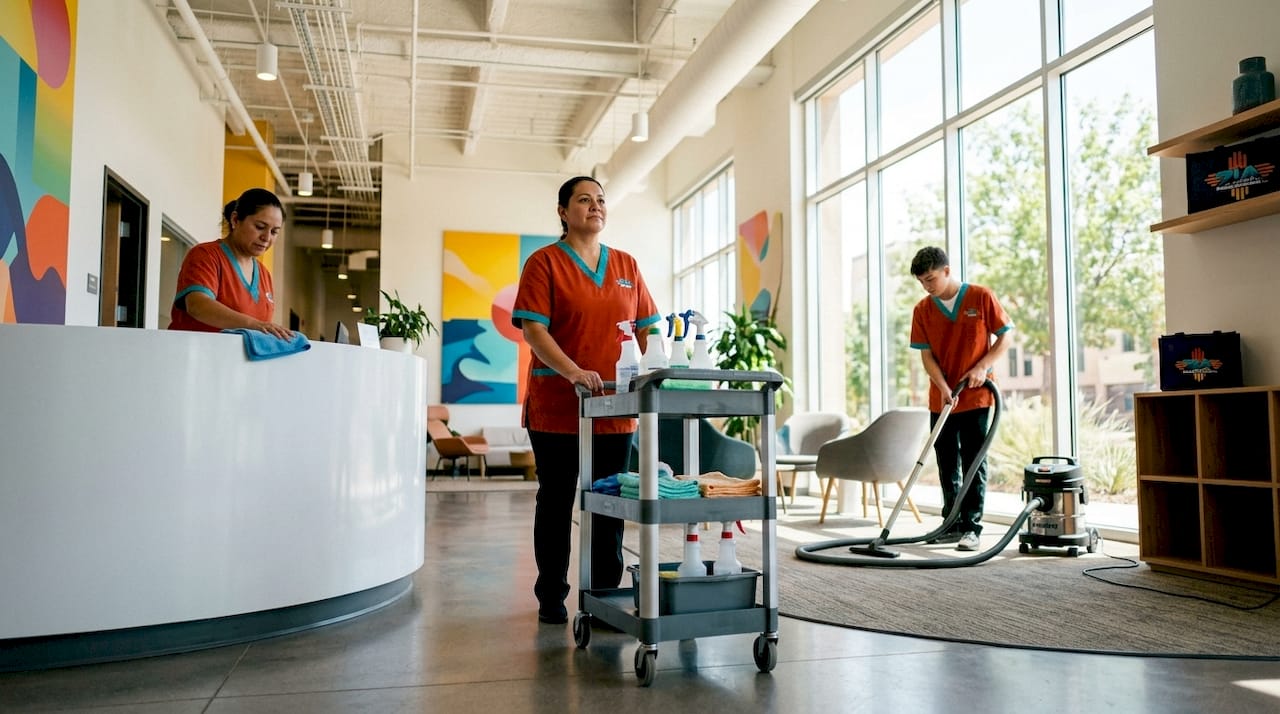
The stakes are concrete. Poorly maintained facilities accumulate surface contamination, accelerate material wear, and create liability exposure. A lobby with stained grout or a restroom with persistent odor signals neglect to tenants, clients, and inspectors alike. Conversely, a well-maintained building retains tenants longer, commands higher lease rates, and passes health and fire safety inspections without incident.
Cleaning also connects directly to occupant productivity. Studies in facility management consistently show that clean, well-organized workspaces reduce sick days and improve staff morale. For managers overseeing offices, medical facilities, or schools, the importance of property upkeep extends well beyond aesthetics. It is a measurable factor in operational performance.
What are the main types of commercial property maintenance cleaning services?
Commercial property maintenance is categorized into four primary types: routine, preventive, corrective or reactive, and predictive. Each serves a distinct purpose, and effective facility programs combine all four rather than relying on any single approach.
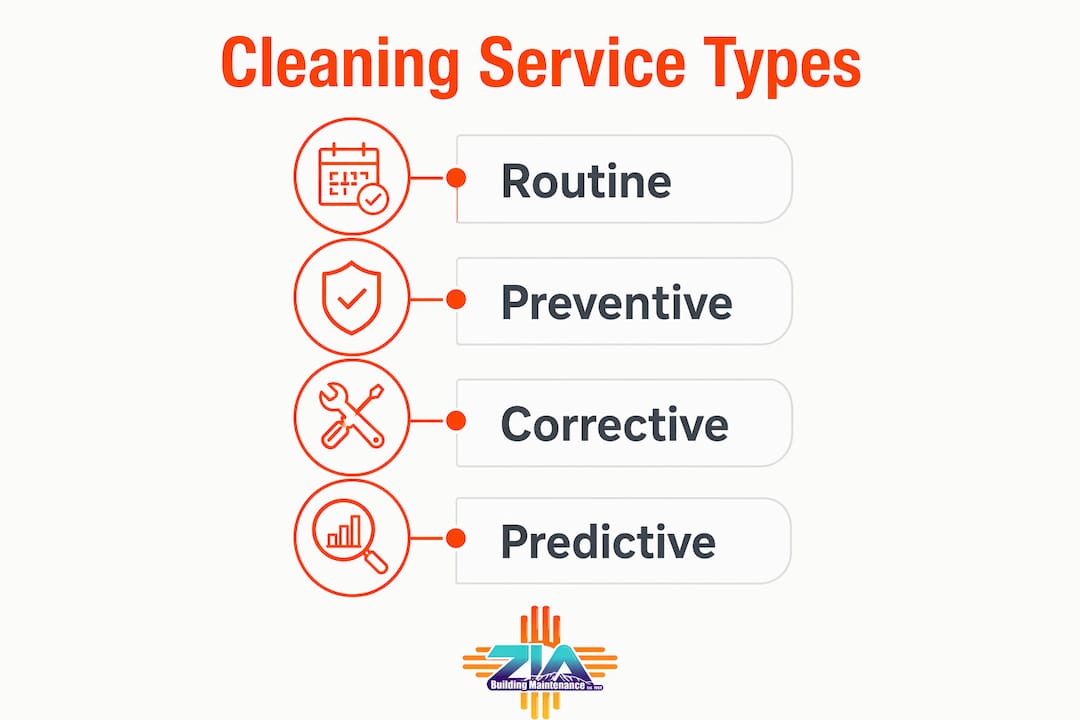
| Type | Frequency | Purpose | Examples |
|---|---|---|---|
| Routine | Daily or weekly | Maintain baseline cleanliness | Trash removal, restroom sanitation, vacuuming |
| Preventive | Scheduled | Prevent deterioration | Quarterly floor stripping, HVAC filter cleaning |
| Corrective/Reactive | As needed | Address unexpected issues | Emergency spill response, flood cleanup |
| Predictive | Data-driven | Optimize timing and resources | Analytics-based scheduling for high-traffic zones |
Routine cleaning forms the foundation. Daily tasks like wiping surfaces, emptying waste bins, and mopping restrooms prevent the buildup that leads to costly corrective work. Preventive cleaning goes deeper. Scheduled floor care, grout sealing, and carpet extraction protect materials before they degrade. Reactive cleaning addresses incidents that fall outside any schedule, such as a burst pipe or a biohazard spill. Predictive cleaning is the newest category, using foot traffic data and sensor analytics to adjust cleaning frequency dynamically rather than following a fixed calendar.
The most resilient programs treat these four types as a system. A building that runs only routine cleaning will still accumulate damage over time. A building that only reacts to problems pays a significant labor premium for emergency response. Combining all four types keeps costs predictable and quality consistent.
Pro Tip: Map your building’s actual foot traffic patterns before setting cleaning frequencies. A conference room used twice a week does not need daily cleaning, but a main entrance used by 300 people daily may need attention multiple times per shift.
What operational best practices ensure effective commercial property maintenance cleaning?
Successful facility cleaning programs run as operating systems, not task lists. The difference lies in three disciplines: zoning, standardization, and auditing.
Zoning means dividing a building by function, risk level, and actual use. A hospital corridor near an operating suite requires different cleaning protocols than a storage room. An office building’s main reception area demands higher frequency than a rarely used stairwell. Zoning lets managers allocate labor precisely, avoiding both over-cleaning low-risk areas and under-cleaning high-risk ones.
Standardization means every task follows a defined sequence regardless of who performs it. The seven-step cleaning sequence developed by JDI Cleaning demonstrates why sequence matters: trash removal, high dusting, damp wiping, restocking, dust mopping, inspection, and wet mopping. Performing inspection before the final wet mop catches missed spots without requiring rework on a freshly mopped floor. Skipping or reordering steps creates exactly the kind of inconsistency that generates complaints and repeat visits.
Auditing closes the loop. A cleaning program without regular quality checks drifts over time. Managers should conduct scheduled walkthroughs using a standardized cleaning audit checklist that scores specific areas against defined criteria. Unannounced spot checks add accountability without creating adversarial dynamics when framed as quality support rather than surveillance.
Common pitfalls that undermine otherwise solid programs include:
- Assigning cleaning tasks without written scope documents, leading to gaps and overlaps
- Setting cleaning frequencies based on calendar convention rather than actual use data
- Skipping restroom inspections during peak occupancy hours
- Failing to update cleaning protocols after facility renovations or tenant changes
- Relying on verbal handoffs between shifts instead of written logs
Pro Tip: Build a simple digital log that cleaning staff complete after each shift. Even a basic checklist app creates a paper trail that protects you during inspections and helps identify recurring problem areas before they escalate.
How does commercial property maintenance cleaning integrate with other facility maintenance tasks?
Cleaning does not operate in isolation. Commercial property maintenance interfaces directly with HVAC servicing, plumbing inspections, electrical maintenance, roofing care, grounds upkeep, and life-safety system checks. Each of these disciplines affects and is affected by cleaning schedules.
Consider HVAC. Dust accumulation on return air vents accelerates filter clogging and reduces system efficiency. Regular cleaning of vents and surrounding surfaces extends filter life and supports air quality. When HVAC technicians schedule filter replacements, coordinating that work with a post-maintenance cleaning prevents dust redistribution across freshly cleaned spaces. The same logic applies to plumbing. Drain cleaning and grout maintenance in restrooms and kitchens prevent odor and microbial growth that no amount of surface cleaning can fully address.
Proactive maintenance programs combine routine janitorial work with scheduled preventive servicing to reduce emergency repairs and the labor cost premiums that come with them. A building that schedules floor waxing alongside quarterly HVAC servicing minimizes occupant disruption and reduces the number of separate contractor visits. This coordination is a direct cost control measure, not just a scheduling convenience.
Compliance is another integration point. Fire safety regulations require clear egress paths, which means cleaning crews must understand and respect fire door clearances and exit corridor standards. Health codes in food service and medical facilities impose specific sanitation requirements that cleaning staff must be trained to meet. Cleaning that supports compliance protects the organization from fines, failed inspections, and liability claims.
Pest control is a related discipline that facility managers often overlook until a problem surfaces. Maintaining clean food preparation areas, sealing waste properly, and eliminating moisture sources are cleaning practices that directly reduce pest pressure. Coordinating with a pest management program during business hours ensures that cleaning and pest prevention reinforce each other rather than working at cross purposes.
What commercial cleaning services and technologies are most effective in 2026?
Modern cleaning methods include pressure washing, electrostatic disinfection, green chemical formulations, and predictive scheduling driven by data analytics. Each addresses a specific gap that traditional cleaning approaches leave open.
Electrostatic disinfection applies a charged mist that wraps around surfaces, including the backs of chairs, undersides of desks, and irregular equipment surfaces that spray bottles and cloths miss entirely. This technology became standard in medical facilities and schools after 2020 and has since moved into office buildings and commercial kitchens. Green chemical formulations reduce volatile organic compound exposure for both cleaning staff and building occupants, which matters for LEED-certified buildings and organizations with indoor air quality commitments.
Predictive scheduling uses occupancy sensors, badge access data, and foot traffic counters to adjust cleaning frequency in real time. A conference room booked for a full-day event triggers a mid-day cleaning visit. A floor that sits empty on a holiday gets skipped. This approach reduces labor hours without reducing cleanliness standards, which is the kind of efficiency that justifies investment in building management technology.
The in-house versus outsourced decision remains relevant for most managers. Only 8% of organizations fully outsource cleaning, which means the majority maintain some level of internal staffing. The practical advantages of outsourcing include access to trained staff, equipment, and specialty services like post-construction cleaning or commercial kitchen degreasing without capital investment. The advantage of in-house staffing is direct control over scheduling, protocols, and personnel. Many organizations use a hybrid model, keeping routine daily cleaning in-house while contracting specialty services to providers like Zia Building Maintenance for deep cleaning, floor care, and periodic intensive work.
Key tools and technologies worth evaluating for your facility program:
- Electrostatic sprayers for high-touch surface disinfection
- Auto-scrubbers for large hard-floor areas
- HEPA-filter vacuums for environments with air quality requirements
- Microfiber mop and cloth systems that reduce chemical use and cross-contamination
- Digital inspection platforms like Swept or Janitorial Manager for audit tracking
Key takeaways
Commercial property maintenance cleaning works when it is designed as a system with defined zones, standardized task sequences, and regular audits rather than treated as a collection of individual tasks.
| Point | Details |
|---|---|
| Define the scope clearly | Zone your building by function and risk before assigning any cleaning frequencies. |
| Use all four cleaning types | Combining routine, preventive, reactive, and predictive cleaning keeps costs stable and quality consistent. |
| Standardize task sequences | The seven-step JDI sequence reduces rework and produces consistent results regardless of who performs the work. |
| Integrate with other maintenance | Coordinate cleaning schedules with HVAC, plumbing, and pest control to reduce disruption and support compliance. |
| Audit regularly | Scheduled and unannounced quality checks prevent program drift and protect you during regulatory inspections. |
Why I think most commercial cleaning programs fail before they start
After spending years working alongside facility managers across offices, medical buildings, and schools, the pattern I see most often is this: a manager inherits a cleaning program, makes a few adjustments, and then assumes the system will run itself. It does not.
The real problem is that cleaning gets treated as a cost to minimize rather than a function to manage. When budgets tighten, cleaning frequency drops. When staff turns over, no one verifies that the replacement knows the actual scope. Within six months, the program looks the same on paper but delivers noticeably worse results. Tenants notice. Inspectors notice. The manager notices last.
What actually works is treating cleaning the way you treat any other operational system. You define the scope in writing. You train to a standard, not just to a task list. You audit on a schedule and act on what you find. You update protocols when the building changes. This is not complicated, but it requires consistent attention that most managers do not budget time for.
The other mistake I see regularly is assuming that outsourcing solves the management problem. It does not. Outsourcing transfers execution, not accountability. A professional janitorial partner like Zia Building Maintenance brings trained staff, proven methods, and specialty equipment. But the manager still needs to define expectations, review performance, and communicate changes. The organizations that get the most from outsourced cleaning are the ones that stay engaged with their service provider, not the ones that hand over a key and walk away.
The managers who run the best facilities I have seen share one trait: they treat cleaning as infrastructure. Not glamorous, not optional, and not something to revisit only when something goes wrong.
— Ashley
Professional cleaning solutions for your commercial property
Zia Building Maintenance has served commercial properties across Albuquerque since 1989, delivering tailored janitorial and facility cleaning programs for offices, medical facilities, and schools. The team brings structured cleaning protocols, trained staff, and transparent audit processes to every account, so you get consistent results without managing every detail yourself. Whether your facility needs daily janitorial coverage, intensive floor care, or specialty deep cleaning, Zia Building Maintenance builds a program around your specific building, occupancy patterns, and compliance requirements. Discover how professional janitorial services reduce costs and protect your facility’s standards, or explore office cleaning solutions designed specifically for commercial property managers in Albuquerque.
FAQ
What is commercial property maintenance cleaning?
Commercial property maintenance cleaning is the structured, ongoing process of cleaning and sanitizing commercial buildings through routine janitorial work, preventive deep cleaning, and specialty services. It covers everything from daily surface cleaning to scheduled floor care and post-construction cleanup.
What are the main types of commercial cleaning services?
The four main types are routine, preventive, corrective or reactive, and predictive cleaning. Effective facility programs combine all four to maintain consistent cleanliness, prevent material damage, and control costs.
How often should commercial spaces be cleaned?
Cleaning frequency depends on building zone, function, and actual foot traffic rather than a fixed calendar. High-traffic areas like lobbies and restrooms typically require daily or multiple-times-daily attention, while low-use spaces may need only weekly service.
What is the difference between facility maintenance and commercial cleaning?
Facility maintenance is the broader discipline covering all physical systems in a building, including HVAC, plumbing, electrical, and structural care. Commercial cleaning is a subset of facility maintenance focused specifically on sanitation, surface care, and occupant hygiene.
Should managers outsource commercial cleaning or keep it in-house?
Only 8% of organizations fully outsource cleaning, and most use a hybrid approach. Outsourcing provides access to trained staff and specialty equipment, while in-house staffing offers direct scheduling control. The right model depends on building size, budget, and the complexity of cleaning requirements.