

The role of entrance cleaning in retail stores starts at the front door
Your store entrance does more work than any display case or promotional sign inside. It is the first thing every customer sees, and 64% of customers have left a store due to poor physical appearance or disorganization, with that judgment forming before they even step inside. Entrance cleaning, in this context, is not routine maintenance. It is a direct input into customer decisions, store safety, and brand credibility.
Entrance cleaning covers everything from the exterior sidewalk and door glass to the interior vestibule, walk-off mats, and the first 10–15 feet of floor space beyond the threshold. Here is what it delivers when done consistently:
- First impression control. A clean entrance signals that the store is well managed, which customers associate with product quality and trustworthy service.
- Dirt and moisture reduction. A properly sized matting system covering several feet can capture most of the dirt and moisture before it reaches the sales floor.
- Slip hazard prevention. Wet, debris-covered entry floors are among the most common causes of retail slip-and-fall incidents.
- Lower overall maintenance costs. Less dirt tracked inside means less frequent deep cleaning of interior floors, reducing labor and supply costs over time.
- Stronger store hygiene. The entrance is the primary contamination point; controlling it protects air quality and surface cleanliness throughout the store.
The retail cleaning paradox makes this challenging: every square foot must remain accessible and spotless during business hours, unlike office or industrial spaces where areas can be closed off. That constraint makes entrance cleaning strategy, not just effort, the deciding factor.
Table of Contents
- How a clean entrance directly affects customer experience and revenue
- Best practices for cleaning retail store entrances effectively
- Safety, liability, and employee wellness at the store entrance
- What Zia Building Maintenance’s expert routines look like in practice
- Zia Building Maintenance keeps your entrance clean so you can focus on your customers
- Key Takeaways
- FAQ
How a clean entrance directly affects customer experience and revenue
Shoppers do not consciously evaluate your entrance floor. They feel it. A dirty, cluttered, or wet entry creates what researchers call “cognitive friction,” a low-level discomfort that shortens dwell time and reduces willingness to browse. Store cleanliness reduces cognitive friction, making customers feel comfortable enough to stay longer and spend more. That connection runs directly from the entrance inward.
The psychological effect starts before customers cross the threshold. A dirty exterior subconsciously signals neglect, deterring potential buyers before they ever touch a door handle. Once inside, the first 10 feet, often called the decompression zone, sets the shopper’s mental state. Clutter or high fixtures in this zone trigger stress responses that discourage lingering and deeper store engagement. A clean, open, well-maintained entry does the opposite.
The operational benefits compound over time:
- Reduced dirt tracking. Effective entrance matting keeps debris contained, cutting the frequency of mid-day floor cleaning on the sales floor.
- Lower maintenance workload. When the entry captures most contaminants, interior floors stay cleaner longer, reducing labor hours and product consumption.
- Stronger brand reputation. Customers associate visible tidiness at the entrance with product quality and professional management, which builds loyalty over repeat visits.
- Employee morale. Staff who work in a clean, well-maintained environment report higher job satisfaction and are more likely to maintain cleanliness standards themselves.
Cleanliness in retail is a strategic revenue driver, not a maintenance line item. The entrance is where that strategy either holds or falls apart.

Best practices for cleaning retail store entrances effectively
Consistency and scheduling are the foundation of effective entrance maintenance. A single deep clean at the start of the week does not protect against the foot traffic, weather, and debris that accumulate by Tuesday afternoon. The goal is a system, not an event.
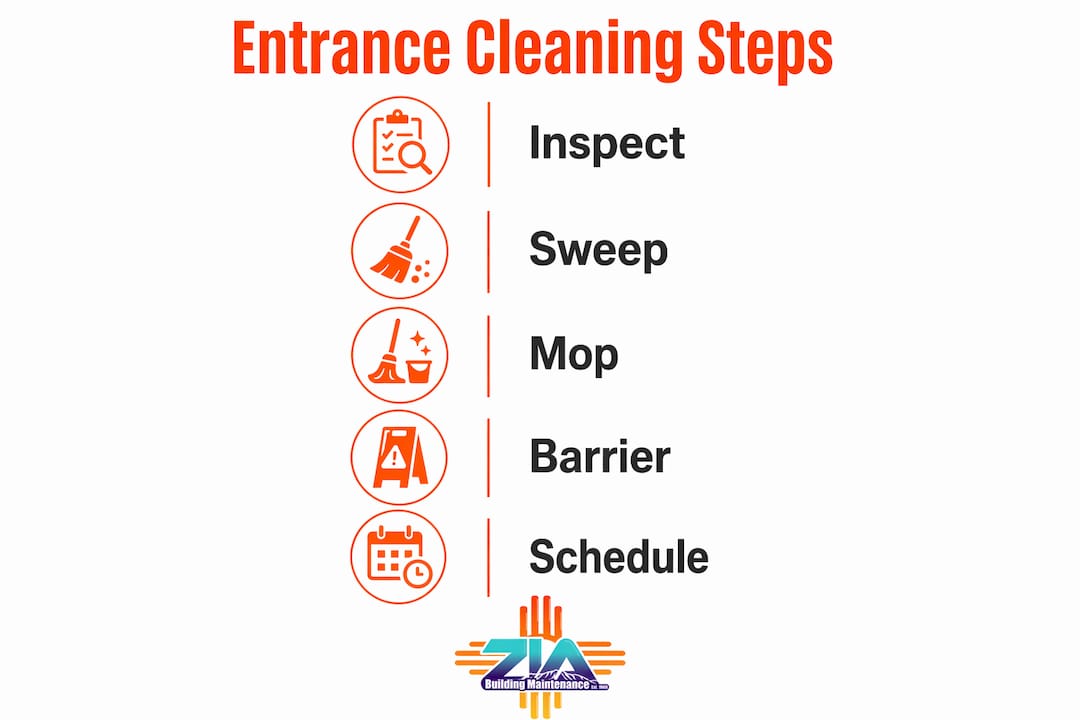
Frequency and scheduling
High-traffic retail entrances typically require attention at multiple points throughout the day. A practical schedule looks like this:
- Pre-opening sweep and mop. Clear debris, spot-clean glass doors, inspect and shake out mats before the first customer arrives.
- Midday check. A quick walk-through to address wet spots, debris accumulation, and mat displacement, especially during rain or high-traffic periods.
- Post-closing deep clean. Thorough mopping, mat cleaning or replacement, glass polishing, and floor inspection.
Equipment and cleaning products
The right tools make the difference between a surface-level clean and one that actually reduces hazards. For retail entrances, the core kit includes:
- Walk-off matting systems covering 12–15 feet (6–8 walking steps) to capture the majority of incoming dirt and moisture.
- Microfiber mops and cloths for floor and glass surfaces, which trap particles rather than spreading them.
- pH-neutral floor cleaners appropriate for the specific floor surface, whether tile, hardwood, or sealed concrete.
- EPA Safer Choice-certified products where possible, reducing chemical exposure for both staff and customers near the entrance.
- Wet floor signage and physical barriers for use during any wet cleaning operation.
Pro Tip: Warning signs alone are not enough during wet floor cleaning at a busy entrance. Physical barriers that redirect foot traffic, or locking one door while cleaning the other, prevent accidents far more reliably than a yellow sign that most shoppers walk past without reading.
Staff training and responsibility
Every team member who opens or closes the store should know the entrance cleaning protocol. Assign clear ownership: who checks the mats, who handles the glass, who responds to spills. A retail store cleaning routine with documented steps reduces the chance that entrance maintenance gets skipped during busy periods. Training should also cover proper chemical handling, mat placement standards, and how to report damage or hazards.

Safety, liability, and employee wellness at the store entrance
Slip-and-fall injuries are among the most costly liability exposures in retail. 2 million fall injuries annually are attributed in part to wet or dirty floors near entrances. A single incident can result in significant legal costs, insurance claims, and reputational damage, making entrance safety a financial priority, not just a compliance checkbox.
Managing wet floors and slip hazards
The most dangerous moment at a retail entrance is during or immediately after floor cleaning. Water left on a hard surface creates a slip risk that most customers will not anticipate. Physical barriers during floor cleaning are more effective than caution signs alone because signs are routinely ignored. Best practice is to lock one entrance door or use stanchions to redirect traffic while the floor dries completely.
Proper cleaning scheduling also reduces risk: cleaning should avoid leaving wet floors accessible to customers. Schedule wet mopping during low-traffic windows, such as before opening or after closing, whenever the store layout allows it.
OSHA and retail safety standards
OSHA’s General Duty Clause requires employers to maintain a workplace free from recognized hazards, which includes wet or contaminated entry floors. Retail managers should document entrance cleaning logs, mat inspection records, and any incident reports related to the entry area. This documentation supports liability defense and demonstrates a proactive safety culture.
You can find practical guidance on slip and fall prevention that applies directly to retail entrance management, covering both scheduling and physical safeguards.
The decompression zone and employee wellness
The decompression zone, the first 10 feet inside the door, affects both shoppers and staff. For employees who work near the entrance, a clean, uncluttered entry reduces exposure to outdoor allergens, tracked-in contaminants, and the stress of managing a visibly messy space. Stores that maintain this zone consistently report fewer customer complaints and a more positive work environment for front-of-store staff.
What Zia Building Maintenance’s expert routines look like in practice
Zia Building Maintenance has served commercial facilities, including retail environments, since 1989. That track record means their entrance cleaning protocols are built on real-world retail conditions, not generic checklists. Their approach balances aesthetic standards with safety requirements and adapts to the specific foot traffic patterns and floor types of each client’s location.
Core routine elements
A well-structured entrance cleaning routine from a professional standpoint covers these areas consistently:
- Daily mat inspection and cleaning. Mats are checked for saturation, displacement, and edge curl, all common trip hazards. Heavily soiled mats are replaced or cleaned before they lose effectiveness.
- Glass and door hardware. Entry doors are wiped down at opening, midday, and closing to remove fingerprints, smudges, and exterior grime.
- Floor surface care. Hard floors are swept, spot-mopped, and inspected for surface damage that could trap moisture or create uneven walking surfaces.
- Exterior sweep. The sidewalk and immediate exterior are cleared of debris, cigarette waste, and standing water, particularly after rain.
- Seasonal adjustments. During wet or snowy seasons, mat systems are extended and cleaning frequency increases to manage the higher moisture load.
Mat replacement and maintenance schedule
Commercial entrance matting loses effectiveness as pile height decreases. Mats lose soil capture efficiency after 30–50% pile height loss, increasing both slip risk and soil transfer to interior floors. The table below reflects the maintenance intervals Zia Building Maintenance applies in high-traffic retail settings.
| Maintenance Task | Recommended Interval | Notes |
|---|---|---|
| Mat vacuuming or shaking | Daily | More frequent during wet weather |
| Mat deep cleaning | Weekly | Hose down or machine wash depending on mat type |
| Mat inspection for wear | Monthly | Check pile height and edge condition |
| Mat replacement | Every 1–2 years | Replace sooner if pile loss exceeds 30–50% |
| Floor surface inspection | Weekly | Check for cracks, chips, or uneven surfaces |
| Safety walk-through log | Daily | Document conditions and any hazards found |
Zia’s team also provides retail managers with customized cleaning checklists that align with their store’s hours, floor type, and seasonal conditions. This kind of tailored support, backed by professional cleaning expertise, is what separates a reactive maintenance approach from one that prevents problems before they reach the sales floor.
The National Floor Safety Institute notes that floor-related injuries are among the most preventable in commercial settings when proper matting, cleaning schedules, and surface maintenance are in place. Zia’s protocols are designed with exactly that standard in mind.
Zia Building Maintenance keeps your entrance clean so you can focus on your customers
Retail managers carry enough on their plates without worrying whether the entrance mat was inspected this morning or whether the floor is still wet from last night’s mop. Zia Building Maintenance takes that off your list entirely, with a done-for-you entrance and store cleaning program built around your hours, your floor type, and your foot traffic volume.
Since 1989, Zia has delivered consistent, professional results for commercial clients across Albuquerque, earning recognition as the #1 office cleaning service in South Valley for 2025. For retail managers, that consistency means a spotless entrance every morning, properly maintained mats, documented safety logs, and a team that adjusts its schedule when the weather changes. No guesswork, no gaps, and no liability exposure from a missed wet floor check. Learn how professional janitorial services save businesses money and request an estimate tailored to your store’s specific needs.
Key Takeaways
A clean retail entrance directly drives customer confidence, dwell time, and safety, making entrance maintenance one of the highest-return investments a store manager can make.
| Point | Details |
|---|---|
| First impressions are decisive | 64% of customers have left a store due to poor physical appearance or disorganization, often judged at the entrance. |
| Matting systems do the heavy lifting | A 12–15 foot matting system captures up to 94% of incoming dirt and moisture before it reaches the sales floor. |
| Physical barriers beat warning signs | During wet floor cleaning, barriers or locked doors prevent slip accidents far more effectively than caution signs alone. |
| Mat replacement matters | Mats lose soil capture efficiency after 30–50% pile height loss and should be replaced every 1–2 years in high-traffic retail settings. |
| Zia Building Maintenance | Provides tailored retail entrance cleaning programs with documented safety logs, mat maintenance, and seasonal scheduling adjustments. |
FAQ
Should the store entrance always be kept neat and clean?
Yes. The entrance is the first point of contact for every customer, and visible tidiness at the entry directly influences their perception of product quality and store management. A consistently clean entrance also reduces slip hazards and liability exposure.
What are the duties of a cleaner in a retail store?
A retail cleaner’s entrance responsibilities typically include sweeping and mopping entry floors, inspecting and cleaning walk-off mats, wiping door glass and hardware, clearing exterior debris, and documenting any hazards found during each shift. Zia Building Maintenance structures these tasks into a scheduled routine tailored to each store’s traffic patterns.
How often should retail store entrances be cleaned?
High-traffic retail entrances benefit from at least three cleaning checks per day: pre-opening, midday, and post-closing. Wet weather or heavy foot traffic may require additional spot checks. Mat deep cleaning should occur weekly, with full mat replacement every 1–2 years depending on wear.
What is the 20/10 rule for cleaning?
Scheduled interval cleaning tied to foot traffic patterns is a more practical and effective standard than a fixed time ratio in retail entrance maintenance.
What are the 5 S’s of retail operations?
The workplace organization framework including concepts like “Shine” and “Sustain” applies directly to entrance cleaning: keeping the area spotless and building repeatable routines that maintain that standard over time.