

Your seasonal deep cleaning checklist at a glance
A well-run seasonal deep clean covers six core zones: entrances, sales floors, checkout areas, restrooms, fitting rooms, and staff spaces. Dividing tasks by daily, weekly, and seasonal frequency keeps your team focused and prevents the kind of buildup that customers notice before you do.
Essential areas and tasks:
- Entrances: Vacuum and deep clean entry mats, wipe glass doors, pressure wash exterior surfaces seasonally
- Sales floor: Spot clean spills daily, machine scrub hard floors weekly, move fixtures to clean underneath each season
- Checkout and POS: Wipe down terminals and card readers hourly during peak periods; deep detail weekly
- Restrooms: Check and restock every 2–3 hours during trading hours; full sanitization at close
- Fitting rooms: Wipe surfaces after each use; deep clean and deodorize weekly
- Staff areas: Sweep and tidy daily; full clean including fridge and lockers weekly
Recommended equipment and products:
- HEPA-filtered vacuum for carpets and high-traffic areas
- Floor scrubber or orbital scrubber for hard floor maintenance and finish removal
- EPA-registered disinfectants for high-touch surfaces
- Microfiber cloths and mops for daily surface care
- Commercial carpet extractor for restorative carpet cleaning
Why seasonal deep cleaning matters for your retail store
Cleanliness drives repeat business more than most retailers expect. According to the P&G Professional Consumer Cleaning Insights Survey, 92% of consumers say cleanliness determines whether they return to a store, regardless of product quality. That single figure reframes deep cleaning from a maintenance cost to a revenue decision.

Seasonal shifts create specific cleaning challenges. Spring brings tracked-in mud and pollen; back-to-school and holiday seasons push foot traffic to its peak, accelerating floor wear, surface contamination, and restroom demand. Each transition is an opportunity to reset your store’s condition before the next wave of customers arrives.
Health and safety are equally at stake. Slips, trips, and falls are among the most common retail accidents, and they typically trace back to wet floors, loose mats, or unaddressed spills. A scheduled seasonal deep clean lets you inspect flooring, replace worn mats, and correct hazards before they become incidents.
Key reasons to schedule a seasonal deep clean:
- Resets floor finishes worn down by heavy foot traffic
- Removes allergens, dust, and contaminants from HVAC grilles and ceiling fixtures
- Restores restroom and fitting room conditions to a standard that daily maintenance cannot reach
- Gives staff a structured opportunity to inspect and report maintenance issues
- Supports brand perception at the moments when customer volume is highest
Daily and weekly cleaning tasks every retail store needs
Consistency between seasonal deep cleans depends on a disciplined daily and weekly routine. Without it, soil accumulates faster than any seasonal effort can reverse.
Daily tasks
- Sweep and spot mop entryways multiple times per day to control tracked-in dirt and reduce slip hazards
- Disinfect POS terminals and self-checkout surfaces every hour during peak shopping periods
- Spot clean spills on hard floors immediately; treat carpet spots with an appropriate spotter
- Dust shelves, displays, and product surfaces to prevent visible buildup
- Check and restock restrooms every 2–3 hours; address any issues immediately
- Empty trash bins throughout the store and replace liners
- Wipe fitting room surfaces after each customer use
Weekly tasks
- Machine scrub or thoroughly mop all hard floors, moving fixtures where possible to reach trapped dirt
- Vacuum high-traffic carpet areas daily; vacuum medium-traffic areas three times per week and low-traffic areas once per week
- Deep clean entry mats with a commercial vacuum and spot treatment
- Dust high shelves, light fixtures, and air vents
- Clean all windows inside and out
- Sanitize employee lockers, backroom storage bins, and the staff refrigerator
- Deep clean and deodorize fitting rooms
- Wipe down and disinfect cart handles and any customer-facing equipment
Pro Tip: A spot maintenance cycle during trading hours helps keep surfaces clean without overwhelming your staff. Assign one team member to cover bathrooms, bin levels, spill response, and front-of-store presentation on a rolling schedule throughout the day.
How to prepare and execute a seasonal deep clean
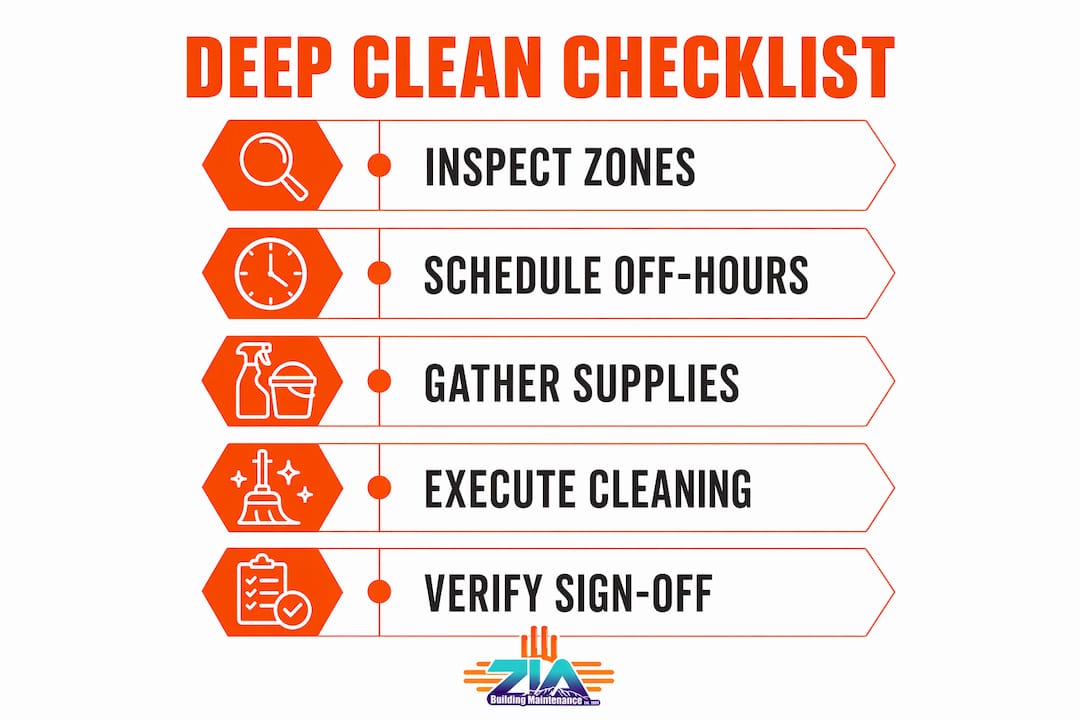
Preparation separates a productive seasonal deep clean from a rushed, incomplete one. Start with a walk-through inspection of every zone before scheduling any work. Note worn floor finishes, damaged mats, dusty HVAC grilles, and any surfaces that daily cleaning has not been able to fully address.
Pre-cleaning preparation steps:
- Inspect all flooring for finish wear, staining, and damage
- Audit entry matting and replace any mats that have worn through
- Schedule the deep clean during off-hours to avoid customer disruption and allow full dwell time for sanitizers and floor treatments
- Assign staff roles by zone to avoid duplication and missed areas
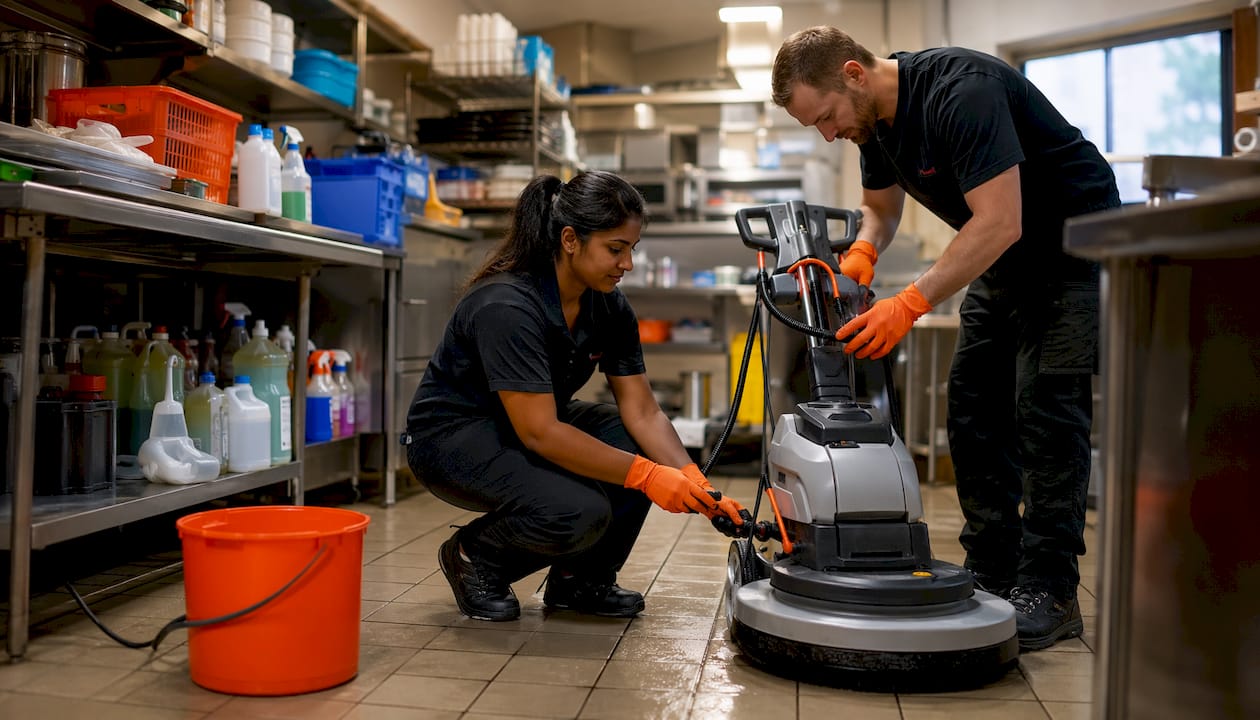
- Confirm equipment availability: orbital scrubber, carpet extractor, HEPA vacuum, and appropriate cleaning solutions
Seasonal deep cleaning tasks:
- Strip and recoat hard floor finishes using an orbital scrubber; restorative floor cleaning every few months to a year maintains gloss and slip resistance in high-traffic areas
- Deep clean carpets with a commercial extractor; aim for a restorative clean every six months to a year in high-traffic zones
- Clean upholstered seating in fitting rooms and waiting areas using methods suited to the material
- Replace HVAC filters and vacuum all ceiling vents, grilles, and light fixtures
- Scrub walls, baseboards, and doors
- Move heavy gondolas and display units to clean underneath, preventing dirt buildup and pest harborage
- Inspect and clean security equipment and card readers
- Check for pest activity in corners and storage areas
Eco-friendly practices worth adopting:
- Use detergent-free cleaning methods where possible; modern equipment can use up to 70% less water than conventional floor cleaning machines
- Choose EPA-registered, low-VOC disinfectants for restrooms and high-touch surfaces
- Install or replace entry matting with high-quality systems; quality entrance mats reduce tracked-in dirt and moisture significantly, cutting the cleaning burden on interior floors.
- Place smaller transition mats in high-traffic interior zones to reduce localized wear and extend the time between restorative floor treatments
Pro Tip: Schedule your seasonal deep clean to finish before 3:30 AM. The “3:30 rule” in commercial floor care advises completing floor cleaning by that time to allow finish curing before the store opens, preventing reactive cleaning cycles that cost more and deliver less.
Expert strategies for scheduling and quality assurance
The most effective retail cleaning operations run on a two-shift model: day shifts handle spot maintenance and immediate response, while night shifts execute deep cleaning, floor care, and full sanitization. This structure works because thorough deep cleaning requires unobstructed access and extended dwell time that a live retail environment simply cannot provide.
92% of consumers say store cleanliness determines whether they return, making a documented, consistent cleaning program one of the highest-return investments a retailer can make.
Documented checklists with timestamped sign-offs are the standard for accountability. When supervisors can verify that every task was completed at the right time, quality stops depending on individual memory and becomes a system. A checklist-driven program with visible proof of task completion also builds customer trust, particularly in restrooms and fitting rooms where shoppers form strong impressions quickly. You can review a broader approach to this in Zia Building Maintenance’s guide to retail store cleaning routines.
Technology is changing what consistency looks like in large retail spaces. Robotic floor cleaners handle routine floor maintenance with a level of repeatability that manual cleaning cannot sustain over long shifts. They also generate performance data, tracking cleaning patterns and identifying high-wear areas so facility managers can adjust schedules before problems become visible. For big-box stores and large-format retailers, this data-driven approach to facility management reduces both labor costs and reactive cleaning.
Scheduling and staffing best practices:
- Assign day-shift staff to a rolling 90-minute maintenance cycle covering all customer-facing zones
- Reserve night shifts for deep floor care, restroom sanitization, and any tasks requiring equipment or extended drying time
- Use a zone-based checklist with timestamped sign-offs for every shift
- Review checklist data weekly to identify recurring problem areas and adjust staffing or frequency accordingly
- Plan seasonal deep cleans around your traffic calendar, scheduling them before peak periods rather than after
For a detailed look at how to structure your commercial cleaning contract and checklist requirements, Zia Building Maintenance provides guidance tailored to retail facility managers. You can also explore a commercial roof cleaning checklist for a useful model of how zone-specific documentation applies across different commercial property types.
Ready to schedule your next deep clean?
Zia Building Maintenance has served commercial clients across Albuquerque since 1989, earning recognition as the #1 office cleaning service in South Valley for 2025. The team brings the same documented, checklist-driven approach to retail spaces, covering everything from daily maintenance to intensive floor care and seasonal deep cleans. Whether you manage a single boutique or a multi-location retail operation, Zia Building Maintenance tailors a cleaning plan to your store’s traffic, layout, and schedule.
Contact Zia Building Maintenance today to request an estimate and put a consistent, professional cleaning program in place before your next peak season. Learn more about professional cleaning solutions and what a customized retail program looks like in practice.
Key Takeaways
A seasonal deep clean for retail spaces is most effective when it combines a documented zone-based checklist, off-hours scheduling, and restorative floor care timed to your store’s traffic cycle.
| Point | Details |
|---|---|
| Cleanliness drives repeat visits | 92% of consumers say store cleanliness determines whether they return, regardless of product quality. |
| Entry mats reduce floor cleaning burden | Quality entrance mats reduce tracked-in dirt and moisture significantly, protecting interior floors. |
| Restorative floor care has a set schedule | Strip and recoat hard floor finishes every few months to a year; deep clean carpets restoratively every six months to a year. |
| Off-hours scheduling maximizes results | Deep cleaning done off-hours allows full dwell time for sanitizers and floor finish curing before the store opens. |
| Eco-friendly equipment cuts water use | Modern floor cleaning equipment can use up to 70% less water than conventional machines. |
FAQ
What is the first step in a retail space deep clean?
Start with a full walk-through inspection of every zone before any cleaning begins. Note worn floor finishes, damaged entry mats, dusty HVAC grilles, and surfaces that routine cleaning has not fully addressed.
What is the 3:30 rule in commercial cleaning?
The 3:30 rule advises completing all floor cleaning before 3:30 AM so that floor finishes have enough time to cure before the store opens. Cleaning after that point leads to less effective results and more costly reactive cleaning cycles.
How often should a retail store have a deep clean?
Most retail stores benefit from a seasonal deep clean four times per year, timed before peak traffic periods. Hard floor finishes should be stripped and recoated every few months to a year, and carpets should receive a restorative clean every six months to a year in high-traffic zones.
How often should a commercial kitchen in a retail food area be deep cleaned?
A commercial kitchen operating at moderate volume should be professionally deep cleaned every six months as a baseline. High-volume operations typically require more frequent cleaning to stay compliant with health regulations.
Should retail deep cleaning be done during or after store hours?
Deep cleaning is most effective off-hours. Performing it while the store is closed allows unobstructed access to all surfaces, full dwell time for disinfectants, and proper curing time for floor finishes before customers arrive.