

How to Choose the Right Commercial Floor Buffer
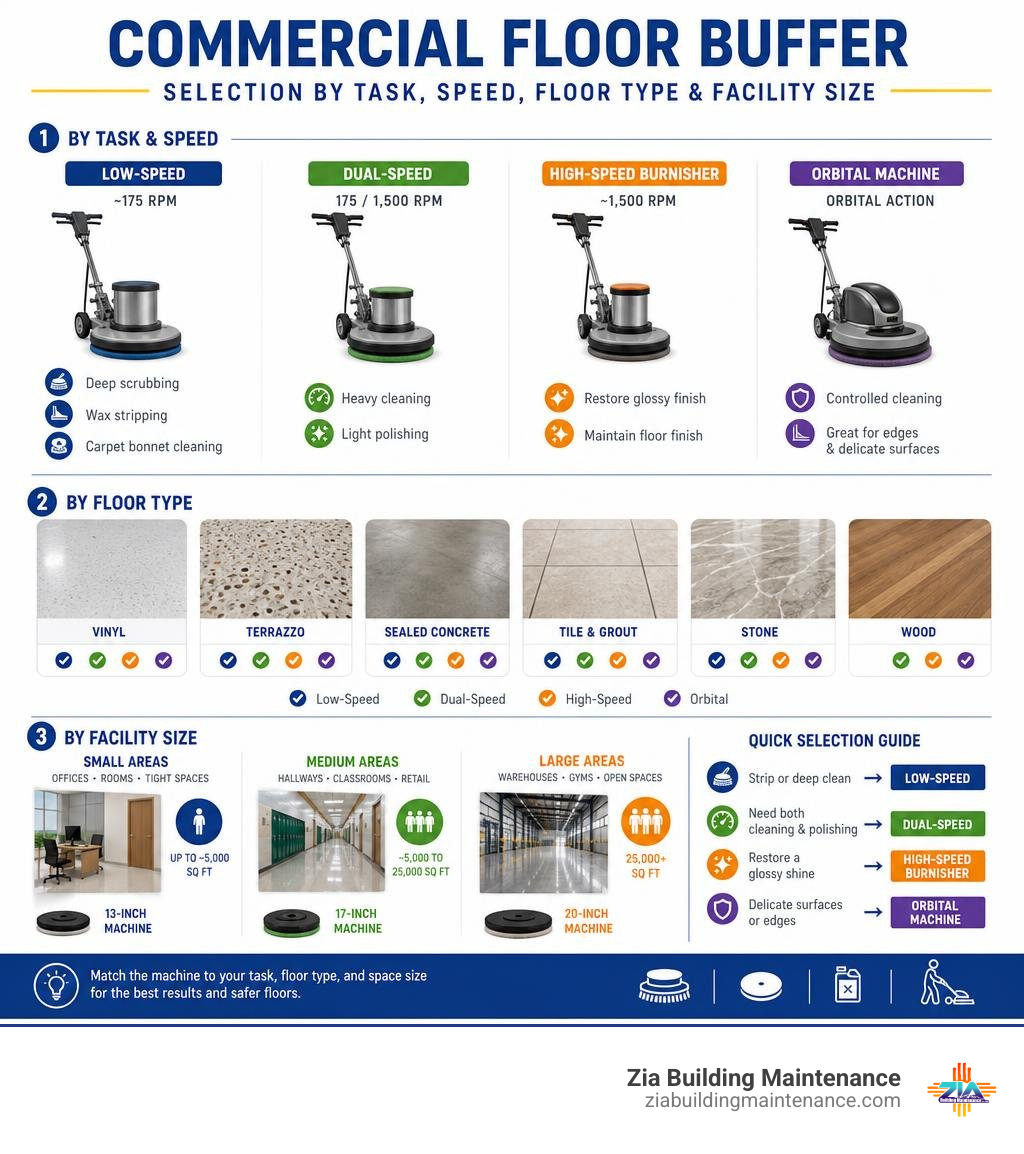
A commercial floor buffer is a powered floor machine that uses a rotating or orbital pad or brush to scrub, strip, buff, polish, or maintain hard flooring. The right choice depends on three things: your floor material, the size of the area, and the work you need it to do.
- Choose a low-speed machine around 175 RPM for deep scrubbing, wax stripping, and carpet bonnet cleaning.
- Choose a dual-speed machine when you need both heavy cleaning and lighter polishing from one unit.
- Choose a high-speed burnisher around 1,500 RPM when your main goal is restoring a glossy finish on maintained floor finish.
- Choose an orbital machine for controlled cleaning on delicate surfaces or for work near edges, with less risk of swirl marks.
For most facilities, a buffer is not a one-size-fits-all purchase. A compact 13-inch machine can suit smaller offices and tight rooms, while a 17- or 20-inch model is usually more practical for long hallways, schools, retail floors, and other large open areas. The pad, brush, cleaning chemical, machine weight, and operator technique matter just as much as RPM.
I am Ashley Cordova, Vice President of Zia Building Maintenance in Albuquerque, where I help oversee operations for a family-owned janitorial company serving New Mexico since 1989. My experience with commercial floor buffer decisions comes from helping teams balance floor safety, appearance, reliable service, and minimal disruption in active facilities.
Commercial floor buffer vocab explained:
Understanding Commercial Floor Machine Types and Mechanics
Maintaining high-traffic commercial flooring requires mechanical friction, chemical agitation, and consistent downward pressure. Manual mopping only cleans surface dirt; it cannot generate the torque needed to remove deeply embedded grime or lift old floor finish. Mechanized commercial floor care tools solve this by delivering steady mechanical action directly to the floor surface.
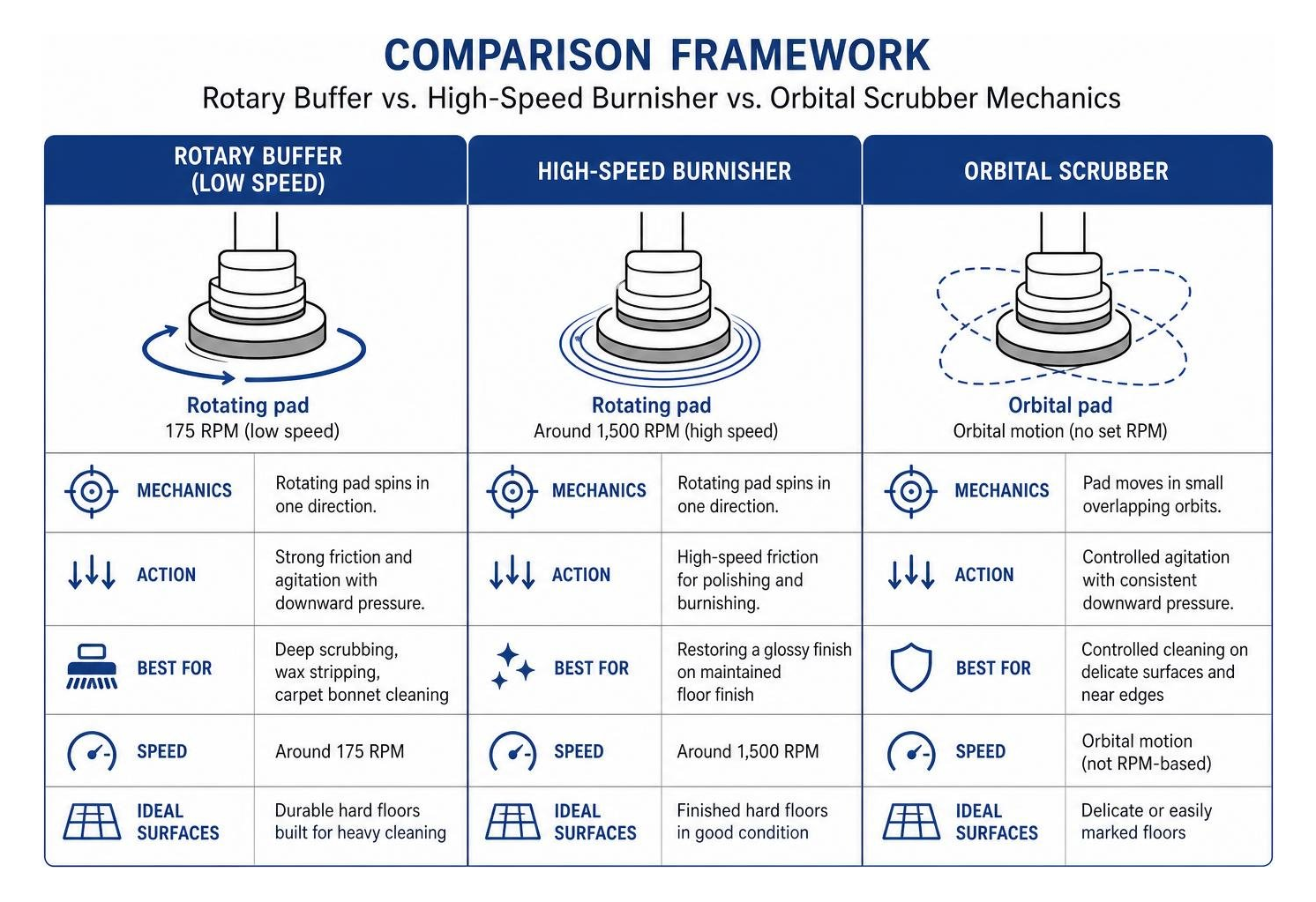
Understanding the distinct categories of floor machines ensures you select the correct equipment for your facility’s daily maintenance and periodic restoration projects.
Commercial Floor Buffer vs. High-Speed Burnisher: Key Differences
Facility managers often use the terms “buffer” and “burnisher” interchangeably, but they serve fundamentally different operational functions:
- Low-Speed Commercial Floor Buffers (150–175 RPM): Low-speed rotary buffers are versatile workhorses. Operating at high torque and lower rotational speeds, these units excel at aggressive friction tasks, such as emulsion stripping, deep wet scrubbing, and carpet bonnet cleaning. Because they rotate at manageable speeds, they do not generate excessive heat, preventing cleaning chemicals and stripping solutions from flashing off or burning into the floor.
- High-Speed Burnishers (1,500–2,000+ RPM): Burnishers are dedicated gloss-restoration machines. Running at 1,500 RPM or higher, these machines generate thermal friction that softens the top microscopic layer of floor wax or acrylic finish. This thermal action smooths out light scratches and scuffs to create an ultra-reflective “wet-look” shine. Burnishers cannot be used for wet stripping or heavy scrubbing, as the intense friction would immediately ruin stripping pads and damage underlying substrates.
| Feature / Metric | Low-Speed Buffer | Dual-Speed Buffer | High-Speed Burnisher | Rectangular Orbital Scrubber |
|---|---|---|---|---|
| Typical RPM | 150 – 180 RPM | 175 / 300–320 RPM | 1,500 – 2,000 RPM | 3,500 RPM (Oscillations) |
| Primary Tasks | Stripping, scrubbing, bonneting | Scrubbing & spray buffing | High-gloss polishing | Chemical-free dry stripping, detail scrubbing |
| Motion Type | Rotary (single direction) | Rotary (single direction) | Rotary (straight line) | Multi-directional oscillation |
| Surface Versatility | VCT, tile, concrete, carpet | VCT, stone, terrazzo, wood | Sealed VCT, terrazzo | Hardwood, gym floors, tile, concrete |
| Pad Styles | Round (12″–20″) | Round (17″–20″) | Round (20″) | Rectangular (14″x20″) or round |
| Average Weight | 85 – 105 lbs | 90 – 105 lbs | 75 – 90 lbs | 28 – 110 lbs |
Single-Speed, Dual-Speed, and Orbital Machine Dynamics
For facilities requiring multiple floor maintenance tasks within a constrained equipment budget, understanding machine drive dynamics is critical:
- Single-Speed Rotary Machines: Typically locked at standard 175 RPM. These units provide maximum reliability for industrial scrubbing, wax removal, and heavy-duty agitation.
- Dual-Speed Rotary Machines: Machines like the JaniSource 20″ Dual-Speed Floor Buffer – 175/320 RPM, 1.5 HP allow operators to toggle between 175 RPM for wet stripping and deep cleaning, and 320 RPM for intermediate spray buffing and high-speed polishing. This dual-action capability makes them a flexible option for schools, commercial offices, and healthcare clinics.
- Rectangular and Round Orbital Machines: Orbital floor machines oscillate at high speeds (up to 3,500 RPM) with tiny orbital eccentricities. Because the pad vibrates in multiple directions simultaneously rather than spinning along a fixed circular axis, orbital machines eliminate torque pull, prevent operator fatigue, and avoid leaving swirl marks or gouges. High-speed rectangular orbital scrubbers can even complete dry stripping of floor finish without requiring aggressive chemical strippers.
Key Features to Evaluate in a Commercial Floor Buffer
Selecting a machine requires evaluating mechanical components to ensure daily durability and compliance with facility standards. For a complete look at routine care schedules, explore our beginners guide to floor maintenance.
Motor Power, RPM, and Downward Pressure Specs
The cleaning power of a rotary machine is determined by the relationship between its motor torque, rotational speed, and head downforce:
- Motor Horsepower & Capacitor Types: Heavy commercial machines rely on 1.5 HP dual-capacitor AC motors or rectified DC motors. Dual capacitors supply the high initial amperage surge needed to overcome static friction when a wide pad sits flat against sticky chemical stripping slurry.
- Gearbox Construction: Look for all-steel, triple-planetary gearboxes (typically operating at a 10:1 reduction ratio). Steel planetary gear systems disperse mechanical stress evenly across three contact points, preventing the stripped gears common in lower-end nylon drive systems.
- Machine Weight and Head Pressure: A lightweight 28 lb orbital machine (such as the Prolux Core 13″) is easy to carry between small jobs and upstairs offices. However, stripping stubborn wax or deep scrubbing grout lines in commercial facilities demands downforce. Industrial units weighing between 95 and 105 lbs use their weight to drive the pad grain deep into porous flooring surfaces without requiring the operator to push downward manually.
- Acoustic Ratings: Sound levels between 60 dB and 69 dB are ideal for sound-sensitive green cleaning programs and occupied buildings, meeting standard GS-42 acoustic criteria.
Pad Size, Cleaning Path Width, and Ergonomics
Machine dimensions directly dictate hourly labor productivity:
- Pad Diameter: Compact 12-inch and 13-inch decks fit easily into restrooms, commercial kitchens, and narrow partitions. Standard 17-inch machines serve mid-sized facilities, while 20-inch decks provide an estimated cleaning rate of 7,000 square feet per hour across expansive corridors and open commercial layouts.
- Handle Adjustability & Safety Controls: Modern commercial machines feature ergonomic handles with dual safety interlocks to prevent accidental startup. Pin-set locking mechanisms provide fixed adjustment slots that eliminate handle slippage during heavy lateral movement.
- Electrical Range & Housing: Premium machines feature hospital-grade plugs connected to high-visibility 50-foot safety-yellow extension cords (12/3 or 14/3 gauge) to provide wide operational reach. Non-marking wraparound vinyl bumpers and powder-coated cast aluminum or steel shrouds protect drywall, baseboards, and the machine itself from chemical corrosion.
Pad Selection, Accessories, and Surface Compatibility
Operating a buffer requires pairing the equipment with the right pad abrasive rating, drive assembly, and cleaning chemical.
When specialized floor surfaces require comprehensive restoration, partnering with our commercial Floor Care Service ensures proper equipment handling and floor protection.
Matching Pad Color Coding and Brushes to Hard Surfaces
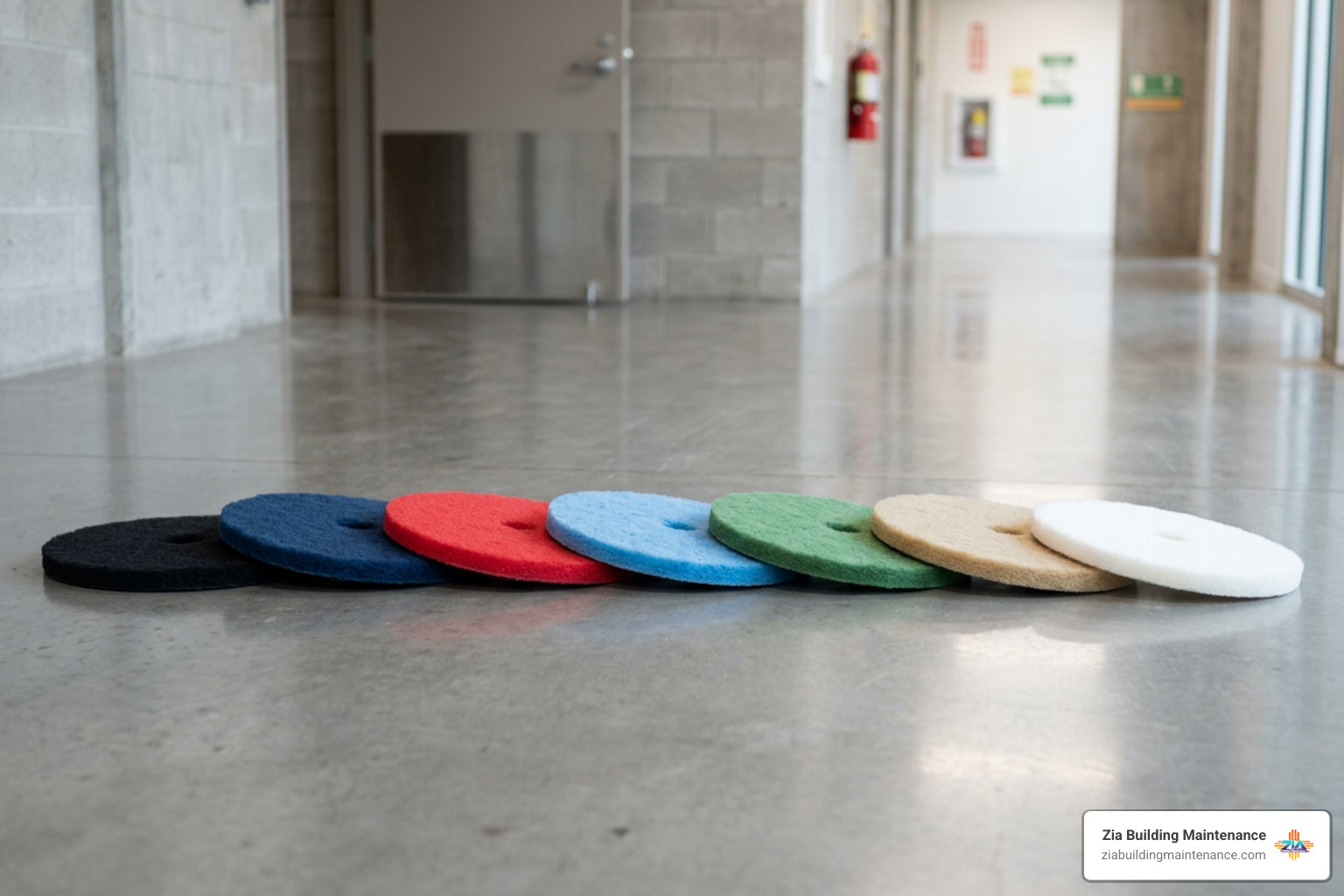
Commercial floor pads follow an industry-standard color-coding framework based on abrasive grit content:
- Black Pads (Aggressive Stripping): Coarse, open-web synthetic fibers designed to strip away multiple layers of floor finish, wax, and heavy sealers. When performing comprehensive stripping and waxing, black pads provide the mechanical agitation required to break down acrylic polymers.
- Brown Pads (Dry Stripping & Scrubbing): Highly abrasive; used on orbital machines for chemical-free finish removal or heavy wet scrubbing on concrete.
- Green & Blue Pads (Heavy Scrubbing): Medium-abrasive pads designed for deep soil removal, daily scrub-and-recoat cycles, and heavy commercial tile cleaning.
- Red Pads (Spray Buffing & Light Cleaning): Mildly abrasive pads that buff away surface shoe scuffs and light soil while restoring a clean sheen during routine maintenance.
- White Pads (Thermal Polishing & Finishing): Non-abrasive, ultra-fine polyester fibers used on dry, clean floors to polish floor finishes to a high shine.
- Microfiber Pads & Union Mix Brushes: Soft microfiber cloth pads are ideal for delicate hardwood, laminate, and gym floor polishing. Natural union-mix fiber brushes are preferred for polishing irregular stone, slate, and marble.
Choosing the Right Commercial Floor Buffer for Your Facility Type
Different flooring materials require specific mechanical setups:
- Vinyl Composition Tile (VCT): Maintaining high gloss on VCT requires low-speed rotary stripping and scrubbing paired with high-speed burnishing. Learn more about our dedicated commercial VCT cleaning.
- Ceramic, Porcelain & Quarry Tile: Rigid tile and recessed grout lines can tear flat synthetic pads. Low-speed buffers equipped with stiff nylon grit scrubbing brushes lift embedded dirt from porous grout joints. For specialized tile care, review our commercial tile cleaning.
- Commercial Low-Pile Carpeting: Using a 175 RPM rotary buffer equipped with a tufted pad driver, 4-gallon solution tank, and looped cotton or synthetic bonnet pads allows facilities to perform low-moisture interim carpet encapsulation. Explore our full commercial carpet cleaning.
- Terrazzo & Polished Concrete: Heavy 20-inch machines paired with diamond-impregnated polishing pads maintain mechanical clarity and surface shine on natural aggregate without damaging protective sealers.
- Hardwood & Gymnasium Flooring: Sensitive wood finishes can be damaged by the single-direction torque of traditional rotary machines. Orbital machines or low-speed polishers using microfiber pads prevent finish gouging, swirl marks, and sanding rings.
Best Operating Practices and Preventative Maintenance Protocols
Safe, efficient machine operation protects operators, facility baseboards, and flooring investments.
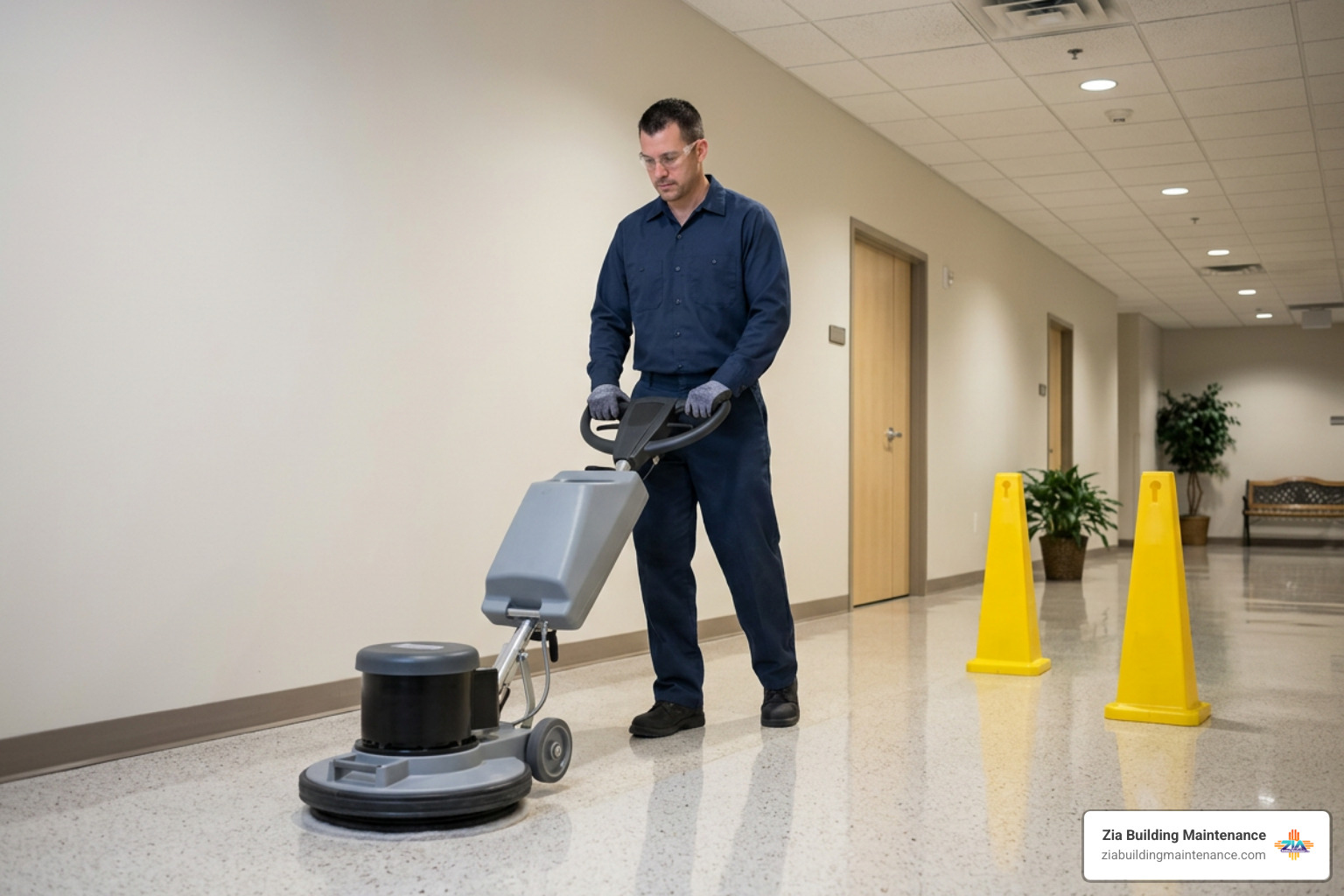
Step-by-Step Stripping, Scrubbing, and Polishing Procedures
- Surface Preparation: Sweep or vacuum the floor thoroughly to remove loose sand, dust, and abrasive debris. Set up safety cones and wet-floor warning signs.
- Chemical Application & Dwell Time: When stripping wax or deep cleaning, apply diluted solution evenly using a mop or mounted 4-gallon gravity dispensing tank. Allow 5 to 10 minutes of dwell time to break down soils and polymers without letting the liquid dry on the floor.
- Machine Setup: Secure the correct pad centered on the pad driver. Plug the unit into a dedicated 120V / 15-amp circuit. Adjust the handle height so the top rests against your hips, keeping your arms relaxed and slightly bent.
- Controlled Operation: Disengage the handle lock with the foot pedal. Lift the handle slightly to move the machine right; lower the handle slightly to drift left. Move across the floor in smooth, overlapping side-to-side sweeping arcs. Inspect machine capabilities such as the CleanFreak® 20″ Heavy Duty Floor Buffer w/ Pad Driver – 175 RPM — CleanFreak.com for standard 175 RPM operational design.
- Slurry Recovery & Neutralization: Vacuum up suspended stripping slurry immediately using an industrial wet/dry vacuum. Rinse and damp-mop the floor with clean water and a neutralizer chemical to achieve a balanced pH before applying fresh finish or sealers.
Routine Machine Maintenance, Safety, and Storage
Proper equipment maintenance extends machine service life and ensures dependable performance:
- Pad Driver Care: Remove pads and brushes immediately after each shift. Never store a floor buffer resting flat on its pad driver, as the bristles or grip face will compress unevenly, causing vibration and wobble.
- Motor & Electrical Cord Inspection: Wipe down the chassis, shroud, and wheels with a damp cloth to remove caustic stripping residue. Check the 50-foot power cord for cuts, exposed wiring, or bent ground pins. On DC-motor machines, inspect motor carbon brushes periodically for wear.
- Storage Configuration: Store the machine in a dry, climate-controlled custodial closet with the handle locked upright and the head tilted back onto its non-marking transport wheels.
Commercial Floor Machine Buying vs. Renting Analysis
When evaluating commercial floor care equipment, facility managers must weigh upfront capital expenditures against long-term maintenance needs.
| Consideration Factor | Purchasing In-House Equipment | Short-Term Rental Equipment | Outsourced Janitorial Partnership |
|---|---|---|---|
| Initial Financial Outlay | Moderate to High ($450 – $2,200+) | Low daily/weekly rental fee | None (bundled in service contract) |
| Storage Requirements | Requires dedicated custodial space | Short-term site footprint | Off-site equipment storage |
| Maintenance & Repairs | Facility team manages parts & upkeep | Rental house manages baseline upkeep | Zero internal maintenance overhead |
| Operator Training | Internal staff training & safety liability | Internal staff must learn machine | Trained, experienced cleaning staff |
| Best Suited For | Daily/weekly floor maintenance | One-time or annual deep cleaning | Comprehensive facility care |
For facility directors considering the advantages of professional contractors, our guide on how to find a floor buffing company outlines key operational standards to look for.
Top Models and Equipment Comparison
wp:html
/wp:html
- CleanFreak® 20″ Heavy Duty Floor Buffer w/ Pad Driver – 175 RPM — CleanFreak.com: A durable 95 lb industrial machine equipped with a 1.5 HP dual-capacitor motor and triple-planetary steel gearing. Delivers 7,000 sq. ft./hr coverage and includes a 5-year warranty on the motor, frame, and shroud.
- JaniSource 20″ Dual-Speed Floor Buffer – 175/320 RPM, 1.5 HP: A versatile 97 lb dual-speed unit featuring a rectified DC motor, 10:1 gear drive, and pin-set handle locks. Operates quietly at 60–69 dB for sound-sensitive spaces.
- 13 in. Core Heavy Duty Commercial Polisher Floor Buffer Machine with 5 Pads : A compact 28 lb orbital machine operating at 150 RPM. Multi-directional random orbit motion eliminates swirl patterns on sensitive hardwood and tile.
- Core 15 in. Loaded Commercial Floor Buffer : A mid-size multi-surface package priced around $499.99, equipped with a 50-foot cord and hard-surface scrub brushes for balanced commercial coverage.
- Oreck Orbiter 12″ Floor Scrubber: A compact, 12-inch random orbit unit priced around $449.00, ideal for light-duty commercial spaces, restrooms, and tight offices.
For alternative packaging and distribution options, consider browsing options like Prolux Core 13″ Heavy Duty Commercial Polisher Floor Buffer Machine Sc or standalone bare tools like Prolux Core 13″ Heavy Duty Single Pad Commercial Polisher Floor Buffer – Prolux Cleaners . Additional specialized catalogs include Commercial – Floor Scrubbers & Buffers , Floor Machines | Cleaning Equipment , and Buffers and Burnishers .
Equipment Ownership vs. Outsourced Professional Maintenance
While buying equipment gives in-house teams direct access to machinery, ongoing maintenance requires labor, regular pad replenishment, storage space, and certified equipment repair.
Partnering with an established janitorial service eliminates machine depreciation, maintenance downtime, and chemical safety risks. Our trained staff handles equipment logistics, safety protocols, and proper technique to ensure consistent floor cleanliness and preservation across your facility.
Frequently Asked Questions About Floor Care Equipment
How much floor area can a 20-inch commercial buffer clean per hour?
A standard 20-inch rotary floor buffer operating at 175 RPM covers approximately 7,000 square feet per hour under typical operating conditions. Actual production rates depend on floor layout, partition density, and whether the machine is performing light spray buffing or intensive chemical stripping.
Can you use a commercial floor buffer on carpeted floors?
Yes. Low-speed 175 RPM rotary buffers equipped with tufted pad drivers and looped cotton or synthetic bonnet pads can perform carpet bonnet cleaning. This low-moisture interim maintenance method lifts surface soils from high-traffic commercial carpets, allowing treated areas to dry in under an hour.
Does buffing hardwood floors remove scratches?
Buffing removes light surface scuffs and minor blemishes embedded in the sacrificial polyurethane wax topcoat. However, buffing cannot repair deep scratches or gouges that penetrate the protective sealant into bare wood fibers. Repairing deep wood damage requires full sanding and refinishing.
Professional Commercial Floor Care in New Mexico
Selecting the right floor machine and maintenance protocol protects your facility’s appearance, improves traction, and extends flooring lifespan. At Zia Building Maintenance, we provide dependable, high-quality janitorial and specialized floor care services across Albuquerque, Rio Rancho, Corrales, and Los Ranchos.
Whether your facility requires regular spray buffing, scheduled scrubbing, or complete floor stripping and waxing, our team delivers consistent results backed by over three decades of commercial experience. Discover how our full suite of commercial cleaning services can protect your flooring investment today.