
What Is a Healthy School Environment Anyway
Why a Healthy School Environment Matters More Than You Think
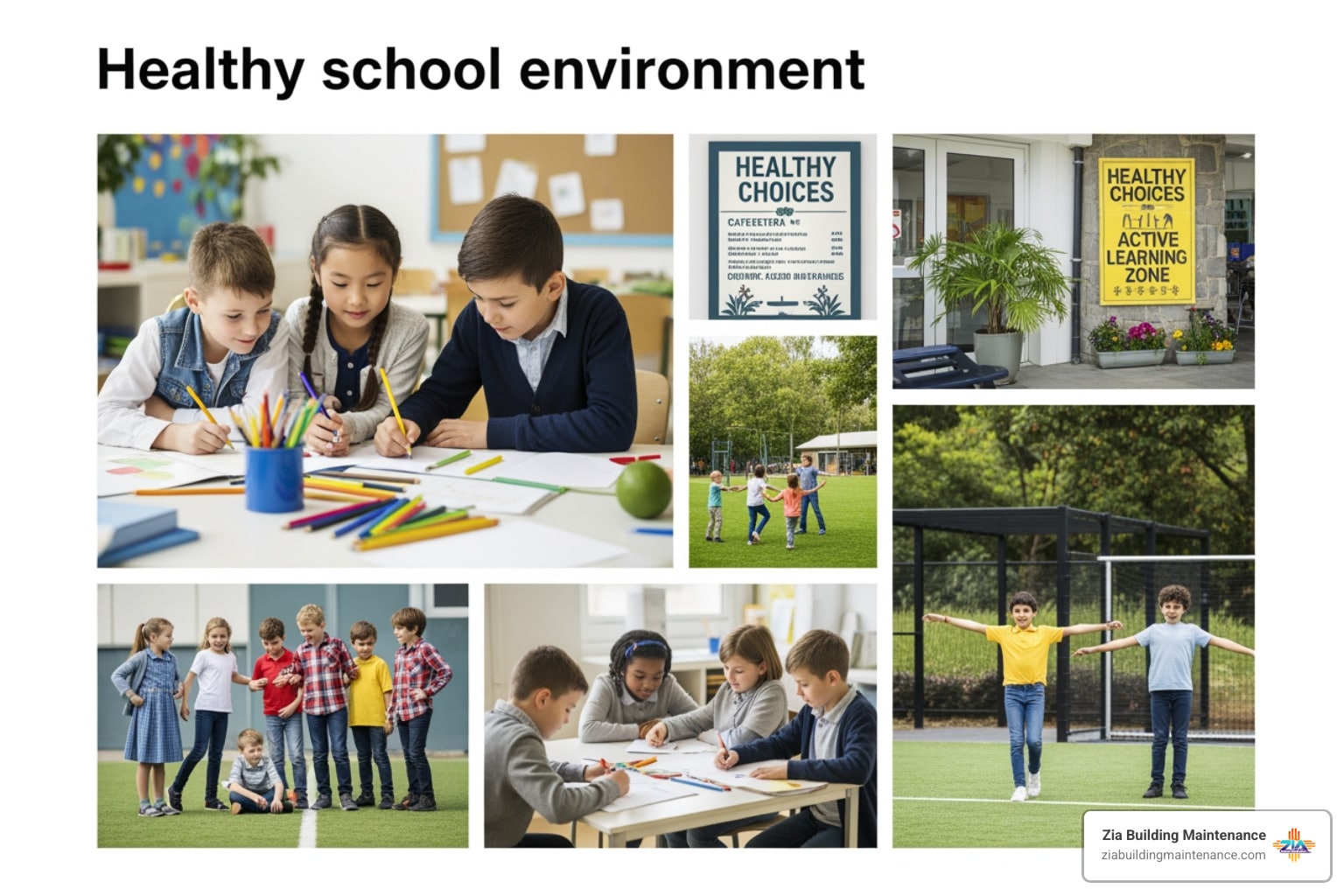
A healthy school environment is one where the physical space, social climate, and support systems all work together to help students thrive — academically, emotionally, and physically.
Here’s a quick breakdown of what that actually means:
| Component | What It Includes |
|---|---|
| Physical environment | Clean air, safe water, proper lighting, good acoustics |
| Social & emotional climate | Belonging, mental health support, positive relationships |
| Teaching & learning | Health topics woven into everyday curriculum |
| Leadership & policy | School-wide wellness policies and consistent enforcement |
| Community partnerships | Families, local agencies, and businesses working with schools |
Think about this: more than 95% of young people in the U.S. spend roughly 6 hours a day in school — for up to 13 years. That’s over 15,000 hours inside a building that either supports their growth or quietly works against it.
The research is clear. Healthy students learn better. And better-educated students tend to make healthier choices throughout their lives. That bidirectional relationship — health driving learning, learning driving health — is at the heart of everything a healthy school environment is designed to do.
This isn’t just about hand sanitizer stations and salad bars. It’s a whole-system approach that touches every corner of school life, from the air in the classroom to the relationships in the hallway.
I’m Ashley Cordova, Vice President of Zia Building Maintenance, and after more than three decades of helping schools and facilities across New Mexico maintain clean, safe spaces, I’ve seen how a well-maintained physical environment is a non-negotiable foundation for a truly healthy school environment. In this guide, I’ll walk you through what it takes to build one — from the framework down to the floor.
Handy Healthy school environment terms:
Defining the Healthy School Environment: A Holistic Approach
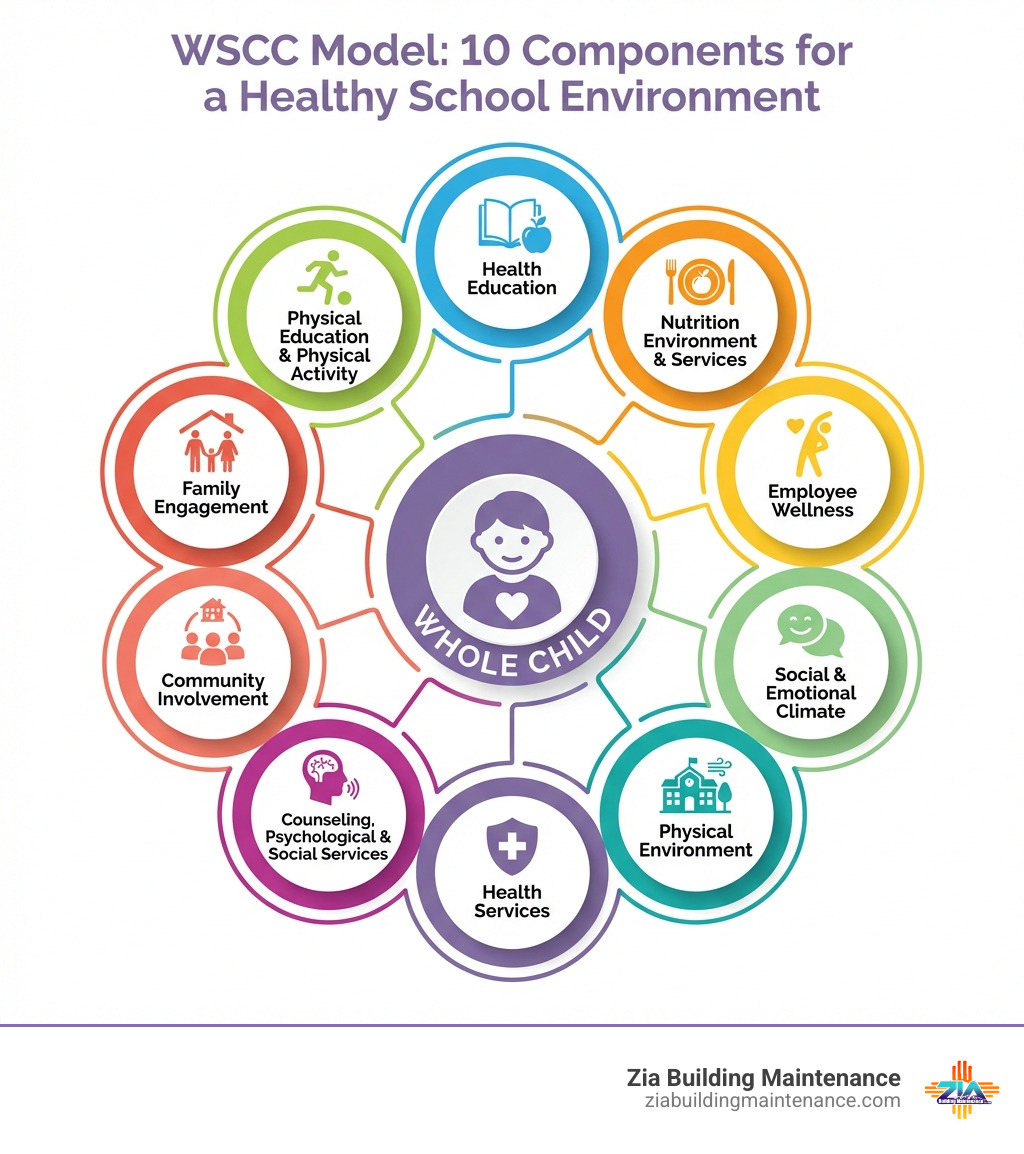
When we talk about a healthy school environment, we aren’t just talking about a building that’s been swept and mopped. We are talking about a holistic ecosystem. The CDC Healthy Schools initiative utilizes the Whole School, Whole Community, Whole Child (WSCC) model to illustrate this. This framework suggests that for a child to be truly “ready to learn,” the school must address everything from nutrition and physical activity to the social and emotional climate.
Another vital piece of the puzzle is the concept of Developmental Assets®. Research shows that on average, young people report having only 20 of the 40 Developmental Assets®—the building blocks of healthy development. A healthy school helps bridge that gap by providing external supports like adult role models and internal values like a sense of purpose.
The relationship between health and learning is bidirectional. Simply put: healthy children make better learners, and better-educated children grow up to be healthier adults. When a school prioritizes a healthy and supportive school environment, it isn’t just checking a box; it’s investing in the long-term success of the community.

The Five Foundations of a Healthy School Environment
To make this concept actionable, many experts point to the Ontario Ministry of Education’s Foundations for a Healthy School. This framework breaks the environment down into five interconnected pillars:
- Curriculum, Teaching, and Learning: Providing students with the knowledge and skills to make healthy choices.
- School and Classroom Leadership: Creating policies that prioritize well-being and modeling healthy behavior from the top down.
- Student Engagement: Giving students a voice in how their school functions, which builds a sense of belonging.
- Social and Physical Environments: Ensuring the school is safe, welcoming, and physically clean.
- Home, School, and Community Partnerships: Engaging parents and local organizations (like us here in Albuquerque!) to support student health.
Why Healthy Learners are Better Learners
It’s not just a feel-good sentiment; it’s backed by data. A healthy school environment can lead to significant improvements in student conduct, attendance rates, academic achievement, and graduation rates. When students feel safe and supported, they are more resilient in the face of challenges.
Furthermore, the benefits of a clean workplace apply just as much to schools as they do to offices. A clean environment reduces distractions and prevents the “broken window” effect, where a neglected space leads to neglected behavior.
The Impact of the Physical School Environment on Student Success
We often ask about student-to-teacher ratios or the latest curriculum, but how often do we ask about the building itself? The physical school environment is an essential component of a health-promoting school, and its impact is massive.
Consider this: national investment in public school facilities in the United States falls short by $46 billion a year. This gap means millions of students are learning in buildings over 50 years old with failing systems. Poor physical conditions lead to an estimated 13.8 million missed school days annually due to asthma alone. Factors like ventilation, lighting, acoustics, and water quality aren’t just “facility issues”—they are “learning issues.”
Maintaining a Healthy School Environment Through Sanitation
Sanitation is the first line of defense in any healthy school environment. Infectious diseases can spread like wildfire in a classroom setting, but proper protocols can break the chain of infection. This involves more than just a quick wipe-down; it requires focusing on high-touch areas often missed during disinfection, such as door handles, shared keyboards, and water fountain buttons.
During the height of the pandemic, we learned a lot about office cleaning tips to prevent the spread of COVID-19, and many of those lessons apply to schools today. Effective handwashing, respiratory etiquette, and creating a healthy school environment through chemical safety are paramount. Using the right products—and using them correctly—ensures that we are killing germs without exposing students to harsh, unnecessary toxins.
Environmental Challenges and Safety
Air quality is perhaps the most “invisible” challenge in schools. High CO2 levels (often exceeding 1,000 ppm in crowded classrooms) can lead to drowsiness and poor cognitive performance. Research shows that for every increase in ventilation, there is a measurable rise in math and reading scores.
Thermal health also plays a role. A student trying to take a test in a 90°F classroom has a 12.3% higher risk of failing compared to a student in a 75°F room. Beyond temperature, schools must also combat springtime allergies by managing dust and mold. A comprehensive approach to cleaning and disinfecting high-touch surfaces helps keep these environmental triggers at bay.
Promoting Mental Health, Nutrition, and Physical Activity
A healthy school environment also feeds the mind and the body. Social and Emotional Learning (SEL) is a critical component, helping students manage emotions and maintain positive relationships. According to the Collaborative for Academic, Social, and Emotional Learning (CASEL), SEL skills are foundational for success in and out of the classroom.
Nutrition is another pillar. It is recommended that schools give students enough time to eat school meals (at least 20 minutes) to ensure they are actually getting the nutrients they need. When paired with daily physical activity and substance use prevention programs, these initiatives create a safety net for students.
Equity and Inclusion in a Healthy School Environment
A school cannot be “healthy” if it isn’t equitable. This means creating identity-affirming spaces where every student feels they belong, regardless of their background. Equity is about leveling the playing field so every child has the resources they need to succeed.
This includes keeping your employees healthy this winter—because teachers who feel supported can better support their students. Furthermore, just as dirty offices can cause higher employee turnover, a neglected school environment can lead to staff burnout and decreased student morale. Parent engagement and student leadership are the “secret ingredients” that ensure these healthy changes are sustainable and culturally relevant.
Local Impact: Healthy Schools in Albuquerque and New Mexico
In our neck of the woods, organizations like Albuquerque Public Schools and Rio Rancho Public Schools are working hard to implement these frameworks. From Downtown Albuquerque to the North Valley, our local schools face unique challenges, including high pollen counts and aging infrastructure.
The New Mexico Healthy Schools Project provides resources to help our local districts improve their wellness policies. Whether you are looking at the top public and private elementary schools in Albuquerque or navigating your way through the best universities and colleges in Albuquerque, NM, the environment remains a top predictor of success.
| Initiative | Focus Area | Local Impact |
|---|---|---|
| APS School Climate | Social-Emotional Support | Improving belonging in Albuquerque schools |
| RRPS Student Services | Mental Health & Safety | Providing counseling in Rio Rancho |
| Bernalillo Health & Wellbeing | Holistic Health | Integrating nutrition and activity in Bernalillo |
Practical Steps for School Leaders to Improve Wellness
If you’re a school leader, the task of creating a healthy school environment might seem daunting, but you don’t have to do it all at once. Start by using the School Health Index (SHI), a self-assessment tool that helps you identify gaps in your current policies.
Helping school leaders create a healthy and supportive school environment often starts with small, actionable steps:
- Ensure students have at least 20 minutes to sit and eat.
- Implement a consistent cleaning schedule for high-traffic areas.
- Foster a culture of “check-ins” where staff and students can share their needs.
how cleaner surfaces mean fewer sick days in healthcare is a principle that applies directly to the classroom. By reducing the viral load in a building, you keep teachers in the classroom and students in their seats.
Frequently Asked Questions about Healthy Schools
What is a healthy school environment?
It is a holistic approach to education where the physical building, the social-emotional climate, and the school policies all work together. It ensures students are safe, physically healthy, and emotionally supported by their community.
How does the physical environment affect student performance?
Factors like lighting, acoustics, and air quality have a direct impact on the brain. Poor lighting can lead to eye strain and headaches, while poor acoustics make it harder for students to process information. Improving these factors has been shown to raise test scores and lower absenteeism.
What are the 40 Developmental Assets?
These are 40 research-based traits, experiences, and qualities that influence young people’s development. They are divided into external assets (like family support and school boundaries) and internal assets (like a commitment to learning and positive values). The more assets a student has, the more likely they are to thrive.
Conclusion
At Zia Building Maintenance, we believe that every child in Albuquerque, Rio Rancho, and Bernalillo deserves to learn in a space that is truly clean and safe. As a family-owned business since 1989, we take pride in being a dependable partner for schools and local businesses. We know that our work—the deep cleaning, the floor waxing, and the high-touch disinfection—is the foundation upon which a healthy school environment is built.
When we take care of the building, we are taking care of the people inside it. If you’re ready to elevate the health and professional look of your facility, we’re here to help with the attention to detail that only a local, dedicated team can provide.