
Why High-Touch Surface Cleaning is Critical for Your Business
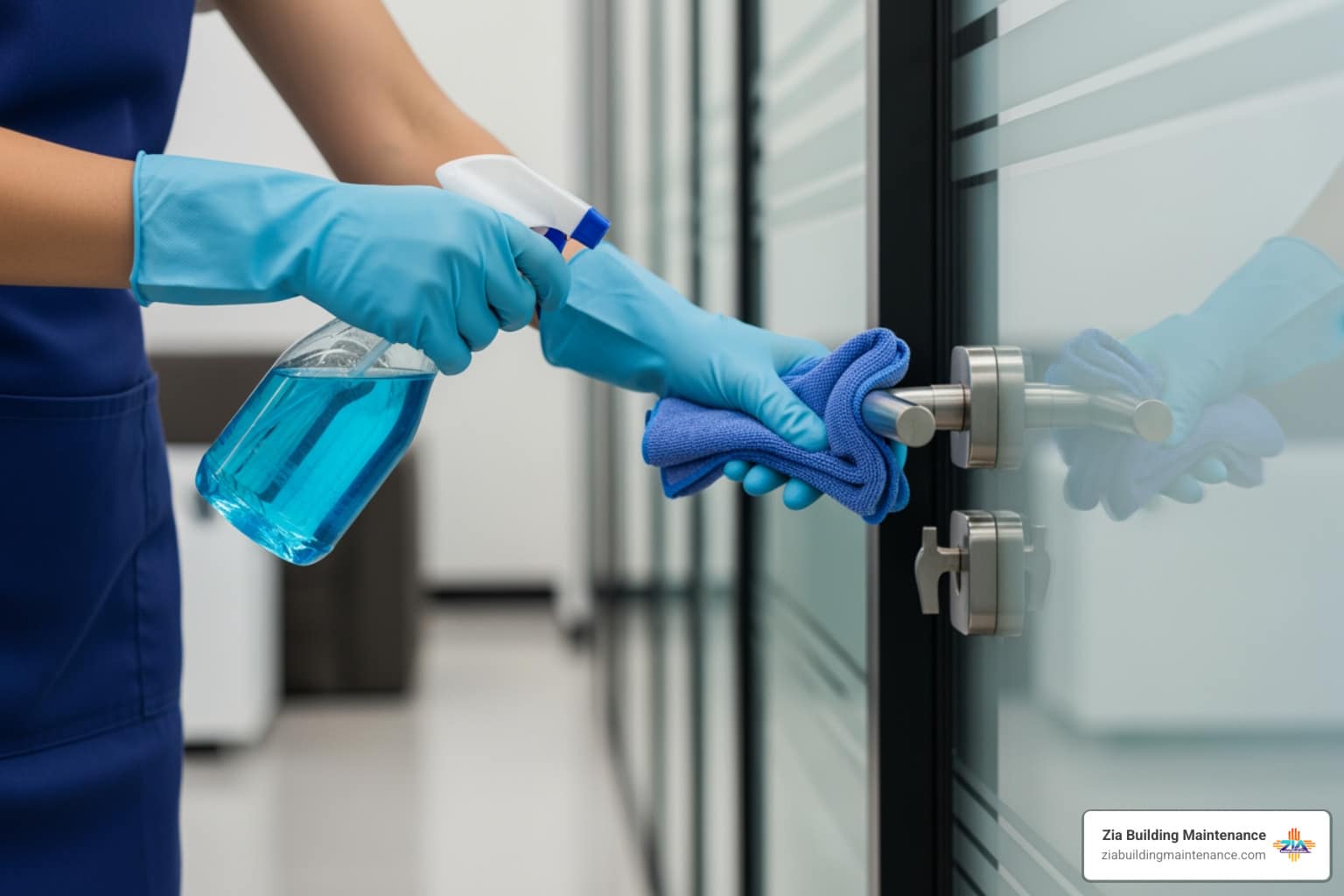
High-touch surface cleaning is the process of regularly removing dirt, germs, and pathogens from surfaces that people frequently touch throughout the day. These surfaces—like door handles, light switches, elevator buttons, and shared equipment—act as transfer points for bacteria and viruses, making them critical areas to maintain for employee health and safety.
Quick Guide to High-Touch Surface Cleaning:
- What qualifies as high-touch? Door handles, light switches, keyboards, phones, countertops, elevator buttons, shared equipment, and bathroom fixtures
- How often to clean? At least 2-3 times daily for most commercial settings; more frequently in high-traffic or healthcare environments
- Key steps: Clean visible dirt first with soap and water, then disinfect with EPA-registered products, ensuring proper contact time (usually 3-10 minutes)
- Essential supplies: EPA-registered disinfectants, microfiber cloths, PPE (gloves, safety glasses), and proper ventilation
- Why it matters: Reduces pathogen transmission, prevents illness spread, protects vulnerable populations, and maintains a professional environment
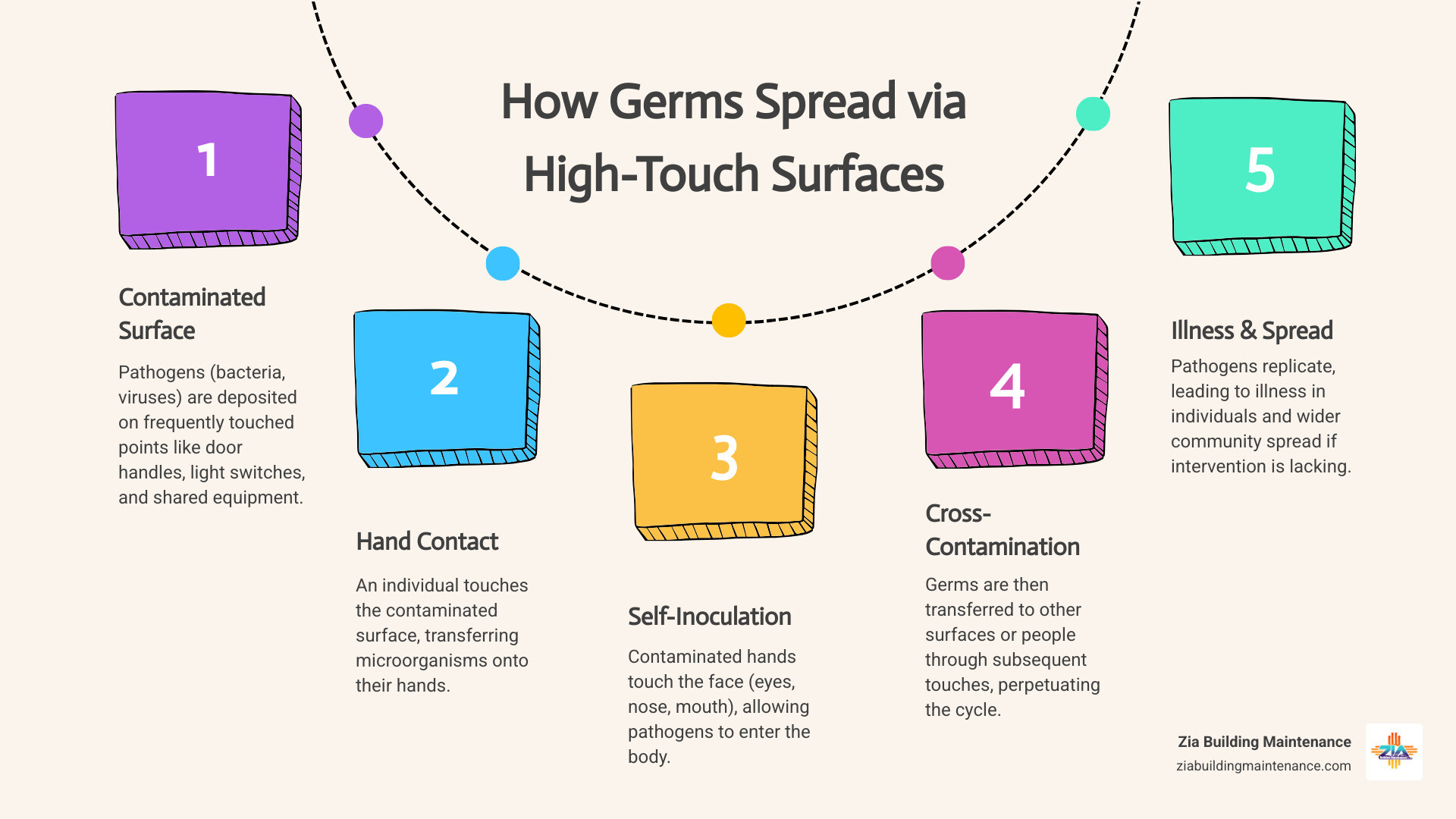
The science is clear: infections spread through three main routes—respiratory systems, close contact with others, and contaminated surfaces. While most attention focuses on the first two, your hands touch dozens of surfaces every hour. Each time you touch a contaminated doorknob or light switch, you risk picking up microorganisms that can then transfer to your face, food, or other people.
UK Government guidance emphasizes that disinfecting high-touch areas works hand-in-hand with frequent handwashing to prevent infections and viruses from spreading. In commercial settings like offices, schools, restaurants, and healthcare facilities, multiple people contaminate the same surfaces throughout the day, creating an environment where cross-contamination can occur rapidly without proper protocols.
The difference between a clean workplace and a safe workplace comes down to understanding what needs to be cleaned, how to clean it properly, and how often. Many facility managers struggle with inconsistent cleaning results because their teams don’t prioritize high-touch surfaces or lack training in proper disinfection techniques. Visible cleanliness doesn’t equal sanitary conditions—a surface can look spotless while harboring harmful pathogens.
I’m Ashley Cordova, Vice President of Zia Building Maintenance, where I’ve overseen high-touch surface cleaning protocols for Albuquerque businesses since joining our family company. My experience managing commercial cleaning operations has shown me that consistent high-touch surface cleaning requires both proper training and accountability systems that many businesses lack when handling cleaning in-house.
This guide will walk you through the science of surface disinfection, identify the most critical high-touch points in your facility, and provide actionable protocols you can implement immediately to protect your employees and customers.
Understanding the Science: Cleaning, Sanitizing, and Disinfecting
Before we grab the spray bottle, we need to talk about what we’re actually trying to achieve. In our industry, we often see people use the terms “cleaning,” “sanitizing,” and “disinfecting” interchangeably. However, they are distinct processes with very different goals.
To understand why this matters, we look at the surface bioburden—the number of microorganisms living on a surface. If you don’t use the right method, you might leave behind enough germs to cause an outbreak.
- Cleaning: This is the foundational step. Cleaning uses soap (or detergent) and water to physically remove dirt, debris, and many germs. While it doesn’t necessarily kill germs, it lowers their numbers and removes the “food” they need to grow.
- Sanitizing: This process reduces the number of bacteria on a surface to levels considered safe by public health standards. It’s commonly used on food-contact surfaces.
- Disinfecting: This is the “heavy hitter.” Disinfecting uses chemicals to kill germs (bacteria, viruses, and fungi) on surfaces. It doesn’t necessarily clean the surface, which is why you must clean first.
For a deeper dive, check out our guide on The Difference Between Cleaning, Sanitizing, and Disinfecting.
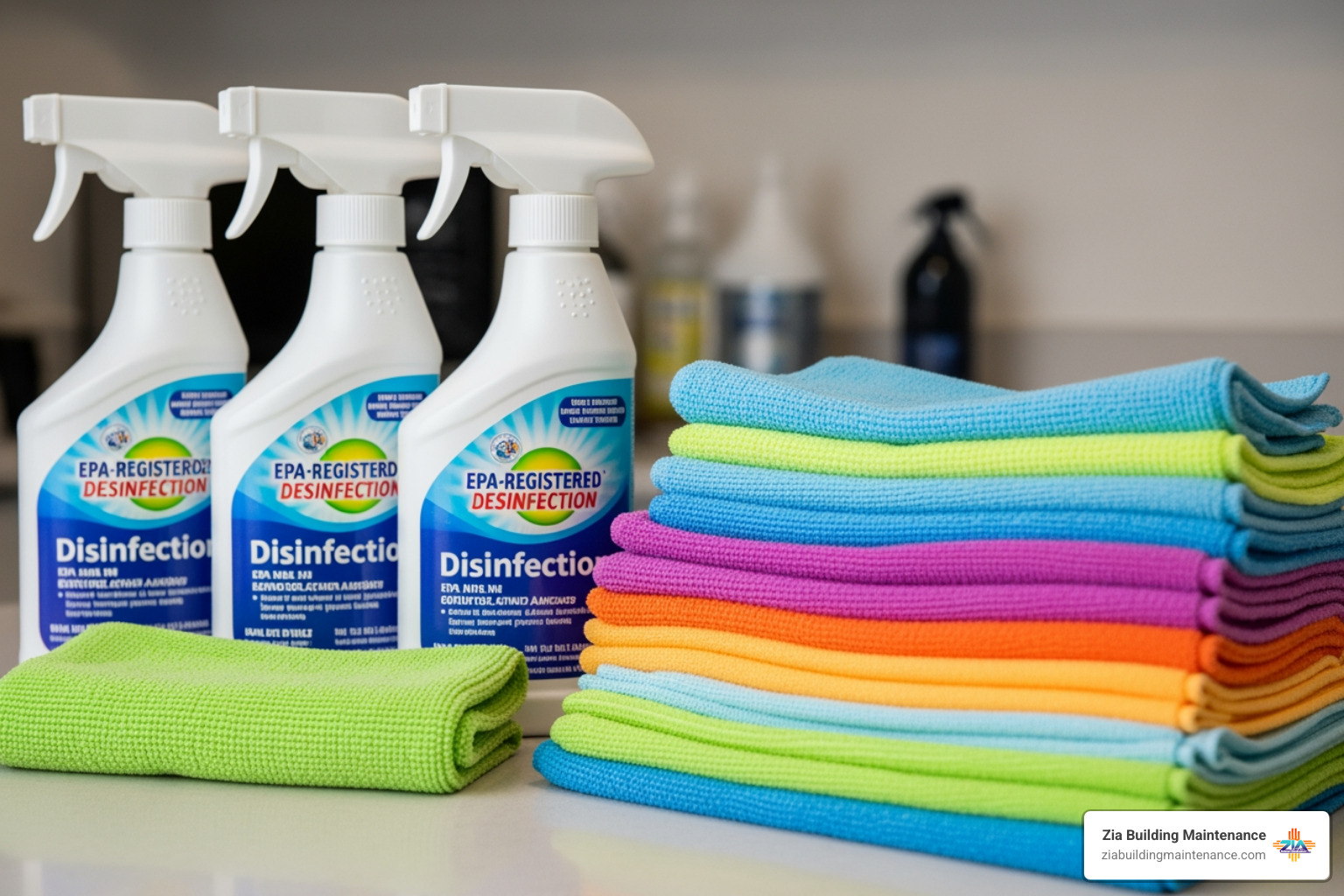
The EPA definitions of surface products remind us that a product is only a “disinfectant” if it has an EPA registration number on the label. If it doesn’t have that number, it hasn’t been verified to kill the specific pathogens it claims to target.
| Process | Goal | Best For | Efficacy |
|---|---|---|---|
| Cleaning | Remove dirt/organic matter | All surfaces | High removal, low kill rate |
| Sanitizing | Reduce bacteria to safe levels | Food prep, toys | 99.9% bacteria reduction |
| Disinfecting | Kill most pathogens | High-touch points, sick rooms | Kills 99.999% of germs |
Defining High-Touch Surfaces
So, what exactly makes a surface “high-touch”? Simply put, these are the items in your facility that are handled by multiple people throughout the day. Because they are touched so often, they become reservoirs for microorganisms.
When we perform audits for businesses in Rio Rancho or Bernalillo, we often find that High-touch Areas Often Missed During Disinfection include things like the undersides of table edges, the buttons on the office microwave, and shared pens at the reception desk. These communal spaces are the primary highways for germ transmission.
The Role of Contact Time
If there is one thing we want you to take away from this guide, it is the importance of dwell time (also known as contact time).
Dwell time is the amount of time a disinfectant must remain visibly wet on a surface to actually kill the germs listed on its label. Many people spray a surface and immediately wipe it dry—this is essentially just expensive cleaning, not disinfecting. Most EPA-registered disinfectants require a 3-10 minute rule of wet contact time to be effective. If the product dries too quickly, you must reapply it to ensure chemical efficacy.
Best Practices for High-Touch Surface Cleaning and Disinfection
Effective High-touch surface cleaning isn’t just about what chemicals you use; it’s about the process. We follow a structured approach to ensure nothing is missed and cross-contamination is avoided.
A professional routine typically involves the six stages of cleaning:
- Pre-clean: Remove loose debris and dust.
- Main clean: Use soap and water to break down grease and dirt.
- Rinse: Remove the cleaning agent.
- Disinfection: Apply the disinfectant and allow it to sit for the full dwell time.
- Final rinse: (If required, usually for food-contact surfaces).
- Drying: Air dry or use a clean cloth after the dwell time has passed.
For more details on these steps, you can refer to the Cleaning and Disinfecting High Touch Surfaces guide.
Essential Steps for High-Touch Surface Cleaning
To maximize efficiency and hygiene, we use specific techniques:
- “S” Shaped Pattern: Instead of wiping in circles (which just spreads germs around), wipe in an “S” shape. This ensures you are always moving from a clean area to a dirty one and not redepositing germs on areas you just wiped.
- Top-to-Bottom Method: Always start at the highest point and work your way down. Gravity is real—dust and germs fall as you clean.
- Clean-to-Dirty Workflow: Clean the least contaminated areas first (like the tops of desks) before moving to the “germiest” areas (like trash can lids or toilets).
By following this workflow, you avoid the Missed Areas in Office Disinfection Routines that often lead to workplace illness.
Safety Protocols and PPE for High-Touch Surface Cleaning
Cleaning for health shouldn’t come at the cost of your own safety. Disinfectants are powerful chemicals that can cause skin irritation, respiratory issues, or eye damage if mishandled.
We always adhere to OSHA PPE standards, which include:
- Nitrile Gloves: Protect your skin from chemical burns and pathogens.
- Safety Goggles: Essential when spraying chemicals to prevent splashes into the eyes.
- Ventilation: Always ensure there is fresh air circulating. If you’re in a small room in an Albuquerque office building, leave the door open.
It’s also important to note that some disinfectants can be asthma triggers. If you or your staff have respiratory sensitivities, look for products that are “fragrance-free” or have lower volatile organic compound (VOC) levels. Always consult the Safety Data Sheets (SDS) for every product you use; these documents tell you exactly what’s in the bottle and what to do if an accident happens.
Targeted Cleaning Strategies for Different Environments
Every building has a different “risk profile.” A quiet law office in downtown Albuquerque doesn’t need the same intensity of cleaning as a pediatric clinic. We use a risk-based approach to determine how often and how deeply to clean.
For instance, identifying the 5 Germiest Areas in the Office helps you focus your resources where they matter most. In healthcare, the stakes are even higher; research shows How Cleaner Surfaces Mean Fewer Sick Days in Healthcare, directly impacting patient outcomes and staff retention.
Specialized Procedures for Electronics and Soft Surfaces
Not all surfaces can handle a bleach-based disinfectant.
- Electronics: Phones, keyboards, and touchscreens are some of the most contaminated items we own. According to CDC guidelines for electronics, you should use 70% alcohol wipes or a cloth sprayed with 70% isopropyl alcohol. Never spray liquid directly onto a device. We also recommend using wipeable covers for shared tablets or remotes to make disinfection easier.
- Soft Surfaces: Carpets, rugs, and drapes should be vacuumed regularly. If they become contaminated, they should be laundered using the warmest water settings appropriate for the fabric and dried completely.
Healthcare and High-Risk Settings
In hospitals and clinics, we divide the environment into patient zones. This includes everything the patient touches—bedrails, call buttons, and bedside tables.
Terminal cleaning is the intensive disinfection process performed after a patient is discharged. This requires sporicidal agents to kill difficult pathogens like C. difficile. We follow the Environmental Cleaning Procedures for Healthcare and the WHO infection prevention manual to ensure these high-risk settings remain safe for the next patient.
Frequency and Maintenance of Sanitary Standards
How often is enough? For most commercial settings, we recommend High-touch surface cleaning at least 2-3 times daily. This usually aligns with the beginning of the shift, mid-day (after lunch rushes), and end-of-day.
During certain times of the year, frequency should increase. Keeping Your Employees Healthy This Winter requires more vigilance because viruses like the flu and RSV thrive in colder, drier air. Similarly, Office Cleaning Tips to Prevent the Spread of COVID-19 emphasize that high-traffic areas like breakrooms and elevators need near-constant attention.
Advanced Disinfection Technologies
Sometimes, manual wiping isn’t enough for large areas or complex surfaces. This is where technology steps in:
- Electrostatic Spraying: This process adds an electric charge to disinfectant droplets, allowing them to wrap around curved surfaces for 360-degree coverage. Electrostatic Cleaning Explained shows why this is a game-changer for gyms and large offices.
- UVGI (Ultraviolet Germicidal Irradiation): Using UV-C light to kill microorganisms in the air and on surfaces.
- Antimicrobial Coatings: Some newer coatings use materials like copper to naturally kill bacteria on contact, providing a secondary layer of protection between cleanings.
Frequently Asked Questions
What are the risks of mixing cleaning products?
Never mix cleaning products. Mixing bleach and ammonia, for example, creates toxic chloramine vapors that can be fatal. Mixing bleach with acids (like vinegar or some window cleaners) creates chlorine gas. According to OSHA Hazard Communication standards, employers must train staff to recognize these chemical hazards. Always use one product at a time and rinse between steps if switching chemicals.
How should spills of blood or body fluids be handled?
This requires a two-step process and specific biohazard safety protocols.
- Confine and Absorb: Use absorbent materials to soak up the fluid.
- Clean and Disinfect: Clean the area with detergent, then apply an intermediate-level disinfectant (like a 1:10 bleach solution) and allow for the full dwell time. Always wear full PPE, including a mask and eye protection, when handling body fluids.
How often should office high-touch points be cleaned?
A daily routine is the bare minimum. However, shared equipment like printers or coffee pots should be cleaned after each high-use period. Implementing 3 Ways Professional Cleaners Improve Office Safety—such as scheduled daytime porter services—ensures that high-traffic points are addressed throughout the day, not just after everyone has gone home.
Conclusion
At Zia Building Maintenance, we believe that a truly clean workspace is the foundation of a successful business. Since 1989, our family-owned team has provided Albuquerque with dependable, high-quality janitorial services that go beyond the surface. We understand that High-touch surface cleaning isn’t just a chore—it’s a critical health intervention.
Whether you are managing a medical clinic in Rio Rancho or a corporate office in Bernalillo, the details matter. If you’re looking to upgrade your facility’s health standards, check out our guide on how to Find the Right COVID Cleaner with These 3 Tips to ensure your provider is actually doing the work they promise.
Ready to provide your team with a safer, more professional environment? Request a quote for professional commercial cleaning services today and let us take the burden of disinfection off your shoulders.