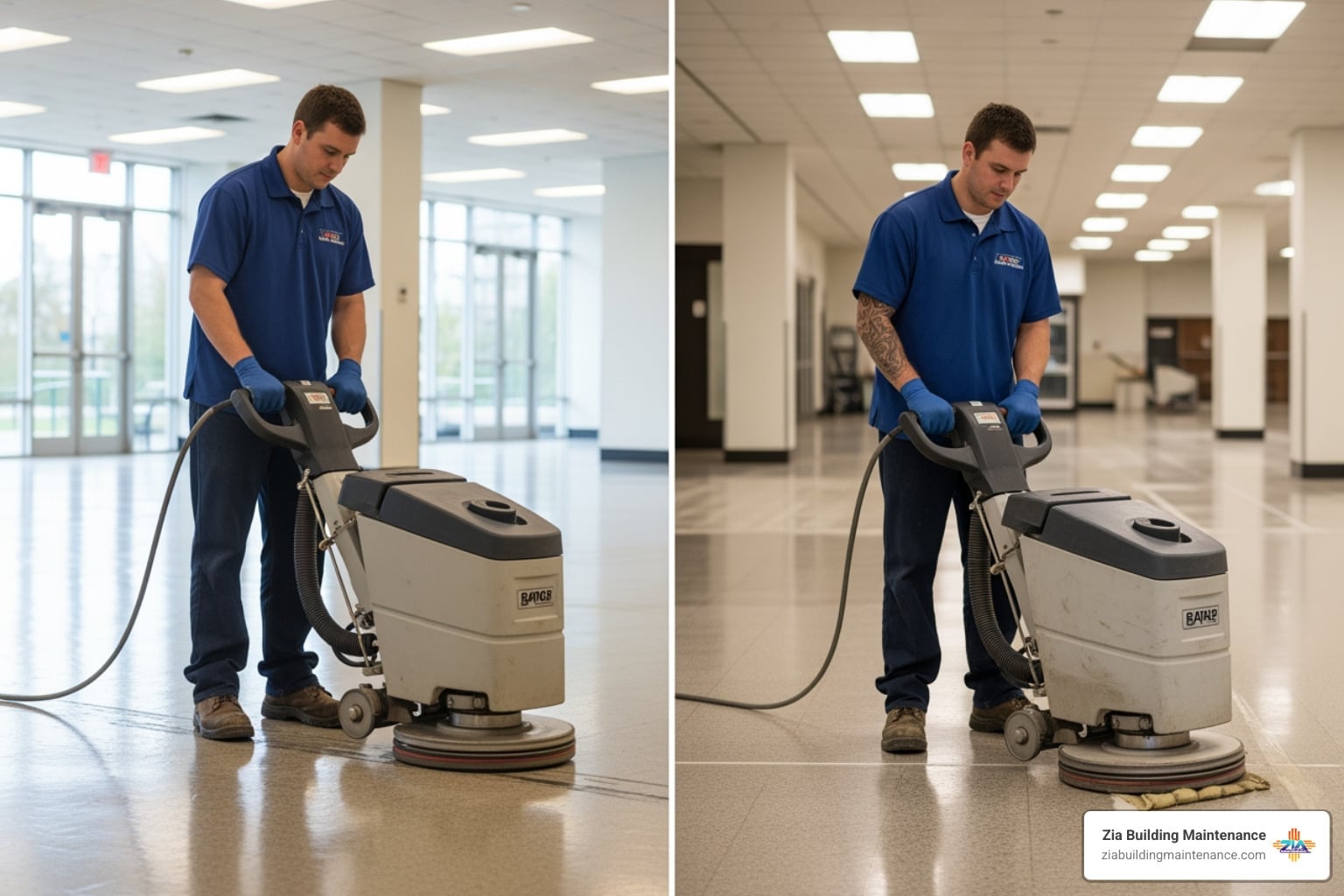
Why Commercial Floors Need Regular Stripping and Waxing
Stripping and waxing floors is the process of removing old, yellowed floor finish and applying fresh protective layers to restore shine and protect your flooring investment. Here’s what you need to know:
The Process:
- Strip – Apply chemical stripper to dissolve old wax buildup
- Scrub – Use floor machine with stripping pads to remove finish
- Rinse – Thoroughly clean and neutralize the floor surface
- Seal – Apply protective sealer to the bare floor
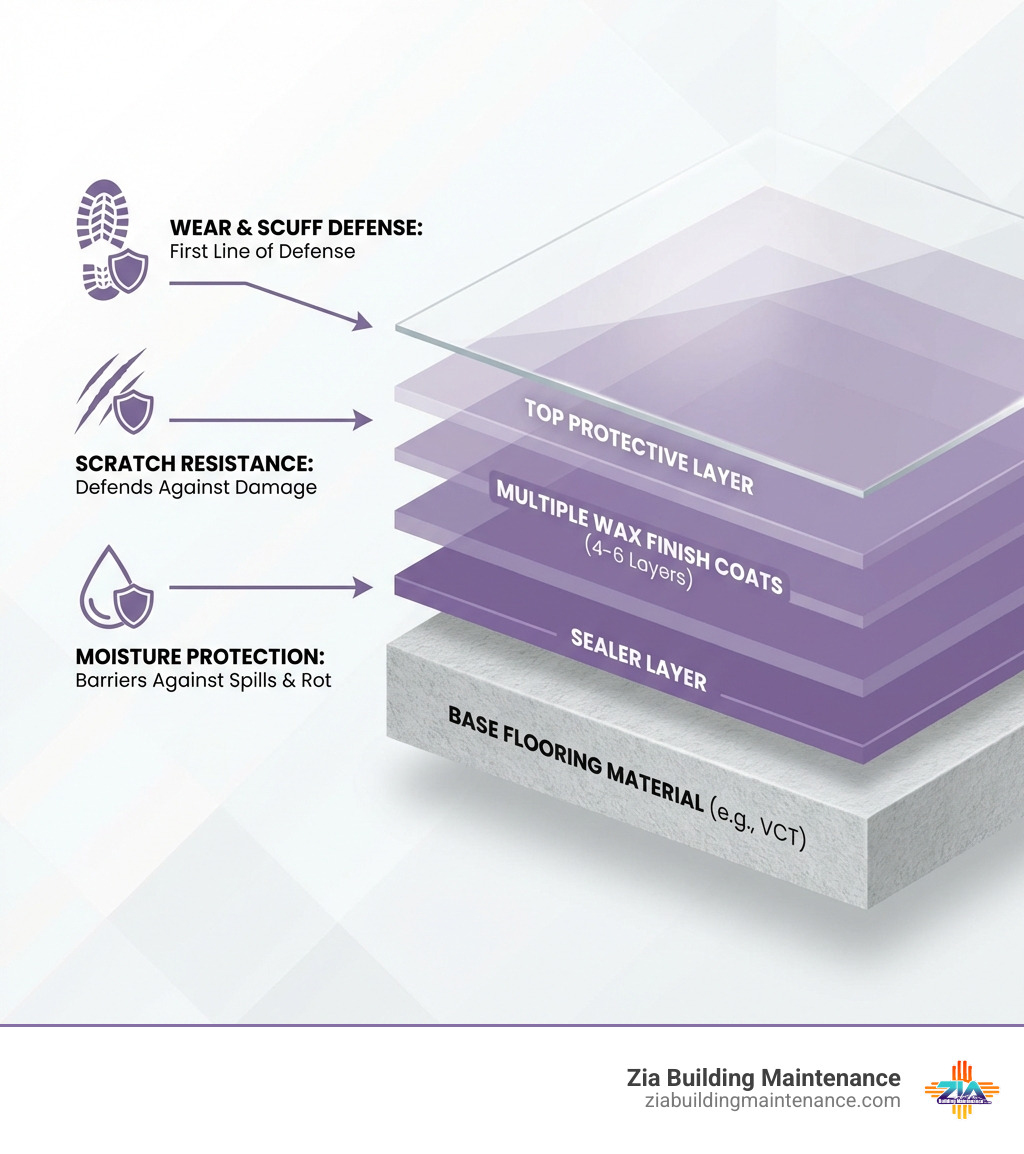
- Wax – Apply 4-6 layers of commercial-grade floor finish
- Buff – Polish to achieve professional shine
Recommended Frequency:
- Office buildings: At least once per year
- Manufacturing facilities: Quarterly
- High-traffic areas: Every 3-6 months
Key Benefits: Protection from scratches, moisture damage, and stains while extending floor life and maintaining professional appearance.
Walking into a facility with dirty, peeling floors creates an immediate negative impression. Your floors take constant abuse from foot traffic, rolling carts, and daily operations. Without proper maintenance, that wear shows quickly.
Most commercial spaces use vinyl composition tile (VCT) because it’s affordable and durable. But VCT is porous—it absorbs dirt, moisture, and grime that regular mopping can’t reach. Over time, old wax builds up and turns yellow. Scratches multiply. The shine disappears.
Regular stripping and waxing fixes these problems. It removes damaged layers down to the original surface, then rebuilds protection with fresh finish. Done correctly, it can extend your floor’s life by years and save thousands in replacement costs.
I’m Ashley Cordova, Vice President of Zia Building Maintenance, where my family has provided commercial janitorial services in New Mexico since 1989. Through years of overseeing operations and client relationships, I’ve seen how proper stripping and waxing floors transforms facilities and prevents costly flooring failures that disrupt business operations.
Why Stripping and Waxing Floors is Essential for Commercial Spaces
In the busy commercial environments of Albuquerque and Rio Rancho, floors are more than just something to walk on; they are a significant capital investment. Most facilities use Vinyl Composition Tile (VCT) because of its resilience, but many business owners don’t realize that VCT is a porous material. Without a proper barrier, dirt and spills don’t just sit on top—they sink in.
Stripping and waxing floors creates an essential moisture barrier. When water or cleaning chemicals seep into the cracks between tiles, they can weaken the adhesive. This leads to “tile lifting,” where the edges of the flooring curl up, creating a dangerous trip hazard and an unsightly mess. By maintaining a solid coat of wax, you block moisture from reaching the subfloor, preventing rot, mold, and warping.
Hygiene is another critical factor. A floor that has lost its finish becomes a magnet for bacteria and grime. Scratches and scuffs act like tiny canyons where pathogens can hide, safe from a standard mop. Professional floor care ensures these pores are sealed, making the surface easy to disinfect. Furthermore, why floor mats are a necessity for keeping the office clean cannot be overstated; they act as the first line of defense, catching the Albuquerque grit and sand before it can grind away your floor’s finish.
For a deeper look into the technical side of this maintenance, you can check out this Guide to Floor Stripping. It highlights how regular maintenance prevents the permanent discoloration that occurs when dirt is ground into the actual tile material rather than just the wax layer.
The Professional Process of Stripping and Waxing Floors
When we step into a facility for a floor restoration project, we aren’t just “cleaning.” We are performing a controlled chemical and mechanical process. Stripping and waxing floors is a learned skill that requires precision. If you use the wrong chemical dilution or rush the “dwell time,” you can permanently damage the floor or end up with a finish that peels within weeks.
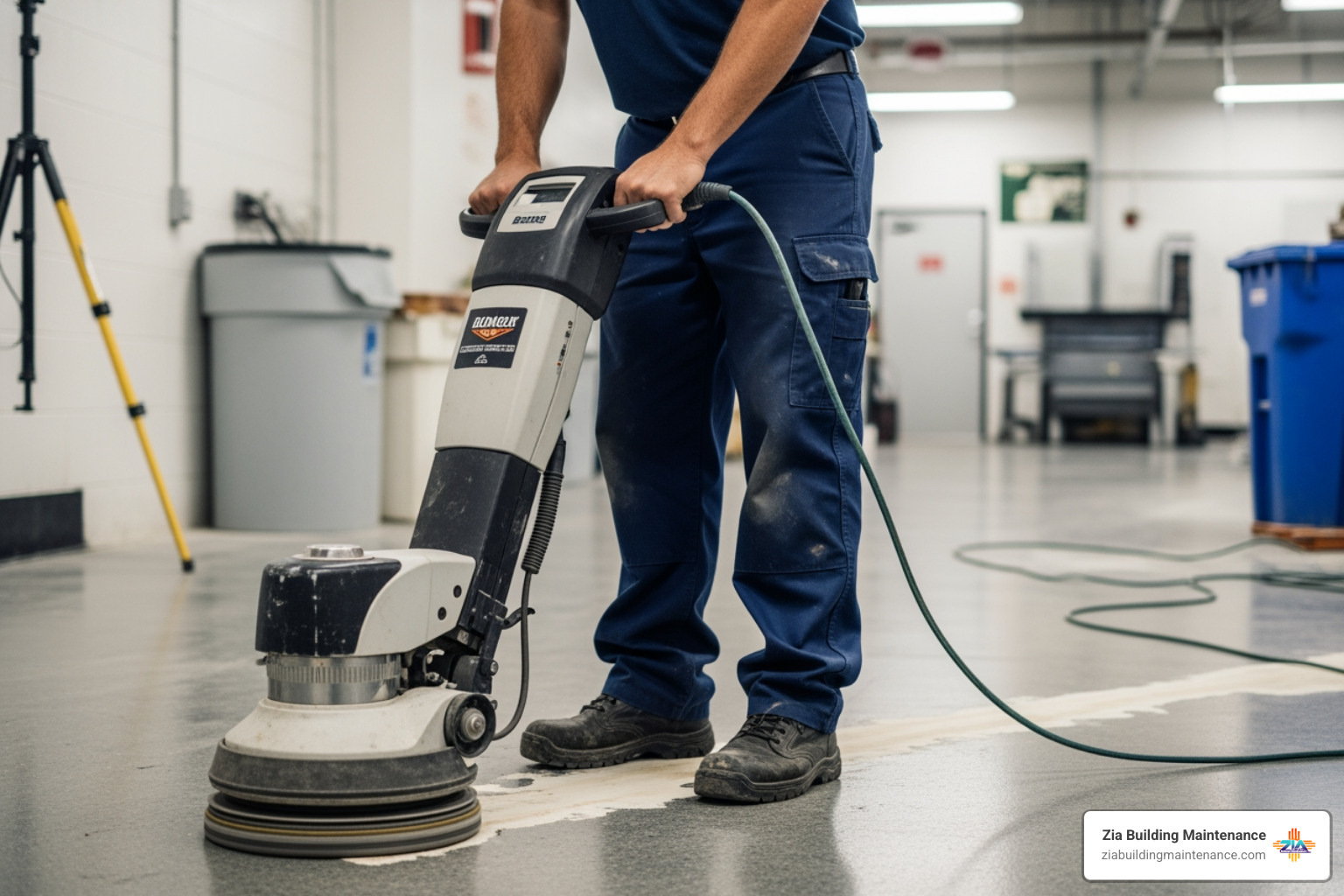
One of the most overlooked aspects of the process is surface integrity. Before we even think about applying new wax, we must ensure the floor is completely neutralized. Stripping chemicals are highly alkaline. If any residue remains, it will react with the new, acidic wax, causing it to bubble or fail to bond. This is why our Commercial VCT Cleaning Service focuses so heavily on the rinsing and neutralization phase.
Key Steps Involved in Stripping and Waxing Floors
The process is a sequence of events that must be followed strictly to achieve a “wet look” shine that lasts:
- Preparation and Safety: We clear the area and place high-visibility wet floor signs. The solution makes floors incredibly slippery—comparable to walking on ice.
- Stripper Application: we apply a commercial-grade floor stripper and let it “dwell” for approximately 10 minutes. This dwell time allows the chemicals to penetrate and dissolve the old, yellowed wax layers.
- Mechanical Scrubbing: Using a rotary floor machine equipped with aggressive black or heavy-duty stripping pads, we agitate the solution. This grinds up the liquefied wax and dirt.
- Detailing the Edges: Machines can’t reach every corner. We manually scrub the baseboards and corners to remove “mop glow”—that dark, ugly buildup that accumulates at the edges of rooms.
- Recovery: We use a high-powered wet vacuum to remove the “slurry” (the mix of old wax and stripper). It’s vital to get this off the floor before it dries, or it becomes even harder to remove than before.
- Rinsing and Neutralizing: We rinse the floor with clean water and a neutralizing agent to return the floor to a proper pH balance.
For those interested in maintaining the value of their property, Residential Floor Refinishing & Repair follows similar principles of precision to ensure longevity and beauty.
Applying the Finish: Stripping and Waxing Floors for Longevity
Once the floor is bare, clean, and dry, the “waxing” begins. We start with a floor sealer. Think of the sealer as a primer; it fills the pores of the VCT so the wax sits smoothly on top rather than soaking in.
We then apply the floor finish in thin, even layers. A common mistake is applying one thick coat. Thick coats don’t dry properly, leading to a cloudy, soft finish that scuffs easily. Instead, we apply 4 to 6 layers of high-quality wax. In high-traffic walkways, we might even go up to 10 layers to ensure maximum durability.
Each layer needs about 30 to 60 minutes to dry completely before the next one is applied. Once the final coat is set, we use a high-speed burnisher or buffer to “pop” the shine. This heat-based process hardens the wax, making it more resistant to the scuffs and scratches common in New Mexico’s commercial spaces. Our specialized Floor Care Service is designed to handle this delicate balance of chemistry and labor.
Frequency and Maintenance: How Often Should You Strip and Wax?
“How often should I do this?” is the question we hear most at Zia Building Maintenance. The answer depends entirely on your industry and foot traffic.
- Commercial Office Buildings: Generally, a full strip and wax is recommended once a year.
- Retail and Grocery Stores: Due to high traffic and shopping carts, these often require semi-annual or even quarterly service.
- Manufacturing and Industrial: These facilities often need quarterly attention to protect the floor from heavy machinery and chemical spills.
If you wait until the floor is peeling or completely black, you’ve waited too long. At that point, the underlying tile may be damaged. You can extend the life of a full strip and wax job by implementing a “top scrub and recoat” every six months. This involves removing just the top layer of dirty wax and applying two fresh coats. This can keep your floors looking great for up to 18-20 months before a total strip is needed.
For more tips on routine maintenance, read our guide on What’s the best way to clean my floor? to ensure your daily mopping isn’t actually hurting your wax.
Professional Services vs. DIY: Avoiding Common Mistakes
It can be tempting to rent a buffer and try to save a few dollars. However, stripping and waxing floors is one of the most difficult janitorial tasks to get right. We often get calls to “fix” DIY jobs where the finish is peeling or the floor has turned a strange shade of blue or yellow.
| Feature | DIY Approach | Professional Service (Zia) |
|---|---|---|
| Equipment | Rental machines (often underpowered) | Industrial rotary & orbital scrubbers |
| Chemicals | Consumer-grade (low solids) | Commercial-grade (high solids/durability) |
| Safety | High risk of slips/chemical burns | Full PPE and OSHA-compliant signage |
| Time | Can take a full weekend | Often completed in a single night |
| Results | Streaks, bubbles, uneven shine | Uniform “wet look” high-gloss finish |
Common mistakes include using too much chemical (which can lead to chemical burns or unhealthy VOC levels) and failing to clean the equipment. If you use a dirty mop to apply wax, you are literally sealing dirt into the floor forever. The benefits of a professional office floor cleaner include the peace of mind that the job is done right the first time without the risk of permanent floor damage.
Frequently Asked Questions about Floor Maintenance
What are the costs associated with professional floor stripping and waxing?
Costs are typically calculated by the square foot. Factors include the current condition of the floor (how many layers of old wax need to come off), the number of obstacles (furniture moving), and whether the work needs to be done after hours. While the upfront cost is higher than a standard cleaning, it saves money in the long run by preventing the need for a total floor replacement, which can cost ten times as much.
How does stripping and waxing protect different types of commercial flooring?
While VCT is the most common, we also service linoleum, stone, and even certain wood floors.
- Vinyl/VCT: Prevents scratches and moisture penetration.
- Linoleum: Protects the natural materials from drying out and cracking.
- Stone: Sealing prevents staining from spills like coffee or oil.
By creating a sacrificial layer of wax, the actual flooring material never takes the hit from shoes or grit; the wax does.
How can stripping and waxing improve the appearance and hygiene of a facility?
A high-gloss floor reflects more light, making your entire facility look brighter and cleaner. This has a direct impact on employee morale and customer perception. As we mentioned in our post about cleaning dirty floors, a dirty floor gives an immediate impression that the entire facility is unsanitary. Stripping and waxing removes the embedded bacteria and creates a smooth surface that repels dirt rather than trapping it.
Conclusion
Your floors are the foundation of your business’s image. In Albuquerque, Rio Rancho, and Bernalillo, the harsh environment and constant grit make stripping and waxing floors a necessity, not a luxury. At Zia Building Maintenance, we combine over 30 years of family-owned experience with the latest floor care technology to ensure your facility shines.
Don’t settle for dull, yellowed, or peeling floors. Whether you need a one-time restoration or a consistent maintenance program, our attention to detail ensures a professional space that welcomes your clients and protects your investment.
Ready to see your floors transformed? Contact us today for a quote on our Floor Care Service or explore our full range of Commercial Cleaning options to keep your entire facility in peak condition. Let us handle the heavy lifting while you focus on running your business.