

Introduction to Ladder-Free Exterior Glass Care
To clean high windows without a ladder, use a telescopic extension pole or a water-fed pure water system operated directly from the ground. Wet and scrub the elevated glass using a microfiber washing attachment, then remove the dirty solution with straight vertical squeegee pulls, wiping the rubber blade between strokes to prevent streaks. This ground-based approach keeps both feet firmly planted on solid ground while reaching second- and third-story panes.
Tackling elevated exterior glass has historically meant dragging out heavy ladders and balancing precariously on uneven turf, where ladder accidents remain a leading cause of preventable injuries. Modern extendable poles and specialized cleaning attachments eliminate those dangerous risks, allowing property owners and facility managers to safely maintain multi-story glass.
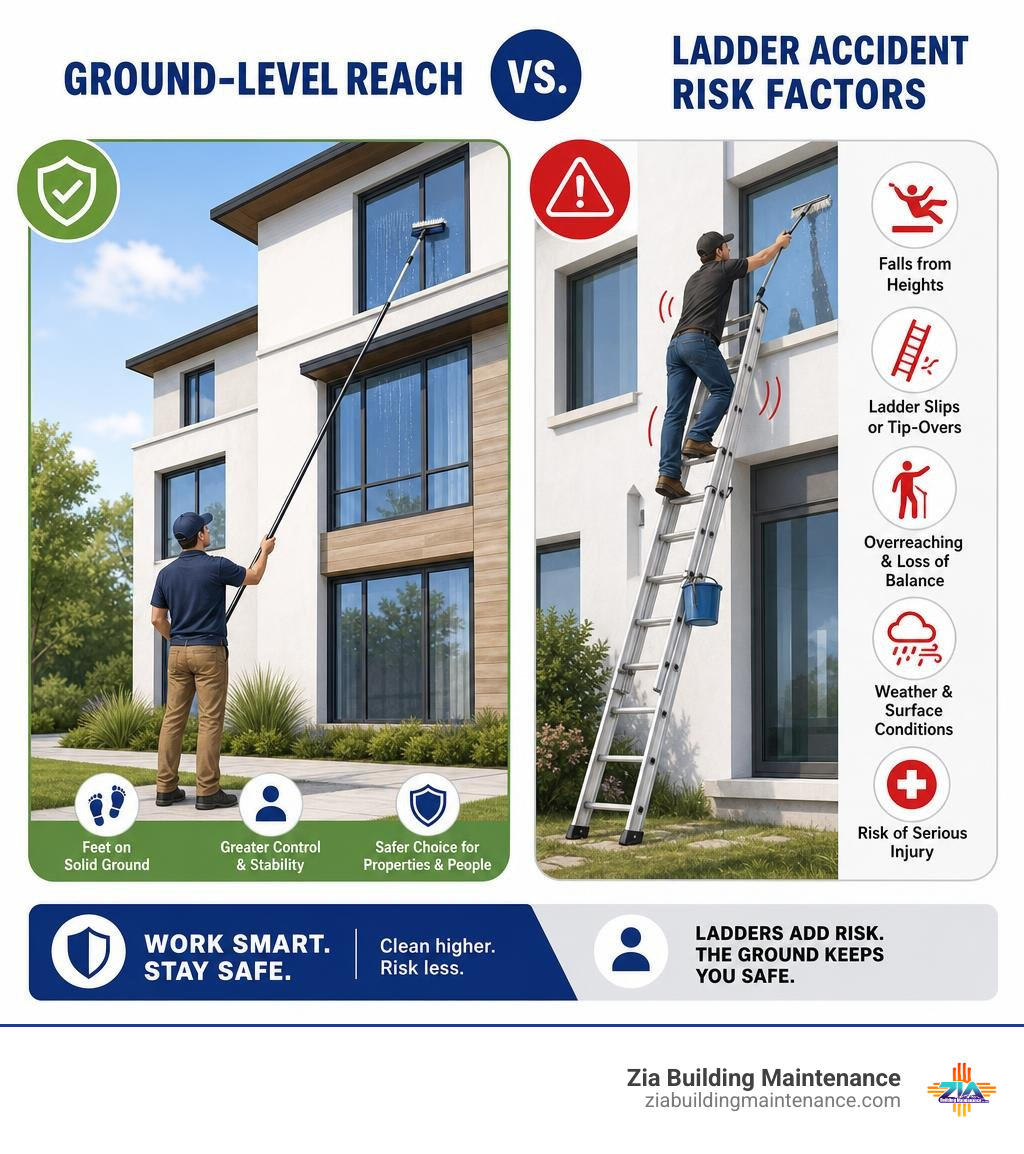
Top Tool Categories for High Reach Window Cleaning
Selecting the best tool depends on your building’s architecture, the height of your upper-story panes, and your overall budget. Here is how the primary ground-based categories compare:
| Tool Category | Typical Reach | Entry Price Point | Best Suited For | Key Limitation |
|---|---|---|---|---|
| Manual Telescopic Pole Kit | 12 to 30 feet | ~$100 | 1–2 story homes, straightforward glass panes | Requires manual squeegee technique to prevent streaks |
| Water-Fed Pure Water System | Up to 3 stories | ~$140+ (basic hose attachment) | Large exterior glass areas, solar panels, multi-story facades | Requires filtration to avoid mineral spots |
| Magnetic Cleaner / Curved Pole | 4 to 5 feet (from sill) | ~$45 – $70 | High-rise apartments, inward-opening or non-tilt windows | Slower coverage; magnetic strength varies by glass thickness |
Telescopic Extension Poles for High Reach Window Cleaning
Manual telescopic poles serve as the foundation of ground-based window maintenance. A standard Window Squeegee with 12 ft Telescopic Pole provides over 20 feet of total working reach, making it well suited for typical upper-story residential windows. Complete starter kits generally start around $100 at home improvement retailers and include interchangeable attachments like microfiber washing pads and rubber squeegee channels.
For larger homes and commercial storefronts, commercial poles reach up to 30 feet. Many tools feature dual-sided combination heads that integrate a non-scratch netted microfiber scrubber on one side and a rubber squeegee blade on the other. This configuration allows you to scrub away stubborn grime and flip the tool over to remove moisture without constantly retracting the pole.
Water-Fed Pure Water Systems
For expansive exterior glass surfaces, water-fed pole systems offer an efficient, ladder-free alternative. Basic setups that connect to a standard garden hose start at roughly $140.
These setups pump water directly through an internal hose to a soft-bristle brush at the top of the pole. Professional systems utilize deionization (DI) and reverse osmosis (RO) filtration to remove total dissolved solids (TDS) from tap water. Because the mineral content is filtered out, the purified water dries completely spot-free on the glass, eliminating the need for a separate squeegee step.
Magnetic Cleaners and Curved Ergonomic Indoor Kits

When exterior ground access is blocked by tight landscaping, courtyards, or structural barriers, interior-operated tools offer a practical solution. Magnetic cleaners start at about $45 and work by pairing two magnetic pads on either side of the glass. As you glide the indoor unit across the window, the outdoor unit follows suit. Always use a magnetic cleaner equipped with a safety tether cord to prevent the outdoor component from dropping if the magnetic connection breaks.
Alternatively, curved telescopic indoor poles allow operators to clean upper-story exterior panes from the safety of an open window inside the room. For example, specialized high-rise tools weigh as little as 480 grams and extend up to 51 inches (130 cm), using a curved lever handle to reach around exterior sills without requiring you to lean over the ledge.
Essential Features and Material Guide for Extension Poles
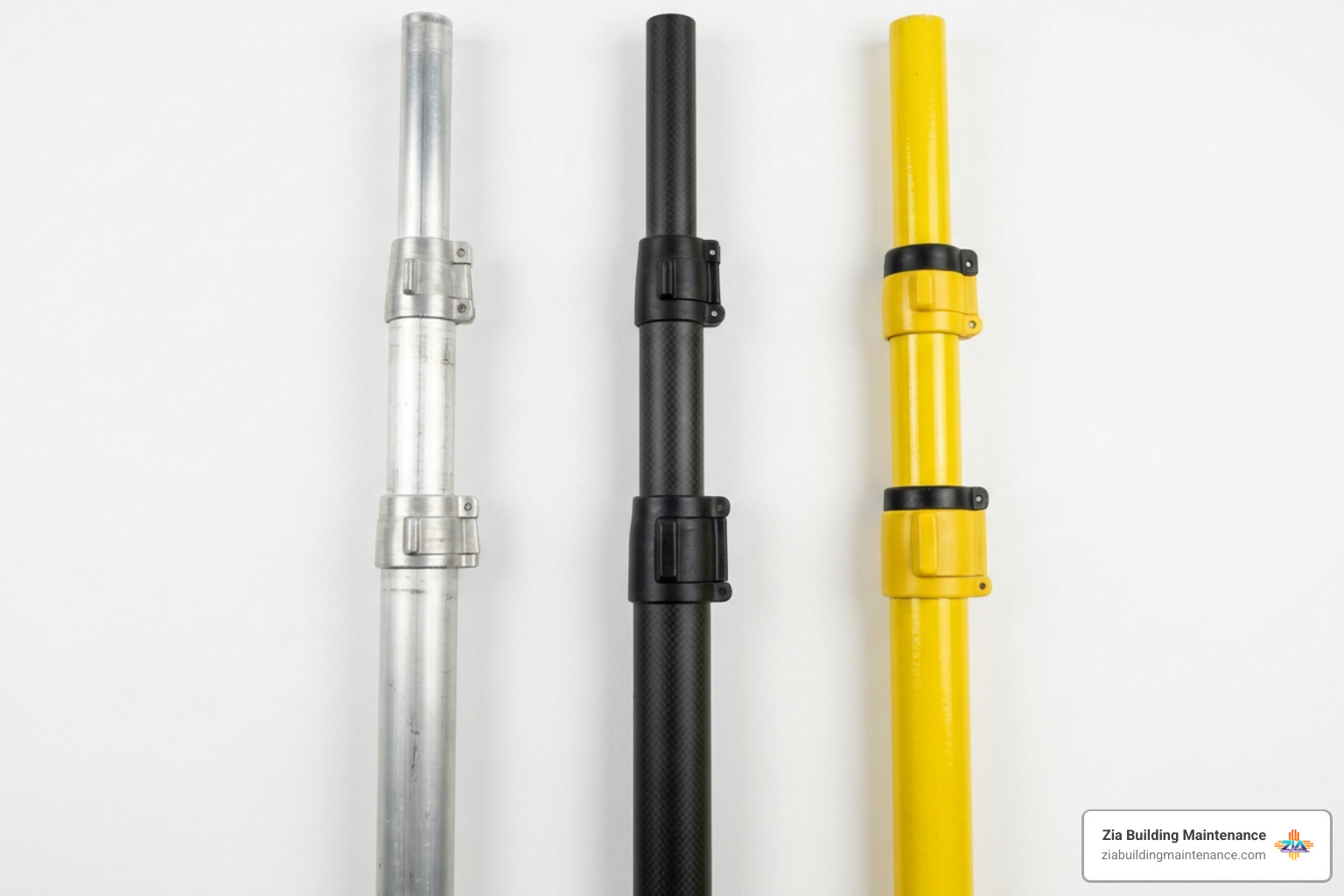
When operating a pole extended 20 to 30 feet in the air, weight and rigidity dictate your control and cleaning results. Choosing the right pole material ensures safe handling and clean glass.
Aluminum vs. Fiberglass vs. Carbon Fiber Poles
- Drawn Aluminum: The most economical option, standard aluminum poles are lightweight and durable for short-to-medium reaches (up to 12–18 feet). At lengths beyond 20 feet, aluminum tends to flex significantly, making it harder to apply even squeegee pressure.
- Fiberglass: Slightly heavier than aluminum, fiberglass provides structural rigidity and serves as a non-conductive barrier, offering essential protection when working in proximity to outdoor electrical lines.
- Carbon Fiber: Carbon fiber extension poles are the professional’s choice due to their unparalleled strength and lightweight nature, reducing worker fatigue during extended cleaning sessions. They deliver maximum stiffness at reaches of 24 to 30 feet, virtually eliminating pole bend.
Locking Mechanisms and Universal ACME Head Attachments
An extension pole is only as reliable as its locking mechanism. Common configurations include:
- Flip-Locks (Clamps): Quick-release levers that clamp each telescoping section securely. They are easy to adjust while wearing work gloves and provide strong holding power against downward force.
- Twist-Lock Collars: Internal cam locks tightened by rotating pole sections in opposite directions. While streamlined, they can slip if moisture or dirt enters the collar threads.
- Button Locks: Spring-loaded metal pins that snap into pre-drilled holes. They offer reliable security against slipping but have fixed extension increments.
Look for poles equipped with universal ACME threading. This standard threading allows you to easily swap between window squeegees, microfiber pads, angle adapters, and other maintenance attachments.
Step-by-Step Guide: How to Safely Clean Upper-Story Panes
wp:html
/wp:html
wp:html
/wp:html
Pre-Cleaning Safety Checks and Weather Timing
Before extending your pole, survey the entire perimeter of your property. Look up to confirm clear clearance from overhead power lines, and clear the ground below of garden hoses, stones, or landscape edges that pose tripping hazards. Using a pair of binoculars to inspect upper-story panes beforehand is an easy way to check for damaged caulking, cracked glass, or loose screens.
Timing is critical. Follow The Pro’s Guide to Sparkling High Windows by scheduling your cleaning on an overcast day or early in the morning. Direct sunlight heats the glass and accelerates the “evaporation clock,” causing cleaning solutions to dry before you can squeegee them off. Additionally, avoid working on windy days; gusts make 20- to 30-foot poles difficult to steer safely.
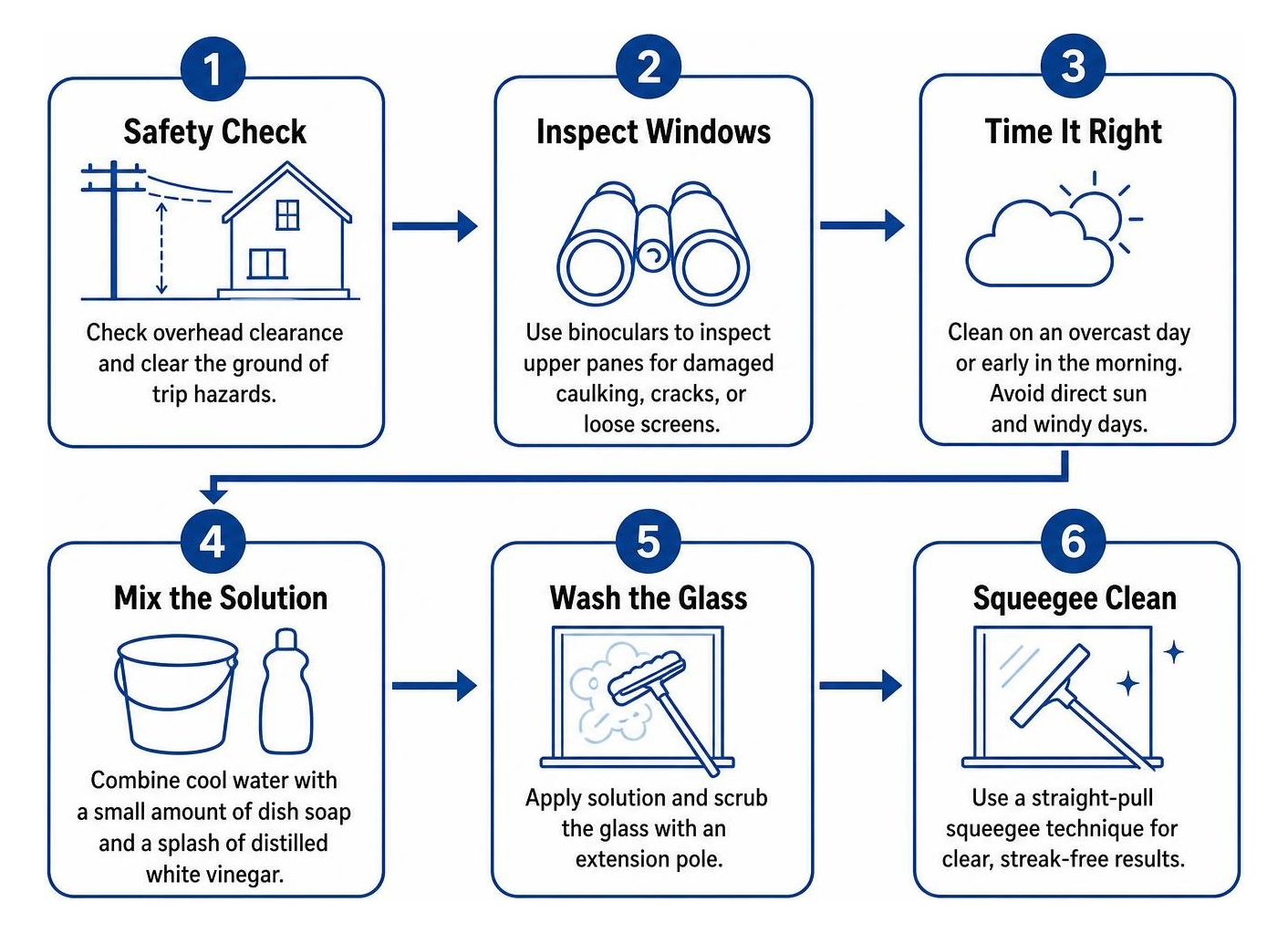
The Straight-Pull Squeegee Technique and Detailing
To achieve clear glass and stop streaking on exterior windows, follow this simple washing process:
- Mix the Solution: Combine cool water with a small amount of liquid dish soap and a splash of distilled white vinegar. Cool water slows down evaporation on warm afternoons. Avoid ammonia-based cleaners, which can leave residues or damage tinted window films.
- Scrub and Rehydrate: Saturate your microfiber scrubber. For stubborn spots like baked-on bird droppings, press the wet pad against the spot for 30 to 60 seconds to rehydrate the acidic debris before gently scrubbing it away.
- Execute Straight Pulls: Place the squeegee blade at the top edge of the window and pull straight down to the bottom sill using smooth, steady pressure. Repeat in overlapping vertical columns.
- Wipe the Blade: Wipe the rubber squeegee blade completely dry with a clean microfiber cloth after each downward stroke to prevent dirty water lines.
- Detail the Corners: Wrap a dry microfiber towel over an attachment tip to dab the bottom corners and frames, preventing residual water from bleeding back onto the clean pane.
Common Mistakes to Avoid in High Reach Window Cleaning
- Attempting S-Curves at Height: While professional window washers use swirling S-curve motions with handheld squeegees, doing this at the end of a 24-foot pole often leads to uneven blade pressure and messy streaks. Stick to straight, vertical pulls.
- Cleaning Hot Panes in Direct Sun: Washing hot glass bakes detergent onto the surface, leaving white streaks.
- Letting Unfiltered Tap Water Air Dry: Rinsing windows with mineral-heavy garden hose water leaves cloudy calcium deposits. If stubborn mineral scaling is already present, refer to our guide on hard water stain removal.
- Applying Excessive Downward Force: Let the weight of the tool do the work. Over-pressing causes the pole to bow and makes the squeegee blade chatter across the glass.
- Overextending Telescoping Sections: Never pull pole segments past their safety stop lines, as this compromises stability and can bend the locking collars.
Frequently Asked Questions About Cleaning High Windows
Can high-reach extension poles be used for other outdoor maintenance tasks?
Yes. Extension poles equipped with universal ACME threading can accommodate various attachments beyond squeegees. They work well for clearing cobwebs from high eaves, washing rooftop solar panels to maintain energy efficiency, vacuuming gutters, and changing high-ceiling floodlights.
How often should multi-story windows be cleaned?
For most residential and commercial properties, a thorough cleaning every six weeks keeps exterior glass free of built-up road film, pollen, and dust. In arid environments where dust storms and windblown grit are common, scheduling routine exterior washes helps protect the glass from surface abrasion. For comprehensive cost breakdowns, see our guide to calculating window cleaning costs.
When should I choose professional services over DIY high window cleaning?
While DIY extension poles work well for standard two-story applications, properties exceeding three stories generally require commercial-grade equipment. Buildings with intricate architectural glass, heavy mineral scaling, or steep ground grades are best handled by certified crews utilizing aerial lifts, mobile elevated work platforms, or pure water filtration systems.
Choosing the Best Cleaning Path for Your Property
Investing in quality ground-based cleaning equipment allows you to maintain high exterior windows safely and effectively without climbing a ladder. For routine second-story care, a sturdy extension pole paired with the right washing technique will keep your glass looking clear year-round.
If your multi-story property requires comprehensive maintenance, Zia Building Maintenance is here to assist. As a family-owned provider serving businesses across Albuquerque, Rio Rancho, Corrales, and Los Ranchos since 1989, our team brings the specialized equipment, certified safety training, and attention to detail needed to keep your facility looking its best. Explore our dedicated commercial window cleaning service today to request a free estimate.