

Start With the Daily Controls Inspectors Check First
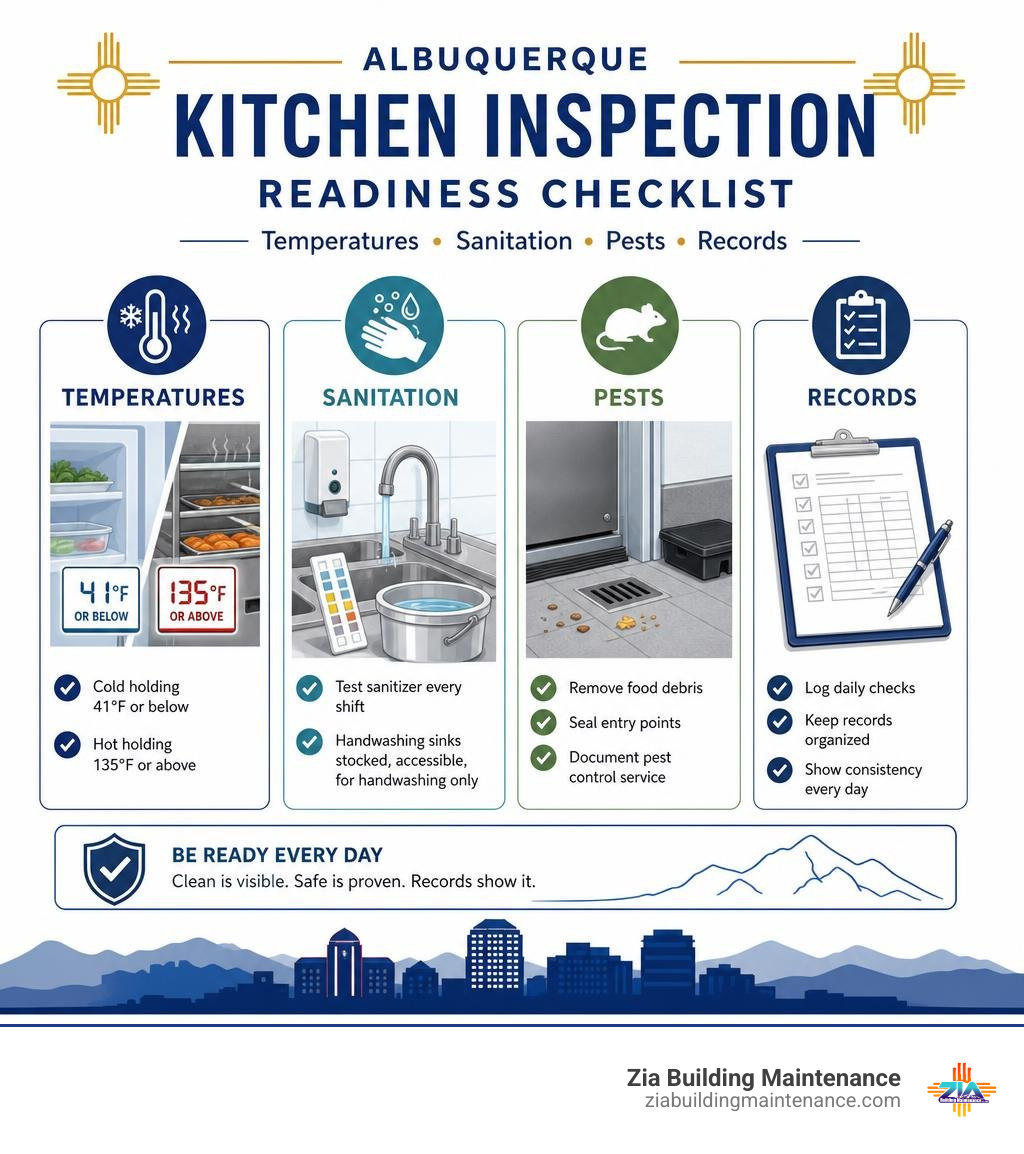
To pass a kitchen health inspection in Albuquerque, make food safety visible in your daily routine – not just before an inspection. Focus on the controls most likely to create critical violations:
- Check and log cold holding at 41 F or below and hot holding at 135 F or above.
- Test sanitizer before every shift and keep it at the proper concentration.
- Keep handwashing sinks stocked, accessible, and used only for handwashing.
- Clean food-contact surfaces, floors, drains, ice machines, and equipment gaps on schedule.
- Control pests by removing food debris, sealing entry points, and documenting service.
Albuquerque inspectors use the 2022 FDA Food Code and local food-service rules to assess real working conditions during unannounced visits. A clean-looking kitchen is not enough. Restaurants also need safe temperatures, active sanitizer, pest prevention, employee hygiene, and records that show these standards are being checked consistently.
I am Ashley Cordova, an Albuquerque native and Vice President of Zia Building Maintenance, where I oversee operations, sales, and service quality for a family-owned New Mexico janitorial company established in 1989. My perspective on kitchen health inspection cleaning Albuquerque teams need is grounded in building consistent cleaning systems that protect food-service operations without disrupting the workday.
Kitchen health inspection cleaning Albuquerque word roundup:
Albuquerque Food Safety Regulations and Municipal Grading Systems
Navigating municipal inspections requires understanding the precise legal framework governing commercial kitchens in our high-desert metro area. The City of Albuquerque Environmental Health Department operates under the 2022 FDA Food Code alongside municipal ordinances. Kitchens are classified into distinct risk categories based on their menu complexity, food handling practices, and vulnerable demographics served. High-risk kitchens handling raw proteins or conducting complex thermal processing face unannounced visits up to four times per year.
Understanding The Role of Cleaning in Building Inspections allows operators to treat everyday sanitation as continuous regulatory compliance rather than a scramble before an audit. Public records on the City of Albuquerque Restaurant Inspection Results portal show that inspectors look for structural sanitation, mechanical integrity, and consistent behavioral compliance on every routine visit.
Understanding Green, Yellow, and Red Inspection Placards
The City of Albuquerque relies on a color-coded placard grading system that must be displayed conspicuously near the main entrance of every food establishment:
- Green Placard (Approved): The kitchen demonstrates substantial compliance with the food code. Critical violations were either absent or immediately corrected on-site during the audit.
- Yellow Placard (Conditional Approved): Serious violations or multiple priority foundation deficiencies were observed. The establishment may remain open, but a strict compliance plan is enforced, triggering a mandatory re-inspection.
- Red Placard (Closed / Permit Suspended): Imminent health hazards exist—such as uncontrolled pest infestations, complete sanitizer failure, sewage backups, or lack of potable hot water. The facility must immediately cease food operations.
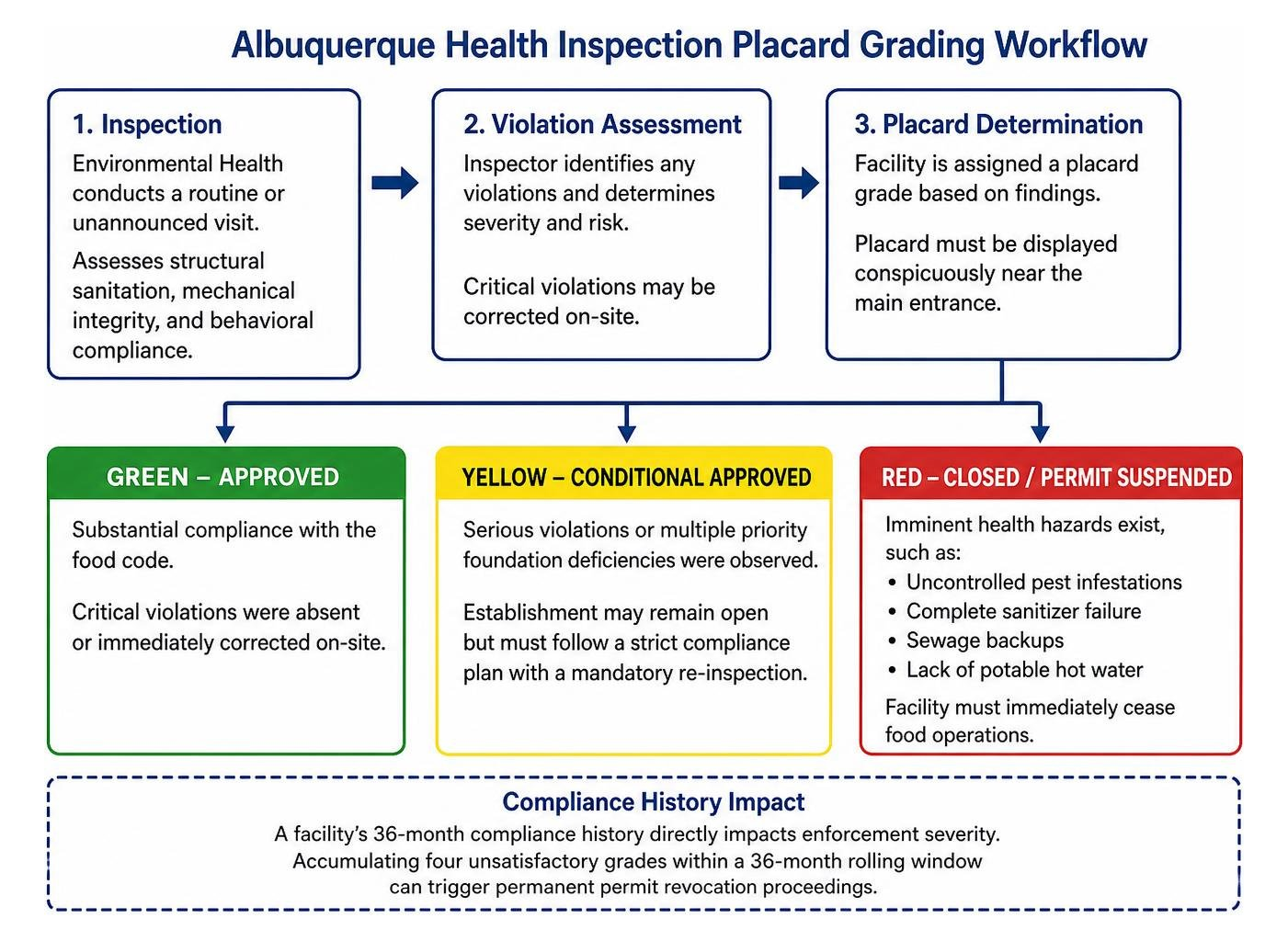
A facility’s 36-month compliance history directly impacts enforcement severity. Accumulating four unsatisfactory grades within a 36-month rolling window can trigger permanent permit revocation proceedings, making routine sanitation essential for business continuity.
Jurisdictional Nuances: Albuquerque, Bernalillo County, and New Mexico State
Operating in the central New Mexico corridor often means navigating overlapping local and state rules. Kitchens in Albuquerque follow the municipal ordinance, while neighboring establishments in unincorporated Bernalillo County, Rio Rancho, Corrales, and Los Ranchos adhere to state or county frameworks.
The 2024 Rules of the Albuquerque Food Service and Retail Ordinance enforce strict allergen labeling alongside traditional food handling controls. Across New Mexico, regulatory updates taking effect in October 2026 introduce higher re-inspection and late renewal fees, stricter plan review windows (mandating submittals 30 days before construction), and automated re-inspections for repeat priority foundation violations observed within a 25-month lookback period.
| Regulatory Standard | City of Albuquerque | Bernalillo County | State of New Mexico |
|---|---|---|---|
| Enforcement Framework | 2022 FDA Food Code & City Ordinance | Bernalillo County Health Ordinance | NMAC 7.6.2 Food Service Regulations |
| Manager Certification | ANSI-accredited Certified Food Manager | ServSafe Manager on duty at all times | ANSI-accredited Certified Food Manager |
| Placard Grading | Green / Yellow / Red Public Placards | Numerical / Letter Compliance Report | Pass / Notice of Violation System |
| Repeat Violation Rule | Follow-up based on risk profile | Case-by-case re-audit | Re-inspection for repeats within 25 months |
| Allergen Signage | Mandatory 9-major-allergens poster | Standard state allergen warnings | State food safety posters |
Critical Violations Identified in Albuquerque Kitchen Inspections
Inspectors categorize findings into Priority (direct foodborne illness risks), Priority Foundation (supporting operational controls), and Core items (general sanitation and facility maintenance). Understanding The Difference Between Cleaning Sanitizing and Disinfecting is critical for kitchen crews. Cleaning removes visible soils, sanitizing lowers microbial counts to safe regulatory thresholds, and disinfecting destroys target pathogens on non-food contact surfaces.
Pest Infestation Controls and High-Desert Environmental Challenges
Pests seek moisture, food, and shelter. In Albuquerque, seasonal changes and dry high-desert weather push German cockroaches and rodents into commercial kitchens. The regional spring winds and dry summer air transport fine desert dust into exhaust systems, loading docks, and exterior door thresholds, creating grimy buildup in mechanical voids.
Recent municipal reports illustrate the severity of pest citations:
- A local country club was red-tagged after inspectors discovered widespread rodent droppings, a rodent nest containing a dead mouse, and organic buildup on ice machine panels.
- A local Asian restaurant was closed when an inspector found an active cockroach infestation featuring a glue trap with over 100 cockroaches and live insects crawling over produce in active preparation areas.
- A neighborhood bakery was closed twice within a single week due to live flies landing on open mascarpone cheese and heavy food debris accumulating under prep lines.
Preventing pest-related closures requires maintaining physical barriers (door sweeps, air curtains, and intact plumbing floor drain air gaps), eliminating food crumbs under heavy cooktops, and maintaining active pest control logs.
Chemical Sanitization Failures and Cold-Chain Holding Deficiencies
Sanitization and temperature control violations represent the most common operational triggers for immediate enforcement:
- An Albuquerque restaurant chain location was red-tagged when its chemical dish machine and three-compartment sanitizer buckets registered 0 ppm chlorine, while walk-in coolers held cooked beef, poultry, and red chile above safe holding thresholds.
- Time/Temperature Control for Safety (TCS) foods must stay at 41°F or below for cold storage and 135°F or above for hot holding.
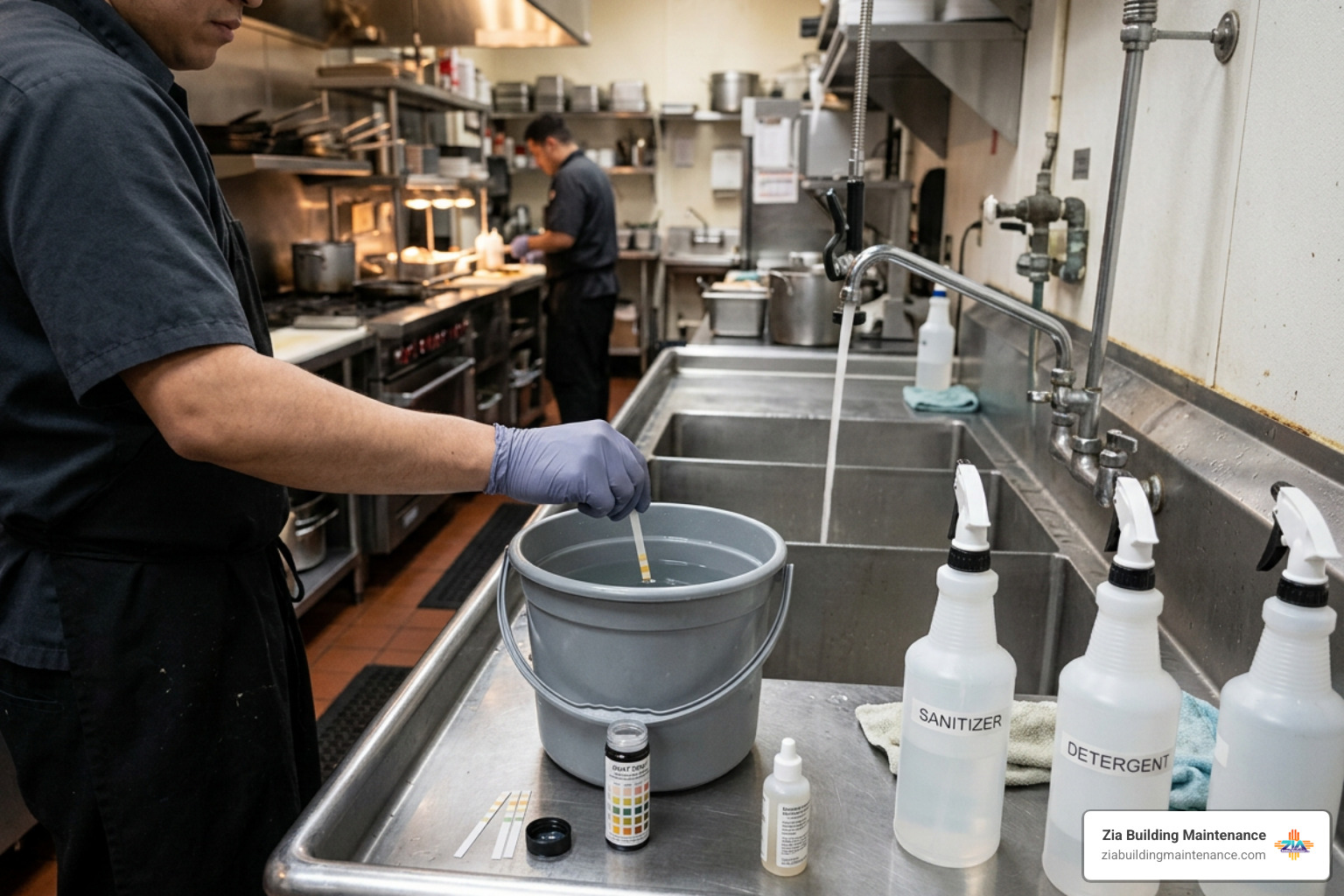
Sanitizing solutions require active monitoring with chemical test strips. Quaternary ammonium (quat) must remain within 200–400 ppm (or manufacturer specifications), while chlorine solutions must measure between 50–100 ppm. Leaving sanitizer at 0 ppm exposes patrons to foodborne pathogens and results in immediate citation.
Operational Standards for Kitchen Health Inspection Cleaning Albuquerque Prep
Maintaining an audit-ready facility requires systematic daily checklists and verified shift routines. Staff must keep all dedicated handwashing sinks accessible, fully stocked with soap and single-use towels, and completely free of dirty dishes or food waste.
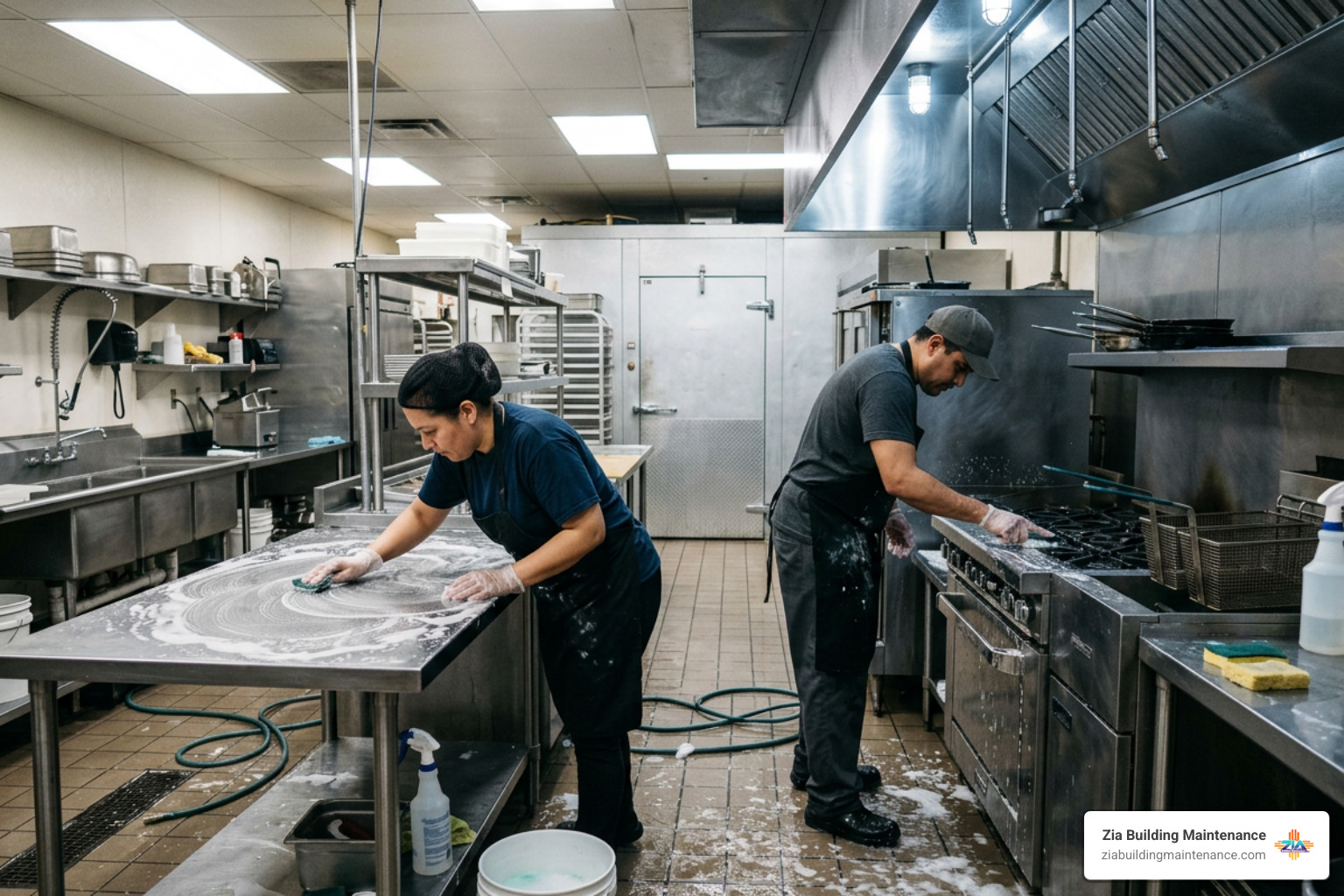
Our practical guide to The Definitive Guide to Reliable Commercial Kitchen Cleaning outlines how to integrate routine janitorial routines with commercial equipment maintenance. All chemical spray bottles must be labeled with their common English name, mops must be hung to air dry in dedicated mop sinks, and dry goods must be stored on wire shelving at least 6 inches off the floor on non-absorbent surfaces.
Mandatory Kitchen Health Inspection Cleaning Albuquerque Procedures
To ensure your kitchen passes every unannounced review, the back-of-house team must execute several core sanitation priorities daily:
- Three-Compartment Sink Protocols: Wash in 110°F soapy water, rinse with clear hot water, and sanitize with tested chemical solution using verified contact dwell times before air drying on clean drainboards.
- Plumbing and Indirect Drains: Maintain unobstructed floor sinks with proper physical air gaps beneath prep sinks, ice machines, and dishwashers to prevent sewage backflow.
- Grease Trap and Hydro-Mechanical Interceptors: Clean grease traps on schedule to prevent line blockages, foul odors, and plumbing backups.
- Ventilation and Grease Removal: Degrease Type I hood filters, grease cups, and duct plenums regularly. Review Why Every Chef Needs a Reliable Commercial Hood Cleaning Company to maintain fire code safety and clean airflow.
- Refrigeration Gaskets and Ice Machine Deficiencies: Clean and sanitize interior ice machine bins, deflector plates, and walk-in cooler door gaskets weekly to stop black organic growth and mold buildup.
Regulatory Recordkeeping and Mandatory Compliance Documentation
Documentation proves to health officers that your operational standards are practiced every single day:
- Temperature Logs: Completed twice daily for all reach-ins, walk-in coolers, steam tables, and hot-holding cabinets.
- Employee Training: Valid ANSI/ASTM-accredited Food Handler Cards for all staff, alongside at least one certified manager on duty.
- Allergen Signage: Conspicuously posted FDA allergen reference materials identifying the 9 major food allergens.
- Sanitizer Concentration Verification: Shift-by-shift logging of ppm testing for dish machines, bar washers, and prep buckets.
- Self-Audits: Kitchen managers should regularly run internal audits using the official IM_FoodInspection Form.
Remediation Protocols for Red-Tagged Kitchens and Professional Cleaning Solutions
Receiving a red closure placard requires swift, structured remediation. The establishment must shut down operations immediately, correct the underlying hazards, pay re-inspection fees, and submit a formal corrective action plan to the Environmental Health Department.
When an operation faces an administrative closure, partnering with an experienced team for back of house cleaning Albuquerque provides the rapid deep-cleaning and bio-remediation needed to satisfy municipal officers.
Professional Kitchen Health Inspection Cleaning Albuquerque Strategies
Professional kitchen sanitation handles the tough jobs that standard dish and line crews cannot manage during shift turnover:
- High-Temperature Deep Extraction: Removing baked-on carbonized grease from behind fryers, ranges, and cook banks where pests congregate.
- Biofilm Removal in Drains: Treating floor drains and beverage trench lines with enzymatic foaming cleaners to eliminate fly breeding habitats.
- Equipment Clearance Maintenance: Moving heavy rolling equipment to degrease quarry tiles, wall bases, and utility raceways.
- Floor Care and Grout Restoration: Machine-scrubbing tile floors and applying approved sanitizers to maintain clean, non-absorbent surfaces.
Our team at Commercial Cleaning Albuquerque provides complete janitorial and kitchen cleaning programs for facilities across Albuquerque, Rio Rancho, Corrales, and Los Ranchos.
Frequently Asked Questions About Albuquerque Kitchen Health Inspections
How often are food establishments inspected in Albuquerque?
Restaurants in Albuquerque are inspected unannounced between 2 to 4 times annually depending on their assigned operational risk category. High-risk establishments that perform extensive raw food preparation or serve high-risk populations face more frequent inspections. Citizen complaints or previous repeat violations will also trigger unexpected follow-up inspections.
What conditions cause an immediate Red Tag closure?
An immediate closure occurs when an inspector identifies an imminent health hazard. Common triggers include active rodent or cockroach infestations, lack of hot or potable water, sewage backing up into food preparation areas, continuous 0 ppm sanitizer levels, or walk-in coolers operating above 41°F with compromised TCS foods.
How do restaurants reopen after failing a health inspection?
The operator must eliminate all critical violations, thoroughly clean and sanitize the facility, correct structural deficiencies, and submit a written remediation request along with required municipal re-inspection fees. An inspector will return for an unannounced on-site audit; if all conditions are met, the red placard is replaced with a green placard, authorizing the kitchen to reopen.
Conclusion
Consistently passing health inspections requires treating kitchen sanitation as a foundational operating system. By strictly maintaining cold-chain holding temperatures, testing sanitizer concentrations, controlling high-desert pest pressures, and keeping organized compliance records, Albuquerque kitchen operators can protect both their patrons and their bottom line.
Since 1989, Zia Building Maintenance has supported local restaurateurs and commercial facilities across Albuquerque, Rio Rancho, Corrales, and Los Ranchos with dependable, detail-oriented janitorial services. Protect your culinary reputation, maintain an Approved green placard, and keep your kitchen audit-ready every day of the week by partnering with our team for professional Restaurant Cleaning. Contact us today to schedule your comprehensive facility sanitation audit.