TL;DR:
- Cleaning is the most controllable factor influencing building inspection success, as it evidences construction completion and occupancy readiness. Proper scheduling, thorough verification, and detailed documentation of cleaning efforts are essential to avoid delays and re-inspections that impact property value. Engaging professional services for specialized tasks ensures all failure points are addressed, securing compliance and project timeline integrity.
Cleaning is defined as the single most controllable factor determining whether a building passes or fails its inspection. The role of cleaning in building inspections goes beyond surface appearance. Inspectors evaluate cleanliness as direct evidence of construction completion, occupancy readiness, and operational control. Dust on HVAC vents, adhesive residue on floors, and grime on high-touch surfaces are not cosmetic concerns. They are documented failure points that delay certificates of occupancy, trigger re-inspections, and reduce property value. Property owners and managers who treat cleaning as a final afterthought pay for it in time, money, and compliance risk.
What cleaning standards do inspectors look for in building inspections?
Inspection-ready cleaning requires every surface to be free of dust, debris, adhesive residue, and construction haze. Inspectors do not rely on a general impression of cleanliness. They move through the building systematically, checking specific surfaces under direct light and in enclosed spaces where residue accumulates unseen.
The most scrutinized areas during a walkthrough include:
- HVAC vents and diffusers: Drywall dust and construction particles collect in return vents. Inspectors flag these because contaminated ductwork signals an air quality risk, not just a cleaning gap.
- Glass surfaces and windows: Streak-free glass is a baseline requirement. Adhesive marks from protective film, paint overspray, and construction haze on glazing are common failure points.
- Floor finishes: Grout haze, adhesive residue, and scuff marks on polished or sealed floors indicate incomplete post-construction cleaning. Inspectors check corners and edges where debris collects under floor protection.
- Restrooms: Tile grout, fixture surfaces, and drain areas require detailed attention. Visible staining or residue in restrooms signals inadequate sanitation, which directly affects occupancy approval.
- High-touch surfaces: Switches, handles, and cabinet pulls accumulate fingerprints and grime during construction. These are checked as indicators of overall cleaning thoroughness.
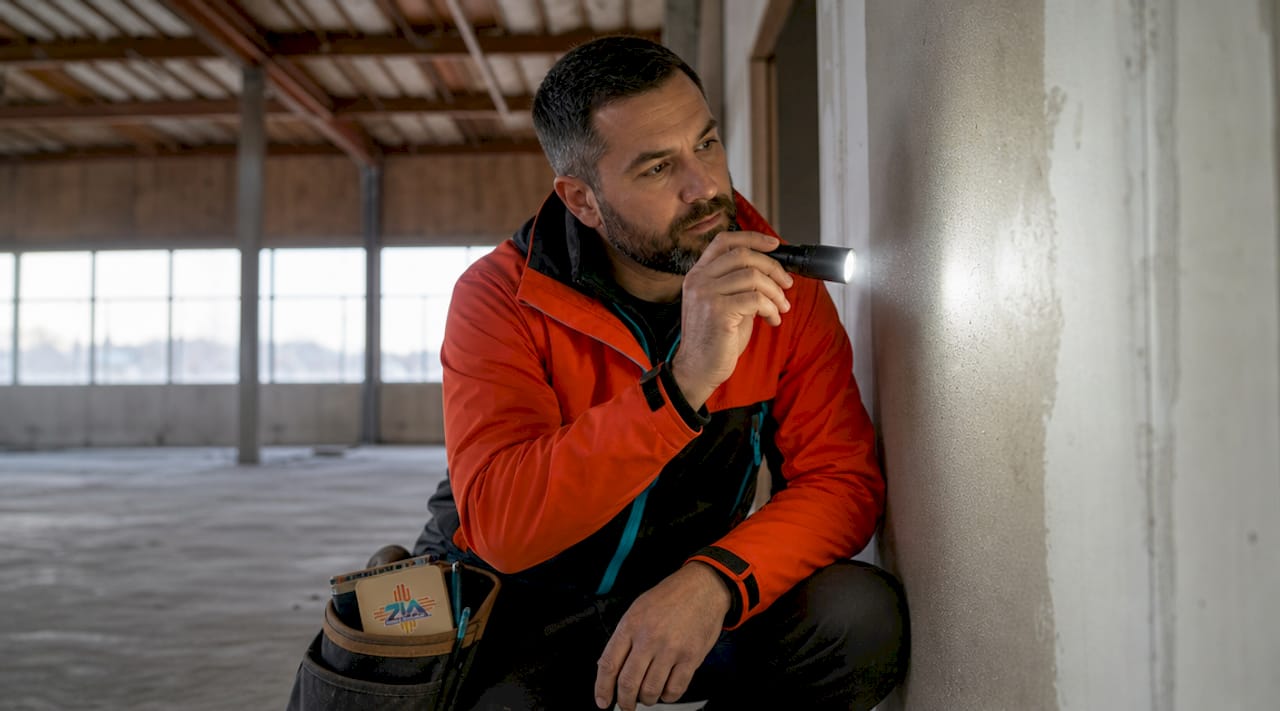
Pro Tip: Conduct a pre-inspection walkthrough using a handheld flashlight held at a low angle to surfaces. This technique reveals dust lines, streaks, and residue that overhead lighting conceals, catching failures before the inspector does.
Inspectors treat cleaning completeness as evidence of operational control. A building that presents clean, accessible, and residue-free surfaces signals that the project is genuinely finished, not just staged for approval.
How does cleaning scheduling affect inspection outcomes?
Scheduling is where most property managers lose time on inspections. The single most common mistake is booking the final clean before all finishing trades have completed their work. Painting, hardware installation, and fixture fitting done after cleaning reset the cleaning status entirely, forcing a second full pass and delaying the inspection date.
The correct sequence follows this order:
- Confirm trade completion by zone. Before any cleaning begins in a section, verify that painters, hardware installers, and fixture crews have signed off on that zone. Cleaning a space that a trade re-enters is wasted effort.
- Schedule rough cleaning during construction. A rough clean removes bulk debris, drywall dust, and construction waste as work progresses. This reduces the scope of the final clean and prevents contamination spreading between zones.
- Execute the final clean only after all trades exit. Final cleaning after trade completion is the only way to avoid rework. This is not a scheduling preference. It is a project management requirement.
- Run a zone-based verification walkthrough. Cleaning verification by zone after trade sign-off catches residues and streaks that are difficult to see under standard lighting. Internal walkthroughs under varied lighting conditions reveal details the naked eye misses during a standard pass.
- Maintain cleanliness between final clean and inspection date. Restrict access to cleaned zones. Any foot traffic or material movement after the final clean can reintroduce dust and debris, requiring spot cleaning before the inspector arrives.
Pro Tip: Build a two-day buffer between the final clean completion and the scheduled inspection. This window allows for a verification walkthrough and targeted touch-ups without compressing the timeline.
Aligning cleaning with project closeout sequencing is the fastest way to protect inspection timelines. Property managers who treat cleaning as a parallel workstream rather than a final task consistently avoid the re-inspection delays that cost projects weeks.
Common cleaning failure points and how to avoid them
Certain areas fail inspections repeatedly across building types. Knowing where inspectors focus their attention lets you prioritize your cleaning checklist for buildings and allocate resources where they matter most.
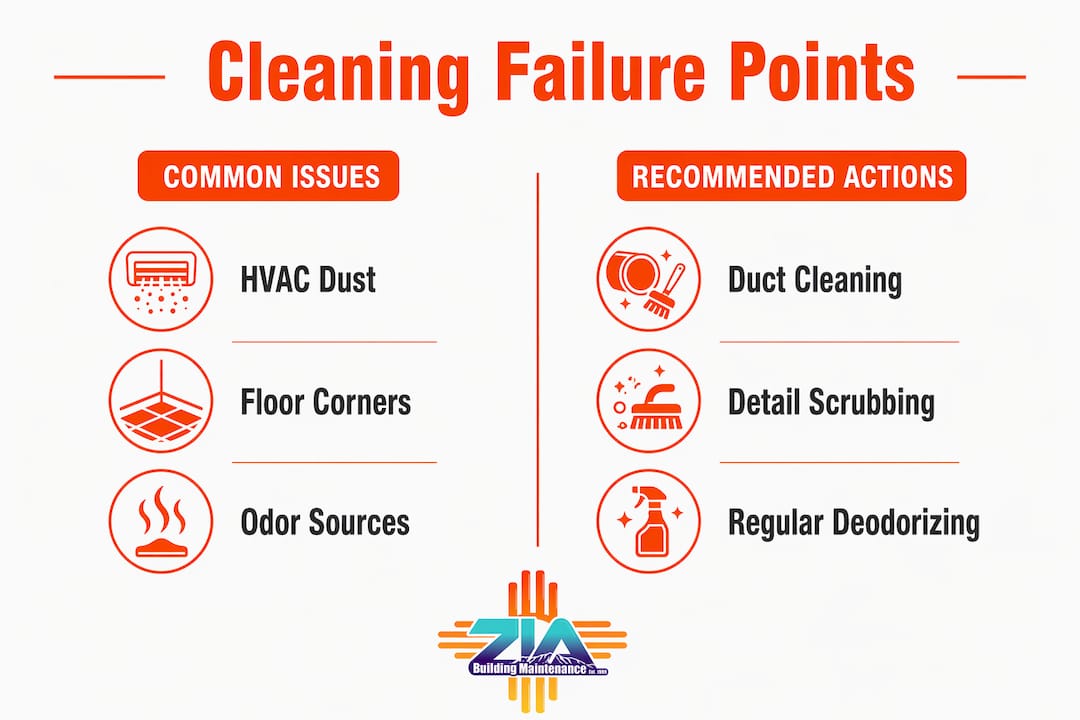
| Failure Point | Common Issue | Recommended Action |
|---|---|---|
| HVAC vents and returns | Drywall dust, construction debris in duct openings | Vacuum and wipe all vent covers; clean mechanical openings before system activation |
| Window frames and sills | Adhesive residue, paint overspray, construction film | Use appropriate solvent for adhesive removal; polish glass to streak-free finish |
| Floor corners and edges | Adhesive, dust trapped under floor protection | Remove all floor protection before final clean; detail corners with hand tools |
| Restroom tile and grout | Grout haze, staining, fixture residue | Use grout-specific cleaners; detail fixtures and drain surrounds individually |
| High-touch surfaces | Fingerprints, grime on switches, handles, pulls | Wipe all hardware with appropriate cleaner as a dedicated final step |
| Enclosed storage areas | Dust accumulation, odors from construction materials | Open and clean all enclosed spaces; check for odor sources before inspection |
HVAC dust in returns and vents is particularly problematic because it is often invisible until the system operates. Once airflow begins, dust distributes through the building and can trigger a re-inspection failure even when all visible surfaces were clean at the time of the original walkthrough. Mechanical openings must be included in the cleaning scope, not treated as a separate trade responsibility.
Odor sources deserve equal attention. Bins, floor drains, and enclosed utility spaces can carry construction material odors or moisture-related smells that create a negative impression during the walkthrough, even when visible surfaces are spotless.
What role does cleaning documentation play in compliance?
Cleaning documentation is evidence of operational control, not a paperwork formality. Health department and OSHA inspections require documented cleaning schedules and logs to validate compliance. A clean building without records is still a compliance risk because inspectors cannot verify that cleaning standards were maintained consistently over time.
OSHA sanitation standards require that toilets, washing facilities, and floors be clean, sanitary, and dry, with prompt waste removal supported by documentation. A cleaning schedule alone does not satisfy this requirement. Cleaning quality audits and timestamped records are what demonstrate that standards were met, not just planned.
Effective documentation for inspection readiness includes:
- Dated cleaning logs by area: Each zone or room should have a record of when it was cleaned, by whom, and what tasks were completed. This creates a traceable history that supports compliance claims.
- Verification scores and audit records: Digital inspection tools can improve janitorial scores by up to 25% and support audit readiness for facility managers. Structured scoring detects cleaning failures significantly earlier than schedule-only approaches.
- Pre-inspection sign-off records: A formal sign-off process for each zone, completed after the verification walkthrough, creates a documented chain of readiness that supports the inspection process.
Property managers overseeing regulated environments, including medical facilities, food service spaces, and schools, face the highest documentation requirements. For those facilities, OSHA and HIPAA cleaning compliance depends on records that demonstrate consistent, verifiable cleaning practices, not just a clean appearance on inspection day.
How to apply effective cleaning strategies for inspection success
Property owners and managers who consistently pass building inspections without re-inspections share one practice: they treat cleaning as a managed process, not a one-time task. The following approach applies across commercial, medical, and institutional buildings.
- Build a zone-based cleaning checklist. Organize your cleaning checklist for buildings by area and surface type. A checklist that covers HVAC vents, glass, floors, restrooms, high-touch surfaces, and enclosed spaces by zone prevents gaps and creates accountability.
- Coordinate cleaning milestones with trade completion. Assign a cleaning phase to each project milestone. Rough clean after framing and drywall. Detailed clean after painting and fixture installation. Final clean only after all trades have exited the zone.
- Engage professional cleaning services for specialized tasks. Post-construction cleaning tasks like grout haze removal, adhesive residue treatment, and HVAC vent cleaning require equipment and techniques that general labor cannot reliably deliver. Professional services reduce the risk of missed failure points.
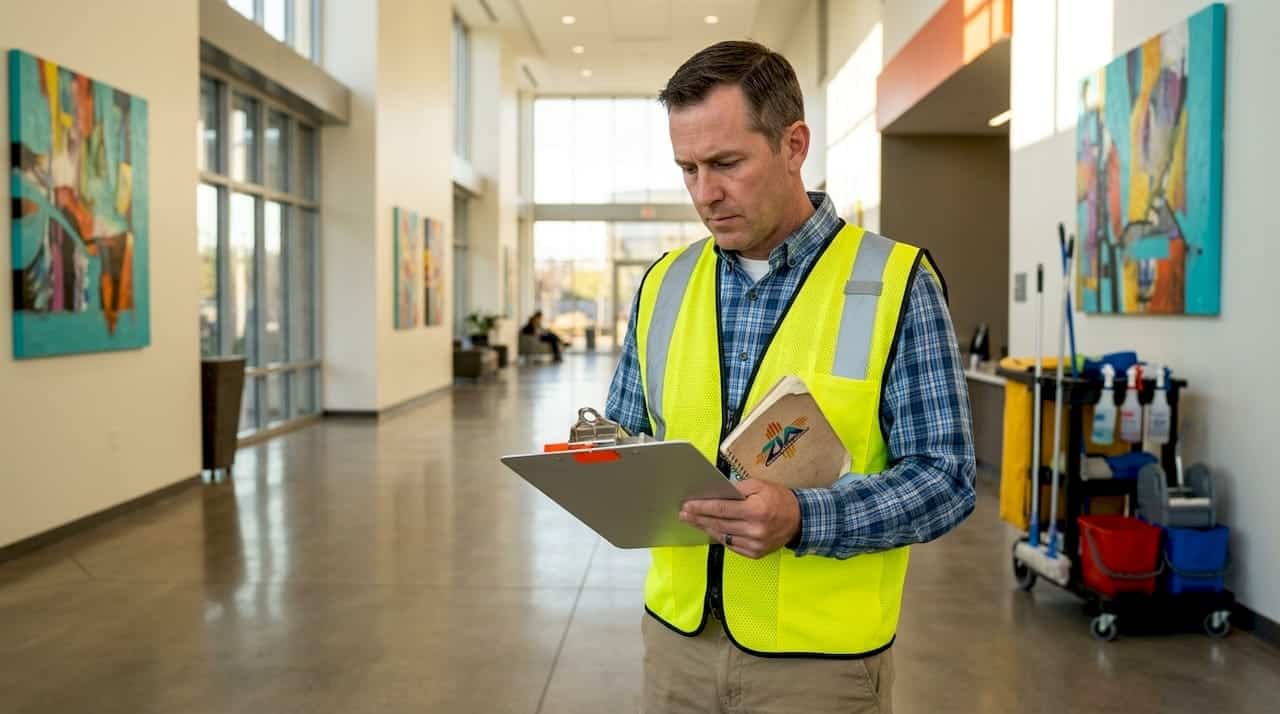
- Run a pre-inspection verification walkthrough. Walk each zone with a flashlight and your checklist before the inspector arrives. Check under different lighting conditions. Confirm that all enclosed spaces, mechanical openings, and high-touch surfaces meet the standard.
- Restrict access after the final clean. Limit foot traffic in cleaned zones. Use temporary barriers or signage to prevent trades or delivery personnel from reintroducing debris after the final clean is complete.
Pro Tip: Assign one person as the cleaning coordinator for the project. This individual owns the cleaning schedule, coordinates with trade supervisors, and signs off on zone readiness. Distributed responsibility for cleaning almost always produces gaps.
Routine cleaning inspections between project milestones catch issues before they compound. Buildings that maintain cleaning discipline throughout the construction process require significantly less remediation before the final inspection.
Key takeaways
Cleaning is the most direct factor property owners and managers can control to protect inspection timelines, meet compliance standards, and maintain property value.
| Point | Details |
|---|---|
| Schedule cleaning after trades exit | Final cleaning done before trade work is complete always requires a second pass and delays inspections. |
| Prioritize HVAC and high-touch surfaces | Vents, handles, and switches are the most frequently failed points in building inspections. |
| Document every cleaning action | Timestamped logs and audit scores are required evidence for OSHA and health department compliance. |
| Use zone-based verification | Internal walkthroughs by zone after trade sign-off catch residues and streaks before the inspector does. |
| Engage professional cleaning for specialized tasks | Grout haze, adhesive removal, and duct cleaning require professional equipment to meet inspection standards. |
Why cleaning is the one inspection variable you actually control
I have seen property managers invest months in construction quality and then lose two weeks to a re-inspection because of a missed cleaning step. That is the part of this topic that most articles skip. The building itself can be perfectly built, and a dirty HVAC vent or adhesive residue on a window frame will still hold up the certificate of occupancy.
The mistake I see most often is treating cleaning as the last item on the project list rather than a parallel workstream with its own schedule and accountability. When cleaning has no dedicated coordinator and no documented sign-off process, it defaults to whoever is available at the end of the project. That person is usually not a specialist, and the result shows during the walkthrough.
The other thing worth saying directly: inspectors use the condition of a building as a proxy for how the entire project was managed. A building that presents clean, organized, and residue-free tells the inspector that the project team was disciplined. A building with dust on the vents and adhesive on the glass tells a different story, regardless of what the construction documents say. That perception matters, and it is entirely within your control.
Investing in professional cleaning before a building inspection is not a luxury. It is the most cost-effective way to protect your project timeline. One re-inspection costs more in contractor time, scheduling delays, and carrying costs than a thorough professional clean ever will.
— Ashley
How Zia Building Maintenance supports your inspection readiness
Zia Building Maintenance has been delivering professional janitorial and commercial cleaning services in Albuquerque since 1989. When your building is approaching an inspection, the details matter. Zia Building Maintenance provides detailed post-construction cleaning, zone-based verification, and documented cleaning records that support compliance with OSHA and health department requirements.
From HVAC vent cleaning to grout haze removal and high-touch surface detailing, the team at Zia Building Maintenance handles the specialized tasks that general labor misses. Property owners and managers across offices, medical facilities, and schools in the South Valley trust Zia Building Maintenance to prepare their buildings for inspection without rework or delays. Learn how professional janitorial services protect your timeline and property value, or explore commercial cleaning solutions tailored to your building type.
FAQ
What is the role of cleaning in building inspections?
Cleaning presents a building as visibly complete, safe, and free of construction residue so inspectors can verify occupancy readiness. Inspectors evaluate cleanliness as evidence of project completion, checking HVAC vents, floors, glass, restrooms, and high-touch surfaces for dust, debris, and residue.
What areas most commonly fail building inspections due to cleaning?
HVAC vents, window frames, floor corners, restroom grout, and high-touch surfaces like switches and cabinet pulls are the most frequently cited failure points. Overlooked enclosed spaces and odor sources also create negative impressions during walkthroughs.
When should the final clean be scheduled before an inspection?
The final clean must be scheduled only after all finishing trades, including painters, hardware installers, and fixture crews, have completed and exited the building. Cleaning before trade work is finished always requires a second pass and delays the inspection date.
Does cleaning documentation affect inspection compliance?
Yes. OSHA and health department inspections require timestamped cleaning logs and audit records, not just a clean appearance. Structured cleaning audits with scoring detect compliance failures earlier than schedule-only approaches and provide verifiable evidence of operational control.
Should property managers hire professional cleaners before a building inspection?
Professional cleaning services are the most reliable way to address specialized tasks like HVAC vent cleaning, adhesive residue removal, and grout haze treatment that general labor consistently misses. A single re-inspection costs more in delays and carrying costs than a professional clean, making it a sound investment for any property owner approaching an inspection.