

TL;DR:
- A clean lobby signals effective building management and significantly influences tenant satisfaction and renewal rates. Regular, targeted cleaning of surfaces, lighting, and scents helps maintain consistent standards that boost occupancy and rental premiums. Facility managers should use real-time feedback and usage-based schedules to optimize lobby upkeep and enhance building performance.
A clean lobby is the single most visible signal of how well a commercial building is managed. Facility managers who treat lobby cleaning as a secondary task consistently see lower tenant satisfaction scores, higher vacancy rates, and weaker lease renewal numbers. The connection between lobby cleanliness and building performance is measurable: a 1-point increase in tenant satisfaction on a 5-point scale results in 8.6% greater willingness to renew leases and 11.5% higher likelihood to recommend a property. That is not a soft benefit. It is a direct financial return tied to the condition of your entrance. Understanding why lobby cleaning matters in commercial buildings starts with recognizing that the lobby is not just a passageway. It is your building’s first and most repeated impression.
How does lobby cleanliness affect tenant satisfaction and building performance?
Tenant satisfaction is the most reliable predictor of lease renewal in commercial real estate. When tenants feel the building is well cared for, they stay longer and pay more. When they feel it is neglected, they leave and tell others. The lobby is the space tenants and their clients pass through every single day, making it the most influential touchpoint in the entire building experience.
The financial case is clear. Buildings with Net Promoter Scores above 60 achieve 18–22% higher tenant retention and command $3.50–$5.00 per square foot in rental premiums. That means a clean, well-maintained lobby is not just good housekeeping. It is a revenue strategy.
“Cleanliness is a core component of a building’s value proposition, often the deciding factor among similar properties in competitive markets. A well-maintained clean environment strongly influences potential tenant decisions.”
In markets where multiple office buildings offer comparable amenities, cleanliness frequently differentiates the property that wins the lease from the one that loses it. Facility managers who understand this treat lobby maintenance as a leasing tool, not a janitorial task.
The data below summarizes the relationship between lobby cleanliness, tenant satisfaction, and building performance outcomes.

| Metric | Impact |
|---|---|
| Tenant satisfaction increase (1 point on 5-point scale) | 8.6% higher lease renewal willingness |
| Tenant satisfaction increase (1 point on 5-point scale) | 11.5% higher likelihood to recommend |
| NPS score above 60 | 18–22% higher tenant retention |
| NPS score above 60 | $3.50–$5.00 per sq ft rental premium |
| Real-time feedback use by facility managers | 12–18 point satisfaction improvement within six months |
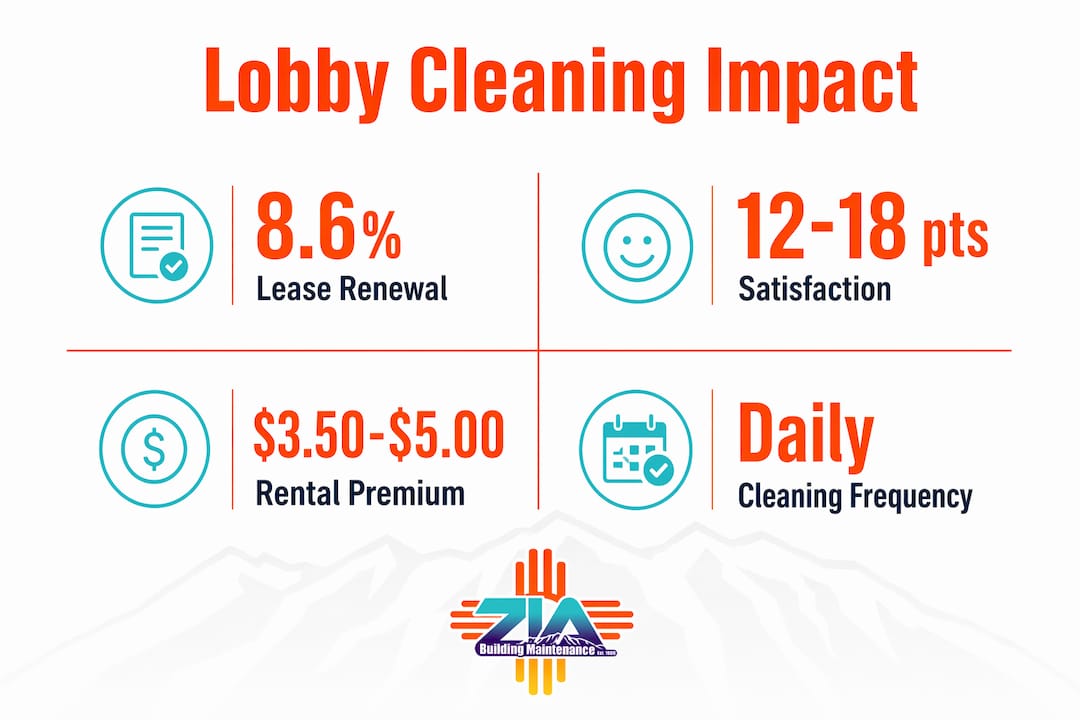
Facility managers using real-time feedback tools improve tenant satisfaction by 12–18 points within six months. That rate of improvement shows how quickly a focused cleaning program can shift measurable outcomes.
What are the key components of effective lobby maintenance?
Effective commercial lobby maintenance covers more than mopping floors. It requires consistent attention to every surface and sensory element a visitor encounters within the first 30 seconds of entering the building.
The highest-priority areas for daily attention include:
- Lobby floors: High foot traffic pulls in dirt, moisture, and debris from outside. Floors that show scuff marks, grime, or moisture stains signal neglect immediately. Consistent floor care prevents surface deterioration and protects the building’s long-term investment in flooring materials.
- Street-facing glass doors and windows: Glass doors and windows are the most visible surfaces in any lobby and require more frequent cleaning than walls or interior floors. Fingerprints, smudges, and grime accumulate fast and degrade the building’s appearance before a visitor even steps inside.
- Lobby furniture and reception surfaces: Chairs, tables, and reception desks collect dust, spills, and germs. These surfaces need daily wiping and periodic deep cleaning to stay presentable and hygienic.
- Lighting and signage: Burned-out bulbs and dusty light fixtures make a lobby feel dated and poorly managed. Clean, well-lit signage reinforces a professional atmosphere and helps visitors navigate confidently.
- Scent profile: Lobby scent significantly affects visitor perception alongside visual cleanliness. Neutral and light scents reinforce hygiene perceptions. Musty or overly artificial odors trigger negative subconscious responses even when the lobby looks clean.
Decluttering is equally important. Excess signage, stacked packages, or unused furniture make even a clean lobby feel chaotic. A clear, open space reads as organized and professional.
Pro Tip: Align your cleaning schedule with your building’s peak foot traffic periods. A lobby cleaned at 6:00 AM but left unattended through a busy 8:00–10:00 AM arrival window will look neglected by mid-morning. Schedule a mid-morning touch-up to maintain consistent standards when it matters most.
The role of cleaning in office branding is often underestimated. A spotless lobby communicates that the building operator cares about details, and tenants extend that perception to every other aspect of building management.
Why is consistent lobby cleaning important beyond aesthetics?
A clean lobby reduces physical hazards. Wet floors, tracked-in debris, and poorly maintained entrance mats are leading causes of slip-and-fall incidents in commercial buildings. Professional cleaning reduces slip hazards and controls allergens in high-traffic areas, directly improving workplace safety for occupants and visitors. Consistent cleaning also supports regulatory compliance with OSHA standards for safe working environments.
The health benefits extend beyond safety. Lobbies are transition zones where outdoor contaminants enter the building. Regular cleaning limits the spread of germs, pollen, and particulate matter into the broader building environment. This matters especially in buildings that house medical offices, schools, or high-density workforces.
Preventive cleaning also protects your capital investment. Consider these four operational benefits of a consistent lobby cleaning program:
- Floor longevity: Dirt and grit act as abrasives on hard flooring surfaces. Regular cleaning removes these particles before they scratch or erode the finish, extending the life of tile, hardwood, and polished concrete floors by years.
- Furniture preservation: Upholstered lobby seating collects dust, oils, and spills. Routine cleaning prevents staining and fabric breakdown, reducing replacement costs.
- Regulatory compliance: Clean, hazard-free lobbies meet OSHA standards for public-facing commercial spaces. Documented cleaning schedules also provide evidence of due diligence in the event of an incident.
- Tenant wellbeing: Occupants who work in buildings with clean, well-maintained common areas report higher job satisfaction. That satisfaction influences their employers’ decisions about lease renewals.
Pro Tip: Keep a cleaning log for your lobby that records the time, task, and staff member for each service. This log serves dual purposes: it holds your cleaning team accountable and provides documentation for compliance audits or incident investigations.
The benefits of professional janitorial services go well beyond appearance. They protect the physical assets of the building and the health of everyone who uses it.
How can facility managers implement effective lobby cleaning strategies?
The most effective lobby cleaning programs are built around actual usage patterns, not fixed daily checklists. Fixed cleaning schedules are outdated. Usage-based cleaning models, which schedule service based on foot traffic data and real-time conditions, consistently outperform rigid routines. A lobby that sees 500 people per hour during morning arrivals needs a different service frequency than one with steady low traffic throughout the day.
Facility managers who want to raise their lobby standards should focus on these core practices:
- Set measurable service standards. Define what “clean” means in writing. Specify acceptable conditions for floors, glass, furniture, and scent before signing any janitorial contract. Vague expectations produce inconsistent results.
- Use tenant feedback actively. Annual surveys lag behind tenant experience, causing missed opportunities for service improvement. Collect feedback immediately after maintenance services using digital tools or brief check-ins. This lets you catch quality issues before they affect lease decisions.
- Train cleaning staff on lobby-specific standards. Lobby cleaning requires a different approach than office or restroom cleaning. Staff should understand the visual and sensory standards expected, not just the task list.
- Evaluate janitorial contracts carefully. Review service agreements using a commercial cleaning contract checklist that covers frequency, scope, quality assurance, and escalation procedures. A contract that lacks clear performance metrics gives you no recourse when standards slip.
- Schedule periodic deep cleaning. Daily maintenance keeps the lobby presentable, but quarterly or semi-annual deep cleaning addresses buildup in grout lines, upholstery, and high-touch surfaces that routine service misses.
The spot cleaning guide for commercial spaces offers a practical framework for maintaining lobby cleanliness between scheduled service visits. Spot cleaning protocols give building staff clear guidance on how to respond to spills, tracked-in mud, or other immediate issues without waiting for the next scheduled service.
Key Takeaways
Lobby cleanliness in commercial buildings directly drives tenant satisfaction, lease renewals, rental premiums, and building safety, making it one of the highest-return maintenance investments a facility manager can make.
| Point | Details |
|---|---|
| Tenant satisfaction drives revenue | A 1-point satisfaction increase raises lease renewal willingness by 8.6% and recommendation likelihood by 11.5%. |
| NPS above 60 commands premiums | Buildings with strong Net Promoter Scores retain more tenants and earn $3.50–$5.00 per sq ft in rental premiums. |
| Scent and glass matter as much as floors | Lobby perception depends on neutral scent, clean glass, and well-lit signage, not just floor condition. |
| Usage-based schedules outperform fixed ones | Aligning cleaning frequency to foot traffic patterns maintains consistent standards and tenant satisfaction. |
| Consistent cleaning protects capital assets | Regular lobby maintenance extends floor and furniture life while supporting OSHA compliance and safety. |
What I’ve learned about lobbies that most facility managers overlook
I have walked through hundreds of commercial lobbies over the years, and the pattern is always the same. The buildings with the highest tenant satisfaction scores are not necessarily the newest or the most expensive. They are the ones where the lobby looks exactly the same at 4:00 PM as it did at 8:00 AM. That consistency is what tenants notice, even if they cannot articulate it.
The biggest mistake I see facility managers make is treating lobby cleaning as a morning task that is done for the day. Lobbies are living spaces. They absorb foot traffic, weather, and activity all day long. A single mid-morning cleaning window is not enough for a building with significant daily traffic. The managers who get this right schedule at least two service windows per day and add a spot-check protocol in between.
The scent issue also surprises people. I have seen beautifully maintained lobbies that still felt off because someone was using a heavy floral air freshener to mask an underlying odor. Visitors noticed it immediately, even if they could not name what was wrong. Neutral scents, or no added scent at all, always perform better. If you are masking an odor, find the source and eliminate it. That is the only fix that works.
My honest recommendation: treat your lobby the way you treat your leasing brochure. Both represent your building to the people who matter most. One just gets updated every few years. The other needs to be perfect every single day.
— Ashley
Zia Building Maintenance: professional lobby cleaning for commercial buildings
Zia Building Maintenance has served commercial buildings in Albuquerque since 1989, and lobby maintenance is one of the most requested services from property managers and facility teams. The team understands that a lobby is not just a floor to mop. It is the first thing every tenant, visitor, and prospective client sees.
Zia Building Maintenance builds customized cleaning plans around your building’s actual foot traffic patterns, not generic schedules. Clients consistently report time savings and reduced maintenance costs after switching to a professional janitorial program. Learn how professional janitorial services save time and money for commercial properties, or explore the full range of office cleaning services available for Albuquerque businesses. Contact Zia Building Maintenance to request an estimate tailored to your building’s needs.
FAQ
Why does lobby cleanliness affect lease renewal rates?
Tenant satisfaction is directly tied to lease renewal decisions, and the lobby is the most frequently experienced common area in any commercial building. A 1-point satisfaction increase raises lease renewal willingness by 8.6%, making lobby condition one of the most measurable drivers of retention.
How often should a commercial lobby be cleaned?
Daily cleaning is the minimum standard for most commercial lobbies, but high-traffic buildings benefit from multiple service windows per day. Usage-based cleaning schedules aligned to peak foot traffic periods consistently outperform fixed once-daily routines.
What surfaces need the most attention in a commercial lobby?
Street-facing glass doors and windows require the most frequent cleaning because they accumulate grime and fingerprints faster than any other surface. Lobby floors and glass are the two surfaces that most directly shape a visitor’s first impression within seconds of arrival.
Does lobby cleanliness affect rental rates?
Buildings with Net Promoter Scores above 60, which cleanliness strongly influences, command $3.50–$5.00 per square foot in rental premiums compared to lower-scoring properties. Clean, well-maintained lobbies are a documented factor in achieving above-market rents.
What is the fastest way to improve lobby cleanliness scores?
Collecting tenant feedback immediately after maintenance services, rather than relying on annual surveys, allows facility teams to identify and fix quality issues rapidly. Real-time feedback use improves tenant satisfaction by 12–18 points within six months.