

TL;DR:
- High-quality cleaning equipment directly improves hygiene outcomes and operational efficiency by increasing task speed and reducing complaints. Proper maintenance and matching tools to facility needs ensure consistent results and extend equipment lifespan, while IoT and robotics further enhance service quality through automation and data tracking. Implementing structured procedures, training, and system-wide planning maximizes the value of investment and supports reliable, audit-ready cleaning performance.
Professional cleaning equipment quality is defined as the direct determinant of service consistency, hygiene outcomes, and operational efficiency in commercial facilities. Facility managers who treat equipment as a cost center rather than a performance driver consistently see higher complaint rates, increased labor hours, and preventable service failures. Standardized cleaning equipment increases task execution rates by 28–45% and reduces cleaning complaints by 60–72%. Those numbers explain why cleaning equipment matters for service quality in concrete, measurable terms. The right tools, properly maintained and correctly matched to your facility, are the foundation of every reliable cleaning program.
How does high-quality cleaning equipment improve efficiency and reduce costs?
Equipment quality directly controls how fast a facility gets cleaned, how much labor it takes, and how often a job needs to be repeated. These three factors drive the total cost of every cleaning contract.
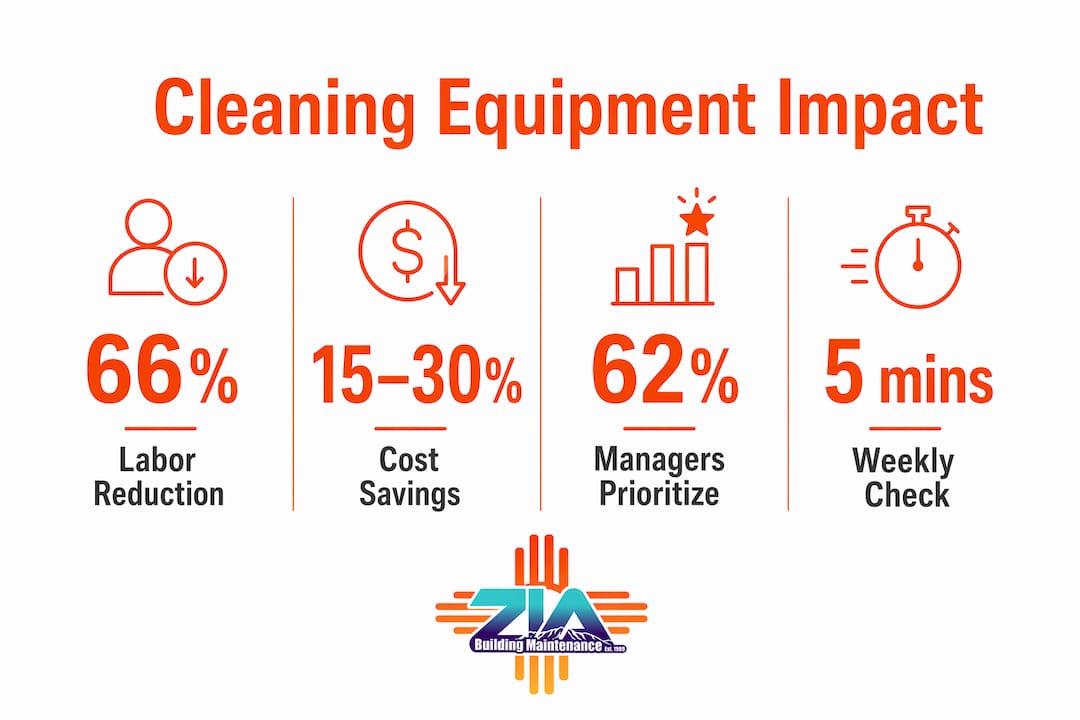
The most documented example is the shift from manual floor cleaning to ride-on scrubbers. Switching to ride-on scrubbers cuts labor hours by approximately 66%, saving $25,000–$40,000 annually in a 30,000-square-foot facility. One operator replaces two to three manual cleaners while delivering more consistent results across a larger coverage area. That is not a marginal gain. It is a structural change in how a facility operates.
Automated systems and IoT-enabled equipment take efficiency further. Labor costs drop by 15–30% when automated routing and reduced manual oversight are applied. IoT sensors track cleaning cycles, flag missed zones, and generate digital proof of work that reduces the need for supervisor spot-checks. Facility managers gain real-time visibility without adding headcount.
The return on investment compounds over time. Professional-grade cleaning tools reduce equipment repair frequency and improve hygiene standards, which lowers the risk of regulatory citations and client complaints. Fewer callbacks and fewer repairs mean the upfront cost of better equipment pays for itself faster than most managers expect.
| Cleaning method | Labor requirement | Annual savings potential |
|---|---|---|
| Manual floor scrubbing | 2–3 operators per shift | Baseline |
| Ride-on floor scrubber | 1 operator per shift | $25,000–$40,000 per year |
| IoT-enabled automated system | Reduced oversight needed | 15–30% labor cost reduction |
Pro Tip: Before purchasing any floor cleaning equipment, calculate your current labor cost per square foot. That single number gives you a clear benchmark to measure ROI against after any equipment upgrade.
What role does equipment maintenance play in consistent cleaning quality?
Neglected equipment is the most common hidden cost in facility management. A floor scrubber with worn brushes, a vacuum with a clogged filter, or a pressure washer with a failing pump all deliver inconsistent results even when operated correctly. The tool fails before the worker does.
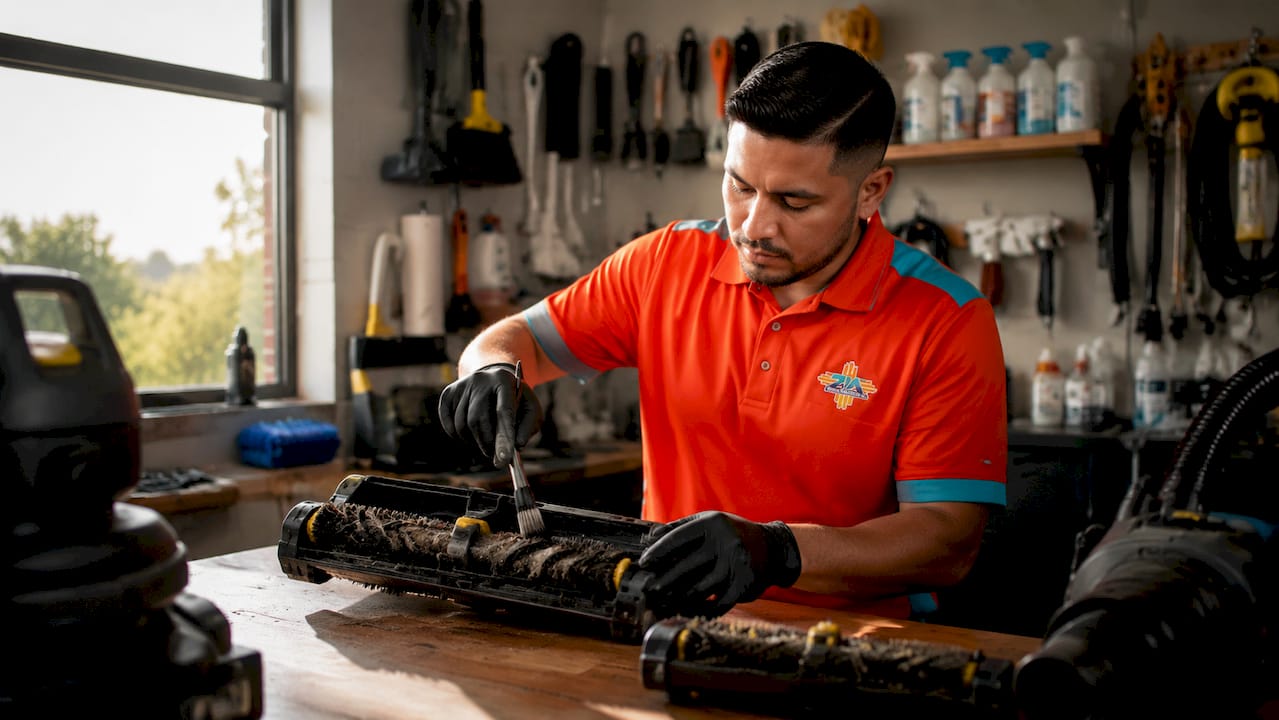
IoT sensors enable predictive maintenance by scheduling repairs before failures occur, avoiding downtime and service disruption. This matters most in multi-site operations where one piece of failed equipment can cascade into missed service windows across multiple locations. Predictive maintenance shifts the model from reactive repair to planned upkeep, which is far less expensive.
Structured maintenance programs deliver three specific benefits:
- Extended equipment lifespan. Daily inspections and scheduled servicing prevent the wear patterns that shorten machine life.
- Consistent cleaning output. Equipment operating within spec produces the same result on day 300 as it did on day one.
- Audit readiness. Maintenance logs and service records support compliance documentation for OSHA inspections and facility certifications.
Manufacturer service plans add another layer of protection. They provide access to genuine parts, trained technicians, and defined response times. For healthcare facilities and schools where cleaning standards are non-negotiable, a lapsed service contract is a real operational risk.
Pro Tip: Assign a weekly equipment inspection checklist to your lead technician. A five-minute visual check of brushes, filters, and fluid levels catches 80% of the issues that cause mid-shift breakdowns.
Why does matching equipment to facility type determine service outcomes?
Equipment mismatches cause more productivity loss than most facility managers realize. A commercial vacuum designed for carpeted offices will underperform on polished concrete. A walk-behind scrubber sized for a 5,000-square-foot retail floor will create bottlenecks in a 50,000-square-foot warehouse. The wrong tool does not just clean poorly. It costs more to operate and damages surfaces over time.
62% of facility managers prioritize equipment effectiveness over price (21%) and sustainability (11%) when making purchasing decisions. That preference reflects hard-won experience. A cheaper machine that requires three passes to match the result of one pass from the correct machine is not actually cheaper.
Facility type drives specific equipment requirements. Healthcare environments need equipment matched to infection control protocols, including microfiber systems that trap pathogens rather than spreading them. Office buildings need quiet, low-profile equipment that can operate during business hours without disrupting staff. Warehouses and distribution centers need ride-on machines with large tank capacities to cover high square footage without frequent refills.
Mapping facility routes, floor types, and cleaning frequencies before purchasing prevents bottlenecks and hidden costs. This assessment takes less than a day and eliminates the most common procurement mistake: buying equipment based on price or brand familiarity rather than operational fit.
Pro Tip: Ask your equipment vendor for a site demonstration before committing to a purchase. Watching a machine perform on your actual floors, in your actual space, reveals fit issues that no spec sheet will show.
How do robotics and IoT raise the bar for cleaning service quality?
Robotic and IoT-enabled cleaning systems are no longer experimental. They are active in airports, hospitals, and large commercial facilities, and they deliver measurable results that manual programs cannot replicate at scale.
Robotic lavatory cleaning systems reduce water and cleaning agent use while maintaining hygiene standards and lowering labor requirements. AI-driven adaptive scheduling adjusts cleaning times based on actual usage data rather than fixed schedules, which means high-traffic restrooms get cleaned more frequently and low-traffic areas are not over-serviced. The result is better hygiene with less waste.
The broader benefits of IoT integration include:
- Remote monitoring. Supervisors track cleaning progress across multiple sites from a single dashboard without being physically present.
- Cleaning validation. Digital logs confirm that each zone was cleaned, when it was cleaned, and with which equipment. This supports compliance audits.
- Resource optimization. Sensors detect soil levels and adjust chemical dosing automatically, reducing product waste by measurable margins.
- Faster response. Alerts flag equipment faults or missed zones in real time, allowing corrections before a client notices a problem.
Facility managers who integrate automated cleaning report improved resource management and audit readiness. Digital logs and IoT tracking build the kind of documented service history that strengthens client trust and supports contract renewals. For business owners evaluating local AI automation tools alongside cleaning technology, the underlying principle is the same: data-driven systems reduce errors and increase accountability.
What best practices maximize the service quality benefits of cleaning equipment?
The best equipment in the wrong hands still delivers poor results. Training, standard operating procedures, and lifecycle management determine whether an equipment investment pays off or sits underutilized.
-
Implement structured SOPs before deploying new equipment. Structured SOPs and standardized routes increase reproducible quality by 60–72% and yield productivity gains of 20–38%. A written procedure for each piece of equipment removes guesswork and reduces the variation that causes inconsistent results.
-
Train every operator on the specific equipment they will use. Generic cleaning training does not transfer to specialized machines. Ride-on scrubbers, auto-dosing systems, and robotic units each require dedicated onboarding. Untrained operators damage equipment and miss the efficiency gains the machine was purchased to deliver.
-
Conduct regular quality audits with rapid control technologies. ATP luminometry measures microbial contamination on surfaces in seconds, giving facility managers objective data on cleaning effectiveness. Audits tied to equipment performance reveal whether a machine is operating within spec or needs servicing.
-
Track total cost of ownership, not purchase price. Choosing equipment based on total cost of ownership prevents the hidden labor and maintenance costs that make cheap equipment expensive. Factor in consumables, service contracts, expected lifespan, and labor requirements before signing a purchase order.
-
Assign clear accountability for equipment care. Facility managers who designate a responsible operator for each machine see longer equipment lifespans and fewer mid-shift failures. Accountability creates ownership, and ownership drives consistent maintenance behavior.
Reviewing your commercial cleaning methods alongside your equipment inventory is a practical starting point for identifying gaps between what your tools can do and what your procedures actually require.
Key Takeaways
Cleaning equipment quality is the single most controllable variable in professional service delivery, directly determining labor costs, hygiene outcomes, and client satisfaction.
| Point | Details |
|---|---|
| Equipment drives efficiency | Ride-on scrubbers cut labor hours by approximately 66%, saving up to $40,000 annually in mid-size facilities. |
| Maintenance prevents failure | IoT-enabled predictive maintenance eliminates downtime and sustains consistent cleaning output across all sites. |
| Match equipment to facility | Mismatched tools increase labor costs and damage surfaces; assess floor types and usage before purchasing. |
| Technology builds accountability | Digital logs and IoT tracking create audit-ready records that strengthen client trust and support compliance. |
| SOPs multiply equipment value | Structured procedures increase reproducible quality by 60–72%, ensuring equipment investment translates to real results. |
What I’ve learned about equipment strategy that most procurement guides miss
After years of observing how facilities manage their cleaning programs, one pattern stands out: the procurement decision and the operational reality almost never align. A facility manager selects equipment based on a vendor demo in ideal conditions, then deploys it into a facility with irregular floor layouts, mixed surface types, and staff who received a 20-minute walkthrough instead of real training. The equipment underperforms. The manager concludes the machine was not worth the investment. The actual problem was the gap between purchase and implementation.
The facilities that get the most from their equipment investments treat the purchase as the beginning of a process, not the end of one. They map their cleaning routes before the machine arrives. They build the SOP before the first shift. They schedule the first maintenance inspection before the equipment shows any signs of wear. That discipline is not common, but it is what separates facilities with consistent service records from those that cycle through equipment every few years looking for a better solution.
The other insight I would offer is this: the importance of cleaning tools is not just about the tools themselves. It is about the system they operate within. A $50,000 robotic scrubber deployed without a cleaning validation protocol delivers worse outcomes than a $5,000 walk-behind machine used by a trained operator following a documented route. Technology amplifies good processes. It does not replace them.
For business owners, the practical takeaway is to evaluate your cleaning program as an integrated system. Equipment, training, maintenance, and quality control are not separate line items. They are one function. When they align, the results show up in cleaner facilities, fewer complaints, and clients who renew contracts without negotiation.
— Ashley
Zia Building Maintenance: professional cleaning built on the right equipment
Zia Building Maintenance has served commercial facilities in Albuquerque since 1989, and the foundation of that track record is a commitment to using the right tools for each facility type, backed by trained technicians and documented cleaning protocols.
Whether you manage an office building, a medical facility, or a school, Zia Building Maintenance tailors its approach to your specific floor types, traffic patterns, and hygiene requirements. The team follows structured SOPs, maintains equipment to manufacturer standards, and provides the kind of consistent, audit-ready service that facility managers rely on. Explore professional office cleaning services in Albuquerque, or review the commercial cleaning methods Zia Building Maintenance uses to deliver reliable results across every facility type. Contact Zia Building Maintenance to request an estimate tailored to your facility’s needs.
FAQ
Why does cleaning equipment quality affect service outcomes?
Equipment quality determines cleaning speed, surface coverage, and hygiene consistency. Standardized equipment reduces cleaning complaints by 60–72% compared to non-standardized approaches.
How often should commercial cleaning equipment be serviced?
Daily visual inspections and scheduled preventive maintenance based on manufacturer guidelines keep equipment performing within spec. IoT-enabled diagnostics allow predictive scheduling before failures occur.
What is the biggest mistake facility managers make when buying cleaning equipment?
Prioritizing purchase price over total cost of ownership is the most common error. Mismatched or underpowered equipment increases labor hours and maintenance costs, making it more expensive than a higher-quality alternative.
How do robotic cleaning systems improve service quality?
Robotic systems use AI-driven scheduling and IoT monitoring to clean based on actual usage data, reducing waste and ensuring high-traffic areas receive more frequent attention. They also generate digital cleaning logs that support compliance audits.
What is ATP luminometry and why does it matter for cleaning quality control?
ATP luminometry is a rapid surface testing method that measures microbial contamination in seconds. Facility managers use it to verify that cleaning equipment and procedures are delivering the hygiene standards required by OSHA and facility certification programs.