Why Professional Medical Office Cleaning Matters More Than You Think
Professional medical office cleaning is a specialized service that goes far beyond standard janitorial work, requiring strict adherence to healthcare regulations, use of hospital-grade disinfectants, and protocols specifically designed to prevent the spread of infections in clinical environments.
Key differences between medical and commercial cleaning:
- Infection Control Focus – Medical cleaning prioritizes pathogen elimination, not just visible cleanliness
- Regulatory Compliance – Must meet OSHA, CDC, and AORN standards for healthcare environments
- Specialized Training – Staff trained in bloodborne pathogen safety, PPE protocols, and HIPAA regulations
- Hospital-Grade Products – EPA-registered disinfectants proven to kill 99.9% of germs and bacteria
- Risk-Based Protocols – Different areas require different cleaning frequencies based on contamination risk
- Biohazard Handling – Proper disposal of sharps, bodily fluids, and medical waste
When patients walk through the doors of your medical building, they immediately judge the appearance of your offices, waiting areas, and examination rooms. That first impression isn’t just about aesthetics—it’s about safety. Healthcare-associated infections (HAIs) remain a serious threat, and every surface, waiting area, and patient room plays a critical role in preventing their spread.
The consequences of inadequate cleaning in medical facilities are severe. Dirty or unsanitary workspaces can lead to loss of medical licenses, patient complaints, regulatory penalties, and most importantly, the spread of dangerous pathogens that put vulnerable patients at risk.
I’m Ashley Cordova, Vice President of Zia Building Maintenance, where my family has served New Mexico healthcare facilities since 1989. Having overseen countless professional medical office cleaning contracts, I’ve seen how the right protocols and attention to detail make all the difference in creating spaces where patients feel safe and staff can focus on delivering excellent care.
Why Professional Medical Office Cleaning is Essential for Patient Safety
In healthcare, “clean enough” simply doesn’t exist. When we talk about professional medical office cleaning, we are talking about a frontline defense against invisible threats. Unlike a standard office where a dusty shelf is just an eyesore, a contaminated surface in a clinic can be a vector for disease.
Infection Prevention and Pathogen Reduction
The primary goal of our medical cleaning service is infection prevention. Research shows that pathogens can survive on surfaces for days, or even weeks, if not properly addressed. By employing evidence-based practices, we significantly reduce the microbial load in your facility. This isn’t just about wiping away dirt; it’s about using science to break the chain of infection.
The Real Cost of Healthcare-Associated Infections (HAIs)
According to the CDC, healthcare‑associated infections (HAIs) are not only dangerous to patients but also incredibly costly for facilities. HAIs can lead to longer patient stays, increased mortality rates, and massive financial liabilities. By investing in high-level sanitation, you are directly contributing to better health outcomes. We’ve seen how How Cleaner Surfaces Mean Fewer Sick Days in Healthcare, which protects your patients and keeps your medical staff healthy and productive.
Specialized Protocols and Regulatory Compliance
One of the biggest problems for healthcare facility managers in Albuquerque and Rio Rancho is staying compliant with the alphabet soup of regulatory bodies. We understand that you have enough on your plate without worrying if your janitorial closet meets federal standards.
Adhering to OSHA and CDC Guidelines
We build our cleaning strategies around OSHA Infection control protocols and CDC recommendations. This isn’t optional; it’s a requirement for the safety of everyone who enters your building. Our teams are trained to understand the nuances of the Bloodborne Pathogens Standard, ensuring that every mop stroke and surface wipe complies with the law. Knowing How to Avoid OSHA and HIPAA Violations in Healthcare is a core part of our service, protecting your facility from heavy fines and legal headaches.
Advanced Equipment Used in Professional Medical Office Cleaning
To achieve a medical-grade clean, we use tools that go far beyond a bucket and a sponge:
- HEPA Filtration: Our HEPA backpack vacuums are designed to capture 99.97% of dust and airborne particles, which is vital for maintaining indoor air quality for patients with respiratory issues.
- Microfiber Technology: We use color-coded microfiber cloths that trap 99% of bacteria and dirt. The color-coding is key—it prevents us from using a cloth in the bathroom and then accidentally using it on a reception desk.
- Hospital-Grade Disinfectants: We use EPA-registered disinfectants that kill 99.9% of germs, including tough pathogens like MRSA and Norovirus, while remaining safe for sensitive environments.
- Electrostatic Technology: For total coverage, Electrostatic Cleaning Explained shows how we can wrap disinfectant around curved surfaces and hard-to-reach areas that traditional wiping might miss.
Handling Biohazardous Waste and Bloodborne Pathogens
The handling of blood-borne pathogens is perhaps the most critical distinction in our industry. Our staff is trained to handle “red bag” waste and follow strict hazardous waste disposal protocols. This includes:
- PPE Usage: Proper donning and doffing of gloves, masks, and gowns to prevent self-contamination.
- Sharps Precautions: Ensuring that needle containers are never overfilled and are handled with extreme care.
- Spill Response: Having the right kits and training to neutralize bodily fluid spills immediately and safely.
Cleaning Frequencies and High-Touch Surface Management
In a medical office, some areas are naturally “hotter” than others when it comes to germ activity. We don’t believe in a one-size-fits-all schedule. Instead, we use a risk-based approach to determine how often different zones need attention.
Daily Disinfection vs. Terminal Cleaning
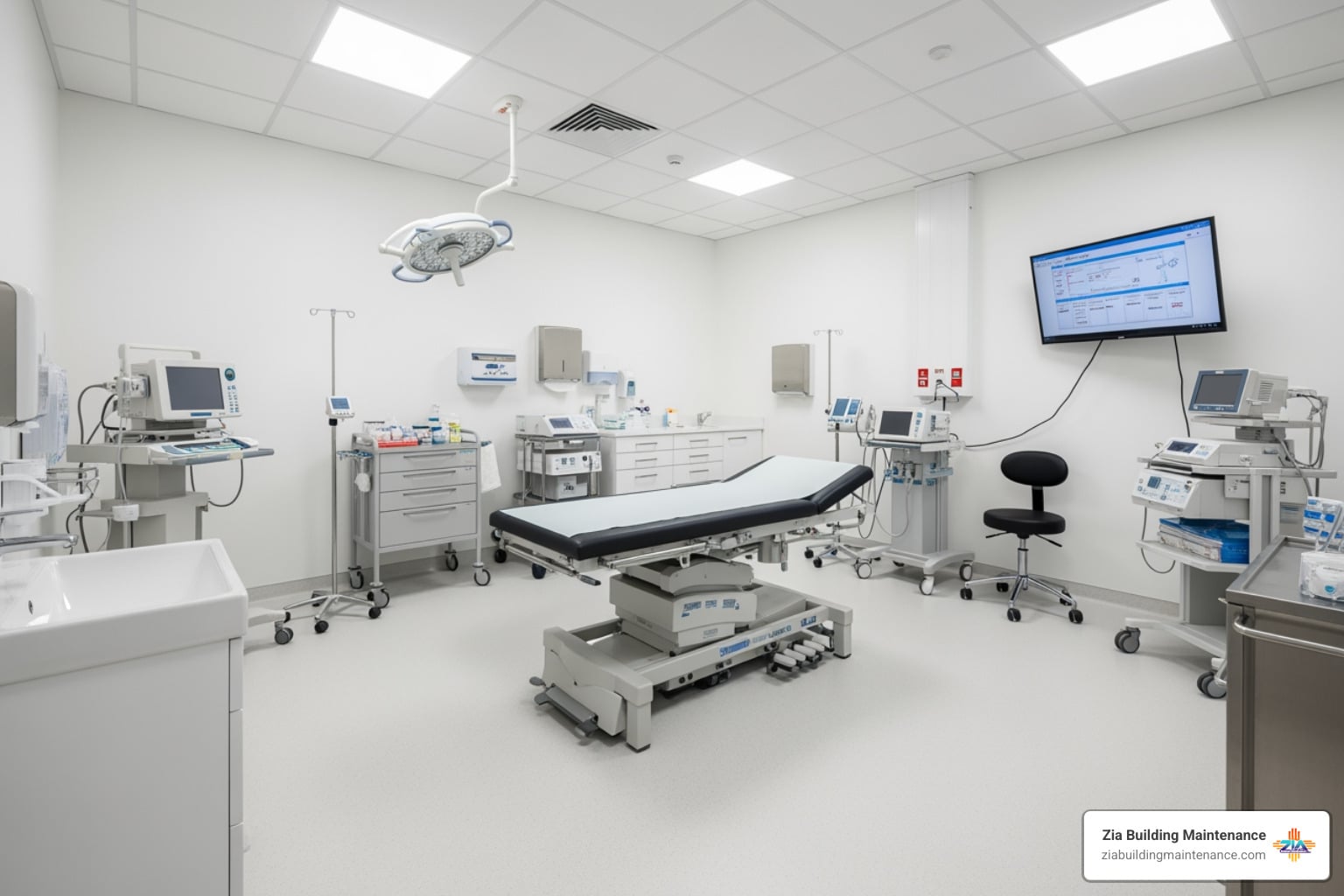
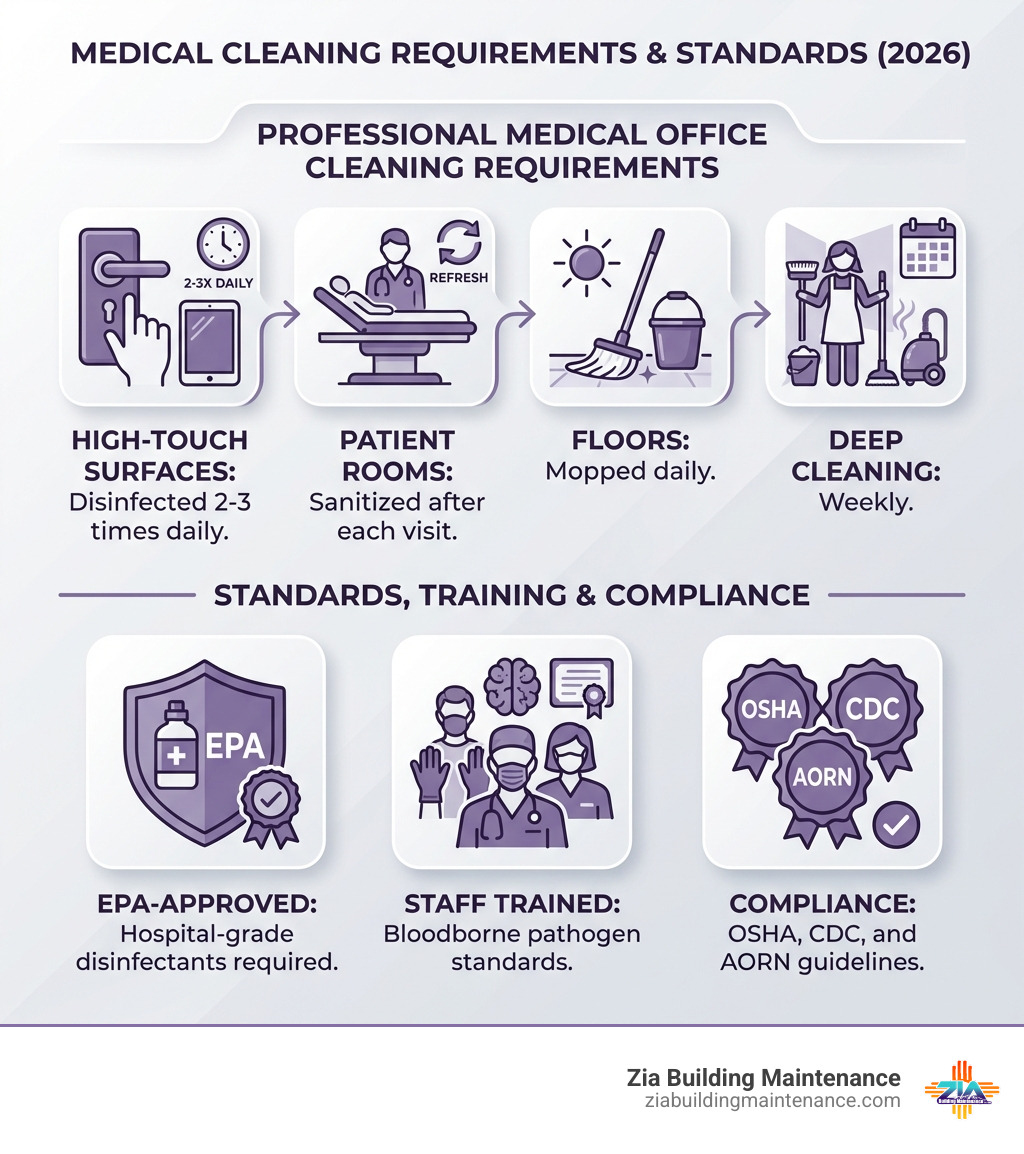
High-traffic areas like waiting rooms and reception desks require daily (and sometimes hourly) disinfection. However, clinical areas like exam rooms require “terminal cleaning”—a thorough, top-to-bottom disinfection process—after each patient visit or at the end of the day.
Area Risk Levels and Recommended Frequency
| Area Type | Risk Level | Cleaning Frequency | Key Tasks |
|---|---|---|---|
| Exam Rooms | High | After every patient | Sanitize tables, change paper, disinfect stools |
| Restrooms | High | Twice daily (minimum) | Sterilize fixtures, floors, and door handles |
| Waiting Areas | Moderate | Daily / Every few hours | Disinfect chairs, clipboards, and entry glass |
| Staff Breakrooms | Moderate | Daily | Sanitize counters, appliances, and handles |
| Admin Offices | Low | 2-3 times per week | Vacuuming, dusting, trash removal |
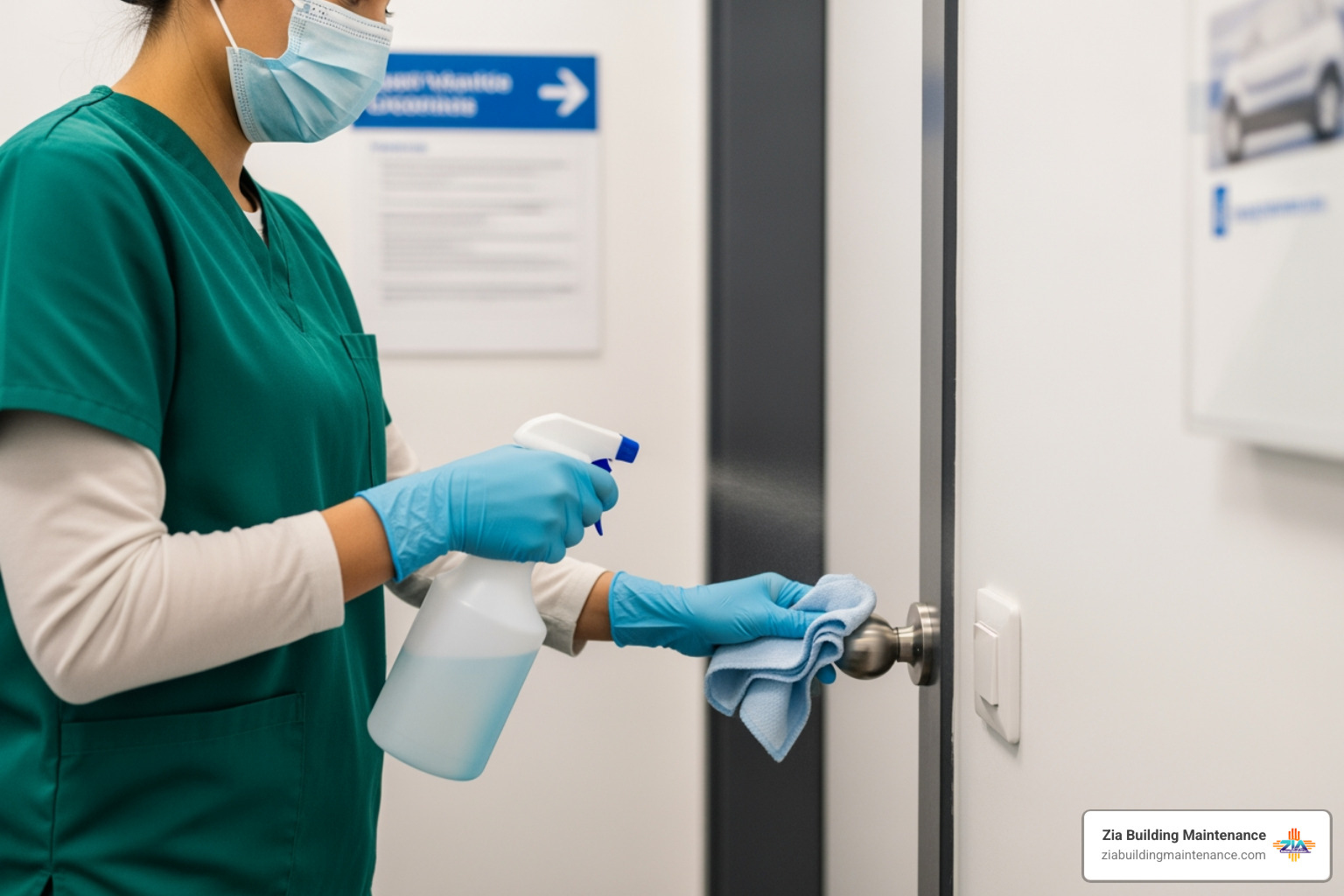
It is easy to focus on the big things, but the High Touch Areas Often Missed During Disinfection are often where the germs hide. We pay special attention to light switches, cabinet handles, telephones, and even the pens at the sign-in desk.
Custom Solutions for Dental and Specialized Clinics
Dental offices present a unique set of challenges. Between the aerosols generated during procedures and the high volume of patients, Dental Office Cleaning requires a specialized touch.
Dental Hygiene and Cross-Contamination
In a dental setting, cross-contamination is the enemy. We focus on the sterilization of the operatory, ensuring that every surface—from the patient chair to the overhead light—is disinfected with hospital-grade germicides. There are numerous Benefits of Getting Your Dental Office Cleaned by professionals, including the protection of your expensive equipment from corrosive, non-medical cleaners and the reassurance it provides to your patients.
Improving Patient Satisfaction Through Professional Medical Office Cleaning
Beyond the science of germs, there is the psychology of “clean.” Keeping a hospital clean or a clinic spotless is one of the fastest ways to build trust. If a patient sees a stained carpet or a dusty baseboard, they may wonder if your medical instruments are truly sterile.
A clean facility also improves indoor air quality. By removing allergens and pathogens from the air using HEPA filtration, we create a more comfortable environment for patients who may already be feeling unwell.
Frequently Asked Questions about Medical Cleaning
What is the difference between sanitizing and disinfecting?
This is a great question! Sanitizing reduces the number of bacteria on a surface to a “safe” level according to public health standards. Disinfecting, however, uses chemicals to actually kill bacteria, viruses, and fungi. In a professional medical office cleaning program, we prioritize disinfection—especially for high-touch surfaces—to ensure the highest level of safety.
How often should medical exam rooms be cleaned?
The CDC recommends that high-touch surfaces in exam rooms be disinfected after every single patient visit. This includes the exam table, chairs, and any counters or equipment used. At the end of the day, a more thorough cleaning of the floors and all surfaces should be performed to prepare the room for the next morning.
What are the consequences of inadequate medical cleaning?
The stakes are incredibly high. Inadequate cleaning can lead to:
- Outbreaks of HAIs: Putting patients and staff at risk of serious illness.
- Regulatory Fines: OSHA and the CDC can impose heavy penalties for non-compliance.
- Reputational Damage: In the age of online reviews, a “dirty” office can sink a practice’s growth.
- Legal Liability: Facilities can be held responsible for infections acquired on-site due to negligence.
Conclusion
At Zia Building Maintenance, we don’t just see ourselves as a cleaning company; we see ourselves as your partners in patient care. Serving the Albuquerque, Rio Rancho, and Bernalillo areas since 1989, our family-owned business understands the local healthcare landscape and the high standards our community deserves.
From the waiting room to the surgical suite, we provide the dependable, detailed service that medical professionals rely on. If you want to ensure your facility meets the highest professional standards, we are here to help. You can find More info about dental office cleaning services and our general medical protocols on our website. Let us handle the cleaning so you can focus on what you do best: healing our community.