

Why Cleaning Berber Carpet the Right Way Actually Matters
Cleaning Berber carpet requires a different approach than standard carpet — and using the wrong method can cause permanent damage.
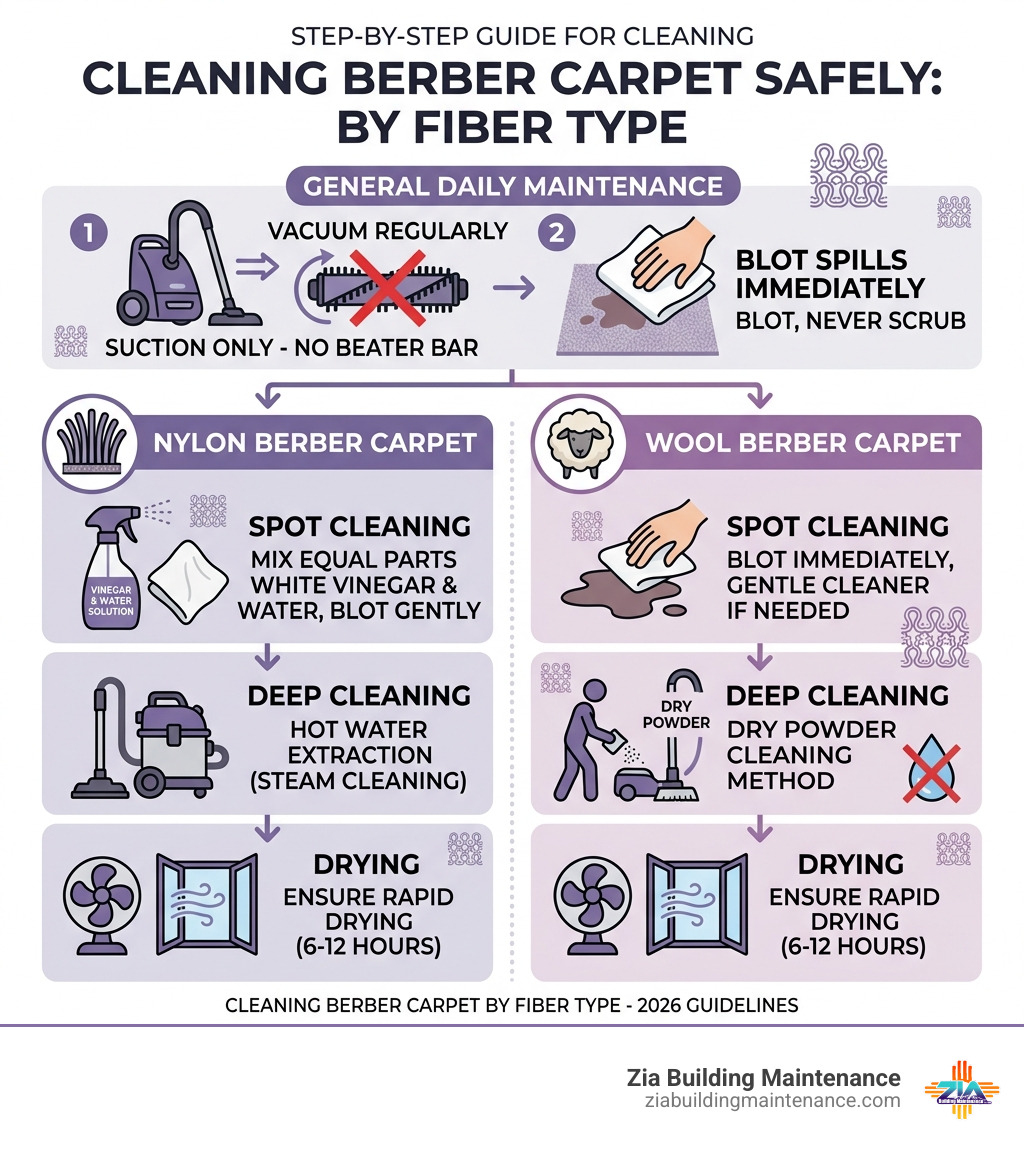
Here’s a quick overview of the safest approach:
| Step | What To Do |
|---|---|
| Vacuum | Use suction only — no beater bar |
| Spills | Blot immediately, never scrub |
| Spot clean | Mix equal parts white vinegar and water, blot gently |
| Deep clean | Hot water extraction (steam) for nylon; dry powder for wool |
| Dry | Use fans or open windows — dry within 6–12 hours |
Berber carpet is one of the most popular flooring choices in Albuquerque commercial spaces — from Downtown offices to high-traffic lobbies — because of its durability and tight looped construction. But that same looped structure that makes it so tough is exactly what makes it tricky to clean. Dirt hides deep in the loops, excess moisture gets trapped easily, and the wrong vacuum can snag and unravel fibers permanently.
The good news? With the right techniques, Berber holds up beautifully for years.
I’m Ashley Cordova, Vice President of Zia Building Maintenance, and through years of overseeing commercial janitorial operations across New Mexico, I’ve seen how much damage improper cleaning berber carpet methods can cause — and how simple the right approach really is. This guide covers everything facility managers need to keep Berber looking sharp without the guesswork.
Understanding Berber Carpet: What Makes It Unique?
To master cleaning Berber carpet, we first have to understand what it actually is. The name “Berber” actually comes from the Berber tribes of North Africa, a nomadic people who lived by raising sheep. They hand-wove carpets with a distinct, knotted texture that inspired the modern looped style we see today in Bernalillo homes and offices.
Unlike traditional “cut pile” carpets (where the fiber ends are exposed and fuzzy), Berber is made of continuous loops of yarn. This “loop pile” construction is what gives it that signature rugged, pebbled look.
Why the Construction Matters
The tight weave creates a dense surface that is incredibly durable. It doesn’t show footprints or vacuum tracks like plush carpets do, which is why it’s a favorite for high-traffic hallways. However, this density is a double-edged sword. While it keeps dirt on the surface longer, if that dirt isn’t removed, it gets ground into the loops. Furthermore, the loops can trap moisture like a sponge, leading to long drying times and potential mildew if you aren’t careful during the deep cleaning process.
Fiber Types and Their Impact on Cleaning
Not all Berber is created equal. Before you start cleaning Berber carpet, you must check the manufacturer’s tag to see what it’s made of. The fiber type dictates which chemicals and temperatures are safe to use.
1. Nylon Berber
Nylon is the gold standard for commercial use. It is highly resilient and responds well to steam cleaning. It resists crushing and “remembers” its shape, making it the most expensive but longest-lasting synthetic option.
2. Olefin (Polypropylene) Berber
This is the most common synthetic Berber found in Albuquerque. It’s budget-friendly and naturally stain-resistant (liquid spills often sit on top). However, Olefin is “oleophilic,” meaning it loves oil. It will suck up oils from the bottom of shoes or even cooking vapors, making it look dingy quickly. It is also heat-sensitive, so you have to be careful with extremely hot steam.
3. Wool Berber
Traditional and luxurious, wool Berber is naturally flame-retardant and eco-friendly. However, it is the most delicate to clean. Wool is highly absorbent and prone to “medulation” (hollow centers in the fiber), making it susceptible to fuzzing if scrubbed. It also reacts poorly to high-pH chemicals and excessive heat.
The Best Vacuum for Berber: Avoid the Beater Bar!
If there is one “Golden Rule” for cleaning Berber carpet, it is this: Turn off the beater bar.
A beater bar (the rotating brush underneath your vacuum) is designed to agitate cut-pile fibers to shake out dirt. On a Berber carpet, those rotating bristles act like a cheese grater. They can snag a single loose loop and pull it, causing a “run” like a pair of pantyhose. Over time, constant use of a beater bar will cause the carpet to look fuzzy or frayed.
What to look for in a vacuum:
- Suction-Only Mode: Ensure your vacuum allows you to turn the brush roll off completely.
- Adjustable Height: Use a higher setting to reduce friction while maintaining strong suction.
- HEPA Filtration: Since Berber’s tight loops can trap fine dust, a HEPA filter ensures that dust isn’t just blown back into your Albuquerque office air.
- Strong Suction: Since you aren’t using mechanical agitation, you need a motor (ideally 1200W or higher) that can pull dirt out from between the loops using air power alone.
Daily and Weekly Maintenance Routines
Prevention is the best medicine for Berber. Because the loops are so dense, dirt that settles at the bottom of the loops acts like sandpaper, wearing down the fibers from the inside out.
- Vacuuming Frequency: In high-traffic areas like Downtown Albuquerque lobbies, vacuum daily. For residential areas in Rio Rancho or Bernalillo, twice a week is usually sufficient.
- Slow Strokes: Don’t rush. Use slow, overlapping passes. Because you aren’t using a beater bar, the vacuum needs an extra second of “dwell time” over each spot to pull the dirt out of the tight weave.
- Entrance Mats: We always recommend placing high-quality mats at all outside doors. This catches the Albuquerque sand and grit before it ever touches your Berber.
Step-by-Step Guide to Spot Cleaning Stains
When a spill happens, the clock is ticking. Because Berber is so dense, a spill that reaches the backing is much harder to remove later.
- Act Fast: As soon as you see the spill, grab a clean, white towel.
- Blot, Don’t Rub: Never, ever scrub Berber. Scrubbing distorts the loops and causes permanent fuzzing. Press down firmly to soak up the liquid.
- The Vinegar Solution: Mix one part white distilled vinegar with one part water in a spray bottle. This is a “secret weapon” for many common stains on your office carpet.
- Apply and Blot: Spray the solution lightly on the stain. Let it sit for a minute, then blot from the outside of the stain toward the center to prevent spreading.
- Rinse: Use a separate cloth dampened with plain water to blot away any vinegar residue.
- Dry: Place a dry towel over the spot and put a heavy book on top for a few hours to “wick” the remaining moisture out of the loops.
How to Handle Tough Stains: Pet Urine, Odors, and More
Pet accidents in a home or a “pet-friendly” office can be a nightmare for Berber. The liquid seeps into the center of the loops and stays there.
- Baking Soda for Fresh Spills: For fresh liquid, sprinkle baking soda generously. Let it sit for 20 seconds to absorb the moisture, then vacuum. Repeat until the powder no longer “balls up.”
- Enzyme Cleaners: For set-in urine or impact of dirty carpets on office air quality and productivity, use an enzyme-based cleaner. These actually “eat” the protein and bacteria that cause odors.
- Grease and Oil: For Olefin carpets that have become greasy, a tiny drop of clear dish soap mixed with water can help break down the oils. Just be sure to rinse thoroughly, as soap residue attracts more dirt.
Deep Cleaning Methods: Steam vs. Dry Cleaning
Every 6 to 12 months, your Berber needs more than just a vacuum.
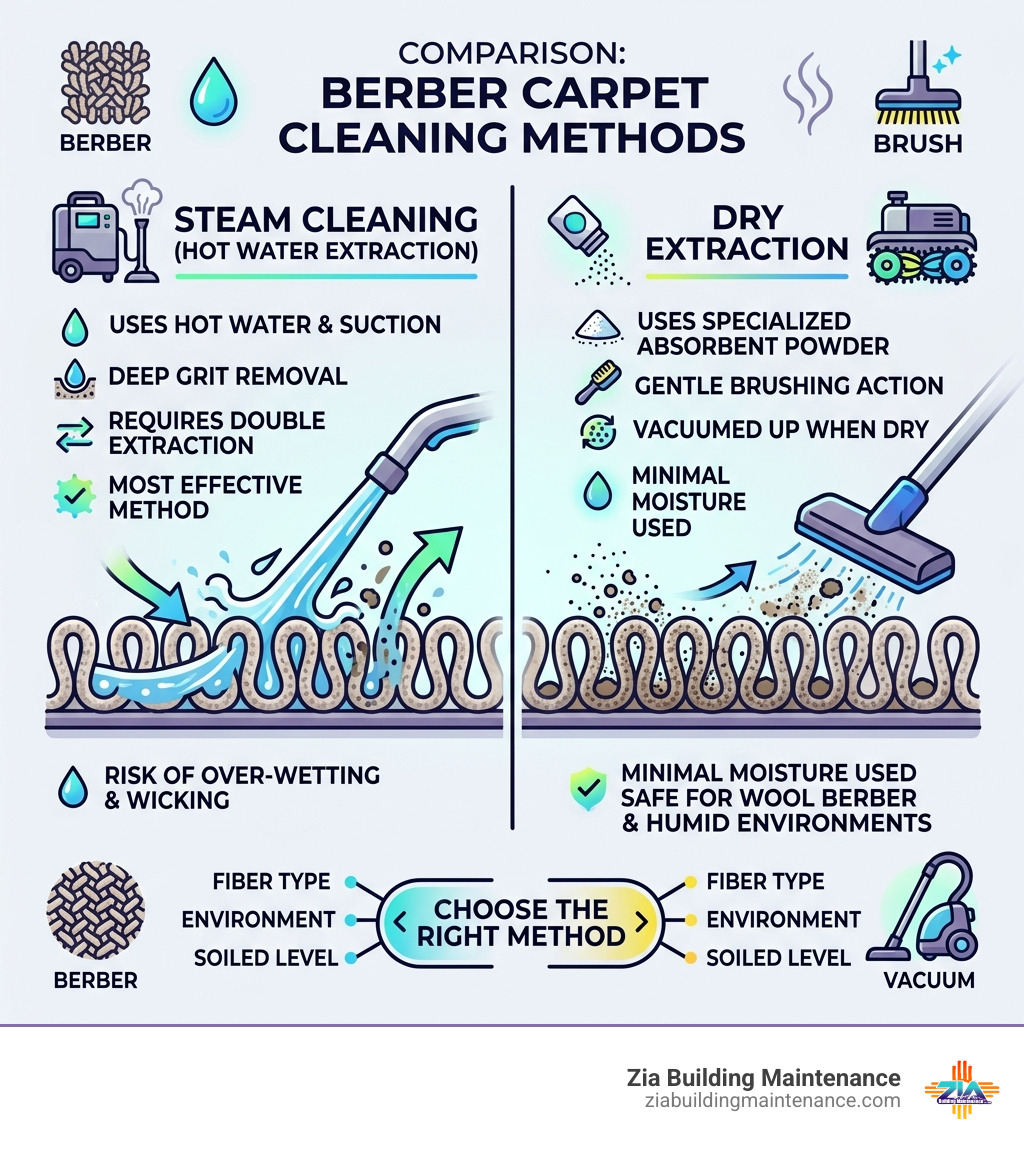
Steam Cleaning (Hot Water Extraction)
Is steam cleaning safe for Berber? Yes—if done correctly. It is the most effective way to remove deep-seated grit. However, you must use a “double extraction” method. This means for every pass you make with water, you make two or three “dry passes” with just suction to ensure every drop of moisture is removed.
Dry Extraction
For wool Berber or carpets in humid environments, dry cleaning is often safer. This involves spreading a specialized absorbent powder (like HOST) over the carpet, brushing it in gently with soft brushes, and then vacuuming it up. This avoids the risk of over-wetting and “wicking.”
The Risks of DIY Cleaning: Wicking and Mildew
We often see well-intentioned DIY efforts go wrong in Bernalillo. The two biggest risks are:
- Wicking: This is when a stain appears to be gone while the carpet is wet, but “travels” back up the fiber as it dries, reappearing a few days later. This happens because the deep part of the loop or the pad stayed wet.
- Mildew: Because Berber is so dense, if you use a home “Rug Doctor” and don’t extract the water properly, the carpet can stay damp for days. In the Albuquerque heat, this can lead to a musty smell and mold growth within 24 to 48 hours.
To avoid this, always use fans or air movers to ensure the carpet is bone-dry within 6 to 12 hours.
Repairing Snags and Furniture Dents
Berber is prone to two types of physical damage: snags and dents.
- Fixing Snags: If a loop pulls up, do not pull it. You will unravel the carpet like a sweater. Instead, take a pair of sharp scissors and carefully snip the loop level with the rest of the pile.
- Removing Dents: Heavy office furniture can leave deep “craters” in Berber. To fix this, place a damp (not soaking) white cloth over the dent. Use a hairdryer on medium heat or a steam iron (held an inch above the cloth, never touching the carpet) to warm the fibers. Then, gently “tease” the loops back up with the edge of a spoon.
When to Call a Professional
While DIY maintenance is great, there are times when you need a commercial carpet cleaning service.
You should call a pro if:
- The carpet hasn’t been deep cleaned in over 18 months.
- You are dealing with a large-scale flood or water damage.
- You have wool Berber (which is easily ruined by DIY chemicals).
- The “wicking” effect keeps bringing stains back to the surface.
- You want to maintain your manufacturer’s warranty, which often requires professional cleaning by IICRC-certified technicians.
At Zia Building Maintenance, we specialize in the specific needs of New Mexico businesses. Whether you’re managing a facility in Rio Rancho or a retail space in Bernalillo, we understand that “clean” isn’t just a look — it’s a standard of health and professionality.
Common Mistakes to Avoid
- Using Bleach: Never use bleach on Berber. It can weaken the fibers and cause permanent yellowing or “fading” spots.
- Over-Wetting: More water does not mean more clean. It just means more mildew risk.
- Scrubbing: We’ve said it before, and we’ll say it again: Blotting is your best friend; scrubbing is your enemy.
- Cheap Detergents: Avoid high-alkaline soaps that leave a sticky residue. That residue acts like a magnet for the Albuquerque dust.
Recommended Tools for Your Berber Toolkit
To keep your Berber in top shape, we recommend having these items on hand:
- Suction-only vacuum (or one with a bypass switch).
- White distilled vinegar.
- Baking soda.
- Clean, white cotton towels (colored towels can transfer dye to the carpet).
- A small fan to accelerate drying after spot treatments.
- Enzyme-based spotter for organic stains.
Check out our 3 tips for removing carpet stains for more professional secrets.
Final Thoughts on Berber Maintenance in Bernalillo
Cleaning Berber carpet doesn’t have to be a chore, but it does require respect for the unique “loop” architecture. By avoiding the beater bar, acting quickly on spills with a vinegar solution, and ensuring the carpet stays dry, you can enjoy the durability and style of Berber for decades.
For businesses in Albuquerque and the surrounding areas, keeping your workspace clean is a reflection of your brand. If your Berber is looking a little tired or you’ve got a stubborn stain that just won’t quit, we’re here to help.
Ready to restore your facility’s carpets? Contact Zia Building Maintenance for a professional commercial carpet cleaning quote today!
Frequently Asked Questions
How often should I deep clean my Berber? For residential homes, every 12-18 months. For high-traffic commercial spaces, we recommend a professional deep clean every 6 months to prevent grit from damaging the loops.
Can I use Oxiclean on Berber? Oxiclean can be used on synthetic (Nylon/Olefin) Berber if you follow the directions exactly and rinse thoroughly. However, never use it on wool, as the oxygen bleach can damage natural fibers.
Why does my Berber look fuzzy? This is usually “pilling” or “fuzzing” caused by using a vacuum with a beater bar or excessive scrubbing during spot cleaning. Unfortunately, this is structural damage and cannot be reversed, though careful trimming can improve the appearance.
How long does it take for Berber to dry? Because of its density, Berber takes longer than other carpets. With proper extraction and fans, it should dry in 6-12 hours. Without proper airflow, it can stay damp for over 24 hours, which is a major mold risk.