

TL;DR:
- Effective staff training in commercial cleaning improves safety compliance, staff retention, and equipment longevity. A blended approach combining on-the-job practice, mentoring, and formal instruction yields the best behavioral outcomes. Building training programs through frontline input and ongoing reviews fosters consistent, high-quality cleaning performance.
Most managers treat commercial cleaning as a background function. You hire staff, hand them a mop, and assume the work handles itself. That assumption is where productivity, safety records, and staff retention quietly fall apart. The role of staff training in commercial cleaning is far more significant than most facilities managers realize. Well-structured training directly affects compliance with health and safety regulations, the lifespan of expensive equipment, and whether your cleaning staff stays or walks out the door. This article gives you a clear, practical path for understanding what effective training looks like and how to build it.
Table of Contents
- Key Takeaways
- The role of staff training in commercial cleaning safety and compliance
- Designing training programs that build real skills
- Impact of training on efficiency, equipment, and staff motivation
- Practical steps for managers to build better training programs
- My perspective on what training actually changes
- How Zia Building Maintenance supports cleaning excellence
- FAQ
Key Takeaways
| Point | Details |
|---|---|
| Training drives retention | Companies that prioritize professional training report significantly higher staff retention rates than the industry average. |
| Safety training has measurable costs | Onsite and online safety training have distinct cost profiles; choosing wisely protects both staff and your budget. |
| Blended learning works best | Combining hands-on practice, mentoring, and e-learning produces better behavior change than any single method alone. |
| Equipment training protects your investment | Without proper handling instruction, new cleaning equipment underperforms and breaks down early. |
| Career pathways reduce turnover | Structured certification programs with clear advancement opportunities help resolve workforce shortages in the cleaning industry. |
The role of staff training in commercial cleaning safety and compliance
Commercial cleaning environments carry real physical hazards. Cleaning staff regularly handle caustic chemicals, operate heavy floor machines, work on wet surfaces, and manage biohazardous waste in facilities like medical offices and schools. Without structured instruction, these conditions become accident waiting to happen.
Training addresses each of these hazard categories directly:
- Chemical handling: Staff need to know which products require gloves, eye protection, or ventilation. Improper mixing of cleaning agents has caused serious injuries in commercial facilities.
- Slip and fall prevention: Wet floor signage, correct mopping techniques, and footwear standards are all trainable behaviors that reduce liability.
- Equipment operation: Riding floor scrubbers, pressure washers, and commercial vacuums each require specific operating procedures.
- Infection control: In medical and school settings, cross-contamination protocols are not optional. They are required by facility accreditation standards.
Regulations from OSHA and EPA require employers to provide documented safety training on hazardous chemicals under the Hazard Communication Standard (HazCom). Non-compliance carries fines, but more importantly, it exposes your staff and clients to preventable harm.
From a budget standpoint, the importance of training in cleaning does not have to be prohibitively expensive. Onsite safety training costs approximately $600 to $700 for groups of up to 12 staff, while online sessions run closer to $350 per session. For most facilities, online training handles foundational knowledge while onsite sessions cover practical skills that require physical demonstration.
Technology is also shifting how training works in the field. A March 2026 study found that AI-assisted supervision during hands-on training improved cleaning procedure adherence significantly. Voice-prompted feedback corrected technique errors in real time, which shortens the gap between instruction and correct behavior. For managers overseeing large teams, this kind of technology creates a scalable way to monitor competency without requiring a supervisor in every room.
Pro Tip: Keep a signed training log for every safety session. If an incident occurs and OSHA investigates, documented proof of training is your first line of defense.
Designing training programs that build real skills
A lot of training programs fail not because they lack content, but because they are built around what is convenient to deliver rather than what staff actually need. The importance of training in cleaning starts with an honest assessment of where your team’s skill and knowledge gaps actually exist.
Start by observing your staff during routine cleaning tasks. Are they correctly diluting chemical concentrates? Are they following color-coded cloth protocols to prevent cross-contamination? Are they inspecting equipment before use? These observations give you a concrete starting point that no generic manual can replicate. Training developed by frontline workers captures real challenges and edge cases that official manuals often miss entirely.
Once you know what gaps exist, build your learning objectives around specific job behaviors, not vague goals. “Staff will correctly dilute multi-surface disinfectant to the recommended ratio using the provided measuring tool” is a measurable objective. “Staff will understand chemical safety” is not.
Here is a practical framework for structuring your training delivery:
- On-the-job practice (70%): Assign new staff to shadow experienced cleaners in real facility conditions. This is where most real learning happens. The 70-20-10 learning rule confirms that 70% of skill development occurs through direct work experience.
- Mentoring and peer learning (20%): Pair staff with a designated mentor who reinforces correct procedures and answers questions without judgment. This is especially effective for staff who struggle with written or online content.
- Formal instruction (10%): Use e-learning modules, workshops, or classroom sessions to cover regulations, documentation, and technical knowledge that cannot be easily shown on the job.
This blended approach is not just theory. Varied training delivery combining practical, e-learning, and mentoring components consistently produces better learning outcomes than any single format.
Measuring whether training actually worked is where most programs fall short. Course completion rates tell you nothing useful. What you need to track is behavioral change: Are staff performing tasks correctly during unannounced spot checks? Have incident reports decreased? Tracking practical behavior changes and business results, rather than completion rates, is the standard that separates effective training from checkbox exercises.
Pro Tip: After every training session, give staff one specific task to practice and observe it within 48 hours. Immediate application dramatically improves knowledge retention.
Impact of training on efficiency, equipment, and staff motivation
The financial case for commercial cleaning training methods goes well beyond accident prevention. Well-trained staff work faster, make fewer mistakes, and take better care of equipment that can cost thousands of dollars to replace.
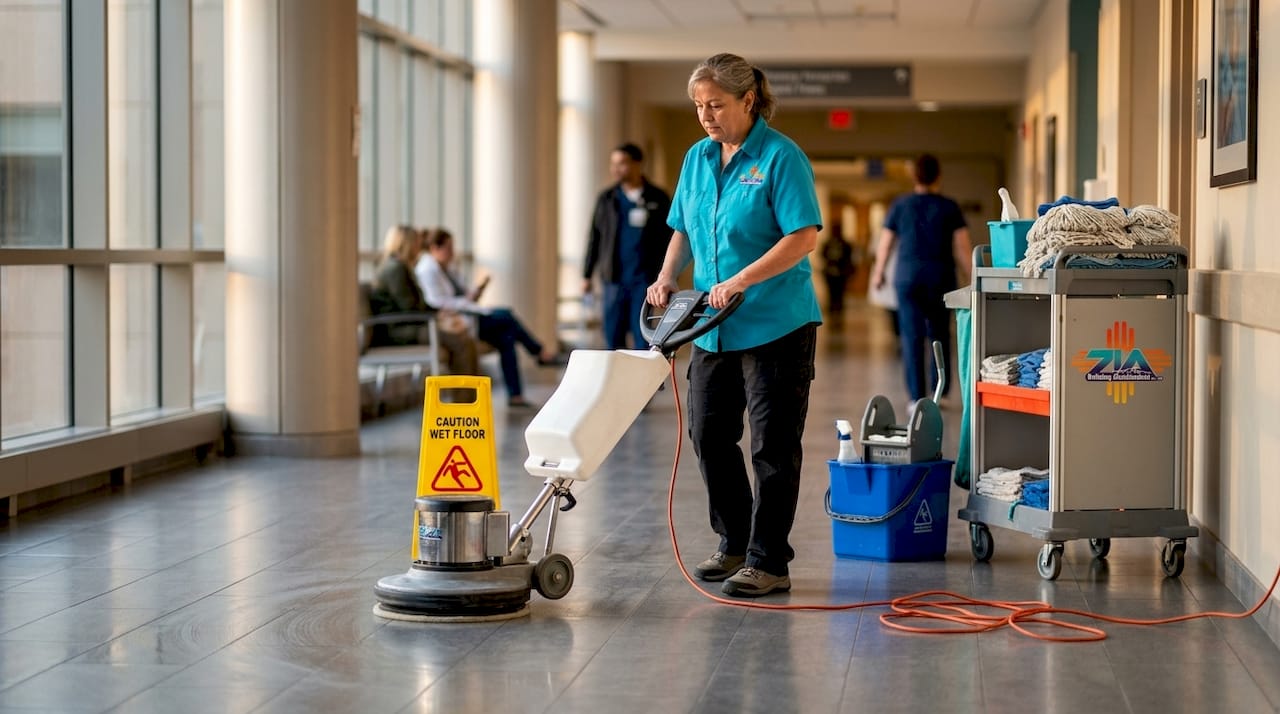
Consider what happens without proper equipment training. New cleaning equipment underperforms and breaks down early when staff misuse it. A commercial auto-scrubber that should last five to seven years may require costly repairs within the first year if operators do not know how to maintain squeegee blades, check battery levels, or handle the solution tank correctly. Proper handling instruction prevents that, and extends the return on your equipment investment considerably.
The broader operational picture looks like this:
| Without training | With structured training |
|---|---|
| High turnover, constant rehiring costs | 94% retention rate reported by companies prioritizing professional training |
| Equipment misuse and early breakdown | Longer equipment lifespan and lower repair costs |
| Inconsistent cleaning quality across locations | Standardized procedures producing reliable results |
| Low staff morale and disengagement | Professional identity and pride in skilled work |
The motivational dimension of effective training for cleaners often surprises managers. Cleaning staff who receive structured training and clear performance feedback stop viewing their role as temporary work. Training shifts staff mindset from routine chore to a valued profession, improving both confidence and career longevity. When people feel competent and recognized, they stay longer and perform better.
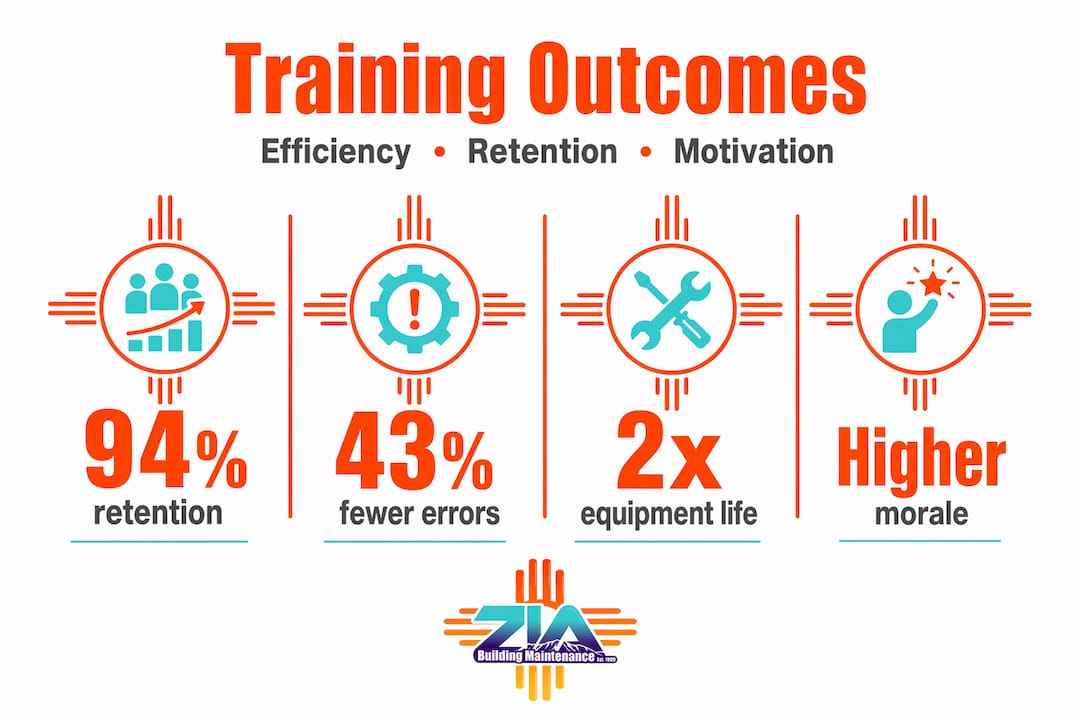
Career pathways amplify this effect. Multi-month certification programs with clear advancement from frontline roles to supervisory positions directly address the workforce crisis that plagues the janitorial industry. Staff who can see a defined path forward are far less likely to leave for a marginally better offer elsewhere. And the business case extends to leadership too. Companies investing in manager development see 218% higher income per employee and reduce voluntary turnover by 27%.
A well-trained cleaning team also has a direct effect on the workplaces they maintain. Research on office cleanliness and employee output confirms that consistently clean environments contribute to focus and productivity for the entire building population, not just the cleaning staff. Training is the mechanism that makes consistent results possible.
Practical steps for managers to build better training programs
You do not need a large training budget or a dedicated HR department to build an effective program. What you need is a structured approach and the discipline to follow through.
-
Audit your current gaps. Talk directly to your cleaning staff. Ask what tasks feel unclear, which procedures vary between workers, and where mistakes happen most often. Their answers will tell you more than any standardized assessment. Skills development in cleaning starts with honest conversations at the front line.
-
Choose your delivery model. Decide whether you will build modules in-house, contract a cleaning industry training provider, or use a blended approach. In-house development works well for facility-specific procedures. Industry providers are better for regulatory compliance topics like HazCom and bloodborne pathogen standards.
-
Schedule training in manageable blocks. Avoid marathon sessions. Two-hour blocks spaced across two to three weeks allow staff to practice between sessions and return with real questions. This pacing prevents overload and increases retention.
-
Assign accountability for follow-through. Designate a team lead or supervisor responsible for observing trained behaviors on the job. Training without follow-up observation reverts quickly to old habits.
-
Review and refresh regularly. Cleaning environments change. New products, new equipment, and new client requirements mean your training content needs periodic updates. Schedule a program review at least twice per year, and conduct short refresher sessions whenever procedures change.
For managers working through formal cleaning contracts, a cleaning contract checklist can help you identify training requirements that should be specified at the contract level, particularly for specialized environments like medical facilities.
Pro Tip: If you manage cleaning for multiple sites, create a simple one-page reference card summarizing the key procedures for each facility type. New staff can carry it during their first two weeks as a practical on-the-job guide.
My perspective on what training actually changes
I’ve spent years watching cleaning operations succeed and struggle, and the single variable that separates the two is almost never the equipment or the cleaning products. It’s how much the organization invests in the people doing the work.
What I’ve learned is that most managers underestimate how capable cleaning staff actually are when given proper instruction and genuine respect for their role. I’ve seen facilities cut turnover in half not by raising wages, but by introducing structured onboarding and monthly skill check-ins. Staff who previously seemed disengaged became the most consistent performers once they understood the “why” behind each procedure.
The mistake I see most often is designing training in a vacuum. Managers write manuals based on what they think happens on the floor, without ever asking the people who actually clean those floors what’s hard, what’s confusing, or what the unofficial workarounds are. That gap between designed procedure and actual practice is where accidents and inconsistency live.
My honest advice: build your training program with frontline input from day one. Ask your most experienced cleaner what they wish they had known in their first month. The answers will reshape your entire onboarding process. Then commit to investing in staff training as a recurring operating cost, not a one-time event. The retention numbers, the safety records, and the client feedback will follow.
— Ashley
How Zia Building Maintenance supports cleaning excellence
At Zia Building Maintenance, quality outcomes start with the people and systems behind every clean. Whether you manage an office building, a medical facility, or a school in the Albuquerque area, the difference between adequate and outstanding cleaning is a trained, consistent team that follows proven procedures.
If you are looking to strengthen your own commercial cleaning operations, the expert strategies for cleaning success resource covers industry-tested approaches for improving team performance and service quality. You can also review the commercial cleaning contract checklist to make sure training requirements are properly built into your service agreements. For managers ready to partner with a team that already brings those standards to the job, request an estimate from Zia Building Maintenance today.
FAQ
Why is staff training important in commercial cleaning?
Staff training directly affects safety compliance, cleaning consistency, and employee retention. Facilities with structured training programs report fewer accidents, lower turnover, and more reliable cleaning outcomes across all areas.
What are the best commercial cleaning training methods?
A blended approach works best. Combining on-the-job practice (70%), peer mentoring (20%), and formal instruction (10%) produces stronger behavior change than classroom-only or e-learning-only programs.
How does training affect cleaning staff retention?
Companies that prioritize professional training report a 94% retention rate compared to the 79% industry average. Staff who receive structured training and clear career pathways are significantly less likely to leave.
What should a commercial cleaning training program include?
A complete program covers chemical safety and handling, equipment operation and maintenance, infection control protocols, and facility-specific procedures. It should also include a documented observation component to verify that trained behaviors carry over to the job.
How do I measure whether cleaning training actually worked?
Track behavioral changes during spot checks, monitor incident and complaint reports, and review equipment maintenance costs over time. Course completion rates alone are not a reliable measure of training effectiveness.