

TL;DR:
- Cleaning is essential for workplace safety as it prevents slips, fires, equipment failures, and disease spread. A structured program with roles, schedules, and documentation reduces hazard risks effectively. Compliance hinges on OSHA standards, proper training, and ongoing hazard monitoring.
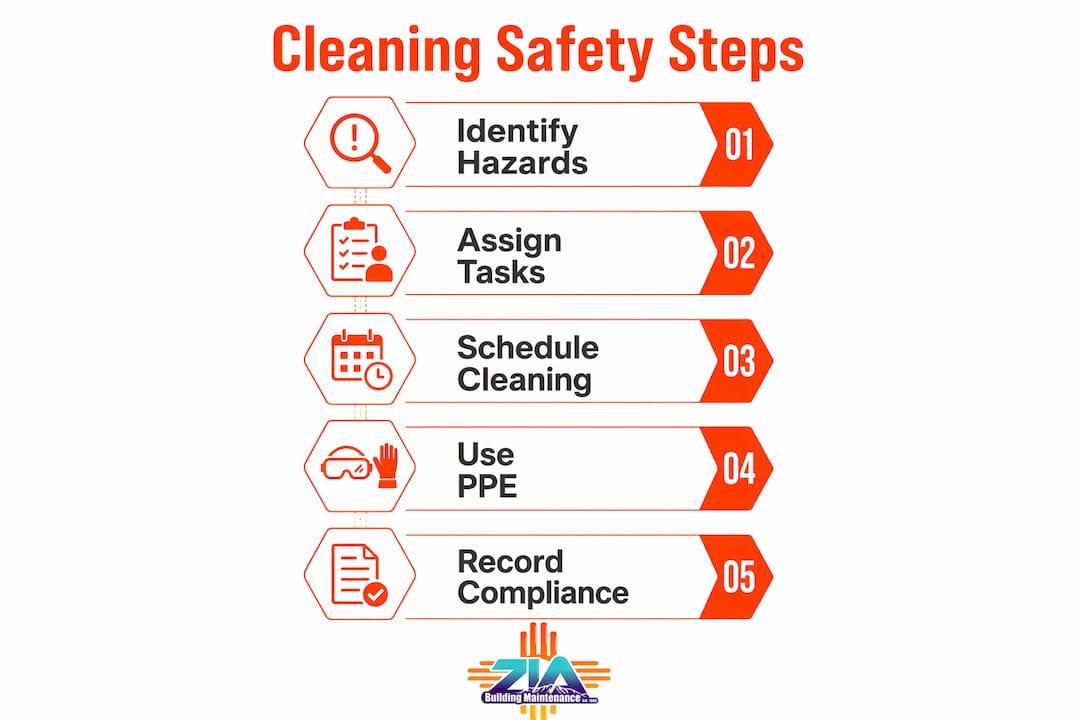
Cleaning is a primary control that prevents slips, fire risks, equipment failures, and disease transmission in the workplace. Under OSHA 29 CFR 1910.141, floors and passageways must be kept free of hazards, and the Hazard Communication standard 29 CFR 1910.1200 requires trained employees and accessible Safety Data Sheets (SDS) for every cleaning chemical on-site. A Job Hazard Analysis (JHA), as outlined in OSHA Publication 3071, is the recognized method for identifying where cleaning gaps create real risk.
Two actions you can take today:
- Assign responsibility now. Designate a named person for each high-risk zone (production floor, restrooms, emergency routes) and confirm SDS binders are accessible to all staff.
- Clear high-risk zones first. Walk aisles, exits, and electrical panels before the next shift starts. Remove debris, contain any spills, and flag floor damage for repair.
Table of Contents
- How does cleaning prevent major workplace hazards?
- What areas and tasks should every cleaning-for-safety program cover?
- What legal requirements and records must managers keep?
- How do you design a cleaning-for-safety program that actually works?
- How should managers handle cleaning chemicals and PPE safely?
- How do you measure whether your cleaning program is actually reducing risk?
- What red flags should managers watch for in their cleaning program?
- How a structured cleaning program reduced hazards: a Zia Building Maintenance example
- Key Takeaways
- Why cleaning deserves a seat at the safety table
- Zia Building Maintenance supports your safety goals directly
- Authoritative sources for further reading
- FAQ
How does cleaning prevent major workplace hazards?
The role of cleaning in workplace safety is most visible in four hazard categories: slips and falls, fire, equipment failure, and biological exposure. Each one has a direct, traceable link to specific cleaning tasks.
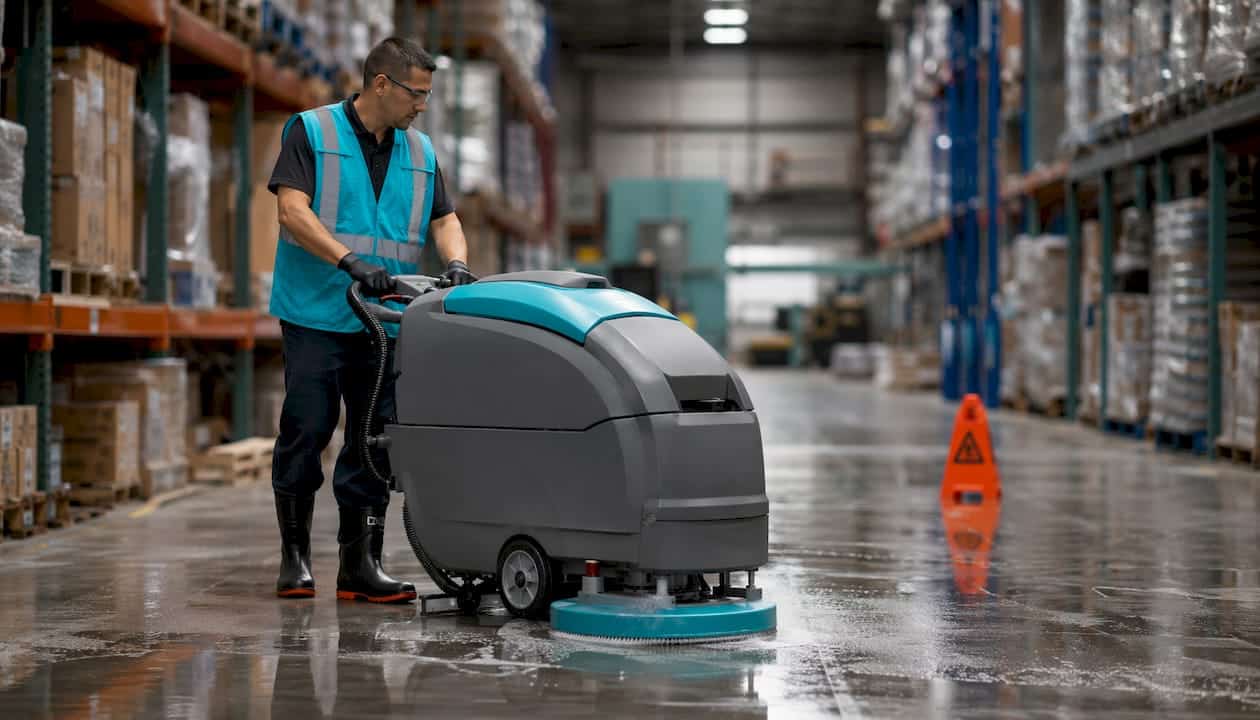
Slips, trips, and falls are the most common result of neglected floors. Spilled liquids, loose debris, and deteriorating floor surfaces all create conditions that lead to injuries. OSHA 29 CFR 1910.141 requires floors and passageways to be free of protruding nails, splinters, loose boards, and holes. Spill containment using drip pans and absorbents, combined with scheduled floor patrols, addresses the problem at the source rather than after the fact. For a practical breakdown of floor-level controls, the slip and fall prevention strategies guide covers matting choices and patrol schedules in detail.
Fire and electrical hazards depend heavily on housekeeping. Combustible dust accumulating near ignition sources, blocked fire extinguishers, and cluttered electrical panels are all cleaning failures. Good housekeeping keeps aisles clear, preserves emergency access, and reduces combustible materials near ignition sources. Storage must never block exits, fire equipment, eyewash stations, or sprinkler coverage.
Equipment malfunction follows the same logic. Dust and grease in machine vents restrict airflow and cause overheating. Conveyor buildup increases friction and wear. A scheduled wipe-down of vents, guards, and moving parts reduces both unplanned downtime and the fire risk that comes with overheated motors.
Biological hazards require consistent restroom sanitation, surface disinfection in break rooms, and controlled handling of waste. Mold, bacteria, and viruses spread fastest where moisture and organic material accumulate unchecked. The OSHA cleaning industry overview confirms that cleaning staff themselves face hazards from chemicals, equipment, and physical environments, which means the program must protect workers doing the cleaning as much as it protects everyone else.
Three quick scenarios that illustrate the task-to-outcome link:
- An oil drip on a production floor, contained with a drip pan and wiped daily, prevents both a slip injury and a machine stoppage from oil contamination.
- Weekly duct and hood cleaning in a woodworking shop removes combustible sawdust before it reaches ignition-level concentrations.
- Daily restroom disinfection in a shared office building limits surface transmission of respiratory viruses during peak illness seasons.
What areas and tasks should every cleaning-for-safety program cover?
Priority zones are not equal. Some areas carry immediate life-safety consequences if neglected; others affect health over time. Sequence your program accordingly.
Highest-priority zones (address first):
- Walking surfaces and main aisles
- Emergency exits and evacuation routes
- Electrical panels and equipment rooms
- Restrooms and handwashing stations
- Break rooms and food-prep areas
- Production lines and conveyor systems
- Ventilation ducts, hoods, and filters
- Storage areas under sprinkler heads
Industrial vacuuming with HEPA-rated equipment and dampening compounds reduces airborne dust that damages both workers’ lungs and sensitive machinery. For healthcare and food-prep zones, disinfection protocols replace general cleaning as the baseline standard. Healthcare-specific training requirements are covered in the janitorial training for healthcare guide.
| Task | Frequency | Responsible Role |
|---|---|---|
| Spill patrol and containment | Every shift | Floor supervisor / assigned staff |
| Restroom disinfection | Daily | Janitorial staff |
| Break room wipe-down | Daily | Janitorial staff |
| Floor scrubbing (hard surfaces) | Weekly | Janitorial staff |
| Vent and hood dusting | Monthly | Facilities / contracted cleaner |
| Sprinkler clearance check | Monthly | Safety officer |
| Deep floor stripping and refinishing | Quarterly | Contracted floor care specialist |
| Full duct cleaning | Annually | Contracted HVAC/janitorial team |
What legal requirements and records must managers keep?
Compliance starts with two OSHA standards that directly govern cleaning programs.
OSHA 29 CFR 1910.141 sets the sanitation baseline: workplaces must be kept clean to the extent the work allows, and floors and passageways must be free of hazards. This standard covers drainage, waste receptacles, and lavatory maintenance. It is the foundation for any documented housekeeping policy.
OSHA 29 CFR 1910.1200 (HazCom) requires that employees receive training on cleaning chemical hazards before they use those products, and that SDS documents are accessible for every hazardous product on-site. A JHA, per OSHA Publication 3071, must identify chemical hazards, confined-space risks, and equipment operation hazards specific to cleaning roles.
Compliance record: Every cleaning-related incident, near-miss, or inspection finding should be documented with a date, corrective action, and responsible party. Regulators look for evidence that hazards were identified, addressed, and tracked over time — not just that a policy exists on paper.
Document checklist for your safety file:
- SDS binder or digital SDS access system, updated when products change
- Employee training logs with dates, topics covered, and signatures
- Cleaning schedules with completion sign-offs
- Inspection records with corrective action notes and close-out dates
- JHA documentation for cleaning roles, especially chemical handling and confined spaces
- Incident and near-miss reports linked to housekeeping conditions
How do you design a cleaning-for-safety program that actually works?
A written policy is the starting point, but the program lives or dies on scheduling and role clarity. Housekeeping integrated into the workday is far more effective than end-of-shift panic cleanups, which allow hazardous accumulations to build for hours.
Sample policy outline:
- Purpose: Prevent injuries, illness, and property damage through scheduled, documented cleaning.
- Scope: All work areas, including production floors, offices, restrooms, storage, and emergency routes.
- Responsibilities: Defined by role (see table below).
- Enforcement: Supervisors conduct daily visual checks; safety officer conducts formal monthly audits.
| Role | Core Responsibility | Frequency |
|---|---|---|
| Facility/safety manager | Approve schedules, review audit results, authorize corrective actions | Monthly audit minimum |
| Supervisor | Daily visual inspection of assigned zones, spill reporting | Every shift |
| In-house cleaning staff | Execute scheduled tasks, report hazards immediately | Per schedule |
| Contracted cleaners | Perform specialized tasks (floor care, duct cleaning) per contract specs | Per contract |
| Safety officer | Conduct formal audits, maintain compliance records, update JHA | Monthly / after incidents |
Inspection checklist template (minimum fields):
- Zone inspected and date
- Inspector name and signature
- Hazards observed (yes/no with description)
- Corrective action required
- Assigned responsible party
- Due date and close-out confirmation
Pro Tip: Schedule spill patrols and aisle checks during shift transitions, not only at shift end. Hazards accumulate fastest during peak production hours, and a mid-shift walk takes less than five minutes.
The commercial cleaning contract checklist is a practical reference when specifying safety deliverables for contracted providers. For a clear breakdown of service models, the office cleaning versus janitorial service guide helps managers decide what to keep in-house and what to contract out.
How should managers handle cleaning chemicals and PPE safely?
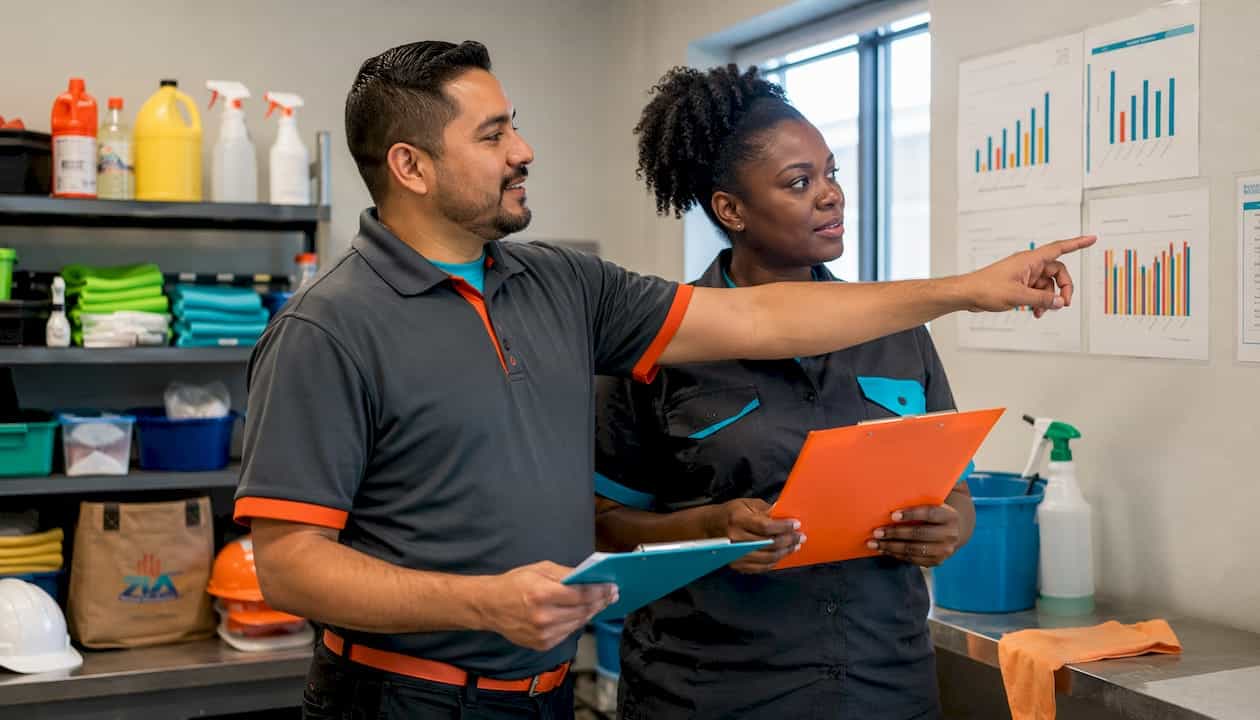
Cleaning chemicals can cause respiratory problems, skin conditions, and eye injuries. OSHA requires training before use and accessible SDS for every product. The JHA for cleaning roles should identify each chemical’s exposure type and match it to the correct control.
HazCom requirement: Under 29 CFR 1910.1200, no employee may use a hazardous cleaning product without prior training on its hazards, safe handling, and emergency response. SDS access must be immediate — not locked in an office or stored on a system workers cannot reach during a shift.
PPE selection by exposure type:
- General surface cleaners (neutral pH): Nitrile gloves, safety glasses
- Disinfectants and sanitizers (quaternary ammonium, bleach-based): Chemical-resistant gloves, eye protection, and ventilation
- Degreasers and solvent-based products: Solvent-resistant gloves, face shield, and local exhaust ventilation
- Acid or caustic cleaners: Heavy-duty chemical-resistant gloves, face shield, apron, and forced ventilation
Chemical storage rules:
- Segregate acids from bases and oxidizers in separate, labeled cabinets.
- Use secondary containment trays under liquid containers.
- Store only the quantity needed for current operations.
- Never mix bleach-based products with ammonia or acid-based cleaners. Chlorine gas is corrosive to the eyes, skin, and respiratory tract.
- Label every container, including diluted working solutions.
Ventilation and engineering controls are the first line of defense where cleaning generates mists, vapors, or dust. HEPA vacuums and microfiber systems reduce the need for chemical sprays in many settings, cutting both exposure and cost. For a detailed look at commercial cleaning methods that reduce chemical reliance, that resource covers microfiber, HEPA, and low-chemical approaches by surface type.
How do you measure whether your cleaning program is actually reducing risk?
Measurement turns a cleaning schedule into a safety program. Without tracked data, managers cannot prove the program works or justify the resources it requires.
Practical KPIs to track:
- Spill reports closed within target response time (e.g., within 30 minutes of report)
- Slip, trip, and fall incident rate per quarter
- Inspection pass rate by zone
- SDS training completion rate for all cleaning-role employees
- Average time from hazard identification to corrective action close-out
| Audit Element | What to Record | Frequency |
|---|---|---|
| Zone condition | Photo evidence, pass/fail rating | Monthly |
| Corrective actions | Owner, due date, close-out date | Per finding |
| Training records | Employee name, date, topic, trainer | After each session |
| Incident linkage | Whether incident location had a recent inspection finding | After each incident |
Trend data tells you where to increase frequency. If slip incidents cluster in one zone across three consecutive quarters, that zone needs more frequent patrols or a floor surface upgrade, not just a reminder memo. Mobile inspection forms with photo capture make this data easy to collect and share with leadership.
What red flags should managers watch for in their cleaning program?
Most cleaning-related safety failures are visible before an incident occurs. The warning signs are consistent.
Red-flag checklist:
- Exits or aisles blocked by equipment, waste, or stored materials
- Missing or inaccessible SDS for any product currently in use
- Floor patrols skipped during peak production hours
- Cleaning tools stored improperly (mops left wet, chemicals stored near ignition sources)
- Cleaning chemicals mixed without reading SDS or without PPE
- Temporary or new staff performing cleaning tasks without documented training
Quick remediation steps:
- Blocked exits: clear immediately and photograph before and after; log the corrective action.
- Missing SDS: pull the product from use until the SDS is obtained and accessible.
- Untrained staff: halt chemical use and schedule training before the next shift.
- Improper chemical storage: relocate to compliant cabinets and label within 24 hours.
When floor damage, persistent moisture, or ventilation failures appear, escalate to maintenance or a qualified contractor. These are engineering problems that cleaning alone cannot fix, and continuing to clean around them without repair creates ongoing liability.
How a structured cleaning program reduced hazards: a Zia Building Maintenance example
A recurring challenge in commercial facilities is the gap between a written cleaning policy and consistent execution. Floors get mopped at shift end but not patrolled mid-shift. SDS binders exist but are stored where workers cannot reach them during an emergency. Temporary staff handle chemicals without documented training.
Zia Building Maintenance addresses this gap through tailored janitorial programs built around scheduled floor patrols, targeted high-risk zone cleaning, SDS management support, and role-specific training. For offices, medical facilities, and schools in Albuquerque, the approach integrates cleaning tasks into the workday rather than treating them as an after-hours afterthought. The result is fewer hazard accumulations, cleaner emergency routes, and documented compliance records that hold up during inspections.
Replicable checklist from this approach:
- Assign a named person to each high-risk zone with a written schedule.
- Conduct spill patrols at every shift transition, not just at day’s end.
- Confirm SDS access is immediate and that all cleaning staff have signed training logs.
- Photograph corrective actions and log close-out dates.
- Review incident data quarterly and adjust patrol frequency where incidents cluster.
Pro Tip: Integrating cleaning tasks into production workflows, rather than scheduling them only after shifts end, prevents the hazardous accumulations that cause most slip and equipment incidents. Zia Building Maintenance’s scheduling model is built on this principle.
Key Takeaways
Cleaning prevents the most frequent and costly workplace hazards when it is scheduled, assigned, documented, and integrated into the workday rather than treated as an afterthought.
| Point | Details |
|---|---|
| Cleaning prevents four major hazard types | Slips/falls, fires, equipment failure, and biological exposure all trace directly to cleaning gaps. |
| OSHA compliance requires documentation | Maintain SDS access, training logs, inspection records, and JHA notes for every cleaning role. |
| Integrate cleaning into shifts | Mid-shift spill patrols and aisle checks prevent hazard accumulation far better than end-of-shift cleanups. |
| Measure with specific KPIs | Track spill response time, incident rate by zone, inspection pass rate, and training completion. |
| Zia Building Maintenance | Provides tailored janitorial programs for Albuquerque facilities, with scheduled patrols, SDS management, and compliance documentation. |
Why cleaning deserves a seat at the safety table
The conventional wisdom treats cleaning as a support function, something that happens after the real work is done. That framing is wrong, and it costs facilities money. Every slip incident, every equipment stoppage from dust buildup, every OSHA citation for a blocked exit or missing SDS is a cleaning failure that was preventable. The evidence from OSHA’s own standards and CCOHS housekeeping guidance is consistent: cleaning is not maintenance. It is hazard control.
What managers often underestimate is how much the timing of cleaning matters. A spill patrol at 2:00 PM catches a hazard before the 3:00 PM shift change. An end-of-shift mop at 5:00 PM does not. The same task, scheduled differently, produces a completely different safety outcome. Partnering with a qualified provider like Zia Building Maintenance, or building internal competency through documented training and role assignments, closes the gap between a policy that looks good on paper and a program that actually protects people.
Zia Building Maintenance supports your safety goals directly
Facilities managers who need a reliable partner for safety-focused cleaning have a straightforward option in Albuquerque. Zia Building Maintenance has delivered tailored janitorial and commercial cleaning programs since 1989, earning recognition as the #1 office cleaning service in South Valley for 2025. The services that directly support your safety program include scheduled floor patrols, restroom and break room sanitation, high-risk zone cleaning, SDS management support, and emergency spill response.
For healthcare facilities, the medical office cleaning program addresses compliance-specific protocols that general janitorial services often miss. For offices and commercial spaces, professional office cleaning in Albuquerque covers everything from daily floor patrols to detailed floor care on a schedule built around your operations. Contact Zia Building Maintenance to request a safety-focused site assessment and discuss a cleaning plan matched to your facility’s risk profile.
Authoritative sources for further reading
- OSHA 29 CFR 1910.141 — Sanitation: The baseline legal standard for workplace cleanliness, floor conditions, drainage, and lavatory maintenance in general industry.
- OSHA 29 CFR 1910.1200 — Hazard Communication: Governs SDS requirements, chemical labeling, and employee training for all hazardous cleaning products.
- OSHA Publication 3071 — Job Hazard Analysis: The standard guide for identifying and documenting cleaning-related hazards, including chemical exposures and confined spaces.
- OSHA Publication 3512 — Protecting Workers Who Use Cleaning Chemicals: Practical guidance on SDS review, PPE selection, and pre-use training for cleaning staff.
- OSHA Cleaning Industry Standards and Safety Programs: Covers management accountability, hazard analysis, and employee training as program foundations.
- CCOHS Workplace Housekeeping: Detailed guidance on aisle clearance, storage rules, dust control, and integrating housekeeping into daily operations.
This article provides general safety and compliance information. Confirm current regulatory requirements with OSHA, your state plan agency, or a qualified safety professional for your specific facility.
FAQ
What is the role of cleaning in workplace safety?
Cleaning removes the physical conditions that cause the most common workplace injuries: spills that cause slips, debris that causes trips, combustible dust that causes fires, and contaminated surfaces that spread illness. OSHA 29 CFR 1910.141 requires workplaces to be kept clean and floors free of hazards as a baseline legal obligation.
What are the five principles of cleaning?
Definitions vary by source, but a widely applied framework covers: preparation (remove loose debris first), cleaning (remove dirt and organic matter with detergent and water), disinfection (apply a disinfectant where required), rinsing (remove chemical residue), and drying (prevent moisture buildup that supports mold and slip hazards).
What are the core safety rules when using cleaning chemicals?
Read the SDS before use, wear the PPE specified for that product, never mix bleach-based cleaners with ammonia or acid-based products, store chemicals in labeled secondary-containment cabinets, and confirm ventilation is adequate before applying any product that generates mists or vapors. OSHA 29 CFR 1910.1200 requires documented training before any employee handles a hazardous cleaning chemical.
How often should high-risk areas be cleaned?
High-risk zones such as production floors, restrooms, and emergency routes require at minimum daily cleaning and mid-shift spill patrols. Vents, hoods, and storage areas under sprinklers should be checked monthly. Zia Building Maintenance builds facility-specific schedules that match cleaning frequency to actual risk levels in each zone.
What records must managers keep for a cleaning compliance program?
Managers must maintain SDS access records, employee training logs with dates and signatures, cleaning schedules with completion sign-offs, inspection records with corrective action notes, and JHA documentation for cleaning roles. These records are the primary evidence an OSHA inspector will request during a facility review.