TL;DR:
- Nightly retail cleaning prepares stores for the next day through thorough sanitation after hours. It involves tasks like floor care, restroom sanitation, and high-touch surface disinfection to maintain cleanliness and safety. This service is essential for high-traffic stores and requires secure, detailed management of access and protocols.
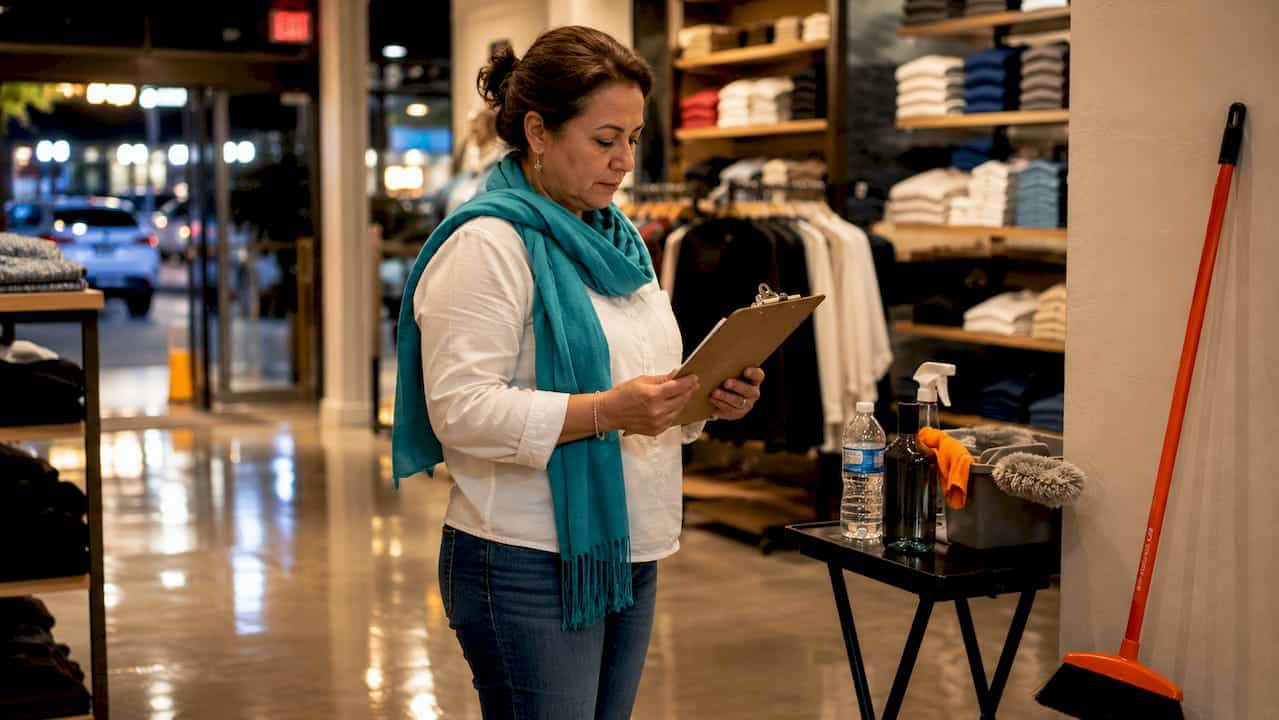
A nightly retail cleaning service is a specialized after-hours janitorial program designed to prepare customer-facing retail spaces for the next business day through thorough sanitation and maintenance. The industry term for this work is “after-hours commercial cleaning,” though retail managers commonly call it a night cleaning shift service. Providers like Jani-King and Supreme Office Cleaning have built entire service lines around this model because retail environments demand a different standard than offices or warehouses. Your store’s floors, restrooms, glass, and high-touch surfaces all need attention that simply cannot happen while shoppers are present. This guide gives you the full picture, from what gets cleaned to how to pick the right provider.
What is nightly retail cleaning service and what does it include?
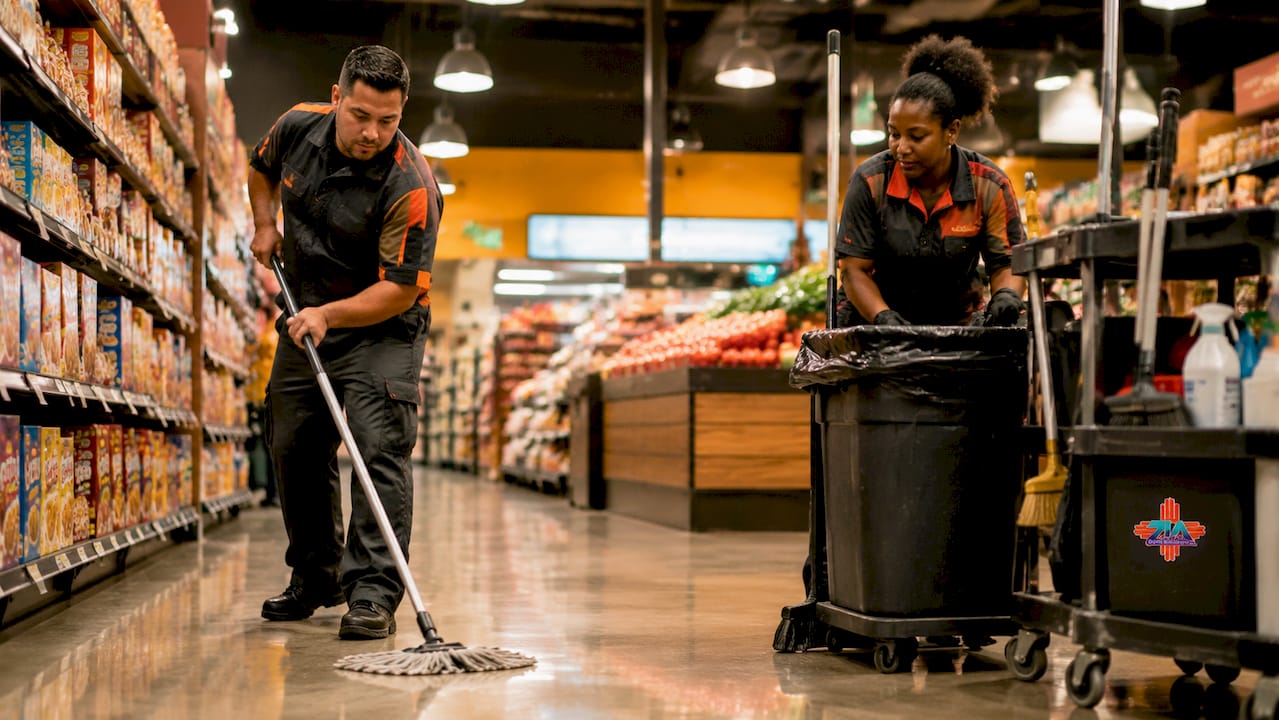
A nightly retail cleaning service is performed after store closing and concludes before morning staff arrive, typically spanning 1.5–4 hours depending on store size. The goal is a spotless, sanitized environment that reflects well on your brand the moment the first customer walks in. This is not the same as a quick tidy. The scope is far more thorough than anything a daytime porter handles between customer interactions.
Retail cleaning requires a different approach than general janitorial or office cleaning because of customer-facing pressures and the need for scheduling flexibility that adjusts with seasonal foot traffic. A grocery store in december needs a different cleaning intensity than the same store in february. That context shapes every decision about scope, frequency, and staffing.
What tasks does nightly retail cleaning typically include?
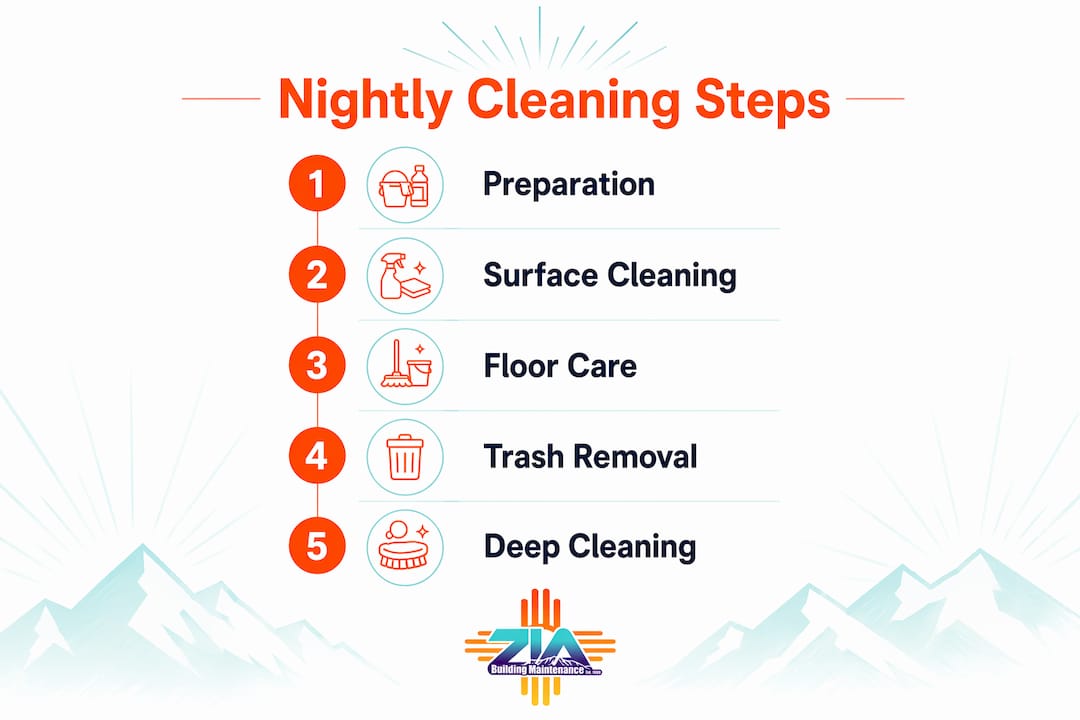
Typical night cleaning tasks cover vacuuming, mopping, deep restroom cleaning, dusting, sanitizing, trash removal, and restocking supplies. Each task serves a specific purpose in keeping your store safe and presentable.
Here is a breakdown of what a complete nightly service covers:
- Floor care: Vacuuming carpeted areas, damp mopping hard floors, and spot-treating stains. High-traffic entry zones get extra attention because grit and moisture degrade floor finishes quickly.
- Restroom deep sanitization: Scrubbing toilets, sinks, and floors, disinfecting all surfaces, and restocking paper products and soap. Restrooms are the single biggest driver of negative customer impressions.
- Trash and recycling removal: Emptying all bins, replacing liners, and transporting waste to designated collection points.
- Glass and mirror cleaning: Wiping down storefront glass, interior mirrors, and display case panels. Smudged glass signals neglect to shoppers before they even enter a department.
- Dusting fixtures and displays: Clearing dust from shelving, signage, and product displays. Dust accumulates fast in retail environments with high air circulation.
- High-touch surface disinfection: Sanitizing door handles, checkout counters, PIN pads, cart handles, and light switches. These surfaces carry the highest pathogen load in any retail space.
Periodic deep cleaning tasks rotate on a 3–6 month schedule and include floor stripping and re-sealing, carpet extraction, and grout cleaning. These are not nightly tasks, but they belong in your service contract. Skipping them shortens the life of your floors and fixtures significantly.
Pro Tip: Ask your provider to separate routine nightly tasks from periodic deep cleaning in the contract. This makes it easier to track what was done and when, and prevents disputes over scope.
How often should you schedule nightly cleaning by store type?
Cleaning frequency is the most misunderstood variable in retail janitorial planning. Scheduling too few nights increases restoration costs, while scheduling too many causes unnecessary operational interference and budget waste. The right frequency depends on foot traffic, store type, and the surfaces you are protecting.
| Store type | Recommended frequency | Monthly cost range (2,000–5,000 sq ft) |
|---|---|---|
| Grocery / big-box retail | 6–7 nights per week | Higher end of market rates |
| Apparel / beauty / specialty | 3–5 nights per week | $1,400–$3,200 per month |
| Low-traffic boutique / showroom | 2–3 nights per week | Lower end of market rates |
Grocery and big-box stores generate the most foot traffic and the most debris, spills, and restroom use. They need nightly service every day the store operates. Apparel and beauty retailers see moderate traffic and can often run a 4-night schedule without visible degradation. Low-traffic boutiques and showrooms can maintain a clean appearance on 2–3 nights per week, provided periodic deep cleans stay on schedule.
Pricing should reflect foot traffic and cleaning intensity, not just square footage. A 3,000 sq ft grocery store costs more to clean than a 3,000 sq ft furniture showroom because the grocery store generates far more mess per square foot. Managers who negotiate purely on space often end up underfunded and undercleaned.
Pro Tip: Request a site walkthrough before signing any contract. A walkthrough lets the provider match scope and frequency to your actual operations, not just your floor plan.
For more guidance on setting the right schedule, Zia Building Maintenance has a detailed resource on cleaning frequency by facility type that applies directly to retail environments.
Why is nightly cleaning better than daytime cleaning for retail?
Overnight cleaning allows detailed work without customer or staff interruptions, which directly improves cleaning thoroughness and store readiness. Daytime cleaning is reactive. A porter wipes a spill or empties a trash can, but cannot mop an entire floor section or deep-clean a restroom while shoppers are present. Nightly cleaning is proactive and complete.
The practical advantages of a night cleaning shift service include:
- No disruption to the shopping experience: Wet floor signs, vacuum noise, and cleaning carts all reduce customer comfort and dwell time.
- Full access to every surface: Crews can move merchandise, clean under fixtures, and address areas that are blocked during business hours.
- Deeper cleaning results: Without time pressure from customers, crews can let disinfectants dwell for the required contact time, which actually kills pathogens rather than just spreading them around.
- Consistent store readiness: Every morning, your team walks into a clean, stocked, and sanitized space. That consistency builds staff morale and sets a professional standard.
Security is the factor most managers underestimate when switching to after-hours cleaning. Reliable overnight providers must have verified lock-up, alarm management, and access control systems to protect your inventory and premises. This is not a minor operational detail. It is the foundation of the entire after-hours relationship.
“Transparent communication and documented site procedures build trust and improve service quality with overnight cleaning partners.” — Allied Facility Care
Retail managers who treat security as an afterthought often discover the problem only after an incident. Vetting a provider’s security protocols before signing is not optional.
How to choose and manage a nightly retail cleaning service
Selecting the right provider takes more than comparing price quotes. The retail store cleaning routine you establish with a provider will directly affect your store’s appearance, safety record, and operating costs for years.
Follow this process when evaluating cleaning companies:
- Verify insurance coverage. Cleaning companies should carry general liability insurance of $2 million or more. This protects you against property damage and theft claims. Ask for a certificate of insurance before any discussion of pricing.
- Check references from retail clients specifically. Office cleaning and retail cleaning are different disciplines. A provider with strong office references may not understand the demands of a high-traffic retail floor.
- Review security protocols in writing. Ask how the provider manages alarm codes, key distribution, and crew verification. Documented procedures signal a professional operation. Vague answers signal risk.
- Request a detailed scope of work. Every task, every surface, and every frequency should appear in the contract. Ambiguity in scope leads to disputes and inconsistent results.
- Build in a quality review period. Schedule a 30-day check-in after service begins. Walk the store with your provider and document any gaps. Early correction prevents long-term problems.
Security protocols including alarm code management, key tracking, and crew verification are non-obvious contract requirements that most managers miss on the first pass. Add them explicitly. A provider who resists putting these in writing is not the right partner for after-hours access to your store.
Pro Tip: Tie your cleaning schedule to your sales calendar. Increase frequency in the weeks before major sales events and reduce it during slow seasons. This keeps costs aligned with actual cleaning demand.
You can also review Zia Building Maintenance’s commercial cleaning contract checklist to make sure nothing gets missed before you sign.
Key Takeaways
A nightly retail cleaning service is the most effective way to maintain a safe, presentable store because it delivers thorough sanitation without disrupting customers or staff.
| Point | Details |
|---|---|
| Core definition | Nightly retail cleaning is an after-hours janitorial program covering floors, restrooms, glass, and high-touch surfaces. |
| Frequency by store type | High-volume stores need 6–7 nights per week; specialty stores need 3–5; low-traffic boutiques need 2–3. |
| Security is non-negotiable | Verify alarm management, key tracking, and crew verification before signing any after-hours cleaning contract. |
| Price by traffic, not space | Cleaning costs should reflect foot traffic intensity, not just square footage, to avoid undercleaning. |
| Site walkthrough first | Always conduct a walkthrough before contracting to match scope and frequency to real store operations. |
What I have learned from years of watching retail cleaning go wrong
The most common mistake retail managers make is treating nightly cleaning as a commodity purchase. They collect three quotes, pick the lowest number, and sign a contract without reading the scope of work. Six months later, the grout is stained, the floor finish is dull, and the restrooms smell. The provider did exactly what the contract said. The problem was the contract.
Security is the second blind spot. I have seen store managers hand over alarm codes on a sticky note with no documentation, no crew verification, and no written protocol. That is not a cleaning problem. That is a liability problem waiting to happen. The best providers treat security as seriously as cleaning quality, and they will show you their procedures without being asked.
The retailers who get this right share one habit: they treat their cleaning provider as a partner, not a vendor. They do walkthroughs. They give feedback. They adjust frequency when foot traffic changes. That relationship produces consistent results because the provider understands the store’s actual needs, not just its square footage.
Affordable nightly cleaning does not mean cheap nightly cleaning. The right price is the one that matches your traffic, your surfaces, and your standards. Paying less than that costs more in the long run.
— Ashley
Zia Building Maintenance: professional nightly cleaning for retail stores
Zia Building Maintenance has served commercial clients in Albuquerque since 1989, earning the title of the #1 office cleaning service in South Valley for 2025. The team brings that same standard to retail environments, with trained crews, documented security protocols, and cleaning plans built around your store’s actual foot traffic and schedule.
Whether you manage a single boutique or a multi-location retail operation, Zia Building Maintenance offers professional retail cleaning solutions tailored to your hours, surfaces, and budget. The process starts with a site walkthrough so the scope matches your real needs. Contact Zia Building Maintenance today to request a customized estimate and see what consistent, professional nightly cleaning looks like in practice.
FAQ
What is a nightly retail cleaning service?
A nightly retail cleaning service is an after-hours janitorial program that cleans and sanitizes a retail store after closing so it is ready for customers the next morning. Typical tasks include floor care, restroom sanitization, trash removal, glass cleaning, and high-touch surface disinfection.
How long does a nightly retail cleaning shift take?
Professional cleaning windows typically span 1.5–4 hours, starting immediately after store closing and finishing before morning staff arrive. Larger stores with more square footage and higher traffic require longer shifts.
How much does nightly retail cleaning cost?
Pricing varies by store type and traffic intensity. A 2,000–5,000 sq ft specialty store typically runs $1,400–$3,200 per month. High-volume stores like grocery or big-box retailers cost more because of greater cleaning intensity.
What security measures should a nightly cleaning provider have?
Providers should carry general liability insurance of $2 million or more and have written protocols for alarm code management, key tracking, and crew verification. Always request these in writing before granting after-hours access.
How is nightly retail cleaning different from daytime cleaning?
Overnight cleaning allows crews to perform detailed, uninterrupted work across every surface without disrupting shoppers or staff. Daytime cleaning is reactive and limited in scope because customers are present. Nightly service produces consistently deeper results.