
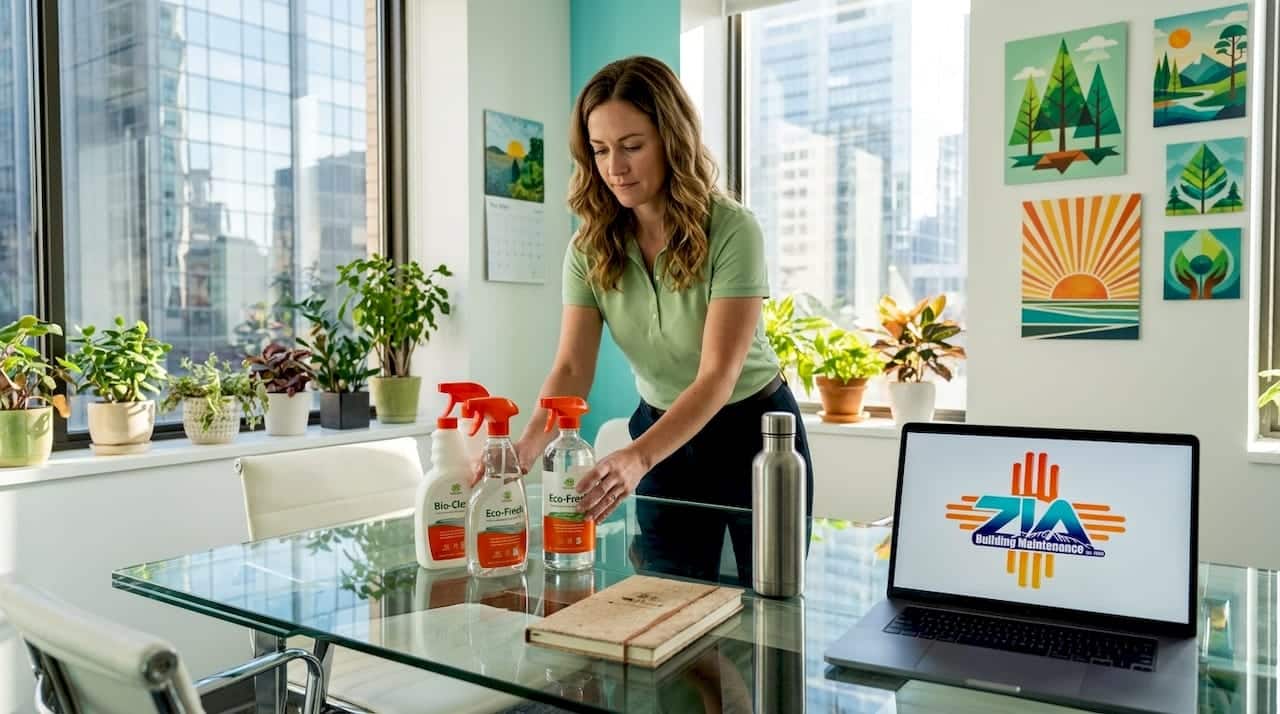
TL;DR:
- Green office cleaning products certified by EPA Safer Choice and DfE meet strict safety and environmental standards, reducing health risks and ecological impact. Using verified concentrated formulas and separating cleaners from disinfectants ensures sustainable, effective hygiene without greenwashing. Regular staff training and product audits are essential to maintain a genuine, highly effective green cleaning program.
Green cleaning products for offices are specialized formulations certified to minimize health risks and environmental impact while maintaining effective cleaning performance. The EPA defines these products through two primary certification labels: Safer Choice for general cleaners and Design for the Environment (DfE) for antimicrobial products. Both labels confirm that every ingredient meets stringent standards for human health and environmental safety. This guide covers the top certified products, key categories including multipurpose cleaners, disinfectants, and biodegradable wipes, and practical selection criteria to help office managers build a genuinely sustainable cleaning program without falling for misleading marketing.
1. What certifications verify truly green cleaning products for offices?
The EPA’s Safer Choice and DfE labels are the most credible markers for identifying genuinely green cleaning products. Safer Choice applies to general-purpose cleaners, while DfE certification covers disinfectants and antimicrobial products. Both require manufacturers to meet the same high standards for ingredient safety, environmental impact, and packaging sustainability. No other label in the U.S. market carries the same level of regulatory rigor.
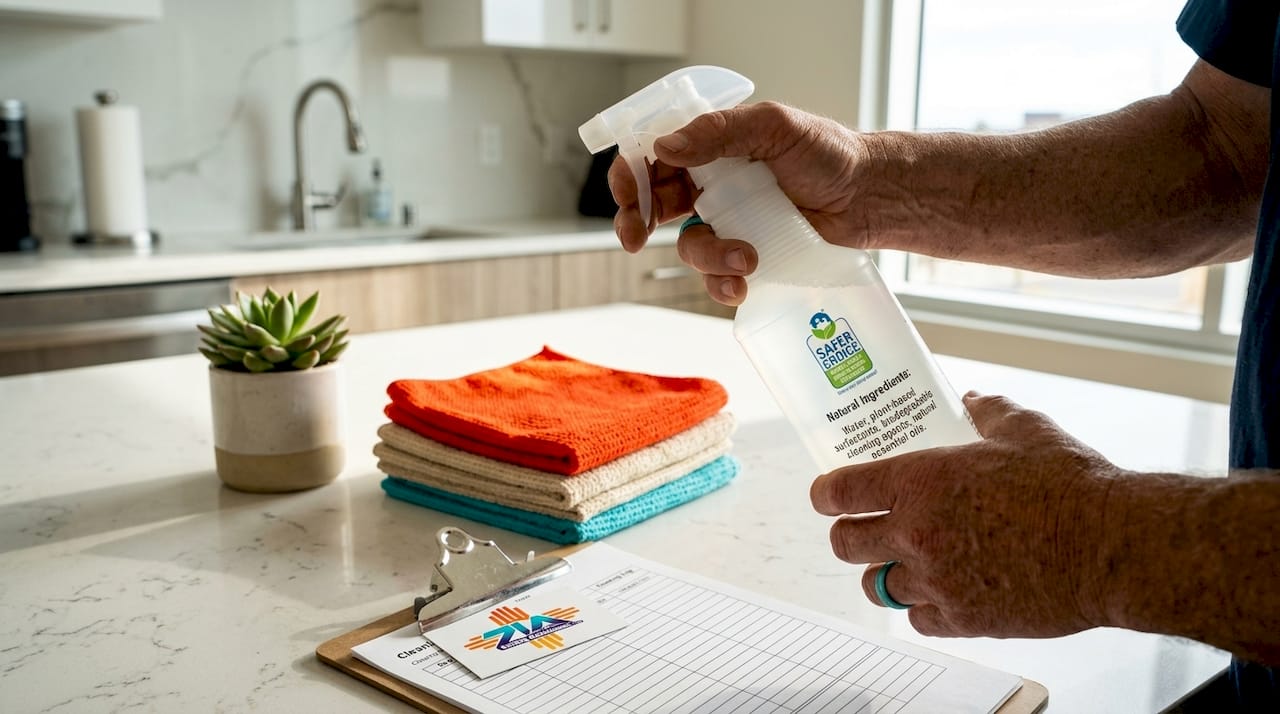
Greenwashing is a real problem in the cleaning products industry. The EPA warns explicitly that vague claims like “eco safe,” “natural,” or “green” carry no regulatory weight and should not be trusted without third-party verification. That means a product labeled “plant-based” with no certification could still contain ingredients harmful to skin, respiratory health, or aquatic ecosystems.
Other credible ecolabels to recognize include Green Seal, EcoLogo (now UL ECOLOGO), and USDA Certified Biobased. Each uses independent testing and ingredient disclosure requirements. However, for office environments specifically, EPA Safer Choice and DfE remain the gold standard because they are directly searchable through free government tools.
- EPA Safer Choice: Covers general cleaners, degreasers, and floor care products
- EPA DfE: Covers disinfectants, sanitizers, and antimicrobial sprays
- Green Seal GS-37: Covers institutional and industrial cleaners
- UL ECOLOGO: Broad certification used across North American commercial markets
Pro Tip: Use the EPA’s free product search tools to verify Safer Choice and DfE certification before purchasing any product for your office. A 30-second search prevents costly mistakes.
2. Top multipurpose green cleaners for office surfaces
Certified multipurpose cleaners are the workhorse of any sustainable office cleaning program. Products carrying the EPA Safer Choice label have passed ingredient-level review, meaning every component, including surfactants, preservatives, and fragrances, meets safety thresholds for both people and the environment. This matters in open-plan offices where cleaning happens during or near occupied hours.
Several products stand out in this category. Seventh Generation Professional Multi-Surface Cleaner carries EPA Safer Choice certification and uses plant-derived cleaning agents. Better Life All-Purpose Cleaner is another Safer Choice-certified option formulated without synthetic fragrances or dyes, making it suitable for offices with employees who have chemical sensitivities. ECOS Pro Spray + Wipe is a concentrated formula that reduces packaging waste through dilution-ready design.
Key features to look for in a multipurpose office cleaner include:
- Safer Choice certification confirmed through the EPA product database
- Plant-derived surfactants rather than petroleum-based ingredients
- Fragrance-free or naturally scented options to protect air quality in enclosed spaces
- Concentrated formulas that reduce plastic packaging per cleaning cycle
- Skin-safe pH levels for staff who apply products without gloves
Packaging sustainability is worth factoring into your selection. Concentrated refill systems, like those offered by Blueland and ECOS Pro, cut down on single-use plastic significantly. For a large office, that reduction adds up across a full year of supply orders.
3. Best green disinfectants and antimicrobial products for offices
General cleaners and disinfectants serve different functions, and mixing up these categories is one of the most common mistakes in office cleaning programs. A multipurpose cleaner removes dirt and residue. A disinfectant kills pathogens on contact. Offices need both, and each requires its own certification pathway.
The EPA’s DfE label for antimicrobials applies specifically to disinfectants and sanitizers. This certification confirms that the active ingredients meet safety criteria while still delivering effective microbial control. CleanBoss Botanical Disinfectant is one notable DfE-aligned product that uses thymol from thyme oil as its active ingredient. Thymol kills viruses and bacteria without the harsh chemical profile of quaternary ammonium compounds, and the formula is safe for food-contact surfaces, which matters in office kitchens and break rooms.
Other strong options in this category include:
- Benefect Botanical Disinfectant: Thymol-based, EPA-registered, no-rinse formula approved for occupied spaces
- Seventh Generation Disinfecting Spray: EPA-registered with hydrogen peroxide as the active ingredient, no bleach or synthetic fragrances
- Bioesque Botanical Disinfectant Solution: DfE-recognized, effective against a broad spectrum of pathogens including influenza and SARS-CoV-2
No-rinse formulas are particularly practical for offices because they reduce labor time and eliminate the risk of residue buildup on shared surfaces like keyboards, door handles, and conference room tables. When selecting a disinfectant, always confirm EPA registration number and DfE status through the official product database before purchasing.
4. Eco-friendly cleaning wipes and disposable products for office hygiene
Disposable cleaning wipes are a convenience staple in offices, but conventional wipes often contain synthetic fibers that do not biodegrade and may include preservatives linked to skin irritation. The sustainable alternative is plant-based, biodegradable wipes certified free of microplastics.
Biom All Purpose Wipes are 100% plant-based and biodegradable, certified plastic neutral, and safe for both skin and surfaces. That plastic neutral certification means the brand offsets the plastic impact of its packaging through verified recovery programs. For offices managing sustainability reporting or pursuing LEED certification, this kind of third-party verification adds measurable value. Pairing LEED-certified facility equipment with certified green cleaning products creates a consistent sustainability profile across your workspace.
Key features to prioritize when selecting office wipes:
- Plant-based fiber construction that biodegrades without leaving microplastic residue
- Non-toxic, skin-safe formulas suitable for use on electronics, desks, and shared surfaces
- Refillable or compostable packaging to reduce landfill contribution
- Fragrance-free or essential oil-scented options for air quality management
- Compatibility with multiple surfaces including glass, laminate, and coated wood
Pro Tip: Set up a refillable wipe dispenser system in high-traffic areas like reception desks and conference rooms. Refillable systems from brands like Grove Collaborative reduce single-use packaging by up to 80% compared to standard wipe canisters.
For electronics specifically, look for wipes with alcohol-free formulas to protect screen coatings. Many plant-based wipes are safe for monitors and keyboards, but always confirm surface compatibility on the product label before widespread use.
5. Comparison of top green cleaning products by type and office need
Matching the right product to the right task is as important as choosing certified products in the first place. The table below summarizes the top options covered in this guide, organized by product type, certification, key ingredient, and best office use case.
| Product | Certification | Key Ingredient | Best Use | Packaging |
|---|---|---|---|---|
| Seventh Generation Multi-Surface | EPA Safer Choice | Plant-derived surfactants | General surfaces, desks | Recycled plastic |
| Better Life All-Purpose | EPA Safer Choice | Corn and coconut-derived | Sensitive environments | BPA-free plastic |
| CleanBoss Botanical Disinfectant | EPA DfE-aligned | Thymol (thyme oil) | High-touch surfaces, kitchens | Recyclable spray bottle |
| Benefect Botanical Disinfectant | EPA Registered | Thymol | Occupied space disinfection | Concentrate refill available |
| Biom All Purpose Wipes | Plastic Neutral Certified | Plant-based fiber | Desks, electronics, common areas | Compostable packaging |
| Blueland Multi-Surface Spray | EPA Safer Choice | Plant-based actives | Open-plan offices, bulk use | Zero single-use plastic |
Budget-conscious office managers should note that concentrated formulas like Blueland and ECOS Pro deliver a lower cost per use than ready-to-use sprays, even when the upfront price appears higher. For large open-plan offices with high foot traffic, concentrates are the more practical and cost-effective choice. Premium options like Benefect are worth the higher price point in medical or high-occupancy settings where disinfection standards are stricter.
The core workflow principle is to separate general cleaners from disinfectants in your supply inventory and train staff to use each category for its intended purpose. Using a disinfectant on every surface every day is unnecessary, wasteful, and can contribute to antimicrobial resistance over time.
Key takeaways
The most effective green cleaning program for offices combines EPA-certified product selection, clear separation of cleaner and disinfectant categories, and staff training on proper application protocols.
| Point | Details |
|---|---|
| Prioritize EPA certifications | Look for Safer Choice on general cleaners and DfE on disinfectants before purchasing. |
| Avoid greenwashing claims | Vague labels like “natural” or “eco safe” carry no regulatory weight without third-party verification. |
| Separate product categories | Use multipurpose cleaners for routine surfaces and certified disinfectants only for high-touch areas. |
| Choose concentrated formulas | Concentrates reduce packaging waste and lower cost per use in large office environments. |
| Verify before you stock | Use the EPA’s free product search tools to confirm certification status on every product in your supply chain. |
What I’ve learned about green cleaning programs that actually work
Office managers often ask me whether switching to green cleaning products means accepting lower performance. After years of working with commercial facilities across Albuquerque, my honest answer is no. But the switch only works when it is treated as a structured procurement decision, not a marketing preference.
The biggest pitfall I see is offices that purchase one or two certified products and then fill the rest of their supply closet with uncertified alternatives. That approach does not constitute a green cleaning program. It constitutes a green cleaning gesture. Treating procurement like a compliance workflow, where every product stocked must have a verified certification pathway, is what separates genuine programs from performative ones.
Training is the second factor that most offices underestimate. Green cleaning effectiveness depends on proper dilution ratios, dwell times for disinfectants, and ventilation during application. A certified product used incorrectly delivers neither the cleaning performance nor the safety benefit it was designed for. Janitorial staff need written SOPs, not just verbal instructions.
The third thing I would tell any office manager is to review your product list at least once a year. Certifications can lapse, formulas can change, and new products enter the market regularly. Building a green workplace cleaning policy that includes an annual product audit keeps your program honest and current.
— Ashley
How Zia Building Maintenance supports your green office cleaning goals
Zia Building Maintenance has served commercial offices in Albuquerque since 1989, and green cleaning is built into the way the team works, not added as an afterthought. Every product used in a Zia Building Maintenance office cleaning program is selected for certification compliance, surface safety, and cleaning effectiveness. Office managers who partner with Zia Building Maintenance get a cleaning team that already knows the difference between a Safer Choice cleaner and a DfE-certified disinfectant, and applies each one correctly.
For businesses that want the benefits of professional janitorial services without the overhead of managing product procurement and staff training in-house, Zia Building Maintenance offers a practical, cost-effective solution. Learn more about professional office cleaning in Albuquerque and request an estimate tailored to your facility’s size and cleaning schedule.
FAQ
What makes a cleaning product genuinely “green”?
A genuinely green cleaning product carries third-party certification from a recognized body like EPA Safer Choice or DfE, confirming that every ingredient meets safety and environmental standards. Marketing claims like “natural” or “eco-friendly” without certification do not meet this standard.
What is the difference between EPA Safer Choice and DfE labels?
EPA Safer Choice applies to general-purpose cleaners, while the DfE label applies specifically to antimicrobial products like disinfectants and sanitizers. Both carry the same rigorous ingredient safety requirements.
Are green disinfectants as effective as conventional ones?
Yes. Products like CleanBoss Botanical Disinfectant and Benefect use thymol, a botanical active ingredient that kills a broad spectrum of viruses and bacteria without the chemical risks associated with bleach or quaternary ammonium compounds.
How do I avoid greenwashing when buying office cleaning supplies?
Use the EPA’s free online search tools to verify Safer Choice or DfE certification for every product before purchasing. If a product does not appear in the EPA database, its green claims are unverified.
Should offices use disinfectants on every surface every day?
No. Matching product type to task is a core principle of effective green cleaning. General cleaners handle routine surface maintenance, while disinfectants should be reserved for high-touch areas and situations where pathogen control is specifically required.