
TL;DR:
- Full-service janitorial is a comprehensive facility management approach that covers routine cleaning, deep cleaning, and supplies under one contract. It assigns provider ownership of overall space condition, reducing management time and extending asset life. The typical cost ranges from $0.10 to $0.30 per square foot monthly, with exclusions like pest control and exterior window washing common in contracts.
Full-service janitorial is defined as a bundled, comprehensive cleaning and maintenance program that covers all routine and periodic facility care tasks under a single contract. Unlike basic cleaning arrangements, this model includes nightly maintenance, scheduled deep cleaning, supply management, equipment, insurance, and dedicated account oversight. The Institute of Inspection, Cleaning and Restoration Certification (IICRC) recognizes cleaning scope standards that align closely with what full-service programs deliver. For facilities managers and business decision-makers, understanding what does full-service janitorial mean is the first step toward making a sound, long-term facility investment.
What services are included in full-service janitorial programs?
Full-service janitorial includes routine cleaning, deep cleaning, specialty services like medical-grade sanitation, supply management, and account oversight. That breadth is what separates it from a simple nightly cleaning visit. Facilities managers get one point of contact responsible for the full condition of their building.
Routine nightly maintenance
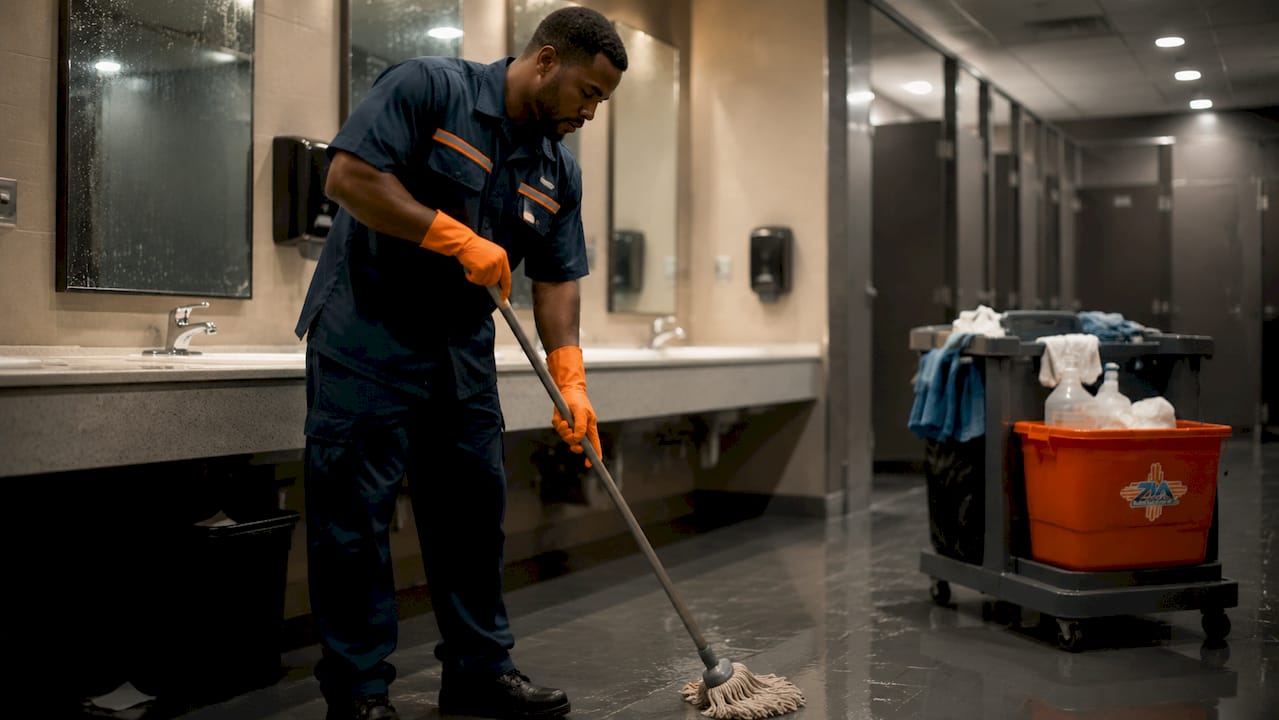
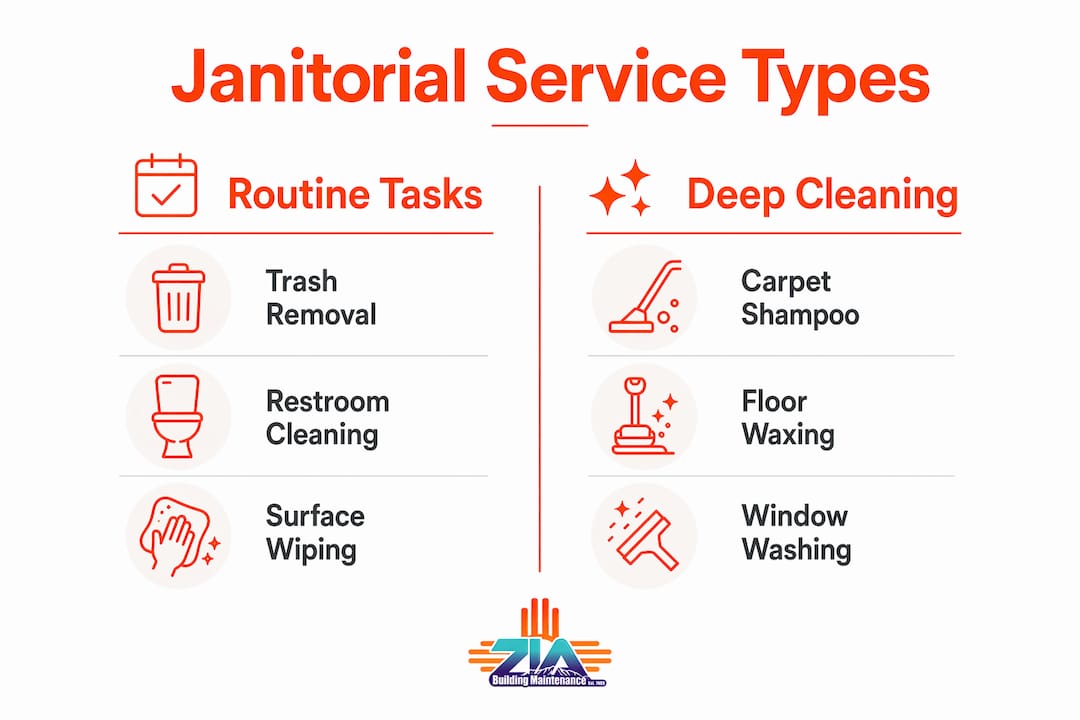
Routine tasks form the daily backbone of any full-service program. These include trash removal, restroom cleaning and restocking, vacuuming, mopping hard floors, dusting surfaces, and wiping down common areas. High-traffic zones like lobbies and break rooms receive attention every service visit. Consistent nightly coverage prevents the buildup that leads to costly corrective cleaning later.
Periodic deep cleaning
Deep cleaning tasks run on a scheduled cycle, typically monthly or quarterly. Carpet shampooing, floor stripping and waxing, interior window washing, and grout scrubbing fall into this category. These services protect flooring and surface investments over time. Proper floor coating maintenance extends asset life and reduces replacement costs significantly.
Specialty and compliance cleaning
Full-service programs also cover specialty work such as medical-grade disinfection, post-construction cleanup, and electrostatic spraying for pathogen control. Medical facilities, schools, and food-service environments often require EPA-registered disinfectants applied with correct dwell times. EPA-certified cleaning chemicals reduce microbial load, cut sick days, and support productivity. That outcome matters directly to any decision-maker tracking absenteeism costs.
| Service Category | Examples | Typical Frequency |
|---|---|---|
| Routine maintenance | Trash removal, restroom cleaning, vacuuming | Nightly or daily |
| Periodic deep cleaning | Carpet shampooing, floor waxing, window washing | Monthly or quarterly |
| Specialty services | Medical disinfection, electrostatic spraying | As needed or scheduled |
| Supply management | Paper products, soap, liners | Ongoing, per contract |
| Account management | Scheduling, quality checks, reporting | Continuous |
Pro Tip: Ask your provider for a written service matrix that maps every task to its frequency. Verbal promises about “full service” are not enforceable. A written matrix is.
How does full-service janitorial differ from basic cleaning?
Full-service janitorial is a proactive strategy managing facility health and safety, not just reactive cleaning. Basic or task-based cleaning operates from a fixed checklist. A crew arrives, completes the listed tasks, and leaves. No one owns the overall condition of the facility. Full-service programs assign that ownership to the provider.
Decision-makers are shifting from task-based checklists to facility-based strategies where providers maintain overall space health and safety standards. That shift reflects a real operational need. When a restroom runs out of soap or a floor finish starts peeling, a task-based crew has no mandate to act. A full-service provider does.
The practical differences are clear:
- Scope ownership. The provider manages all cleaning outcomes, not just completed tasks.
- Supply management. Consumables like paper products and soap are tracked and restocked by the provider.
- Scheduling coordination. Proactive scheduling by providers reduces labor rework and protects maintenance outcomes.
- Quality accountability. A dedicated account manager conducts inspections and responds to issues.
- Risk management. The provider carries insurance and handles compliance documentation.
Understanding the differences between janitorial and commercial cleaning helps facilities managers set the right expectations before signing any contract.
Pro Tip: Request a sample inspection report from any prospective provider. If they cannot produce one, they likely do not conduct regular quality checks.
What does full-service janitorial cost, and what is the ROI?
Full-service janitorial typically costs between $0.10 and $0.30 per square foot per month, including nightly maintenance and periodic deep cleaning. That range reflects building type, service frequency, and regional labor rates. A 20,000-square-foot office building could expect to pay between $2,000 and $6,000 per month for a complete program.
For facilities above 5,000 square feet, full-service programs cost 15–25% more than basic cleaning. That premium pays for itself through fewer sick days, longer asset life, and reduced management burden. Professional janitorial services carry a lower total cost of ownership than in-house teams when you account for hidden costs like benefits, payroll taxes, and equipment. Outsourcing removes those line items entirely.
Businesses save 5–10 hours of management time monthly per location by using full-service, turnkey janitorial providers. For a facilities manager earning $65,000 per year, that equals real recovered capacity every month. That time goes back into higher-value work.
| Cost or Savings Factor | Basic Cleaning | Full-Service Program |
|---|---|---|
| Cost per sq ft per month | $0.07–$0.12 | $0.10–$0.30 |
| Management time required | 8–15 hrs/month | 3–8 hrs/month |
| Asset replacement frequency | Higher | Lower |
| Sick day impact | Unmanaged | Reduced via EPA protocols |
| Hidden in-house costs | N/A | Eliminated by outsourcing |
Pro Tip: Always ask whether consumables like soap and paper products are included in the base rate or billed separately. Consumables billed as add-ons can shift your monthly cost by 5–10%, which disrupts budget planning.
Facilities managers who want a deeper look at the financial case should review how janitorial services save money and time before finalizing a vendor decision.
What are common exclusions in full-service janitorial contracts?
The phrase “full service” is a marketing label, not a legal standard. Common exclusions in full-service janitorial contracts include pest control, HVAC duct cleaning, above-ground exterior window washing, and major renovation cleanups. Facilities managers who assume these tasks are covered will face unexpected costs and service gaps.
Typical contract exclusions to verify before signing:
- Pest control and extermination services
- HVAC duct and coil cleaning
- Exterior window washing above ground level
- Post-renovation or construction debris removal
- Dumpster hauling and waste disposal
- Biohazard or hazardous material remediation
- Parking lot sweeping and exterior pressure washing
Consumable inclusion is another area that catches facilities managers off guard. Verifying whether consumables are included or billed separately prevents a 5–10% variance in monthly costs that can disrupt annual budgets. Some providers bundle soap, paper towels, and liners into the base contract. Others treat them as billable add-ons. Neither approach is wrong, but you need to know which model applies before you sign.
Emergency response availability is also worth confirming. A flood, a sewage backup, or a post-event cleanup may fall outside standard contract hours. Ask specifically whether emergency response is included, available at an additional rate, or not offered at all. A clear answer protects you from scrambling when an incident occurs.
Pro Tip: Use a commercial cleaning contract checklist to review every clause before signing. Pay particular attention to the exclusions section and the consumables billing model.
Key Takeaways
Full-service janitorial is a proactive, bundled facility management strategy that delivers measurable cost, health, and operational benefits when the contract scope is clearly defined and verified.
| Point | Details |
|---|---|
| Scope is bundled, not basic | Full-service programs cover routine tasks, deep cleaning, supplies, and account management under one contract. |
| Cost range is predictable | Expect $0.10–$0.30 per square foot per month, with consumables potentially adding 5–10% if billed separately. |
| ROI is real and measurable | Facilities save 5–10 management hours monthly and reduce sick days through EPA-certified cleaning protocols. |
| “Full service” has limits | Pest control, HVAC cleaning, and exterior window washing are commonly excluded despite the label. |
| Contract clarity is non-negotiable | Always verify consumable billing, exclusions, and emergency response terms in writing before signing. |
Why I think most facilities managers underestimate what they are actually buying
After years of working alongside facilities teams, I have noticed a consistent pattern. Managers evaluate janitorial contracts the same way they evaluate supply purchases: price per unit, scope of deliverables, renewal terms. That framework misses the larger point.
A full-service janitorial program is not a cleaning expense. It is a facility preservation strategy. The floors, the restrooms, the common areas, and the air quality in your building are physical assets. They depreciate faster without consistent professional care. When a provider applies the right floor finish on the right schedule, they are extending the life of a surface that costs thousands of dollars to replace. That is asset management, not housekeeping.
The vendors I trust most are the ones who bring a service matrix to the first meeting, not a price sheet. They want to understand your facility’s foot traffic patterns, your compliance requirements, and your peak occupancy hours before quoting anything. That approach signals they are thinking about your building’s health, not just their billing cycle.
The uncomfortable truth is that the cheapest full-service contract is usually the one with the most exclusions. Pest control, HVAC cleaning, and exterior window washing get quietly removed from scope, and the “full service” label stays on the proposal. Read the exclusions section of any contract as carefully as you read the price.
Zia Building Maintenance has operated in Albuquerque since 1989, and the facilities managers who stay with them longest are the ones who treated the relationship as a partnership from day one. They communicated their standards, reviewed the service matrix, and held the provider accountable to it. That is the model that works.
— Ashley
Zia Building Maintenance: full-service janitorial for Albuquerque facilities
Zia Building Maintenance has delivered tailored commercial cleaning solutions across Albuquerque since 1989, earning the title of the #1 office cleaning service in South Valley for 2025. Their programs cover routine nightly maintenance, periodic deep cleaning, floor care, and specialty services for offices, medical facilities, and schools.
Facilities managers benefit from one-stop accountability: a single provider, a single point of contact, and predictable monthly costs. Zia Building Maintenance builds each program around your facility’s specific requirements, so you are not paying for services you do not need or missing the ones you do. Explore their commercial facility cleaning strategies to see how a full-service program can be structured for your building. Request an estimate and get a written service matrix from day one.
FAQ
What does full-service janitorial mean?
Full-service janitorial is a bundled cleaning and maintenance program that covers routine tasks, periodic deep cleaning, supply management, and account oversight under one contract. It differs from basic cleaning by assigning the provider full responsibility for overall facility condition.
What is typically included in a full-service janitorial contract?
A standard full-service contract includes nightly maintenance such as trash removal and restroom cleaning, periodic services like carpet shampooing and floor waxing, consumable restocking, and a dedicated account manager for quality oversight.
How much does full-service janitorial cost per month?
Full-service janitorial costs between $0.10 and $0.30 per square foot per month, depending on building size, service frequency, and location. Consumables may add 5–10% to monthly costs if billed separately rather than bundled into the base rate.
What services are usually excluded from full-service janitorial?
Most full-service contracts exclude pest control, HVAC duct cleaning, above-ground exterior window washing, and post-renovation cleanups. Always review the exclusions section of any contract before signing.
How does full-service janitorial save money compared to in-house cleaning?
Outsourcing eliminates hidden in-house costs like benefits, payroll taxes, and equipment purchases. Facilities managers also recover 5–10 hours of management time per month per location, and consistent professional cleaning reduces employee sick days and extends asset life.