
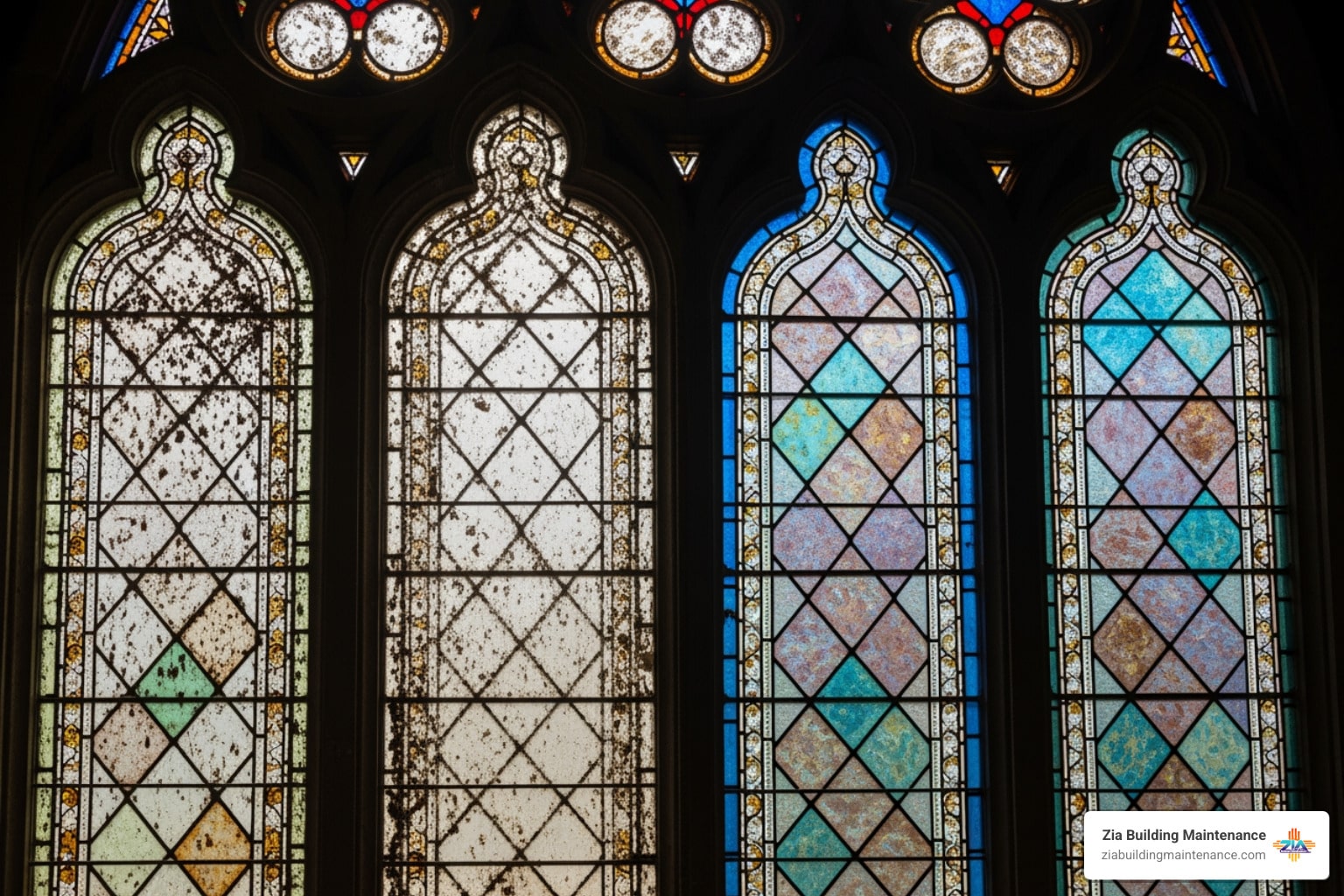
Understanding the Challenges of Stained Glass Cleaning
When we approach stained glass cleaning, we first have to identify what exactly we are trying to remove. Unlike the simple dust on a standard office window, stained glass accumulates a complex cocktail of “accretions”—layers of foreign material that bond to the surface over time.
On the exterior of buildings in areas like Albuquerque and Rio Rancho, rainwater is a primary culprit. As water runs down the building facade, it picks up particles from mortar, render, and limestone, depositing them onto the glass as a tough limescale patina. If the window is near ironwork, you might also see rust staining. In urban areas with heavy traffic, thick pollution crusts can form, particularly in sheltered areas like the top of a lancet or under a horizontal support bar where rain doesn’t naturally wash it away.
Bird guano is another frequent and serious nuisance. Beyond being unsightly, it poses health risks and contains acids that can etch the glass surface. Because of these pathogens, it should only be removed by trained personnel using appropriate safety equipment.
On the interior, the “grime” is often different. Decades of burning candles can deposit a layer of soot that gradually darkens the window. Even if a window isn’t leaking, condensation running down the inside creates its own limescale deposits. This constant moisture also invites organic growth; algae, fungi, and moulds thrive on the inside of windows where they have a steady supply of water but aren’t washed away by the elements.
For more detailed information on these deposits, the resource Cleaning Historic Stained Glass Windows provides an excellent deep dive into the chemistry of window soiling.
The Impact of Age and Glass Type
The age of your glass dictates our entire cleaning strategy. Medieval glass, for instance, is highly susceptible to corrosion. Over centuries, the chemical composition of the glass changes, resulting in “weathering crusts.” These can appear as even brownish layers or white spots erupting from distinct pits in the glass.
One of the most critical things we look for is painted decoration. In traditional stained glass, the “paint” is actually a mixture of ground glass and iron or copper oxide. This was fused to the surface in a kiln, much like a pottery glaze. However, if that firing wasn’t perfect, or if the glass has been damp for too long, that paint can become fragile or start to flake.
If your facility prioritizes environmental health, you might be interested in more info about green cleaning services to see how we balance effective cleaning with safety.
Risks of Inappropriate Cleaning Methods
The surface of glass is surprisingly soft and prone to scratches. It is a common myth that only diamonds can scratch glass; in reality, wire wool, glass-fibre brushes, abrasive powders, and even grit from surrounding stonework can cause serious, permanent damage.
Inappropriate cleaning doesn’t just scratch; it can be irreversible. Over-cleaning a window with fragile paint can leave it “unreadable,” stripping away the fine lines of a face or the delicate patterns of a robe. Chemical risks are just as high. Using the wrong solvent can cause a reaction with the lead cames (the H-shaped strips holding the glass), leading to structural weakening.
Furthermore, using high-pressure water or steam can force moisture into the putty or lead joints, creating “moisture traps” that accelerate the very corrosion we are trying to prevent. For a technical perspective on these risks, the GSA’s guide on Cleaning Historic Glass is a vital resource for facility managers.
Essential Supplies and Products to Avoid
Before you even touch the glass, you need the right kit. In our experience at Zia Building Maintenance, “less is more” when it comes to chemical agents.
| Safe Cleaning Agents | Harmful Chemicals/Tools |
|---|---|
| Distilled or De-ionised water | Ammonia (Windex) |
| pH-neutral dish soap (diluted) | Vinegar or Citric Acid |
| Microfiber cloths | Bleach |
| Cotton buds/swabs | Wire wool or Steel wool |
| Bamboo skewers (for custom swabs) | Abrasive scouring pads |
| Feather dusters | High-pressure washers |
We often emphasize to our clients why green cleaning is worth the added effort, especially when dealing with sensitive materials like lead and antique glass. Using pH-neutral, non-toxic solutions isn’t just better for the environment; it’s the only way to ensure you aren’t accidentally triggering a chemical reaction on the window’s surface.
What to Avoid During Stained Glass Cleaning
We cannot stress this enough: Keep the Windex away from your stained glass. Ammonia-based cleaners are excellent for modern plate glass, but they can cause severe chemical damage to the lead and solder joints of a stained glass window.
Vinegar is another common “natural” cleaner that should be strictly avoided. Because vinegar is acidic, it can react with the lead and potentially damage the glass surface or the painted details. Similarly, stay away from bleach and any “scouring” powders. If a product claims to “scrub away” stains, it is likely too abrasive for art glass. Even paper towels can be too rough for very delicate pieces; we always recommend soft, lint-free microfiber or cotton cloths.
For those dealing with standard household glassware that has become “cloudy,” the rules are different, as seen in How to Clean Cloudy Glasses, but those household vinegar-soak methods should never be applied to architectural stained glass.
Step-by-Step Guide to Safe Stained Glass Cleaning
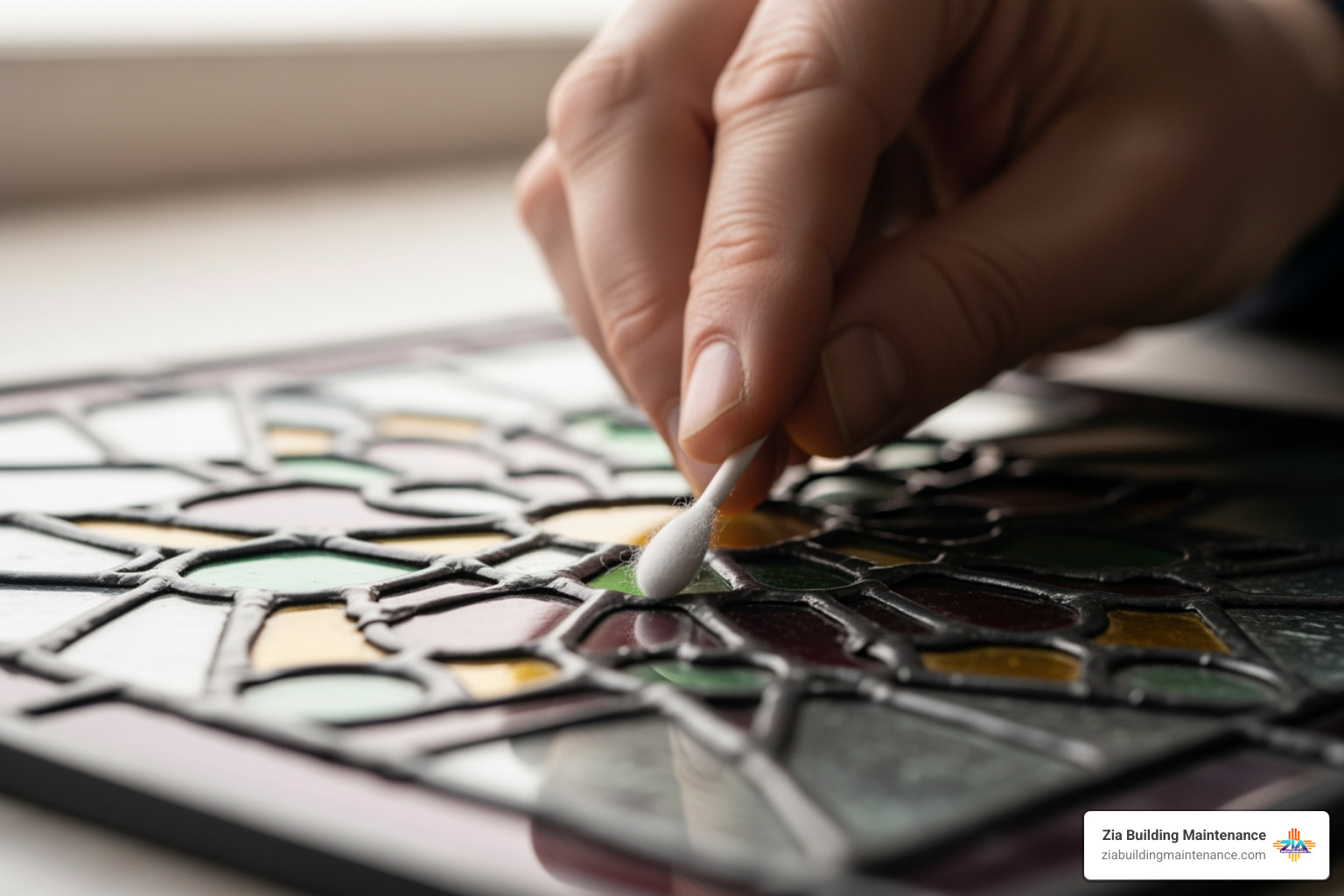
If you have determined the glass is stable and the paint is not flaking, follow this conservative approach to stained glass cleaning.
- Dry Dusting: Start by removing loose surface dust. Use a soft feather duster or a clean, dry microfiber cloth. This prevents you from turning dry dust into an abrasive mud once you add water.
- The Rolling Method: Instead of rubbing back and forth, which can trap grit against the glass and cause scratches, use the “rolling” method. Dampen a cotton bud with a small amount of distilled water. Gently roll the bud over the glass surface. The dirt will adhere to the cotton without the need for friction.
- Sectional Cleaning: Work piece by piece, within the lead cames. This prevents cleaning solution from sitting on the lead or putty for too long.
- Top-to-Bottom: Always start at the top of the window so any drips fall onto uncleaned areas.
- Minimal Moisture: Your cloth should be “barely damp,” never dripping. If water gets behind the lead cames, it can trap moisture against the glass, leading to long-term damage.
- Immediate Drying: As soon as you finish a small section, dry it with a clean, soft cloth or a paper towel to prevent limescale streaks.
For larger facilities, our window cleaning service uses these specialized techniques to ensure every pane is handled with care.
Differentiating Dirt from Permanent Damage
Sometimes, “grime” isn’t grime at all. It’s important to know when to stop cleaning.
- Etching: These are permanent scratches or “bites” in the glass surface. No amount of cleaning will remove them, and scrubbing will only make them worse.
- Iridescent Tints: If you see pink, purple, or blue tints when looking at the glass at an angle, the glass may be etched or experiencing a chemical change.
- Surface Crazing: This looks like a fine network of cracks on the surface. It is a sign of age and glass decay, not dirt.
- Opalescent Films: Sometimes a “cloudy” look is actually an alkaline reaction film that has become part of the glass.
If you aren’t sure what you’re looking at, check out our guide on signs your workplace needs professional cleanup services to help determine if you’re dealing with standard maintenance or something more serious.
Best Practices for Stained Glass Cleaning in Situ
When cleaning windows that are still installed in their frames, pay special attention to the “cames” (the lead strips) and the “putty” (the waterproofing material between the lead and glass).
Use cotton swabs to reach into the sharp interior corners where wax or dirt tends to build up. If you use a specialized stained glass polish (like a 100% carnauba wax), ensure you buff it off completely. If wax dries in the corners, it turns white and becomes very difficult to remove without picking at it, which can damage the lead.
For building managers, including these checks in your spring cleaning checklist for commercial buildings ensures that your architectural art is preserved year-round.
Preservation, Storage, and Professional Restoration
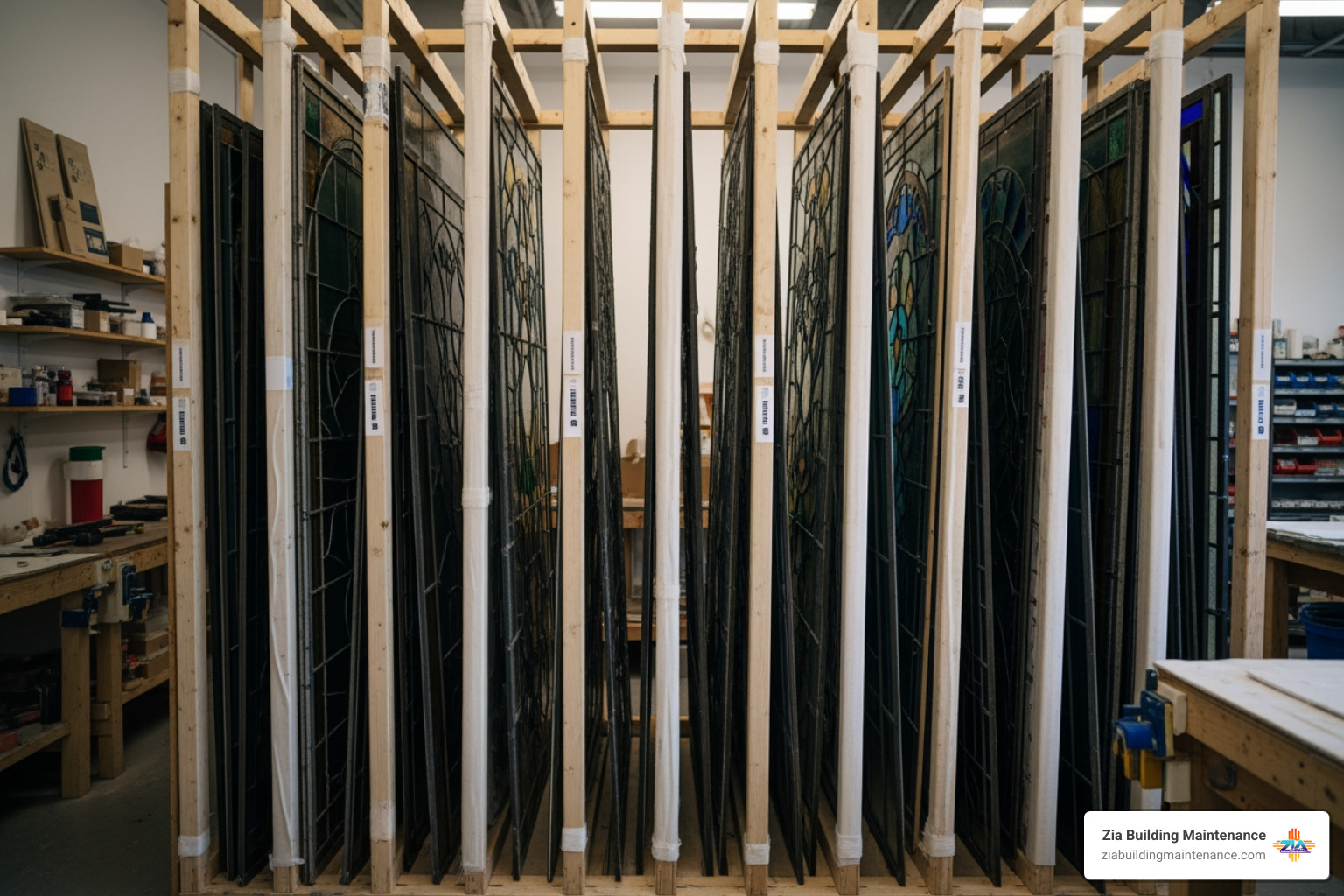
If you have stained glass panels that are not currently installed, how you store them is just as important as how you clean them.
Never store stained glass flat. The weight of the glass can cause the lead cames to bow or the solder joints to crack over time. Always store panels vertically in padded racks. If you are transporting them, wrap each piece in bubble wrap or foam and sandwich them between two rigid boards (like plywood) to prevent flexing. Use foam-lined crates and clearly label them as “FRAGILE – GLASS!”
For those acting as stewards for religious or historic buildings, the For Caretakers resource from the SGAA is an invaluable guide for long-term preservation.
Signs You Need Professional Stained Glass Cleaning or Repair
Sometimes, a bucket and a microfiber cloth aren’t enough. You should stop what you’re doing and call a professional conservator if you notice:
- Buckling or Bowing: If the window looks like it is “bulging” or no longer sits flat in its frame.
- Light Gaps: If you can see daylight between the glass and the lead cames.
- Blooming Lead: If the lead appears to be “growing” a white, powdery crust (oxidation).
- Fragile Paint: If you see any flakes of paint on the windowsill or if the decoration looks “dusty.”
- Missing Cement: If the waterproofing putty is cracked or falling out.
At Zia Building Maintenance, we understand the unique needs of historic properties. Our church cleaning services are designed to respect these sacred spaces while maintaining the highest standards of cleanliness.
Frequently Asked Questions about Stained Glass Cleaning
Can I use standard glass cleaners like Windex on stained glass?
No. Standard glass cleaners contain ammonia or vinegar. Ammonia can cause a chemical reaction with the lead cames and solder, leading to corrosion and structural failure. Vinegar, being an acid, can damage both the glass surface and fragile kiln-fired paint. Always stick to pH-neutral dish soap and distilled water.
How often should stained glass windows be cleaned?
For indoor decorative pieces, a light dusting every 3–6 months is usually sufficient. For exterior windows, we recommend an inspection every 2 months to check for bird guano or organic growth. A “deep” but gentle cleaning should only be done once a year or even less frequently, depending on the environment. Remember: over-cleaning is a leading cause of damage.
Is bird guano safe to remove by myself?
We generally advise against it. Bird guano can carry pathogens like histoplasmosis. Furthermore, because guano is acidic, it can bond to the glass. Removing it without the proper softening agents and safety gear can result in both health risks and physical damage to the window. Professional removal is always the safest bet.
Conclusion
From the historic chapels of Albuquerque to modern commercial foyers in Rio Rancho, stained glass is a treasure that requires a specialized touch. By choosing the right products—like pH-neutral soaps and distilled water—and employing gentle techniques like the “rolling” method, you can ensure these windows continue to shine for generations.
Zia Building Maintenance has been a part of the Albuquerque community since 1989. As a family-owned business, we pride ourselves on dependable service and an obsessive attention to detail. Whether you need routine janitorial work or professional church cleaning services, we bring the expertise needed to keep your facility—and its architectural art—in “glory” condition.
If you’re ready to see the difference that professional care can make for your building, contact us today. We’re here to help Albuquerque’s historic and commercial spaces stay truly clean and professional.