

TL;DR:
- Facilities cleaning costs are based on cleanable square footage, labor rates, and service frequency. Using accurate measurements and industry benchmarks helps facilities managers evaluate bids and control budgets effectively. The lowest bid often hides hidden costs that lead to higher expenses and lower quality over time.
A facilities cleaning cost breakdown is the systematic analysis of every direct and indirect cost that determines what you pay for commercial cleaning services. The industry term for this process is janitorial cost analysis, and understanding it separates facilities managers who control their budgets from those who simply approve invoices. Your total cleaning cost is driven by four primary variables: cleanable square footage, service frequency, burdened labor rates, and facility-specific scope. This article explains each factor, provides 2026 benchmark rates, and gives you the formulas to validate any bid you receive.
What are the main cost components in facilities cleaning services?
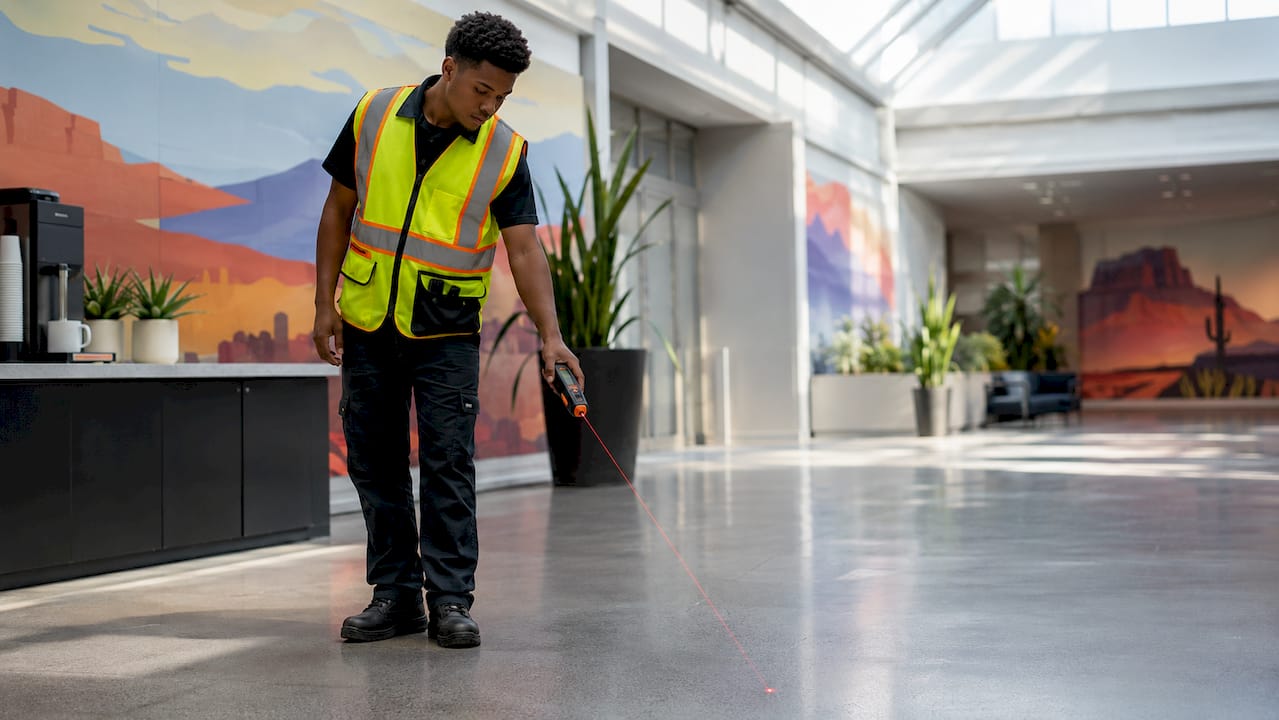
Cleanable square footage is the foundation of every cleaning cost estimate. Cleanable space excludes mechanical rooms, storage areas, and secured zones that cleaners never enter. Using total building size instead of cleanable area inflates your labor estimate and misaligns your budget with actual work performed.
Labor is the largest single line item in any cleaning contract. The number that matters is the burdened labor rate, not the hourly wage posted on a job listing. Burdened labor exceeds the base wage by 15–25% once you add payroll taxes, workers’ compensation, and benefits. A cleaner earning $18 per hour actually costs the service provider $21–$23 per hour. Facilities managers who budget using raw wages consistently underestimate contract costs.
Service frequency multiplies every cost in the model. A facility cleaned five days per week consumes roughly four times the labor and supplies of one cleaned weekly. Frequency decisions should match foot traffic patterns and compliance requirements, not just budget preferences.
Consumables and supplies add a predictable layer of cost on top of labor. These include paper products, trash liners, cleaning chemicals, and microfiber cloths. Supply costs vary by facility type: a medical office requires hospital-grade disinfectants that cost significantly more than standard office supplies.
Overhead rounds out the cost structure. Overhead typically adds 20–30% to direct labor costs and covers equipment depreciation, liability insurance, management time, and the provider’s profit margin. Skipping overhead in your budget analysis means your contract will either underfund the provider or invite quality shortcuts.
Pro Tip: Ask every vendor to itemize labor, supplies, and overhead separately in their bid. Any provider unwilling to do this is likely bundling costs in ways that obscure poor labor assumptions.
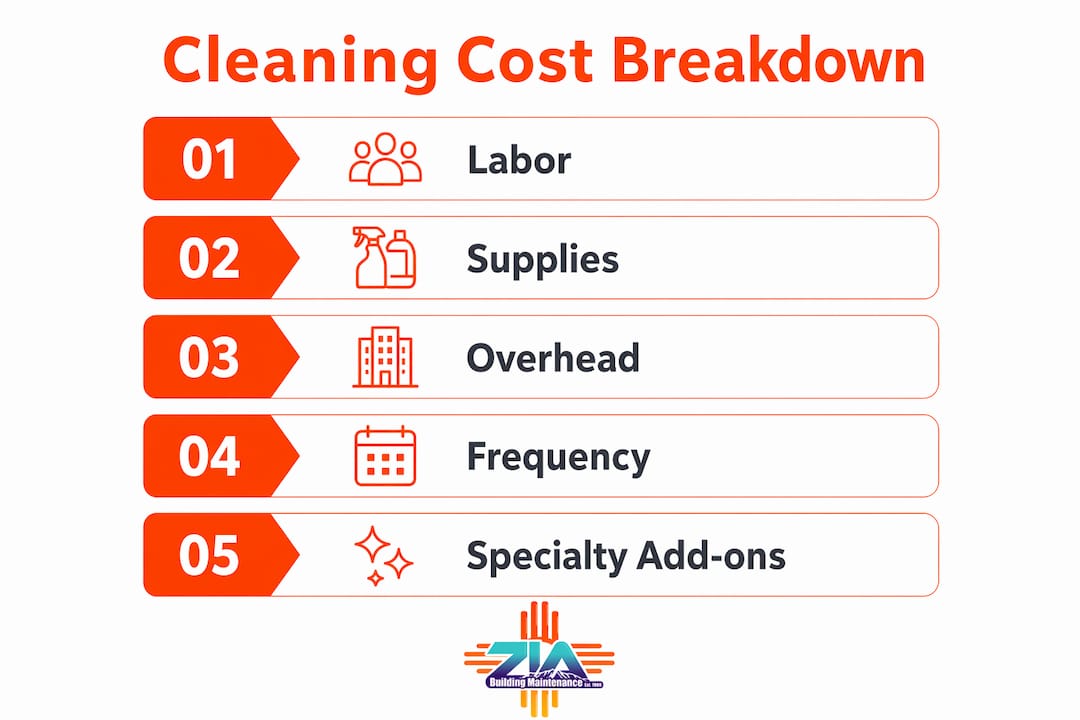
Specialty add-ons sit outside the base contract. Floor stripping and waxing, window cleaning, pressure washing, and OSHA or HIPAA compliance protocols each carry separate pricing. Medical facilities and schools face stricter regulatory requirements, which drive up both labor time and supply costs compared to standard office cleaning.
How do industry benchmarks define cleaning cost rates?
Standard commercial cleaning rates range from $0.05 to $0.20 per square foot per visit in 2026. That wide range reflects real differences in facility type, task complexity, and service frequency.
| Facility type | Rate per sq ft per visit | Notes |
|---|---|---|
| Standard office | $0.05–$0.10 | Routine cleaning, moderate foot traffic |
| Medical/dental | $0.12–$0.20 | Disinfection protocols, compliance requirements |
| Retail | $0.07–$0.12 | High foot traffic, restroom intensity |
| Warehouse | $0.04–$0.07 | Large open areas, lower task density |
| Gym/fitness | $0.10–$0.15 | Equipment wipe-downs, locker rooms |
Production rates explain why medical facilities cost more per square foot than warehouses. Office cleaning averages 3,000 sq ft per hour, while medical cleaning averages only 1,800 sq ft per hour. Slower production means more labor hours per visit, which directly raises the cost per square foot. Production rates are the single most critical variable in any labor estimate.
A practical example anchors these numbers. A 10,000 sq ft office cleaned three times per week generates roughly 12 visits per month. At $0.08 per sq ft, monthly cleaning costs run approximately $9,600. That figure assumes standard office tasks and does not include floor care or window cleaning add-ons.
Large facilities benefit from economies of scale. Facilities over 50,000 sq ft typically see rates drop to $0.05–$0.09 per sq ft for routine cleaning. The fixed costs of mobilization, management, and equipment spread across more square footage, lowering the per-unit cost. Facilities managers overseeing large campuses should negotiate performance-based contracts that lock in these scale advantages with measurable service metrics. Understanding types of facility maintenance contracts helps you structure agreements that protect both quality and cost.
What pricing models are used to calculate cleaning costs accurately?
Two formulas cover the vast majority of commercial cleaning contracts. The first is the per-square-foot model. The second is the hourly labor model. Both produce the same result when inputs are accurate, but they catch errors in different places.
Per-square-foot formula:
- Measure cleanable square footage (exclude mechanical, storage, and secured areas).
- Multiply cleanable sq ft by the rate per visit for your facility type.
- Multiply that figure by the number of visits per month.
- Add specialty service costs as line items.
Hourly labor formula:
- Divide cleanable sq ft by the production rate for your facility type to get labor hours per visit.
- Multiply labor hours by the burdened hourly rate (not the base wage).
- Multiply by visits per month to get monthly labor cost.
- Add supplies (typically 5–10% of labor cost) and overhead (20–30% of labor cost).
- Apply your margin to reach the final contract price.
The distinction between markup and margin trips up many facilities managers reviewing bids. Markup and margin are not the same: a 25% markup on $100 of costs produces a $125 price, but the profit margin on that price is only 20%. A provider targeting a 25% net margin must divide total costs by 0.75, producing a $133 price. Bids that confuse the two will either underprice the contract or misrepresent profitability.
Pro Tip: When reviewing a bid, ask the vendor to confirm whether their margin figure is calculated on cost (markup) or on price (margin). The answer tells you whether their pricing model is financially sound.
The cleanable vs. total square footage distinction matters here too. A 20,000 sq ft building with 4,000 sq ft of mechanical and storage space has only 16,000 sq ft of cleanable area. Running the formula on 20,000 sq ft overstates labor by 25%. Auditing your cleanable footage before soliciting bids gives you a more accurate baseline and protects you from inflated proposals.
You can cross-reference your own calculations against a commercial cleaning cost calculator to validate bids before signing any contract.
How can facilities managers optimize cleaning budgets while maintaining quality?
Budget optimization starts with a clear, written scope of work. Vague scopes invite low bids that omit critical tasks, then generate change orders that exceed the original savings. A performance-based scope defines exactly which tasks are completed at each visit, how often, and to what measurable standard.
Key strategies for budget control:
- Audit cleanable square footage before issuing any RFP. Accurate measurements prevent inflated bids and give you a consistent baseline for comparing proposals.
- Use burdened labor rates in your internal cost model. Lowest-price bids often omit burdened labor or overhead, which compromises service quality and contract sustainability.
- Benchmark against industry rates for your facility type. A medical office bid at $0.08 per sq ft should raise questions, since the standard range starts at $0.12.
- Schedule regular contract reviews. Cleaning needs change as occupancy, foot traffic, and facility use evolve. Annual reviews with performance metrics prevent scope creep and cost drift.
- Separate base services from add-ons. Floor care, window cleaning, and deep-cleaning cycles belong in separate line items, not bundled into a flat monthly rate.
The productivity argument for professional cleaning is concrete. Professional janitorial maintenance can reduce employee sick days by 15%, translating to approximately $30,000 in recovered productivity annually for a 50-person office. That figure reframes cleaning from a facility expense into a workforce investment. The benefits of a clean workplace extend well beyond appearance, affecting health outcomes and daily productivity.
Facilities managers overseeing large portfolios should also consider how cleaning frequency affects total cost and whether adjusting visit schedules in lower-traffic zones can reduce costs without affecting outcomes.
Key Takeaways
Accurate facilities cleaning cost analysis requires cleanable square footage, burdened labor rates, production rates, and overhead to produce a reliable budget or validate any bid.
| Point | Details |
|---|---|
| Measure cleanable space | Exclude mechanical and storage areas to avoid overstating labor needs by up to 25%. |
| Use burdened labor rates | Add 15–25% to base wages for taxes, workers’ comp, and benefits before budgeting. |
| Apply production rates | Office cleaning averages 3,000 sq ft per hour; medical averages 1,800 sq ft per hour. |
| Benchmark by facility type | Rates range from $0.05 to $0.20 per sq ft per visit depending on facility and scope. |
| Prioritize scope over price | Performance-based contracts with clear metrics outperform lowest-bid contracts over time. |
Why the cheapest bid almost always costs you more
I have reviewed hundreds of cleaning contracts over the years, and the pattern is consistent. The facilities manager who selects the lowest bid without auditing the underlying assumptions pays more within six months. Not in the contract price. In turnover, re-cleaning, complaints, and the time spent managing a vendor who cannot deliver what they promised.
The most common mistake I see is treating cleanable square footage as an afterthought. A facilities manager hands a vendor the total building size from a lease document, the vendor runs their formula, and the resulting bid is based on space that never gets cleaned. Both parties sign a contract built on a false number. The vendor runs short on labor hours, quality drops, and the relationship deteriorates.
The second mistake is accepting a burdened labor rate that looks reasonable on paper but is actually a base wage in disguise. A $16-per-hour wage sounds like a fair labor cost until you realize the true cost to the provider is closer to $20. That gap has to come from somewhere, and it usually comes from reduced cleaning time, fewer staff, or lower-quality supplies.
My advice is direct: build your own cost model before you issue any RFP. Use the formulas in this article, apply your actual cleanable footage, and calculate what a fair contract should cost. When bids come in significantly below your model, ask the vendor to show their labor assumptions. That single question separates professional providers from those who win on price and fail on delivery.
— Ashley
Zia Building Maintenance: transparent pricing built on real benchmarks
Zia Building Maintenance has served commercial facilities in Albuquerque since 1989, and transparent pricing has been central to that track record. Every estimate starts with an on-site measurement of cleanable square footage, not a guess from a lease document.
Zia Building Maintenance builds cleaning plans around your facility type, service frequency, and budget, whether you manage a medical office, a school, or a corporate campus. Rates align with 2026 industry benchmarks, and every contract includes a clear scope of work with defined performance standards. See how professional janitorial services save businesses money and request a custom estimate based on your actual cleanable space. For a full overview of expert strategies tailored to your facility, visit the commercial facilities cleaning guide.
FAQ
What is a facilities cleaning cost breakdown?
A facilities cleaning cost breakdown is the analysis of all direct and indirect costs in a commercial cleaning contract, including labor, supplies, overhead, and service frequency. It gives facilities managers a clear picture of how pricing is calculated and where budget dollars go.
How much does commercial cleaning cost per square foot in 2026?
Standard rates range from $0.05 to $0.20 per square foot per visit, with offices at the lower end and medical facilities at the higher end due to stricter cleaning protocols.
What is burdened labor rate and why does it matter?
The burdened labor rate is the true cost of an employee’s time, including wages, payroll taxes, workers’ compensation, and benefits. It runs 15–25% above the base wage and is the correct figure to use when estimating or reviewing cleaning contract costs.
Why should I measure cleanable square footage instead of total building size?
Cleanable square footage excludes mechanical rooms, storage areas, and secured zones that are never serviced. Using total building size overstates labor requirements and produces inaccurate cost estimates.
How do I know if a cleaning bid is priced fairly?
Compare the bid against 2026 benchmark rates for your facility type, then build your own estimate using cleanable square footage, production rates, and burdened labor costs. A bid that falls significantly below your model likely omits overhead or uses unrealistic labor assumptions.