TL;DR:
- Most audit failures are caused by poor documentation and missed inspection zones, not dirty buildings.
- Preparing with checklists, digital tools, and photo evidence ensures thorough, compliant audits and ongoing facility standards.
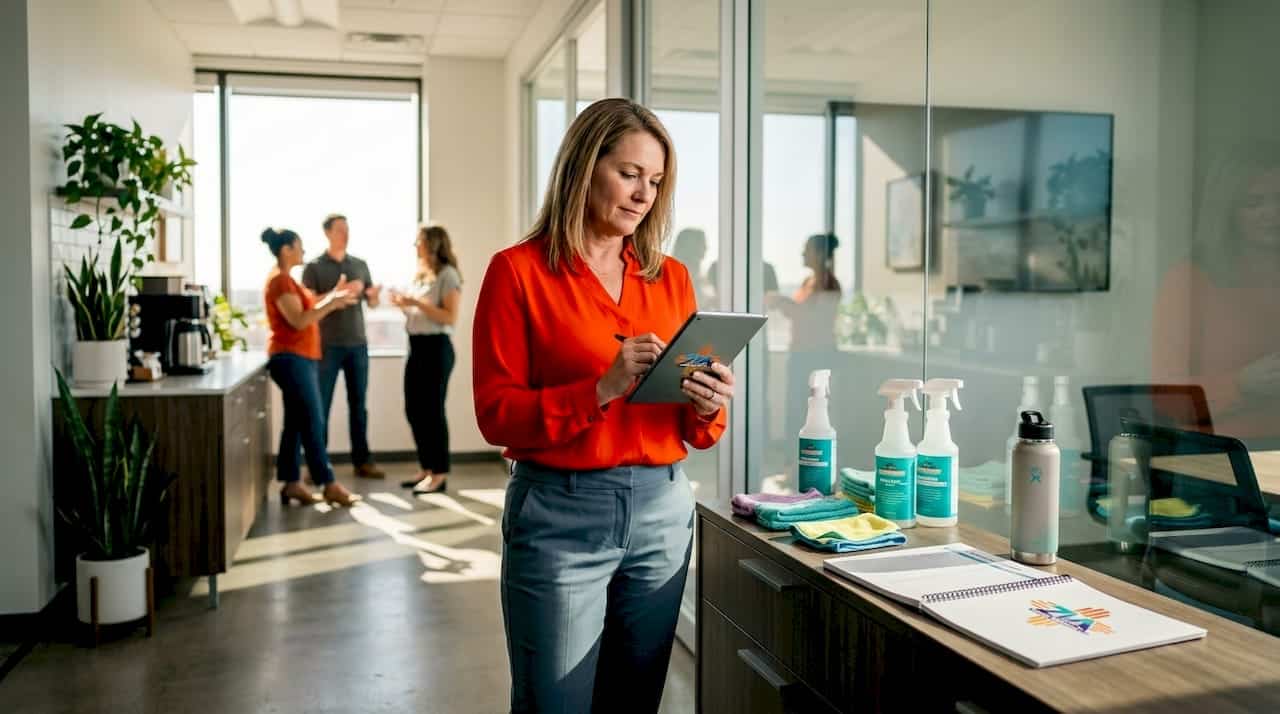
A failed commercial property cleaning audit can trigger regulatory fines, client complaints, and reputational damage that takes months to repair. Yet most audit failures are not caused by dirty buildings. They are caused by poor documentation, missed inspection zones, and cleaning contractors who were never held to a defined standard. This guide walks you through exactly how to prepare for and conduct a thorough commercial property cleaning audit, from the tools you need on day one to how you use the data afterward to stay continuously compliant.
Table of Contents
- Key takeaways
- What you need before a commercial property cleaning audit
- How to conduct the audit walkthrough step by step
- Common pitfalls during cleaning audits and how to avoid them
- Verifying audit results and using data for ongoing compliance
- My perspective on auditing in the modern facility environment
- How Zia Building Maintenance can support your audit goals
- FAQ
Key takeaways
| Point | Details |
|---|---|
| Prepare before you walk | Gather checklists, past reports, and contractor info before starting any audit walkthrough. |
| Document with photo evidence | Timestamped photos are the strongest proof of cleaning compliance during official inspections. |
| Audit systematically by zone | Start at entry points and work through high-risk areas like restrooms, kitchens, and high-touch surfaces. |
| Digitize your records | Property managers who reduce audit prep time by 90% do so by switching to digital compliance tracking. |
| Use data to drive improvement | Audit scores and trend data should directly inform staff training decisions and contract renegotiations. |
What you need before a commercial property cleaning audit
Walking into an audit unprepared is the fastest way to miss critical deficiencies. Before you set foot on the floor, you need the right tools, reference documents, and a clearly defined scope.
Start with your documentation kit. This means a digital or paper facility cleaning checklist tailored to your property type, a mobile inspection app if available, and a smartphone or camera for photo documentation. Cleaning audit software automates report generation, scores inspections, and stores everything in the cloud so data is accessible instantly. For properties managing multiple sites, this is not optional. It is the difference between an hour of prep and a week of scrambling.
Gather your reference materials next. Pull your current cleaning schedule, any previous audit reports, your contractor’s service agreement, and the relevant compliance standards for your industry. A medical facility cleaning standard differs significantly from an office building standard. Knowing which framework applies to you shapes every section of your checklist.
Here is a quick overview of core preparation elements:
- Facility cleaning checklist: Standardized and customized to your property’s specific zones and risk areas
- Past audit reports: Identify recurring problem areas before the walkthrough begins
- Cleaning staff or contractor details: Names, assigned areas, schedules, and licensing documentation
- Photo documentation tools: Smartphone, tablet, or dedicated inspection device with timestamp capability
- Compliance standards reference: OSHA guidelines, local health codes, or industry-specific regulations
Pro Tip: Before each audit, request a copy of your contractor’s Certificate of Insurance and license. Digitizing vendor compliance documents with automated expiration alerts prevents costly gaps in accountability that regulators will catch before you do.
| Preparation Item | Why It Matters |
|---|---|
| Digital inspection app | Reduces inspection time and increases scoring accuracy |
| Previous audit reports | Flags chronic problem zones before you begin walking |
| Contractor COI and license | Verifies vendor compliance and reduces liability exposure |
| Standardized checklist | Ensures consistent scoring across all areas and inspectors |
| Cleaning schedule | Confirms services were performed at the required frequency |
Standardized checklists tailored to specific commercial spaces consistently improve audit outcomes by targeting high-risk contamination zones with precision. Investing time here directly pays off during the walkthrough.
How to conduct the audit walkthrough step by step
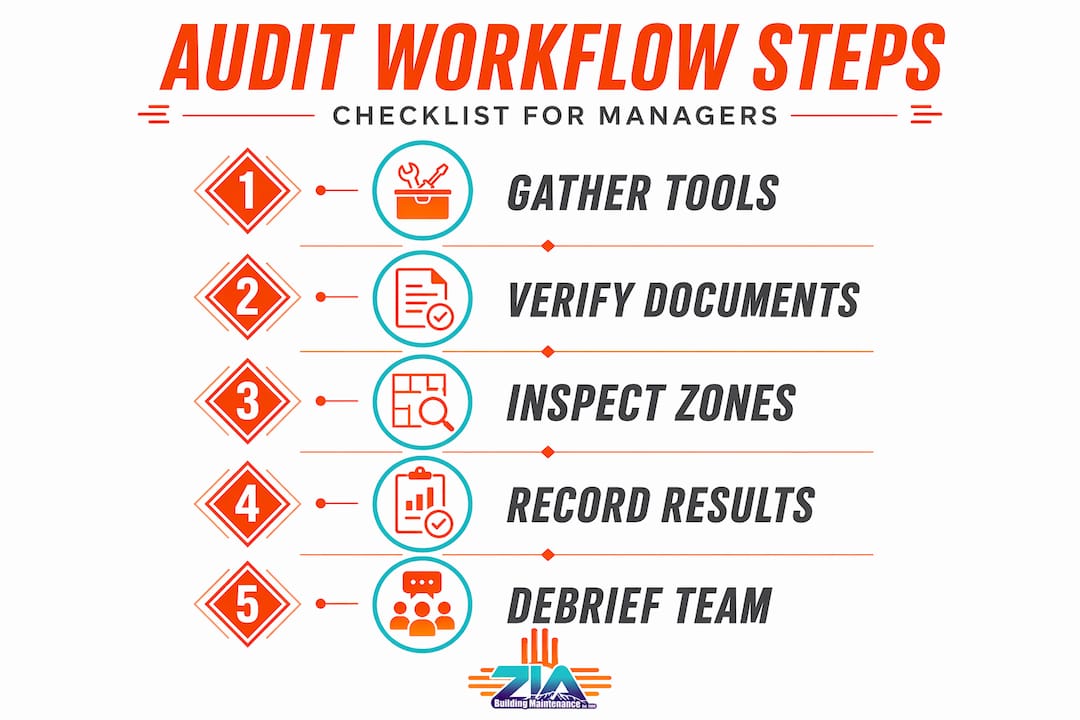
With your preparation complete, the actual commercial cleaning assessment follows a systematic path. Improvising the route wastes time and creates gaps. Here is a proven sequence that covers every critical zone.
-
Start at the main entry points. Check door handles, glass panels, reception desk surfaces, and floor mats. High foot traffic zones accumulate grime fast and make the first impression on any visitor or inspector.
-
Move through common areas. Lobbies, break rooms, and shared workspaces need scrutiny on surface cleanliness, trash removal, and floor condition. Note any odors, stains, or visible residue on counters and chairs.
-
Inspect restrooms thoroughly. Restrooms are the highest-risk zone in any commercial property cleaning audit. Check grout lines, toilet bases, behind fixtures, soap dispenser refills, and the floor around stall doors. These are areas cleaners often rush through.
-
Evaluate offices and workstations. Look at desk surfaces, keyboards, phones, and light switches. High-touch surfaces like elevator buttons and door handles in office zones are leading vectors for cross-contamination and should be logged separately.
-
Check utility and storage areas. Janitorial closets, supply rooms, and mechanical areas are routinely skipped in informal inspections. Their condition reflects whether a cleaning crew is truly organized or just keeping up appearances in visible zones.
-
Score each area on a standardized rubric. A simple 1 to 5 scale works well. One means non-compliant and requires immediate correction. Five means fully compliant with no action needed. Anything scored below a 3 should be photographed and logged as a deficiency.
-
Capture timestamped photo evidence for every deficiency. Regulators and insurance carriers operate by one principle: if it is not documented, it is considered not done. A photo with a date and time stamp is the only proof that holds up when it matters.
-
Observe cleaning staff or review their completion logs. Watch whether protocols are followed in real time or review sign-off sheets to confirm task completion. This step is part of how to audit cleaning services effectively because it distinguishes between tasks that were completed and tasks that were completed correctly.
Pro Tip: At the end of every walkthrough, hold a brief verbal debrief with the cleaning supervisor on site. Point out deficiencies directly and document their response. This creates a clear record of communication and gives the crew a fair opportunity to correct issues before a formal follow-up.
Regular cleaning audits are critical for spotting recurring issues, preventing client complaints, and holding cleaning providers to a measurable standard. Without a documented walkthrough process, accountability is impossible to enforce.
Common pitfalls during cleaning audits and how to avoid them
Even well-intentioned property maintenance audits fall apart in predictable ways. Knowing where managers typically go wrong puts you ahead of the problem.
Inconsistent or missing documentation is the single most common audit failure. Missing documentation, lost paper logs, and illegible handwriting are leading causes of audit failures, not actual cleanliness issues. Switching to a digital format eliminates this entirely.

Mismatched audit frequency is another significant issue. High-traffic restrooms may need weekly assessments while storage areas can be reviewed monthly. Applying the same audit schedule to every zone wastes resources and leaves your highest-risk areas under-inspected.
Here are the most common pitfalls to watch for:
- Skipping contractor compliance verification, such as missing licenses or expired insurance certificates
- Allowing cleaning staff to self-report without independent verification or spot checks
- Failing to photograph deficiencies, relying instead on handwritten notes that get lost
- Not tracking corrective action completion after deficiencies are identified
- Conducting audits only when a complaint has already been received
“The most effective audit question is ‘Prove it.’ Verbal assurances without supporting documentation carry no weight with regulators or during insurance claims. Build a system where proof is the default, not the exception.”
If cleaning staff or contractors resist the audit process, that resistance is itself a red flag. Professional providers who maintain audit-ready standards welcome oversight because it confirms the quality of their work. Resistance usually signals poor habits that have gone unchecked.
Verifying audit results and using data for ongoing compliance
A completed audit report is only valuable if you use it. The real payoff comes from how you analyze results, track trends, and build a system that keeps your property compliant between official inspections.
Start by reviewing your audit scores zone by zone and comparing them to previous reports. A break room that scores consistently low across three consecutive audits is not a one-time oversight. It is a training issue or a scheduling gap that needs a structural fix, not just another correction notice.
| Audit Data Use | Action to Take |
|---|---|
| Low scores in specific zones | Adjust cleaning frequency or reassign staff responsibilities |
| Recurring deficiencies | Incorporate them into staff training and contractor performance reviews |
| Contractor non-compliance | Use audit records to negotiate contract terms or initiate escalation |
| Strong trend improvement | Document for use in vendor recognition or as a compliance record |
| Pre-inspection gaps | Run a mock audit 30 days before any scheduled official inspection |
Setting up a compliance dashboard is one of the most practical steps you can take. Whether it is a spreadsheet reviewed weekly or a dedicated property management platform, this tool gives you a live view of your cleaning compliance status. Digital compliance tracking creates an unshakeable evidence trail and supports daily audit readiness, not just last-minute scrambling.
Pro Tip: Schedule a mock cleaning compliance inspection 30 days before any known regulatory review. Regular mock audits allow your team to find and close deficiencies proactively. This approach is far less costly than discovering gaps the day an official inspector arrives.
Use your audit data in contract conversations too. If a vendor’s scores have not improved after two consecutive audit cycles, you have documented grounds to renegotiate terms or seek a new provider. Check a resource like this janitorial service performance guide to see what measurable benchmarks look like in practice.
My perspective on auditing in the modern facility environment
I have reviewed a lot of commercial property cleaning audit processes over the years, and the clearest pattern I have seen is this: the properties that fail inspections are rarely the dirtiest ones. They are the ones with the worst records.
In my experience, the transition from reactive paper records to digital compliance dashboards is the single biggest shift a property manager can make. Paper logs get lost. Handwriting gets misread. And when a regulator asks for documentation from 14 months ago, paper-based systems fall apart almost every time. Digital systems do not have that problem.
What I find most underestimated is the human element. Engaging your cleaning crew in the audit process, rather than treating it as an adversarial inspection, produces dramatically better outcomes. When staff understand what the checklist looks for and why it matters, compliance improves before the next formal audit even happens.
The future is moving toward automation and AI-assisted inspections that flag anomalies in cleaning logs before a human auditor ever shows up. That shift is already underway in facility management software. Getting your documentation practices right now puts you in a position to benefit from those tools as they become more accessible. The properties that are audit-ready every day will not be caught off guard by any of it.
— Ashley
How Zia Building Maintenance can support your audit goals
Running a thorough commercial property cleaning audit requires a cleaning partner that already operates to a documented, inspectable standard. That is where Zia Building Maintenance comes in.
Zia Building Maintenance has been delivering tailored janitorial and commercial cleaning solutions in Albuquerque since 1989, earning the title of the number one office cleaning service in South Valley for 2025. Every service is built around consistency, documentation, and the kind of detailed cleaning that holds up to formal inspection. For property managers who want a provider that is already audit-ready, this level of accountability is not a bonus. It is the baseline. Contact Zia Building Maintenance to discuss a cleaning plan that keeps your property compliant and inspection-ready year-round. You can also explore how professional janitorial services reduce your total cost of compliance, including audit preparation time.
FAQ
What is a commercial property cleaning audit?
A commercial property cleaning audit is a systematic inspection of a facility to verify that cleaning tasks meet compliance standards, health codes, and contractual obligations. It typically includes a zone-by-zone walkthrough, scored checklists, and photo documentation of deficiencies.
How often should you conduct a cleaning compliance inspection?
Most commercial properties benefit from monthly audits for high-traffic zones like restrooms and lobbies, with quarterly reviews for lower-risk areas. Properties in regulated industries such as healthcare may require weekly inspections to maintain compliance.
What should a facility cleaning checklist include?
A strong facility cleaning checklist covers entry points, common areas, restrooms, offices, high-touch surfaces, and janitorial storage areas. Each zone should have specific criteria scored on a consistent scale with space for photo evidence and corrective action notes.
How do you use audit results to improve cleaning services?
Review scores by zone and compare them across multiple audit cycles to identify recurring deficiencies. Use that data in staff training sessions and vendor performance conversations to drive measurable improvement rather than one-time corrections.
What is the biggest mistake during a property maintenance audit?
The most common mistake is relying on verbal assurances or incomplete paper records instead of timestamped photo documentation. Regulators treat undocumented cleaning as cleaning that did not happen, making photo evidence the most critical part of any audit record.