TL;DR:
- Professional janitorial services enhance health, reduce costs, and extend asset lifespan through scheduled, protocol-driven cleaning. Outsourcing provides measurable savings and trusted protection, turning cleaning into an operational asset rather than an expense. A partnership approach with accountable vendors improves facility standards, brand reputation, and overall operational efficiency.
Professional janitorial services are defined as contracted, protocol-driven cleaning operations that maintain commercial facilities through scheduled sanitation, disinfection, and preventive maintenance. For business owners and facility managers, the benefits extend well beyond a tidy office. Research links professional cleaning to up to 46% fewer sick days, documented cost savings of up to $12,200 annually versus in-house cleaning, and measurable protection of physical assets. This article breaks down each core advantage so you can evaluate the full return on investment before making a vendor decision.
1. Benefits of professional janitorial services start with healthier employees
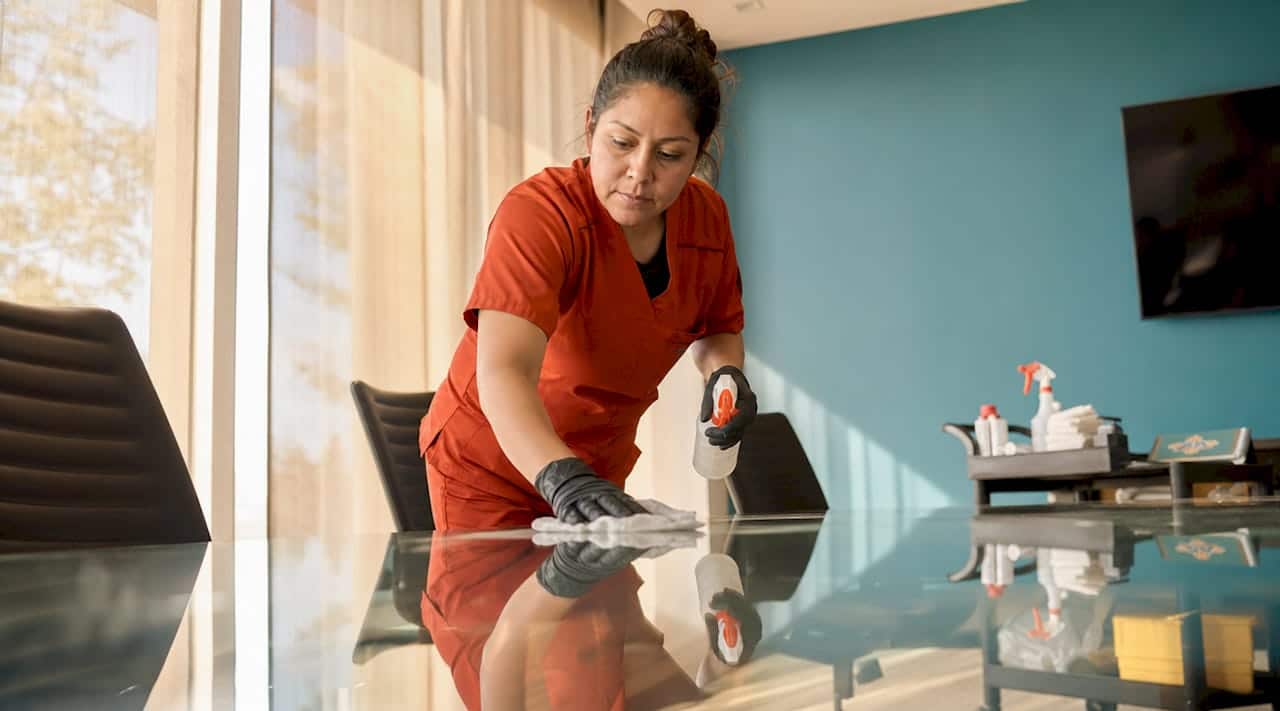
Consistent sanitation of high-touch surfaces is the single most direct way professional cleaning reduces illness in your facility. Door handles, light switches, desks, and restrooms are the primary transmission points for viruses and bacteria in any shared workspace. A trained janitorial team addresses these surfaces on a scheduled, documented basis that an in-house employee simply cannot replicate while managing other duties.
The numbers behind this are striking. ISSA research shows that cleanliness correlates directly with up to a 46% reduction in employee absenteeism in certain office environments. For a 50-person office, even a 10% reduction in sick days translates to dozens of recovered productive hours per year.
Air quality is a secondary but equally real benefit. Professional teams remove allergens, dust buildup, and mold spores from surfaces, vents, and carpets that accumulate invisibly over time. A clean and organized workplace also correlates with better employee focus, higher morale, and lower workplace dissatisfaction. These are not soft benefits. They show up in retention rates and output.
Pro Tip: Schedule high-touch surface cleaning at the start and end of each business day, not just during overnight rounds. Midday attention to break rooms and restrooms cuts transmission during peak occupancy hours.
2. Outsourcing cleaning delivers measurable financial savings
Outsourcing janitorial services provides predictable cost savings of up to $12,200 annually compared to managing an in-house team, and that figure excludes secondary savings from reduced liability and lower management overhead. The bundled pricing model of a professional vendor replaces unpredictable labor, supply, and equipment costs with a single contracted line item.
The hidden costs of in-house cleaning are where most facility managers underestimate their true spend. Recruiting, onboarding, scheduling, payroll processing, and compliance management all consume time and money. Janitorial outsourcing transfers those administrative burdens to the vendor, freeing your operations team to focus on core business functions.
Liability coverage is another financial advantage that rarely appears in cost comparisons. Professional janitorial vendors carry their own insurance, meaning slip-and-fall incidents or cleaning-related property damage fall under the vendor’s policy rather than yours. This risk transfer has real dollar value that belongs in any honest total cost of ownership calculation.
Pro Tip: When reviewing vendor contracts, require itemized cleaning routines and a verification checklist. Contracts tied to measurable deliverables give you grounds to hold providers accountable and protect your investment.
3. Professional cleaning protects and extends the life of your assets
Routine professional cleaning prevents the soil accumulation that causes premature wear on flooring, carpets, and office furnishings. Preventive maintenance with material-specific care schedules substantially reduces the frequency of costly repairs and full replacements. This is one of the most underappreciated commercial cleaning advantages for facility managers managing tight capital budgets.
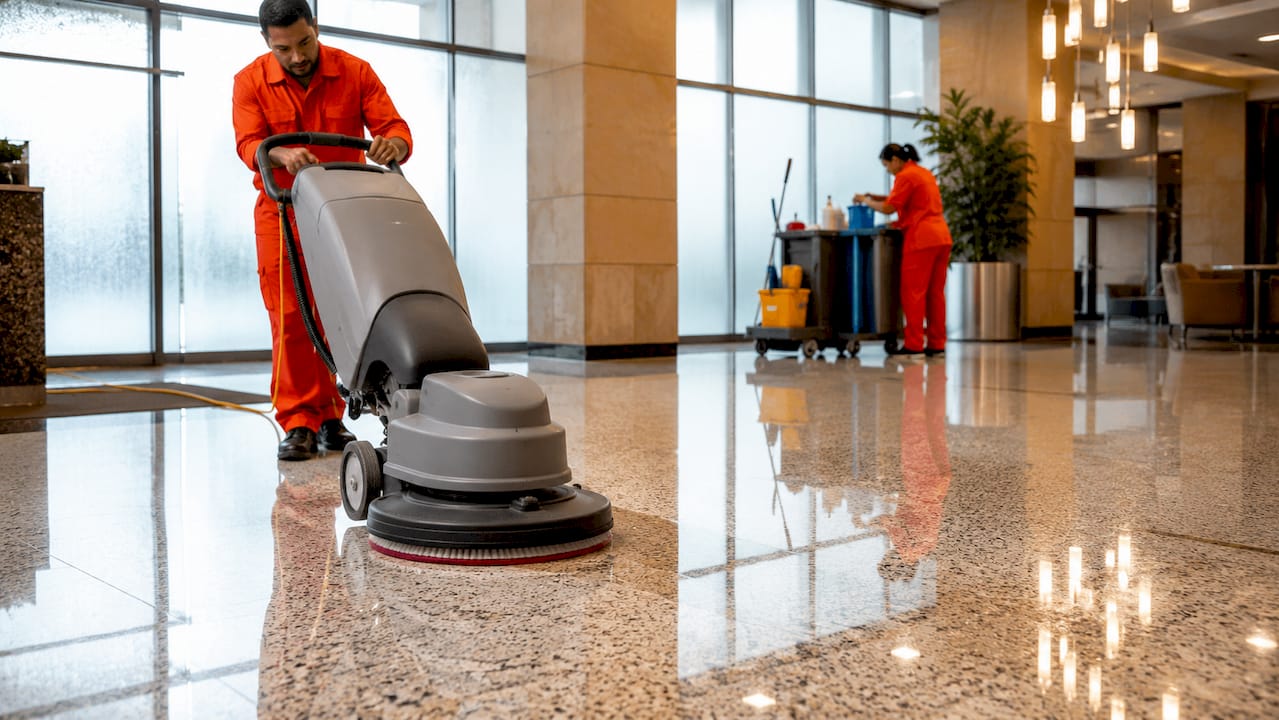
Flooring is the clearest example. Superficial cleaning done incorrectly can actually accelerate wear by trapping dirt inside carpet fibers rather than extracting it. Professional teams use commercial-grade extraction equipment and scheduled deep cleaning cycles that match the manufacturer’s care specifications. The result is carpet and hard flooring that lasts years longer than it would under casual maintenance.
Electronics and office furnishings benefit from the same principle. Dust accumulation inside computer equipment shortens hardware life and increases IT replacement costs. Professional teams trained in proper handling of delicate assets clean these areas without causing damage, using appropriate tools and products for each surface type. For a detailed look at floor care protocols and how they extend asset life, the specifics are worth reviewing before writing your next service contract.
Pro Tip: Align your janitorial service schedule with manufacturer-recommended care intervals for flooring and furnishings. Share those specifications with your vendor at contract signing so they build them into the routine.
4. Consistent cleanliness builds client trust and brand reputation
A clean business environment creates positive first impressions, and customers notice cleanliness immediately, using it to judge the professionalism and reliability of the organization they are entering. This is true whether the space is a medical waiting room, a corporate lobby, or a school hallway. The condition of your facility communicates your standards before a single word is spoken.
Polished lobbies, spotless restrooms, and clean conference rooms signal that your organization pays attention to detail. In competitive markets, that signal matters. Clients comparing two vendors of similar capability will consistently favor the one whose facility feels well-maintained and orderly. The professional office cleaning benefits here are not cosmetic. They are competitive.
Staff morale follows the same pattern. Employees who work in clean, organized spaces report higher job satisfaction and greater pride in their workplace. That connection between environment and attitude affects how your team presents itself to clients and how long they stay with your organization. Ziabuildingmaintenance has observed this pattern consistently across its client base in Albuquerque since 1989, particularly in medical facilities and schools where environment directly shapes the experience of visitors and students.
“A spotless facility tells every client, patient, or visitor that your organization holds itself to a high standard. That impression is formed in the first 30 seconds and rarely changes.”
5. Flexible scheduling minimizes disruption to daily operations
Professional janitorial vendors offer service windows that work around your business hours, including early mornings, evenings, and weekends. This flexibility means cleaning happens when your space is empty or at low occupancy, eliminating the disruption that comes with in-house staff cleaning during business hours. The operational benefit is real: your team arrives to a clean facility without having shared the space with cleaning crews during the workday.
Quality control is the other side of this equation. Professional vendors use detailed checklists and regular supervisory inspections to maintain consistency across every visit. Contracting based on measurable routines and auditable checklists prevents critical cleaning touchpoints from being missed and gives you a clear record of what was completed and when.
Disinfection protocol is one area where professional teams outperform in-house staff by a significant margin. Correct dwell time and surface sequencing are required for disinfectants to reach their rated kill rates. Wiping a surface before the chemical has had time to work reduces efficacy substantially. Professional teams are trained on these protocols in ways that casual in-house cleaning rarely replicates.
Pro Tip: Ask prospective vendors whether they use digital reporting tools that log completed tasks by location and time. Transparent reporting protects you and gives you data to verify service quality over time.
6. Outsourcing reduces staffing risk and management burden
In-house janitorial operations require continuous recruitment because turnover in this role is high. Every departure means a gap in coverage, a new hire to train, and a period of inconsistent results. Professional vendors absorb that staffing volatility across their entire client base, scaling labor up or down without passing the disruption to you.
The compliance dimension is equally significant. Professional vendors assume liability and compliance responsibilities for their staff, including OSHA standards, chemical handling regulations, and employment law. For facility managers in regulated industries such as healthcare or food service, this risk transfer is not optional. It is a core reason why outsourcing cleaning is the standard practice in those sectors.
Scaling service frequency is straightforward with a contracted vendor. If your business grows, adds a shift, or takes on a new facility, you adjust the contract. There is no recruiting cycle, no equipment purchase, and no training program to manage. That flexibility is one of the most practical janitorial service advantages for businesses in growth or transition phases.
7. Professional equipment and products deliver superior results
Commercial-grade tools improve speed, depth, and consistency of cleaning results in ways that consumer-grade equipment cannot match. Industrial floor scrubbers, HEPA-filter vacuums, and commercial steam cleaners reach soil levels and surface areas that standard mops and vacuums leave behind. This is not a minor difference in outcome. It is the difference between a surface that looks clean and one that is clean.
Professional teams also use products matched to specific surface types and contamination levels. The wrong cleaning agent on a sealed hardwood floor or a polished stone surface causes damage over time. Vendors with trained staff and proper product protocols protect your assets while achieving better sanitation results. For businesses in healthcare or food service, compliance with OSHA and CDC standards requires exactly this level of product and protocol specificity.
The combination of professional equipment, trained staff, and documented protocols is what separates a contracted janitorial service from an in-house arrangement. You can review a direct cost and quality comparison between the two approaches to see where the gaps appear in practice.
Key takeaways
Professional janitorial services deliver measurable ROI through health improvements, cost savings, asset protection, and brand reputation gains that in-house cleaning cannot match at comparable cost.
| Point | Details |
|---|---|
| Health and absenteeism | Professional cleaning reduces employee sick days by up to 46%, directly improving productivity. |
| Financial savings | Outsourcing saves up to $12,200 annually versus in-house cleaning, excluding liability and overhead benefits. |
| Asset protection | Scheduled deep cleaning extends the life of flooring, carpets, and equipment, reducing replacement costs. |
| Brand and client trust | Consistent cleanliness creates positive first impressions that influence client perception and staff morale. |
| Operational flexibility | Contracted vendors scale service frequency and handle staffing, compliance, and scheduling without burdening your team. |
What I’ve learned about evaluating janitorial service ROI
Most facility managers I speak with frame janitorial services as a cost line. That framing is the first mistake. When you treat cleaning as an expense to minimize, you optimize for the wrong variable and end up with inconsistent results, higher asset replacement costs, and a facility that quietly undermines your brand.
The vendors worth hiring are the ones who can show you a documented cleaning protocol, a supervisory inspection schedule, and a clear escalation process when something is missed. That level of accountability is not universal in this industry. It requires asking the right questions before signing a contract.
I have also found that the businesses getting the most value from outsourcing are the ones who treat their janitorial vendor as an operational partner. They share facility changes, flag problem areas, and review performance data regularly. That partnership approach is what turns a cleaning contract into a genuine operational asset rather than a recurring invoice.
The multi-factor ROI view matters here. Sick-day reduction, asset lifespan, liability transfer, and management time savings all belong in the calculation. When you add them together, the case for professional janitorial services is not close.
— Ashley
Ziabuildingmaintenance offers tailored cleaning plans for your facility
Ziabuildingmaintenance has served businesses across Albuquerque since 1989, delivering consistent, protocol-driven janitorial and commercial cleaning solutions for offices, medical facilities, and schools. Every plan is customized to match your facility size, schedule, and industry requirements, so you receive the health, operational, and asset protection benefits described in this article without paying for services you do not need. The team uses commercial-grade equipment and verified cleaning protocols to meet the standards your clients and employees expect. To explore office cleaning solutions tailored to your business, or to understand the full scope of available services, request an estimate today.
FAQ
What are the main benefits of professional janitorial services?
Professional janitorial services reduce employee sick days, protect physical assets, lower operational costs, and improve client-facing cleanliness. Research links consistent professional cleaning to up to 46% fewer sick days and annual savings of up to $12,200 compared to in-house cleaning.
How does outsourcing janitorial services save money?
Outsourcing replaces unpredictable labor, supply, and equipment costs with a single contracted fee, and transfers liability and compliance responsibilities to the vendor. Businesses also eliminate recruiting, payroll, and training overhead for cleaning staff.
How often should a business schedule professional cleaning?
Frequency depends on foot traffic, industry, and facility type. High-traffic offices and medical facilities typically require daily service, while lower-traffic spaces may be well-served by three to five visits per week.
Can professional janitorial services help with regulatory compliance?
Professional vendors trained in OSHA and CDC sanitation standards help businesses in regulated industries meet hygiene requirements and avoid fines. This is particularly relevant for healthcare facilities, schools, and food service operations.
What should I look for in a janitorial service contract?
Prioritize contracts that specify measurable cleaning routines, auditable checklists, supervisory inspection schedules, and a clear process for addressing missed tasks. Accountability structures in the contract protect your investment and maintain consistent results.