
TL;DR:
- Annual deep cleaning significantly lowers operating costs and enhances indoor air quality by removing hidden contaminants. It also preserves building assets and reduces reactive maintenance costs through proactive upkeep. Outsourcing proven deep-cleaning services ensures thorough results aligned with usage patterns and long-term asset protection.
Most property managers schedule routine janitorial service and assume the building is covered. It is not. Annual building deep cleaning benefits go far beyond what daily or weekly cleaning ever addresses. Grime accumulates inside HVAC ducts, beneath carpet fibers, and behind fixtures in ways that compound quietly over months. Left unchecked, these hidden problems drive up repair bills, compromise air quality, and shorten the lifespan of expensive building systems. This article breaks down exactly what deep cleaning delivers, why it matters financially, and how to build a program that protects your property and your people.
Table of Contents
- Key takeaways
- 1. Real cost savings from annual deep cleaning
- 2. Health and safety improvements for building occupants
- 3. Asset preservation and extended equipment lifespan
- 4. Reduced emergency maintenance and reactive repair costs
- 5. Comparing annual, semi-annual, and quarterly cleaning schedules
- 6. Practical steps for implementing a deep cleaning program
- My take on why deep cleaning is still undervalued
- How Zia Building Maintenance supports your deep cleaning goals
- FAQ
Key takeaways
| Point | Details |
|---|---|
| Cost savings are measurable | Structured deep cleaning programs reduce total operating costs by 25–35% within 18 months. |
| Health outcomes improve significantly | Deep cleaning removes pathogens and allergens that routine janitorial work never reaches. |
| Assets last longer | Carpet extraction and grout cleaning defer six-figure replacement costs by years. |
| Frequency should match usage | Annual deep cleaning suits low-traffic buildings; high-traffic facilities need quarterly attention. |
| Professional services deliver ROI | Outsourced deep cleaning provides certified methods, proper equipment, and documented results. |
1. Real cost savings from annual deep cleaning
The financial case for annual deep cleaning is more concrete than most property managers realize. Structured maintenance programs that include deep cleaning reduce total operating costs by 25–35% within 18 months. That is not a marginal improvement. It reflects a fundamental shift from reactive spending to planned, controlled maintenance.
The cost reduction comes from several directions at once. Emergency repairs drop sharply when building systems are cleaned and inspected on schedule. Properties with preventive maintenance plans spend 40–60% less on emergency maintenance compared to those operating reactively. A single after-hours HVAC failure or a flooded restroom caused by a clogged drain can cost more than an entire year of professional cleaning service.
Energy bills also respond to deep cleaning in ways that surprise many building owners. Dirty HVAC systems work harder to move air through clogged filters, coated coils, and debris-filled ducts. Professional HVAC deep cleaning improves energy efficiency by 15–25% and can reduce utility bills by 20–35%. For a mid-size commercial building, that translates to thousands of dollars annually.
Pro Tip: Schedule your annual deep cleaning to coincide with your HVAC filter replacement cycle. Combining both tasks in one visit reduces labor overlap and gives your technicians a complete picture of system health at the same time.
2. Health and safety improvements for building occupants
Daily janitorial service cleans what is visible. Deep cleaning addresses what is not. Surface dirt is only part of the problem; the real health risks hide in HVAC ducts, carpet fibers, upholstered furniture, restroom grout, and ceiling fixtures that standard cleaning schedules never touch.
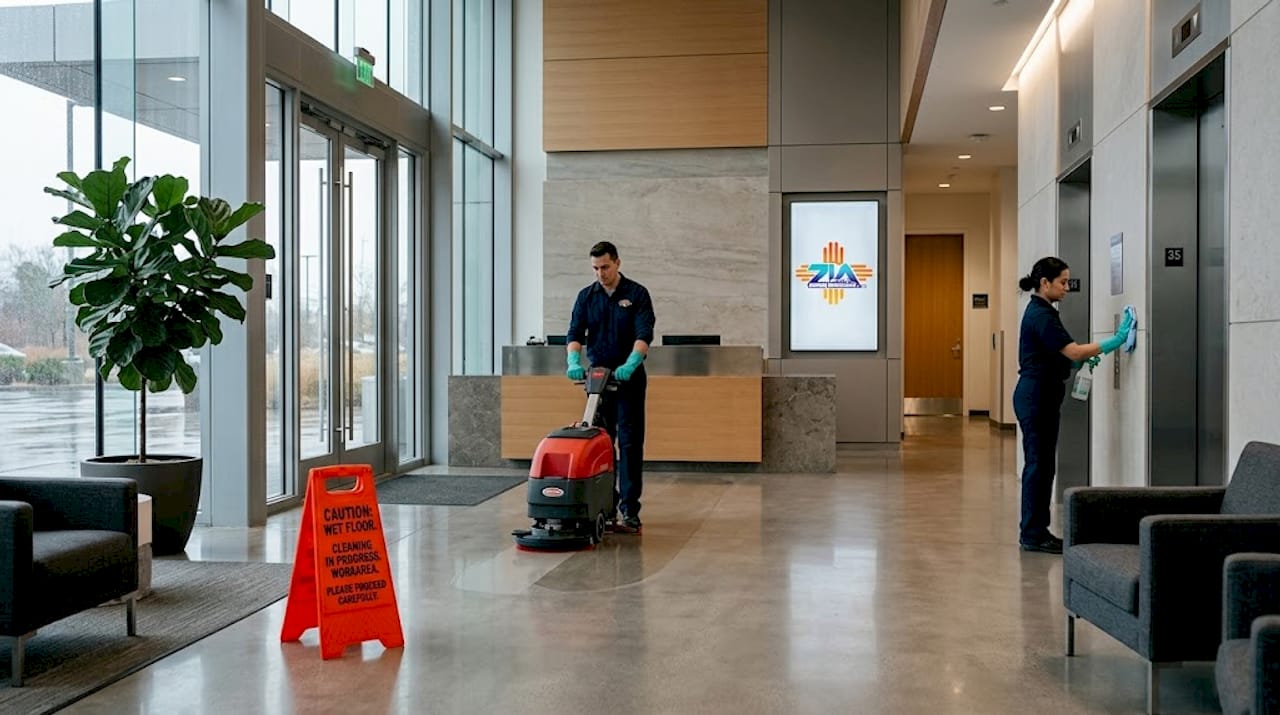
Allergens, mold spores, and bacteria accumulate in these spaces over time. When HVAC systems circulate air through contaminated ducts, those particles spread throughout the entire building. Employees in affected spaces experience more respiratory irritation, more sick days, and lower overall productivity. The office deep cleaning importance becomes clear when you consider that responsive, proactive maintenance is directly linked to 25–40% higher occupant satisfaction scores.
The specific zones that carry the highest health risk include:
- Restrooms, where pathogens concentrate on surfaces that daily cleaning cannot fully sanitize
- HVAC ducts and air handling units, which distribute contaminants building-wide if left uncleaned
- Break rooms and kitchen areas, where food residue creates conditions for mold and bacteria
- Entryways and lobbies, where foot traffic deposits outdoor pollutants deep into flooring materials
Pro Tip: Prioritize restrooms, HVAC intakes, and high-touch surfaces when planning your deep cleaning scope. These zones carry the highest pathogen load and deliver the most immediate health return when cleaned thoroughly.
3. Asset preservation and extended equipment lifespan
Every major surface and system in your building degrades faster when grime is allowed to build up unchecked. Allowing grime to accumulate for over a year can cause permanent damage to grout and HVAC components that requires expensive restoration rather than simple cleaning. That distinction matters. Cleaning costs a fraction of restoration.
Carpet is one of the clearest examples of this principle. Professional carpet extraction removes the embedded grit and oils that slowly cut carpet fibers from the inside out. Without annual extraction, a carpet that could last 10 to 12 years may need replacement in 6 to 7. Deep cleaning extends asset lifespans by preventing permanent staining and mechanical deterioration, deferring replacement costs that frequently reach six figures in larger facilities.
The same logic applies to hard flooring, tile grout, and building fixtures. Grout that is cleaned annually stays sealed and intact. Grout that is neglected absorbs stains and moisture, eventually cracking and requiring re-grouting or full tile replacement. These are not hypothetical risks. They are the predictable outcome of skipping scheduled deep cleaning.
Pro Tip: Document the condition of flooring, grout, and HVAC components before and after each annual deep clean. Photographs and written notes create a maintenance record that supports capital expenditure planning and insurance claims.
Key assets that benefit most from annual deep cleaning include:
- Commercial carpeting and area rugs
- Tile and grout in restrooms, kitchens, and lobbies
- HVAC coils, filters, and ductwork
- Upholstered furniture and partition panels
- Exterior-facing windows and building entry systems
4. Reduced emergency maintenance and reactive repair costs
Reactive maintenance costs run 3 to 5 times higher per event than planned maintenance that includes scheduled deep cleaning. That multiplier is the core financial argument for treating deep cleaning as a budget line, not an optional expense.
When deep cleaning is integrated into a preventive maintenance program, building systems get inspected regularly. Technicians notice early signs of wear, blockage, or corrosion that would otherwise go undetected until they cause a failure. Buildings with deep cleaning integrated into preventive maintenance programs cut emergency repairs by 40–60%. That reduction directly protects your operating budget from unpredictable spikes.
The commercial cleaning advantages of a scheduled approach extend beyond the cleaning itself. You gain predictability. You can budget accurately, plan around operational cycles, and avoid the disruption that emergency repairs cause to tenants, employees, and customers.
5. Comparing annual, semi-annual, and quarterly cleaning schedules
Not every building needs the same deep cleaning frequency. Building usage patterns should drive cleaning frequency rather than arbitrary calendar decisions. A low-traffic administrative office and a high-volume medical clinic have fundamentally different cleaning requirements.
The table below summarizes how different schedules align with building types and the trade-offs involved:
| Schedule | Best suited for | Key advantage | Key risk |
|---|---|---|---|
| Annual | Low-traffic offices, storage facilities | Cost-effective, sufficient for light use | May miss problems in moderate-use zones |
| Semi-annual | Mid-size offices, schools | Balances cost and coverage | Requires careful zone prioritization |
| Quarterly | Medical facilities, high-traffic retail | Catches problems early, protects health | Higher annual spend |
| Monthly | Hospitals, food service, gyms | Maximum protection and compliance | Significant budget commitment |
Deep cleaning frequency should be annual for low-traffic environments and quarterly for high-traffic spaces, with focused attention on restrooms, lobbies, and entryways in busy buildings. The cost of over-cleaning is manageable. The cost of under-cleaning compounds silently until it becomes a major repair or a health complaint.
6. Practical steps for implementing a deep cleaning program
Planning a deep cleaning program is straightforward when you approach it systematically. The goal is to align the cleaning schedule with your building’s operational rhythm so that disruption is minimal and results are consistent.
Start by mapping your building’s usage patterns. Identify which zones carry the highest foot traffic, which systems are most vulnerable to grime buildup, and which areas have the greatest impact on occupant health and first impressions. This assessment becomes the foundation of your cleaning scope.
Key planning considerations include:
- Timing: Schedule deep cleaning during low-occupancy periods, such as weekends, holidays, or after business hours, to avoid disrupting operations
- Product selection: Specify certified green cleaning products where possible, particularly in medical facilities and schools where chemical sensitivity is a concern
- Vendor qualifications: Confirm that your cleaning provider carries proper insurance, uses trained technicians, and can document results with before-and-after reporting
- Budget integration: Treat deep cleaning as a capital maintenance expense, not a discretionary line item, to protect it from budget cuts
- Frequency review: Reassess your schedule annually as building occupancy and usage patterns change
For most commercial properties, outsourcing deep cleaning to a professional service delivers better results than in-house teams. Professional providers bring specialized equipment, trained staff, and established protocols that in-house janitorial teams are not equipped to replicate. You can review office cleaning frequency guidance to match your building type with the right schedule before committing to a program.
My take on why deep cleaning is still undervalued
I have worked with facility managers across a wide range of commercial properties, and the same pattern comes up repeatedly. Deep cleaning gets treated as an aesthetic upgrade rather than a maintenance necessity. When budgets tighten, it is one of the first line items to get cut. That decision almost always costs more in the long run.
What I have seen in practice is that the buildings with the highest long-term maintenance costs are rarely the oldest or the most heavily used. They are the ones where deep cleaning was deferred for two or three years because it “looked fine.” By the time the damage becomes visible, you are past the point where cleaning fixes it. You are into restoration territory.
The insight I keep coming back to is that deep cleaning is often misunderstood as an aesthetic luxury rather than a preventive strategy that protects indoor air quality and asset integrity. That framing needs to change. Treat deep cleaning the same way you treat roof inspections or fire suppression testing. It is not optional maintenance. It is how you protect the investment the building represents.
My recommendation: get your first deep clean documented thoroughly. The before-and-after record alone will make the case for every future budget conversation you need to have.
— Ashley
How Zia Building Maintenance supports your deep cleaning goals
Zia Building Maintenance has been delivering professional janitorial and commercial cleaning services in Albuquerque since 1989. Their team understands that every building has different needs, and they build cleaning programs around your specific usage patterns, occupant requirements, and budget. Whether you manage an office building, a medical facility, or a school, Zia Building Maintenance brings the equipment, trained staff, and documented processes that produce consistent results.
If you are ready to build a cleaning schedule that protects your assets and supports a healthy environment, start with their guidance on how often large offices should be cleaned. Their team can walk you through a customized plan that aligns deep cleaning with your operational calendar. Request an estimate today and see why Zia Building Maintenance earned the title of the #1 office cleaning service in South Valley for 2025.
FAQ
What are the main annual building deep cleaning benefits?
Annual deep cleaning reduces operating costs by 25–35%, improves indoor air quality by removing hidden allergens and pathogens, and extends the lifespan of flooring, HVAC systems, and fixtures by preventing permanent damage from grime buildup.
How is deep cleaning different from regular janitorial service?
Regular janitorial service addresses surface dirt on a daily or weekly basis. Deep cleaning targets grime, allergens, and pathogens in HVAC ducts, carpet fibers, grout, and upholstery that routine cleaning never reaches.
How often should a commercial building be deep cleaned?
Frequency depends on building usage. Low-traffic offices typically need annual deep cleaning, while high-traffic environments such as medical facilities and retail spaces benefit from quarterly deep cleaning focused on restrooms, lobbies, and entryways.
Does annual deep cleaning actually save money?
Yes. Properties with preventive maintenance plans that include deep cleaning spend 40–60% less on emergency maintenance, and reactive repair costs run 3 to 5 times higher per event than planned maintenance that incorporates scheduled cleaning.
Should property managers hire professionals or use in-house staff for deep cleaning?
Professional cleaning services are generally the better choice because they bring specialized equipment, trained technicians, and documented protocols that in-house janitorial teams are not equipped to replicate at the same level of quality.