
A Divine Shine for Your Sanctuary Lighting
Why Church Lighting Fixture Cleaning Belongs on Every Sanctuary Maintenance List
Church lighting fixture cleaning is one of the most overlooked — and most impactful — maintenance tasks in any house of worship. Here’s a quick overview of what it involves and why it matters:
Quick-start guide to church lighting fixture cleaning:
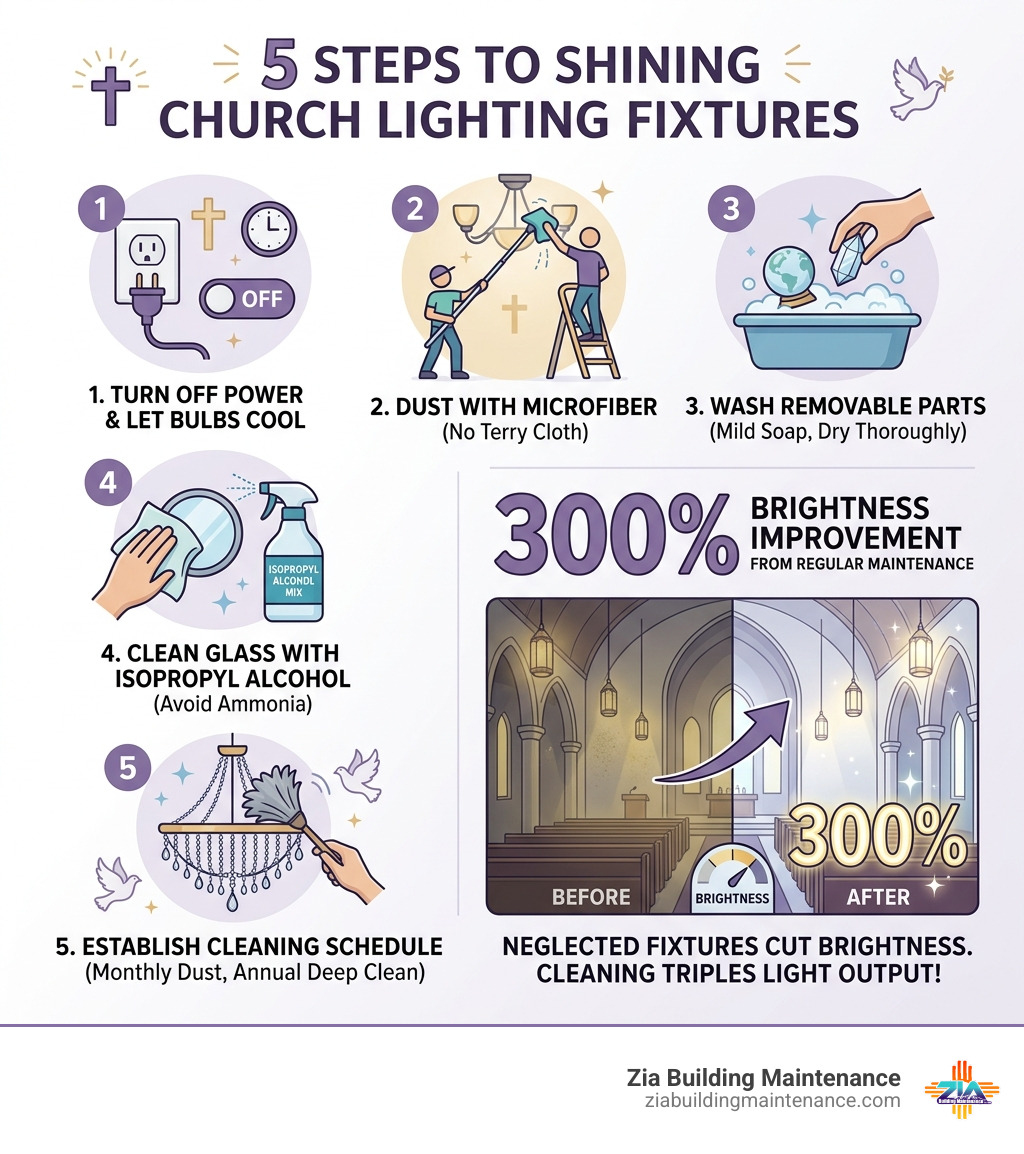
- Turn off power at the switch and breaker, and let bulbs cool completely
- Dust first using a microfiber cloth or extendable duster — never terry cloth
- Clean removable parts with mild dish soap and warm water; dry thoroughly before reinstalling
- Use isopropyl alcohol (mixed with distilled water) for glass lenses and crystal fixtures
- Avoid ammonia-based cleaners like Windex — they can damage coatings and produce harmful fumes
- Repeat on a schedule — monthly dusting, annual deep clean for chandeliers
Dirty light fixtures don’t just look bad. They can cut your sanctuary’s brightness by up to 300% — without a single bulb burning out. That’s not a typo. Research shows that cleaning neglected fixtures can triple light output without buying a single piece of new equipment.
For churches in Albuquerque, where dust is a constant presence, this problem compounds fast. Fixtures that haven’t been touched in a year or more accumulate enough grime to noticeably dim a sanctuary — affecting the worship experience, the warmth of the space, and even air quality.
And yet, cleaning is often skipped because it feels complicated, especially with high ceilings, delicate crystals, and electrical components in the mix.
This guide breaks it all down — safely, practically, and in plain language.
I’m Ashley Cordova, Vice President of Zia Building Maintenance, a family-owned janitorial company serving New Mexico since 1989, and church lighting fixture cleaning is one of the most detail-critical services we provide to Albuquerque’s religious facilities. With a background shaped by hands-on operations management and a client-first approach, I’ve seen how the right maintenance routine transforms a dim, dusty sanctuary into a space that truly shines.
Key terms for church lighting fixture cleaning:
The Importance of Church Lighting Fixture Cleaning
When we walk into a sanctuary, the light should feel warm and inviting. However, gravity and static electricity are constantly at work, pulling dust, pollen, and even microscopic soot from heating systems onto your fixtures.
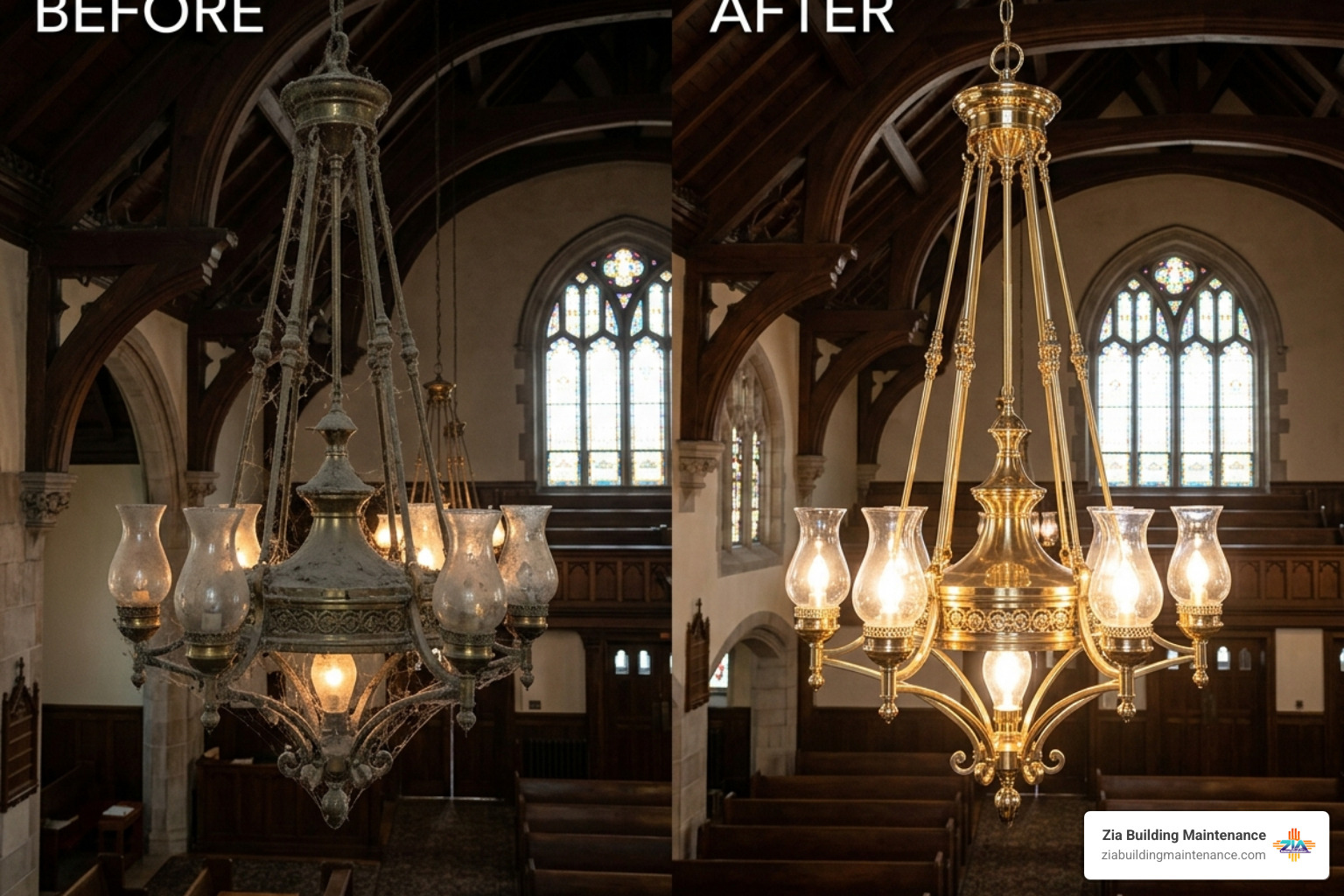
The impact of this buildup is more than just cosmetic. According to industry research, cleaning dirty lighting fixtures can improve light output by at least 300% without purchasing any new lamps or equipment. If your fixtures haven’t been cleaned in three years, they are likely operating at a fraction of their intended efficiency. This is essentially “free” light that your congregation is missing out on.
Furthermore, regular lighting maintenance extends the life of your equipment. Dust acts as an insulator, trapping heat around sensitive electronics and bulbs. In the dry, dusty climate of Rio Rancho and Bernalillo, this heat buildup can lead to premature fixture failure or even electrical shorts. By keeping these components clean, you ensure that heat dissipates correctly, protecting the church’s investment in its facility infrastructure.
Enhancing the Worship Atmosphere
The sanctuary is a place of spiritual focus. Flickering lights, visible cobwebs on chandeliers, or a “hazy” glow from dusty recessed cans can be a subtle distraction for congregants. Proper church lighting fixture cleaning restores the intended brilliance of the space, ensuring that the pulpit is well-lit and the architectural beauty of the building is showcased. Preventive maintenance ensures that the atmosphere remains consistent from week to week, reflecting the care and stewardship the leadership has for the house of God.
Safety and Fire Prevention
Safety is our top priority at Zia Building Maintenance. Thick layers of dust are not just unsightly; they are flammable. When a high-wattage bulb heats up a dust-caked fixture, it creates a fire hazard. Regular cleaning allows for a visual inspection of the wiring and sockets. We often find brittle wires or scorched sockets during a cleaning session that would have otherwise gone unnoticed until a failure occurred.
Essential Safety and Preparation for Sanctuary Maintenance
Before anyone climbs a ladder, safety protocols must be established. In Downtown Albuquerque, where many historic churches have older electrical systems, these steps are non-negotiable.
Electrical and Ladder Protocols
- Kill the Power: Never rely solely on the wall switch. Turn off the circuit breaker for the lighting section you are working on. This prevents accidental shocks and protects the fixtures from power surges.
- Cool Down Time: Traditional bulbs can reach high temperatures. Give them at least 30 minutes to cool before touching them.
- Ladder Safety: Use a high-quality, non-conductive fiberglass ladder. Always maintain “three-point contact” (two feet and one hand, or two hands and one foot on the ladder).
- The Spotter System: Never clean high fixtures alone. Always have a spotter to steady the ladder and assist with passing tools.
Protecting Sanctuary Furnishings
Cleaning light fixtures often involves liquids and falling dust. We recommend using mover’s pads or thick drop cloths to cover pews, altars, and delicate flooring. If you are working near the church nursery, ensure all toys and mats are covered or moved to prevent dust from settling where children play.
Step-by-Step Guide to church lighting fixture cleaning
To achieve a professional-grade clean, we follow a strict “top-down” methodology. This ensures that any dust dislodged from the top of a fixture doesn’t ruin a surface you’ve already cleaned below.
Tools and Solutions for church lighting fixture cleaning
The right tools make the difference between a streaky mess and a “divine shine.”
- Microfiber Cloths: These are superior to terry cloth because they trap dust rather than just moving it around. They also won’t scratch delicate finishes.
- Isopropyl Alcohol (70-90%): Great for removing oils and grime from glass without leaving a residue.
- Distilled Water: Prevents water spots that occur with Albuquerque’s hard tap water.
- Mild Dish Soap: For washing removable glass globes or plastic covers.
| Component | Recommended Solution | Tool |
|---|---|---|
| Glass Lenses/Globes | Distilled water + Isopropyl alcohol | Microfiber cloth |
| Metal Frames | Dry dusting or very damp cloth | Microfiber cloth |
| LED Screens/Walls | 2/3 Alcohol + 1/3 Distilled water | Lint-free cloth |
| Crystal Elements | Distilled water + Alcohol | Cotton gloves |
For churches with stained glass fixtures, extra care is needed. Never use harsh chemicals on leaded glass; a soft brush and a slightly damp cloth are usually all that is required.
Best Practices for church lighting fixture cleaning in High Ceilings
For recessed lights or ceiling-mounted fixtures that are out of reach for a standard ladder, use extendable dusters with microfiber heads. If the fixtures are extremely high, such as in a cathedral-style sanctuary, consider using scaffolding or a specialized lift. Always ensure the floor can support the weight of the equipment and protect the flooring with plywood or heavy mats.
Specialized Care for Chandeliers and Production Rigs
Chandeliers and stage lighting require a more technical approach than standard hallway lights.
Handling Delicate Crystals and Glass
Church chandeliers are often centerpieces of spiritual and historical significance. When deep cleaning:
- Work in Sections: To avoid losing your place, clean one section at a time.
- The “Drip-Dry” Myth: Some suggest spraying chandeliers and letting them drip. We advise against this, as it can cause moisture to seep into electrical sockets.
- Hand-Wiping: Use cotton gloves dampened with a mixture of three parts distilled water and one part isopropyl alcohol. Wipe each crystal individually. This prevents fingerprints and ensures every facet sparkles.
- Padding Below: Place a thick comforter or mover’s pad directly under the chandelier. If a crystal drops, it has a much better chance of surviving the fall.
Maintenance for Stage and LED Lighting
Modern lighting rigs require specific care to stay functional.
- Fans and Vents: Moving head lights and LED fixtures have fans that pull in dust. Use a vacuum with a soft brush attachment to clean these vents monthly.
- Heat Sinks: Dust on heat sinks causes LEDs to run hot, shortening their lifespan.
- The “Listening Mode” Trap: Many church techs don’t realize that LED fixtures often stay powered on even when the light is “off” (dimmed to 0%). Always cut the power at the breaker to truly power down the electronics and prevent heat wear.
- Lens Coatings: Never use Windex or ammonia on high-end stage lights like ETC Source Fours. These have anti-reflective coatings that ammonia will strip away. Use only pure isopropyl alcohol.
Establishing a Professional Maintenance Schedule
Consistency is the secret to a well-maintained facility. We recommend integrating lighting into your monthly church cleaning plan.
- Weekly: Dust low-hanging fixtures and entryway lights.
- Monthly: Use extendable dusters for recessed lights and high-reach fixtures. Vacuum cooling fans on stage lights.
- Quarterly: Inspect all bulbs and sockets. Wipe down accessible glass lenses.
- Annually: Perform a deep clean of all chandeliers, including crystal removal if necessary.
Training Volunteers and Staff
If your church relies on volunteers, provide a clear safety orientation. Standardize the tools—don’t let volunteers bring in their own “favorite” cleaners, as someone might accidentally use a caustic chemical on a delicate finish. Keeping a custodian contract or log helps track when fixtures were last serviced.
When to Call Professional Services
While a dedicated volunteer team can handle basic dusting, some situations require professional intervention:
- Extreme Heights: If fixtures are over 20 feet high, specialized lifts and safety harnesses are required.
- Intricate Restoration: If a historic chandelier has years of “nicotine film” or heavy soot, professional restoration cleaning is safer.
- Liability Concerns: Many Albuquerque churches prefer the peace of mind that comes with a licensed and insured commercial cleaning provider.
Frequently Asked Questions about Church Lighting
Can I use ammonia-based cleaners like Windex on church light fixtures?
No. Ammonia can react with the heat of the bulbs to produce toxic fumes. More importantly, it can damage the anti-reflective coatings on stage lights and cause yellowing or “crazing” on acrylic and plastic components.
How often should church chandeliers be deep cleaned?
In the Albuquerque area, we recommend a thorough deep clean at least once a year. If your church is located near a busy road with high traffic and dust, you may need to perform this twice a year to maintain maximum brightness.
Why is it important to wear gloves when changing or cleaning bulbs?
The oils from your skin can create “hot spots” on the glass of the bulb. This is especially true for halogen lamps. These hot spots cause the glass to heat unevenly, which can lead to the bulb shattering or burning out prematurely.
Conclusion
A well-lit sanctuary is a welcoming sanctuary. By prioritizing church lighting fixture cleaning, you aren’t just improving the aesthetics of your building; you are practicing good stewardship of your resources and ensuring the safety of your congregation.
At Zia Building Maintenance, we understand that your sanctuary is more than just a building—it’s a sacred space. Since 1989, our family has been helping Albuquerque, Rio Rancho, and Bernalillo churches maintain their “grime to glory” transformations. Whether you need a one-time deep clean of your historic chandeliers or a consistent monthly maintenance plan, we are here to help.
Request a professional church cleaning consultation today and let us help your sanctuary shine with a divine light.