TL;DR:
- Effective common area janitorial service requires precise scope definitions, documented task frequencies, and clear boundary exclusions to prevent disputes. Regular review and adaptation of the scope, along with comprehensive contract documentation, ensure consistent, reliable building maintenance. Establishing a strong partnership with an accountable vendor enhances cleanliness, tenant satisfaction, and overall facility hygiene.
Common area janitorial service is the professional cleaning and upkeep of shared spaces in commercial or residential buildings, covering every zone that multiple tenants, employees, or visitors access and use together. In property management, this service is also referred to as common area maintenance cleaning, and understanding the distinction matters when you are writing contracts, allocating costs, or evaluating vendor proposals. Spaces like lobbies, corridors, restrooms, stairwells, elevators, and parking areas all fall under this umbrella. When these shared zones are clean and well maintained, they signal professionalism, support tenant retention, and reduce liability. When they are neglected, complaints follow quickly.
What is common area janitorial service and which spaces does it cover?
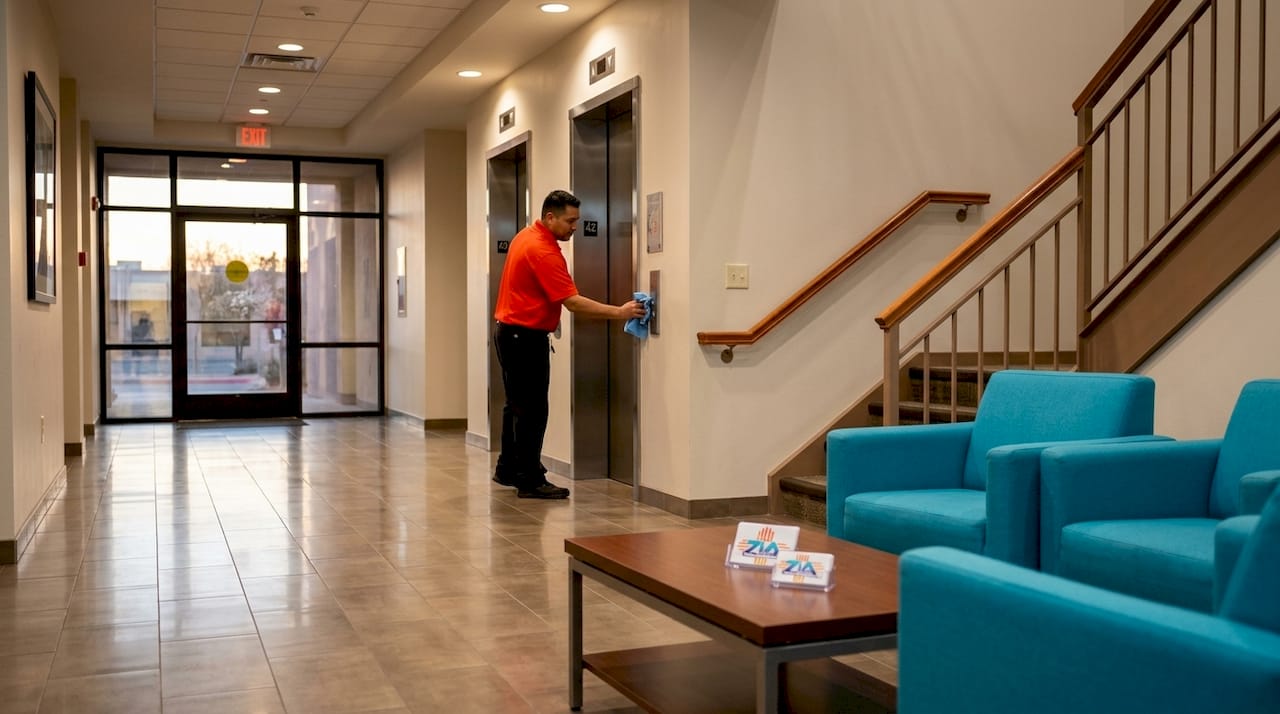
Common areas are defined in lease clauses and typically include lobbies, corridors, stairwells, elevators, restrooms, parking areas, sidewalks, landscaping, and loading docks. This definition is not just a formality. It directly determines which spaces your janitorial vendor is responsible for and which costs get passed to tenants through Common Area Maintenance (CAM) fees.
The boundaries matter more than most property managers realize. Vague common area definitions in leases can result in tenants paying for spaces they never use, including landlord offices or areas under active renovation. That kind of ambiguity generates disputes and erodes trust with tenants. Getting precise about boundaries from the start protects everyone.
Spaces that are typically excluded from common area janitorial scope include landlord-only offices, mechanical and utility rooms, tenant-exclusive suites, and any area currently under renovation. These exclusions should appear explicitly in both the lease and the janitorial contract. Referencing floor plans and attaching labeled diagrams to your service agreement removes any gray area.
- Included spaces: Lobbies, hallways, shared restrooms, stairwells, elevators, parking structures, sidewalks, and building entrances
- Typically excluded: Landlord offices, mechanical rooms, tenant-only suites, storage areas, and active construction zones
- Gray areas to clarify: Shared break rooms, fitness centers, rooftop terraces, and loading docks with mixed use
Pro Tip: List every exclusion explicitly in the contract before signing. A vendor who charges for mechanical room cleaning or landlord office space is not overcharging by accident. Ambiguity in scope language is the most common source of billing disputes in commercial janitorial contracts.
What tasks and frequencies are included in janitorial services for common areas?
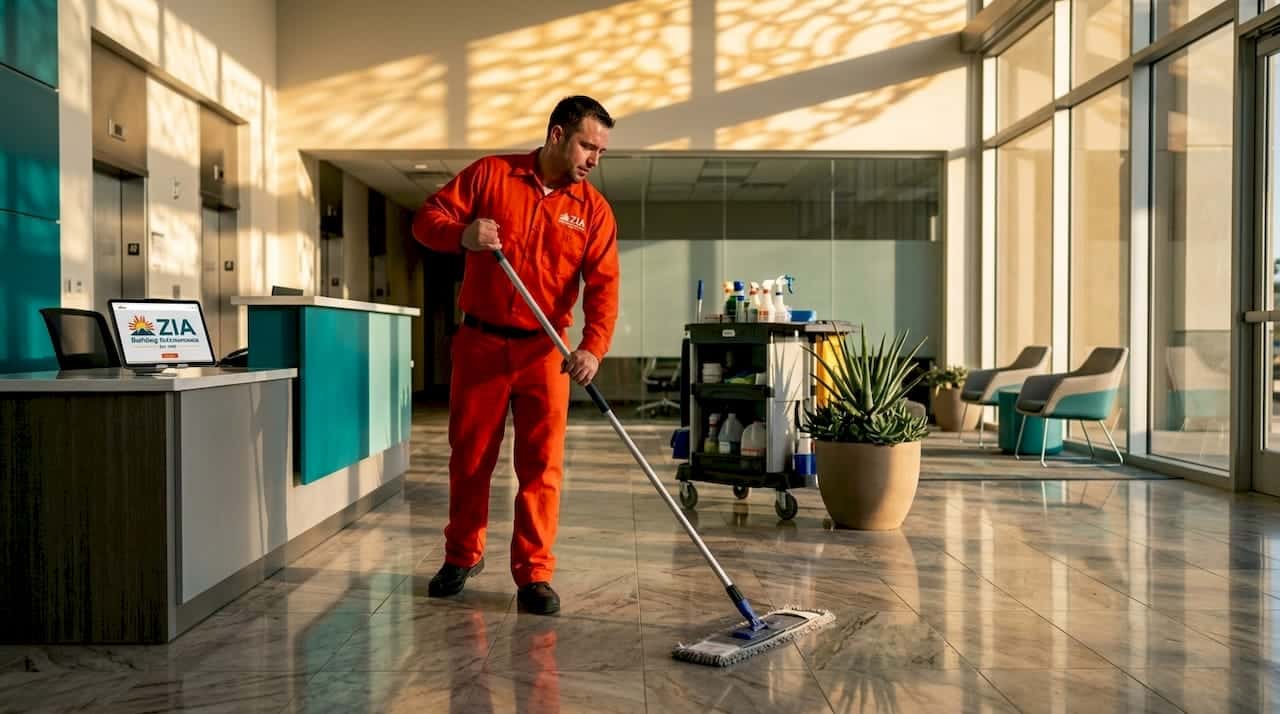
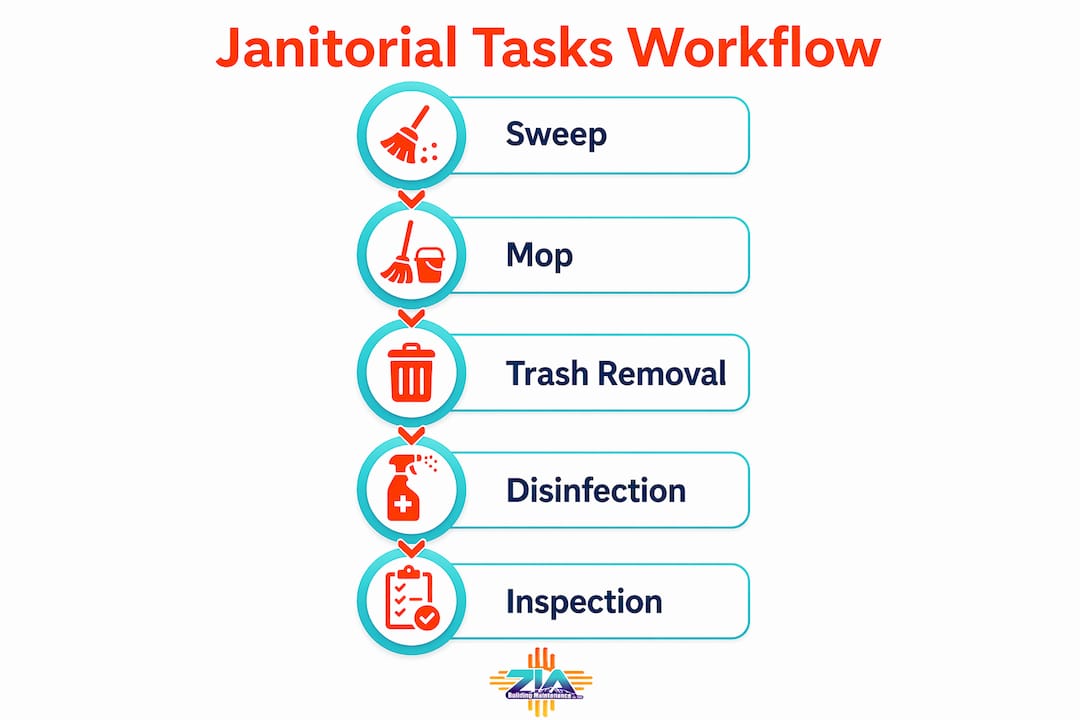
Professional janitorial services typically include sweeping, mopping, dusting, trash removal, restroom sanitation, and spot cleaning of windows and high-touch surfaces in shared spaces. The scope is customized per property, but the task categories remain consistent across office buildings, medical facilities, retail centers, and multi-tenant residential complexes.
Frequency is where most service agreements fall short. Not every task needs to happen every night, and not every area carries the same foot traffic. A structured approach assigns tasks to one of three tiers.
- Nightly tasks: Trash removal, restroom cleaning and restocking, floor sweeping and mopping, wiping down reception counters and shared surfaces
- Weekly tasks: Vacuuming carpeted corridors, spot cleaning walls and doors, cleaning elevator interiors, sanitizing drinking fountains
- Monthly tasks: Deep cleaning of floor grout, window washing, dusting of ceiling vents and light fixtures, inspection of supply levels
High-touch point disinfection deserves its own category. Door handles, elevator buttons, restroom fixtures, and shared amenity surfaces require more frequent attention than standard cleaning schedules account for. This is especially true in medical office buildings, schools, and any facility with high daily visitor volume.
A zone × frequency matrix ensures that cleaning scope matches the actual needs of different areas, improving efficiency and tenant satisfaction. Experienced property managers build these matrices before services begin to avoid under-scoping and minimize complaints, particularly for sensitive touchpoints and restocking needs.
Pro Tip: Ask your vendor to provide a completed zone × frequency matrix as part of their proposal. If they cannot produce one, that tells you something important about their operational maturity. A vendor who plans cleaning by zone and frequency will consistently outperform one who works from a generic checklist.
How are common area janitorial services contracted and managed?
A Scope of Work (SOW) document clearly details janitorial tasks, frequencies, and service standards, and it is the single most important document in any common area cleaning relationship. Without it, both parties are operating on assumptions. With it, you have a reference point for every performance conversation.
A well-structured SOW for common area janitorial services should include the following elements:
- Task list by zone: Every area mapped to its specific cleaning duties
- Frequency schedule: Nightly, weekly, and monthly tasks clearly separated
- Service standards: What “clean” means for each task, including acceptable product types
- Exclusions: Spaces and tasks explicitly outside the vendor’s responsibility
- Accountability measures: Cleaning logs, checklists, and issue reporting procedures
- Performance review schedule: Quarterly walkthroughs or monthly check-ins with documented outcomes
Cleaning logs, checklists, and issue tracking documentation in contracts support accountability and auditing of janitorial services. Experienced operators require these to verify adherence to agreed service levels and respond promptly to deficiencies. Without documentation, a missed task is just your word against the vendor’s.
The most common causes of tenant complaints are missed or deferred maintenance tasks in common areas. A checklist-based system with assigned priorities and responsible parties is the most reliable way to prevent those failures before they affect tenant satisfaction.
CAM fee structures add another layer of complexity. When janitorial costs are passed through to tenants, the scope of what is cleaned directly affects what tenants pay. A commercial cleaning contract checklist helps property managers align janitorial scope with CAM cost allocations, reducing the risk of tenant challenges at year-end reconciliation.
Janitorial services vs. commercial cleaning: what is the difference?
Janitorial services focus on routine cleaning and maintenance of common spaces, while commercial cleaning includes specialized or one-time deep cleaning services. Janitorial work is scheduled and ongoing. Commercial cleaning can be project-based, seasonal, or specialist in nature. Both serve a role in facility maintenance, but they are not interchangeable.
| Service Type | Scope | Frequency | Best For |
|---|---|---|---|
| Common area janitorial | Routine cleaning of shared spaces | Nightly, weekly, monthly | Ongoing building maintenance |
| Commercial deep cleaning | Intensive cleaning of floors, carpets, or surfaces | Quarterly or as needed | Post-construction, seasonal refresh |
| Tenant-specific cleaning | Interior of individual suites or offices | Per tenant agreement | Private office upkeep |
| Specialized cleaning | Biohazard, medical, or industrial cleaning | As required | Health facilities, labs, warehouses |
The distinction matters when you are evaluating bids. A vendor quoting only janitorial rates may not include carpet extraction, pressure washing, or post-renovation cleanup. Confirm which category each line item falls under before signing. Mixing the two without clarity in the contract is a reliable path to scope creep and unexpected invoices.
How to hire janitorial services for common areas: practical tips
Selecting the right vendor for common area cleaning requires more than comparing hourly rates. The quality of documentation, the vendor’s licensing and insurance status, and their communication practices all predict long-term performance more accurately than price alone.
Evaluating janitorial service performance starts before the contract is signed. Ask every prospective vendor these questions during the selection process:
- Do you carry general liability insurance and workers’ compensation coverage?
- Can you provide a sample SOW and zone × frequency matrix from a comparable property?
- How do you handle missed tasks or tenant complaints?
- What cleaning products do you use, and are they safe for the surfaces in our building?
- Do you provide cleaning logs, and how are they shared with property management?
Knowing what to look for in a janitorial company goes beyond credentials. Responsiveness during the sales process is a reliable indicator of responsiveness after the contract starts. A vendor who takes three days to return a proposal will likely take three days to respond to a complaint.
Missed or deferred maintenance tasks in common areas are the most common source of tenant complaints, which means your oversight process is as important as your vendor selection. Schedule quarterly walkthroughs, review cleaning logs monthly, and document every deficiency in writing. That paper trail protects you during contract renewals and dispute resolution.
Pro Tip: Review and update your Scope of Work at least once a year. Building use patterns change, tenant mix shifts, and foot traffic fluctuates seasonally. A SOW written in January may not reflect your actual cleaning needs by October. Vendors who never push back on an outdated SOW are not managing your account. They are just cashing checks.
Key takeaways
Common area janitorial service requires a precise scope of work, documented task frequencies, and clear boundary definitions to protect both property managers and tenants from disputes and service gaps.
| Point | Details |
|---|---|
| Define boundaries precisely | Reference floor plans and list all exclusions in the lease and janitorial contract. |
| Use a zone × frequency matrix | Assign cleaning tasks by area and frequency to match actual building needs. |
| Demand documentation | Require cleaning logs, checklists, and issue tracking in every service agreement. |
| Separate janitorial from commercial cleaning | Confirm which tasks are routine maintenance and which are specialized or project-based. |
| Review the SOW annually | Update scope documents to reflect changes in building use, tenant mix, and foot traffic. |
What I have learned from years of watching common area contracts go wrong
I have reviewed enough janitorial contracts to know that the problems almost never start with the cleaning itself. They start with the paperwork, or the lack of it. Property managers sign agreements that list “common areas” without defining them, then spend months arguing with vendors about whether the parking garage counts.
The other pattern I see constantly is treating the SOW as a one-time document. A building’s cleaning needs in year one look nothing like year three. Tenant turnover, new amenities, higher foot traffic, and seasonal changes all affect what needs to be cleaned and how often. Vendors are not going to volunteer that your scope is outdated. That is your job.
The property managers who get the best results treat their janitorial vendor as a facility partner, not a commodity. They share occupancy data, flag upcoming events that will spike traffic, and give vendors enough lead time to adjust staffing. That partnership mindset produces cleaner buildings and fewer complaints. It also makes vendors more likely to go above the minimum when something unexpected comes up.
Hygiene expectations from tenants have also shifted noticeably in recent years. What passed as acceptable in 2019 does not meet the standard today, particularly in restrooms, elevator cabs, and shared break rooms. If your SOW has not been updated since before 2022, you are almost certainly under-scoped on disinfection frequency.
— Ashley
Reliable common area cleaning starts with the right partner
Zia Building Maintenance has provided professional janitorial and commercial cleaning services in Albuquerque since 1989, serving offices, medical facilities, and schools with customized cleaning plans built around documented scopes of work. Every service agreement includes task checklists, cleaning logs, and defined frequencies so property managers always know exactly what is being cleaned and when. The team is fully licensed and insured, and service plans are reviewed regularly to stay aligned with each property’s actual needs. If you manage shared spaces and want consistent, accountable cleaning you can verify, request an estimate from Zia Building Maintenance today and see why they earned the title of the #1 office cleaning service in South Valley for 2025.
FAQ
What does common area janitorial service include?
Common area janitorial service includes sweeping, mopping, trash removal, restroom cleaning, dusting, and high-touch surface disinfection in shared building spaces like lobbies, corridors, elevators, and restrooms. Task frequency varies by area, with nightly, weekly, and monthly duties assigned based on foot traffic and use.
How is common area cleaning different from commercial cleaning?
Janitorial service covers routine, scheduled maintenance of shared spaces, while commercial cleaning refers to specialized or project-based work such as carpet extraction, pressure washing, or post-construction cleanup. Both serve different purposes and should be listed separately in any service contract.
How often should common areas be cleaned?
High-traffic areas like restrooms and lobbies require nightly cleaning, while corridors and elevator interiors typically need weekly attention. Monthly tasks cover deep floor care, window washing, and vent dusting. Cleaning frequency should be set based on actual building use, not a generic schedule.
Who is responsible for common area cleaning costs?
In commercial leases, common area maintenance costs are typically shared among tenants through CAM fees. The exact cost allocation depends on how common areas are defined in the lease, which is why precise boundary definitions and documented janitorial scopes are critical to avoiding disputes at year-end reconciliation.
What should a janitorial service contract include?
A janitorial contract should include a detailed Scope of Work, a zone × frequency task matrix, service standards, explicit exclusions, cleaning log requirements, and a performance review schedule. A restroom inspection checklist is also a useful addition for verifying restroom service standards in high-use facilities.