

TL;DR:
- Office cleanliness signals brand quality and influences client trust, employee productivity, and workplace culture.
- Consistent, professional cleaning enhances perception, reduces sick days, and fosters a positive environment that reflects strong leadership.
Office cleanliness is defined as a direct signal of brand quality, shaping how clients and employees judge your business before a single word is spoken. The role of cleaning in office branding goes well beyond surface appearances. Research consistently links well-maintained workspaces to stronger client trust, lower absenteeism, and measurably higher employee output. For office managers and business leaders, this means cleaning is not a background expense. It is a strategic investment that shapes perception, protects your reputation, and supports the kind of workplace culture that retains good people.
How clean offices shape client perception and brand trust
Clients form subconscious judgments about reliability within seconds of entering your office. A spotless reception area communicates operational discipline. A smudged glass door or stained carpet communicates the opposite, and no amount of polished marketing material will undo that first impression.
The areas that carry the most weight in client perception are specific and predictable:
- Reception and lobby areas: These are the first physical touchpoints. Gleaming floors, organized furniture, and fresh air set the tone immediately.
- Meeting rooms: Clients notice fingerprints on whiteboards, dusty surfaces, and stale odors. These details signal whether your team is detail-oriented or not.
- Restrooms: A clean restroom is one of the strongest proxies clients use to assess overall operational standards.
- Shared hallways and break rooms: Visible clutter or grime in transitional spaces undermines the professionalism of the spaces clients are meant to see.
What makes this particularly significant is that sensory markers like scent and air quality affect brand perception even when no visible dirt is present. A reception area can look clean but still carry stale air or a faint odor that reduces perceived professionalism. Neutral or fresh scents in client-facing areas actively reinforce the impression of a well-run organization.
Consistency matters as much as intensity. A single deep clean before a major client visit is far less effective than a maintained standard that clients encounter every time they walk through your door. That consistency is what builds brand credibility over time, not a one-off effort.
Pro Tip: Prioritize your lobby, reception, and conference rooms for daily attention. These high-visibility areas deliver the greatest return on your cleaning investment when it comes to client impressions.
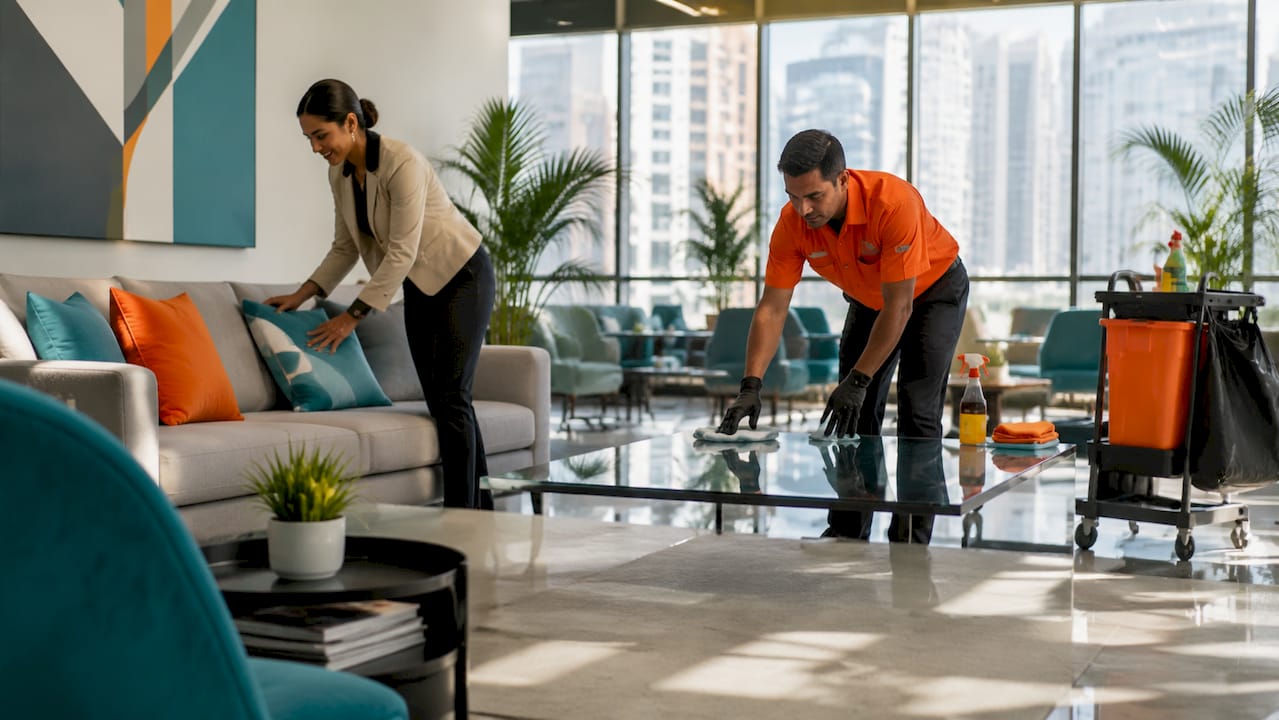
Does office cleanliness really affect employee productivity?
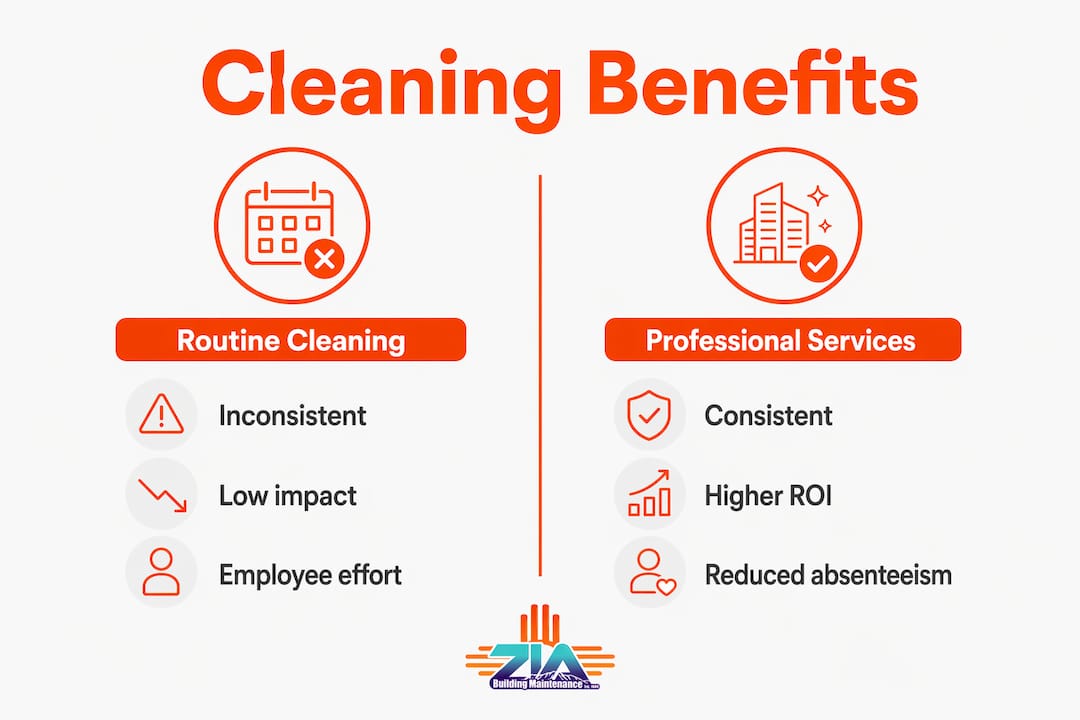
The data on this is clear and worth taking seriously. Routine professional cleaning reduces sick days by up to 46% compared to inconsistent cleaning practices. For a 50-person office, that recovery in work hours translates directly into reduced salary costs and higher output across the year.
Beyond sick days, the cognitive impact of a clean workspace is measurable. Improved indoor environmental quality increases cognitive function by 8%, with workers performing better on strategy tasks, crisis response, and information processing when air quality and cleanliness are maintained. That is not a marginal gain. For knowledge workers, an 8% improvement in cognitive performance is the difference between a good quarter and a great one.
The productivity connection extends further:
- Clutter-free, organized environments produce up to 20% higher employee productivity, according to a 2024 survey. A clean desk is not just aesthetically pleasing. It removes micro-distractions that accumulate into significant lost time.
- High-touch disinfection protocols targeting keyboards, door handles, and shared equipment reduce pathogen transmission beyond what surface wiping achieves. This targeted approach is what separates effective cleaning from performative cleaning.
- A clean office lowers stress biomarkers like cortisol, contributing to improved mental health and engagement. Employees who feel less stressed make better decisions and stay longer.
Employees also interpret a clean office as a signal that leadership values their well-being. This strengthens employee pride and reinforces brand consistency from the inside out. When your team feels respected by their environment, they are more likely to represent the brand with that same level of care.
Pro Tip: Schedule cleaning during low-traffic periods, such as early morning or post-lunch, so employees experience the workspace at its best during peak working hours. Aligning cleaning with traffic flow patterns maximizes the visible and sensory impact of each clean.
Routine cleaning vs. professional services: what actually moves the needle?
Most offices rely on some combination of employee tidying and periodic contracted cleaning. The gap between that approach and a structured professional cleaning program is larger than most office managers realize, and it shows up directly in health outcomes and brand perception.
| Factor | Routine or In-House Cleaning | Professional Cleaning Services |
|---|---|---|
| Consistency | Variable, dependent on staff availability | Scheduled and accountable |
| High-touch disinfection | Often missed or inconsistent | Targeted protocols for keyboards, handles, shared surfaces |
| Air quality management | Rarely addressed | Included in comprehensive programs |
| Brand readiness timing | Reactive | Aligned with client visits and traffic peaks |
| Health and absenteeism impact | Minimal reduction | Up to 46% reduction in sick days |
| ROI measurement | Difficult to track | Measurable through absenteeism and productivity data |
Structured cleaning as a high-ROI investment reduces financial loss from preventable illness-related absenteeism. Successful companies recognize that the cost of professional cleaning is consistently lower than the cost of the productivity and reputation losses it prevents.
The timing dimension is worth emphasizing. Cleaning schedules aligned with high-traffic periods maximize cleanliness visibility during the moments that matter most. A professional cleaning partner who understands your office schedule can position your space at peak readiness for morning client arrivals, post-lunch resets, and end-of-day preparation. An in-house approach rarely achieves that level of coordination. For a deeper look at what professional floor care contributes to this picture, the difference in long-term surface quality alone justifies the investment.
Practical strategies for making cleanliness part of your brand culture
Cleanliness becomes a brand asset when it is treated as a standard rather than a task. The following steps help office managers move from reactive cleaning to a proactive brand strategy built around workspace quality.
-
Define and communicate your cleanliness standard. Write it down as part of your office operations policy. When employees understand that a clean workspace reflects the company’s values, they are more likely to maintain it between professional cleaning visits.
-
Implement a clean desk policy. Require workstations to be cleared at the end of each day. This supports the cleaning team’s efficiency and reinforces a culture of order that clients notice.
-
Establish shared kitchen and break room etiquette. Post clear, friendly guidelines. These spaces are high-traffic and high-visibility. Neglecting them undermines the professionalism of the rest of the office.
-
Select a professional cleaning partner with a documented process. Ask prospective providers about their protocols for high-touch surfaces, scheduling flexibility, and quality checks. Knowing what to look for in a janitorial company before signing a contract saves significant time and frustration.
-
Use cleanliness as a differentiator in client interactions. When you walk a prospect through your office, a spotless environment does part of the selling for you. It signals that your organization operates with precision and care, qualities clients want in a business partner.
-
Monitor and adjust. Schedule quarterly reviews with your cleaning provider to assess coverage, timing, and any areas that need more attention. Treat it like any other vendor relationship that affects your brand.
Maintaining a clean and tidy workplace is not a passive outcome. It requires active management, clear expectations, and the right professional support to sustain over time.
Key takeaways
Office cleanliness functions as a silent brand ambassador, directly shaping client trust, employee productivity, and business reputation through consistent, professionally managed standards.
| Point | Details |
|---|---|
| First impressions are immediate | Clients judge reliability and competence within seconds of entering your office. |
| Productivity gains are measurable | Clean environments increase cognitive function by 8% and can boost output by up to 20%. |
| Professional cleaning outperforms in-house efforts | Structured programs reduce sick days by up to 46% and align cleaning with peak business moments. |
| Cleanliness signals leadership values | Employees interpret a clean office as evidence that management cares about their well-being. |
| Strategy beats one-off effort | Consistent standards, not occasional deep cleans, are what build lasting brand credibility. |
Why most office leaders are thinking about cleaning the wrong way
I have spent years observing how businesses approach their physical environments, and the pattern is consistent. Cleaning gets treated as a line item to minimize rather than a lever to pull. Leaders will invest thousands in lobby furniture or branded signage, then cut the cleaning budget when margins tighten. The result is a brand experience that contradicts itself.
The most common mistake I see is reactive scheduling. Offices get cleaned after problems become visible, not before key moments arrive. A client walks in the morning after a busy event day and encounters a space that looks used rather than prepared. That impression sticks, regardless of how good the meeting itself goes.
The second mistake is measuring cleaning ROI only in janitorial labor costs. The real ROI of cleaning lives in reduced absenteeism, improved cognitive performance, and the client impressions that convert to revenue. When you measure those outcomes, the math on professional cleaning changes completely.
My honest recommendation is to treat your cleaning standard the same way you treat your brand guidelines. Define it, document it, and hold your partners accountable to it. A well-maintained office is one of the most credible signals a business can send. It costs far less than most leaders assume, and it pays back in ways that show up on the balance sheet.
— Ashley
How Ziabuildingmaintenance can protect your office brand
Ziabuildingmaintenance has served Albuquerque businesses since 1989, earning the title of the #1 office cleaning service in South Valley for 2025. Their approach is built around customized cleaning plans that align with your office schedule, foot traffic patterns, and brand standards, so your workspace is always at its best when it matters most.
Whether you manage a professional services firm, a medical office, or a corporate headquarters, Ziabuildingmaintenance delivers the consistency and attention to detail that protects your reputation. From daily janitorial care to intensive floor maintenance, their team handles the full scope of what a well-branded office requires. Discover how professional janitorial services save money and free up your management resources for higher-priority work. Request an estimate today and see what a professionally maintained office does for your brand.
FAQ
How does office cleanliness affect brand perception?
Clients form subconscious judgments about a business’s reliability and competence based on cleanliness within seconds of entry. Clean reception areas, meeting rooms, and restrooms communicate operational excellence before any business conversation begins.
Can a dirty office increase employee turnover?
Yes. Employees interpret a dirty or disorganized office as a sign that leadership does not value their well-being, which reduces morale and engagement over time. Research shows that dirty offices contribute to turnover by undermining the workplace culture that retains good people.
What is the productivity impact of professional office cleaning?
Professional cleaning reduces sick days by up to 46% and improves cognitive function by 8% through better indoor environmental quality. For a 50-person office, those gains represent hundreds of recovered work hours annually.
How often should a professional office be cleaned?
High-traffic offices benefit from daily cleaning of common areas, restrooms, and high-touch surfaces, with deeper periodic cleaning for floors and less-used spaces. Scheduling cleans before morning arrivals and after lunch maximizes the visible impact during peak business hours.
What should I look for in a professional cleaning partner?
Prioritize providers with documented protocols for high-touch disinfection, flexible scheduling that aligns with your traffic patterns, and a clear quality review process. A provider who understands your office’s rhythm will consistently deliver a workspace that reflects your brand standards.