
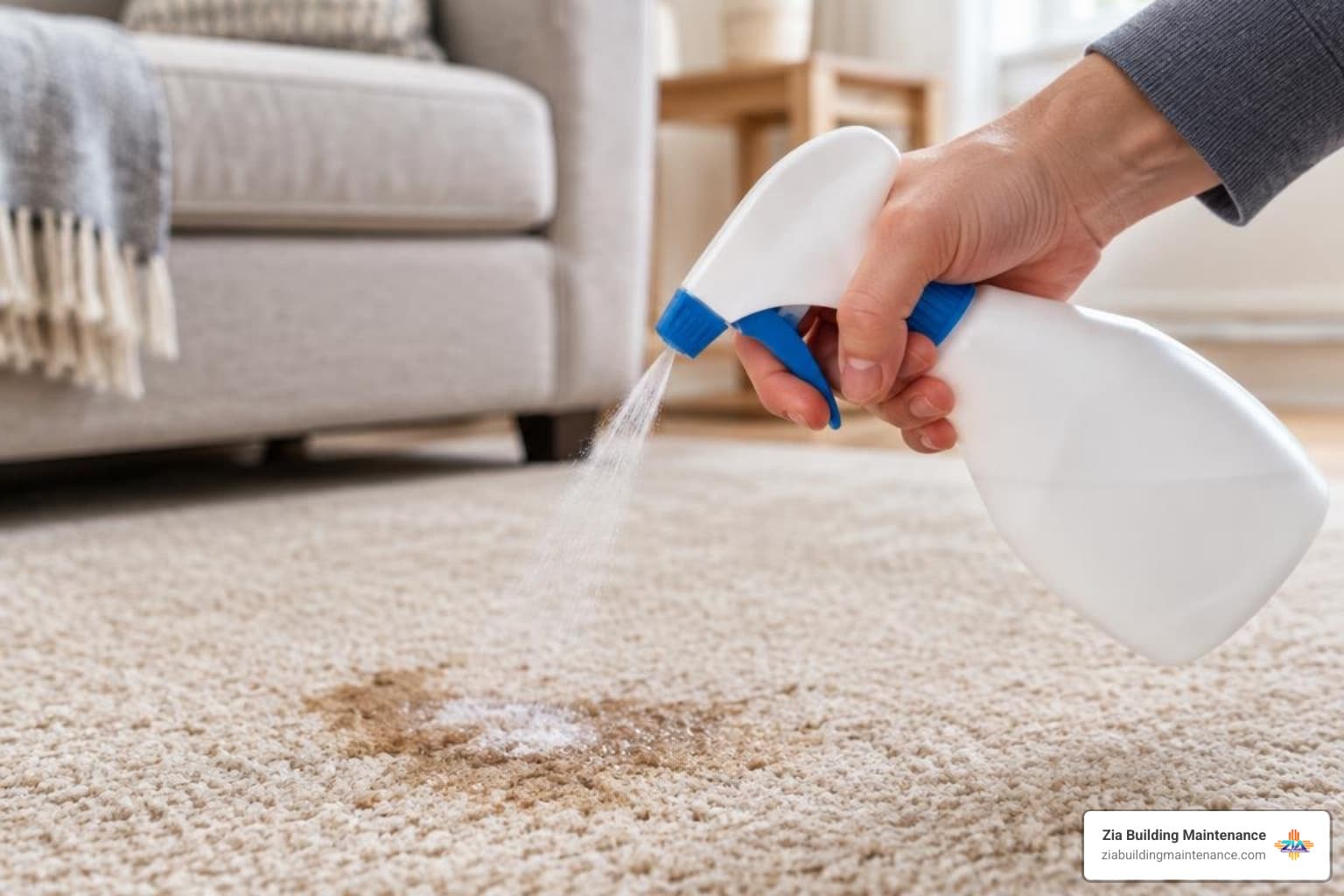
Finding the Best Carpet Spot Remover for Your Stain
The best carpet spot remover depends on what caused the stain. Choose an enzyme-based cleaner for pet accidents and odors, an oxygen-based cleaner for red wine or coffee, and a carpet-safe grease remover for oily spills. For everyday spots, Folex is a quick-acting option; OxiClean is a strong choice for colored food and drink stains. Always test a hidden area first.
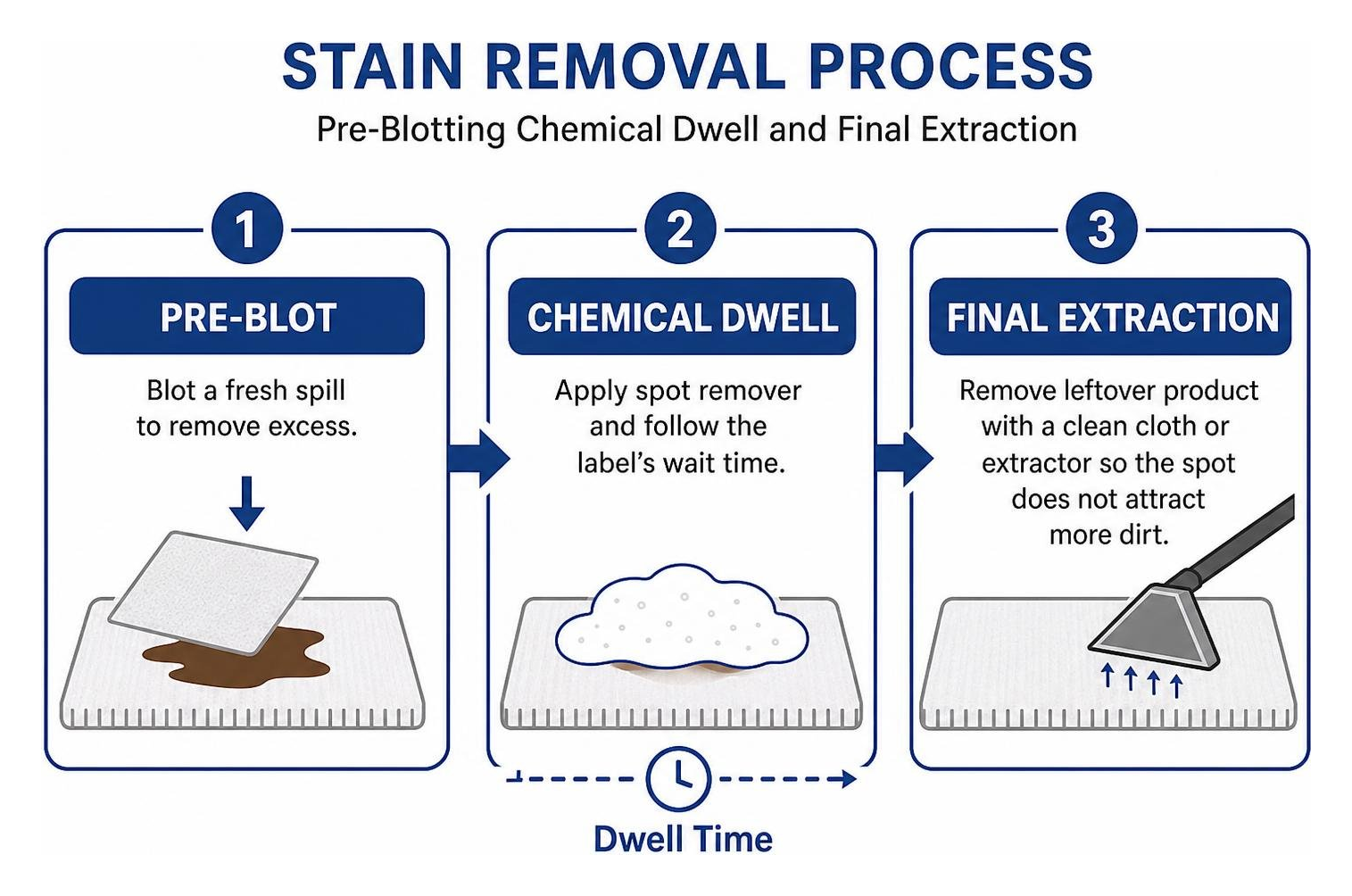
Speed matters, but so does restraint. Blot a fresh spill before applying cleaner, follow the label’s wait time, and remove any leftover product so the spot does not attract more dirt.
I’m Ashley Cordova, vice president of Zia Building Maintenance, where I oversee operations for our family-owned Albuquerque janitorial company. That work shapes my approach to finding the best carpet spot remover: treat the stain without leaving the carpet worse off.
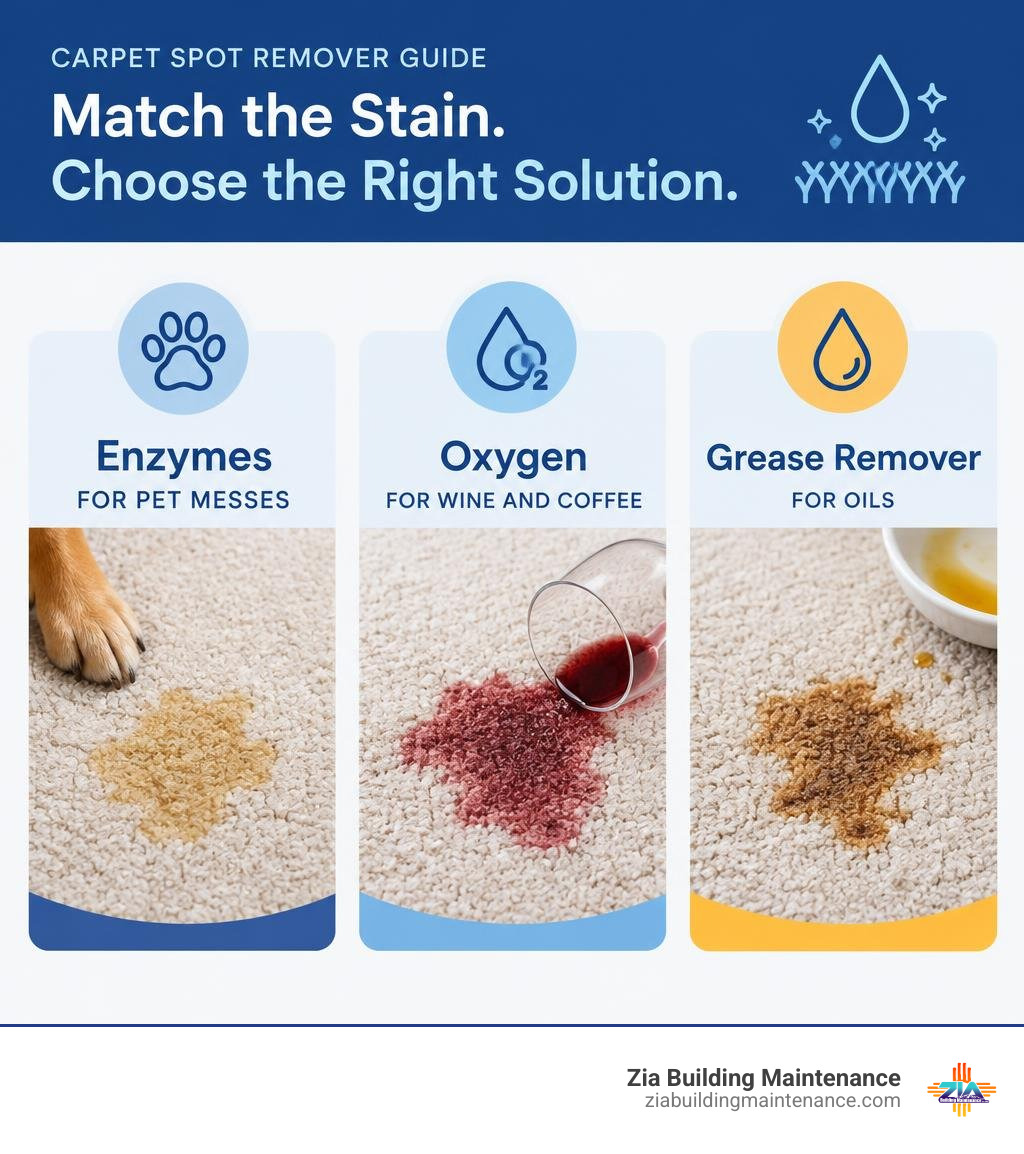
How to Choose the Best Carpet Spot Remover for Any Stain
Carpet fibers act like tiny sponges. Whether you are dealing with a spilled latte in a busy downtown Albuquerque office, muddy footprints in a Rio Rancho storefront, or an unexpected pet mess at home, choosing the right chemical action determines whether that spill vanishes or turns into a permanent blemish.
Finding the right cleaner requires balancing three key elements: stain chemistry, chemical dwell time, and fiber safety.
When selecting a spot remover, we always check for Carpet and Rug Institute (CRI) Seal of Approval certification. This standard guarantees that the product will effectively lift soils without damaging carpet fibers or leaving a sticky residue that accelerates re-soiling. Mastering a few practical, effective tips for removing carpet stains gives you a clear advantage before a spill has time to set.
Enzyme vs. Oxygen Formulations in the Best Carpet Spot Remover
The two most common active ingredients in modern spot treatments are biological enzymes and oxygenating compounds. Each is engineered to attack completely different stain molecular structures:
- Enzyme Formulations (Biological Digestion): Enzyme-based spotters use specialized bacterial strains to produce enzymes like proteases, lipases, and amylases. These enzymes physically digest organic waste, proteins, blood, vomit, and pet urine. They do not merely mask odor; they eliminate the microscopic uric acid salts and biological proteins that feed odor-causing bacteria. According to lab evaluations of tested carpet stain removers, enzyme cleaners achieve peak odor destruction when given adequate dwell time.
- Oxygen Formulations (Tannin and Dye Oxidation): Oxygen-based removers use stabilized hydrogen peroxide or sodium percarbonate. When sprayed, these solutions release microscopic oxygen bubbles that fracture the chemical bonds of colored tannins found in coffee, red wine, tea, soda, and fruit juices. Oxygen bleaches lift vivid pigments out of synthetic carpet tufts without stripping the carpet’s original color.
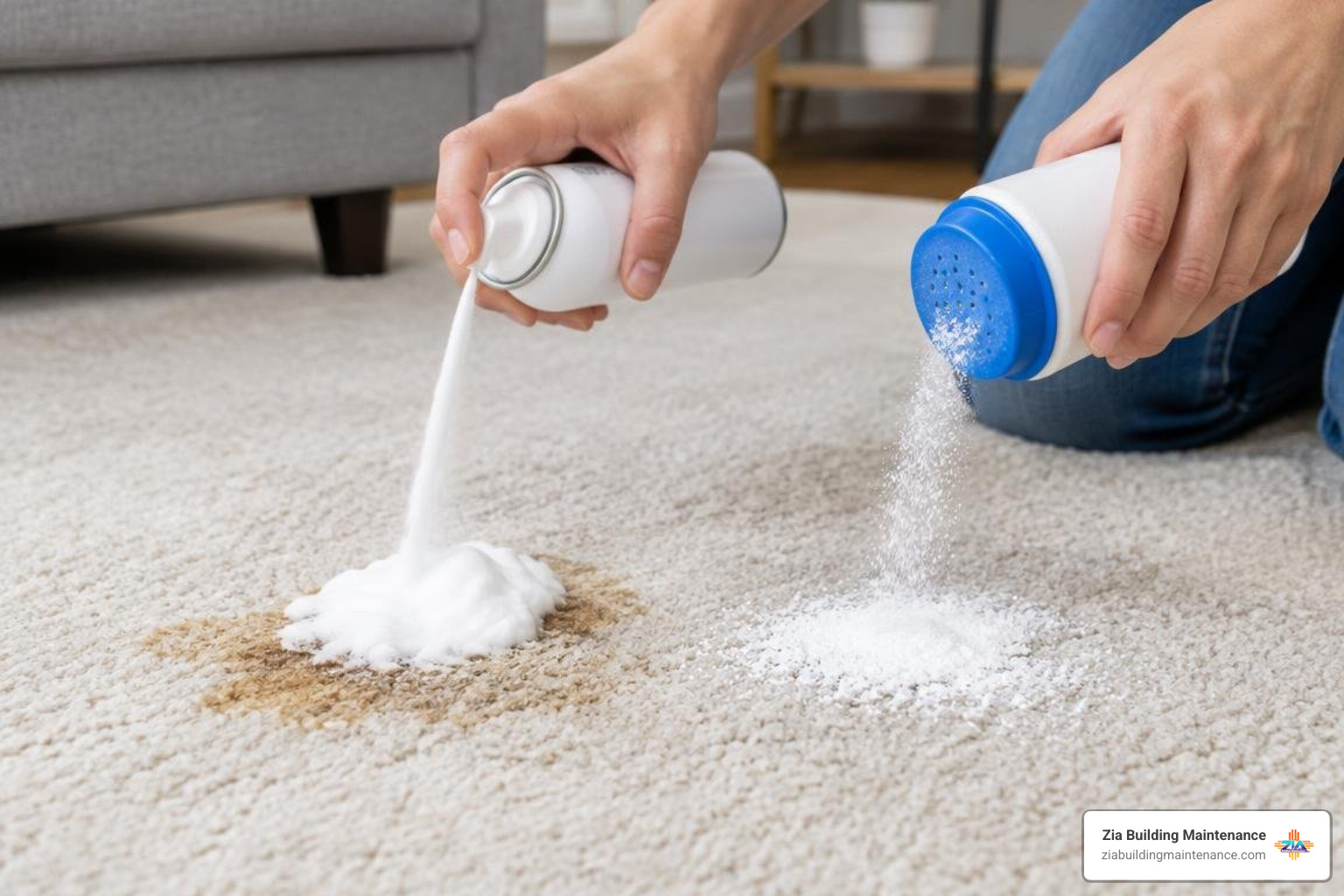
Format Comparisons: Sprays, Foams, and Dry Powders
Spot removers come in three primary packaging types, each suited for particular carpet constructions and saturation limits.
| Format | Best For | Application Method | Residue Risk |
|---|---|---|---|
| Liquid Trigger Sprays | Deep-set stains, high-traffic synthetic carpets | Direct spray or mist onto cloth | Moderate; requires clean water rinsing |
| Aerosol Foams | Surface spots, delicate upholstery, low-saturation needs | High-density foam applied to surface | Low to Moderate; easy to blot up |
| Dry Powder Granules | Moisture-sensitive wool, antique rugs, velvet | Brush granules in, dwell, vacuum away | Extremely low; zero liquid saturation |
Liquid sprays penetrate deep into the tuft backing, making them ideal for heavy spills. Foaming sprays sit on top of the pile to prevent over-saturating carpet padding. Dry absorbent powders work best for moisture-sensitive natural materials like wool or jute, absorbing liquid mess into sponge-like granules that vacuum up cleanly without liquid transfer.
Top Contenders and Professional Cleaning Alternatives
Retail shelves offer dozens of commercial spot removers. Independent testing labs have put these retail formulas through hundreds of controlled tests to see which ones consistently deliver results.

In extensive consumer evaluations, such as Good Housekeeping’s assessment removing 250 fresh and set-in stains, specific brands consistently outperform standard soap-and-water solutions.
Top Rated Options for the Best Carpet Spot Remover in 2026
- Folex Instant Carpet Spot Remover: With over 100,000 top ratings online, this surfactant-based, water-soluble spotter requires no rinsing. In testing, it removed old grease on wool rugs and mysterious dark traffic spots on low-pile synthetic carpet within seconds of light agitation.
- OxiClean Carpet Stain Remover: An oxygen-rich formula that easily handles fresh and overnight red wine spills while cutting through greasy chili oil and pigmented tomato sauces.
- Bissell Professional Stain & Odor Remover: Formulated with targeted enzyme complexes, this cleaner lifts stubborn biological spills while neutralizing pheromone traces to discourage recurring pet accidents.
- Biokleen Bac-Out Stain & Odor Remover: A plant-based, eco-friendly cleaner utilizing live enzyme cultures and citrus extracts, making it ideal for homes and workspaces prioritizing low-VOC cleaning agents.
- Rocco & Roxie Supply Co. Oxy Stain Remover: A potent oxygenated cleaner built to target organic discoloration, dark sauces, and beverage stains on synthetic piles.
If you are dealing with deeply embedded stains that have resisted standard cleaners, exploring the best carpet stain remover for old stains can help you select the exact chemical formulation needed for stubborn blemishes.
When Manual Spot Treatments Need Professional Extraction
While handheld trigger sprays work well for day-to-day spills, high-traffic commercial facilities in Albuquerque and Rio Rancho often encounter widespread contamination that spot cleaners cannot solve alone. Over-saturating carpets with manual spotters can drive sticky residue deep into the backing.
When spot treatments spread or continue wicking back up, utilizing proven commercial carpet cleaning methods or scheduling a scheduled commercial carpet cleaning service ensures full-depth soil extraction without damaging the subfloor.
Step-by-Step Spot Removal and Pre-Treatment Techniques
The best carpet spot remover will fail if applied incorrectly. Scrubbing frantically with a paper towel spreads the stain sideways and damages the carpet pile, causing fiber fraying known as “blooming.”
Understanding how to classify spills starts with identifying common stains on office carpet. Once identified, follow this step-by-step cleaning sequence:
- Pre-Extract Loose Material: For solid or semi-solid spills, scrape excess matter inward with a blunt spoon or putty knife. For liquid spills, blot firmly with a clean white microfiber towel.
- Apply Spotter Correctly: On fresh spills, spray the spot remover onto your cleaning cloth rather than soaking the carpet pile directly. For dried, set-in spills, apply the solution directly to the carpet to penetrate the stain crust.
- Allow Chemical Dwell Time: Let the formula dwell undisturbed for 5 to 10 minutes (or up to several hours under a damp towel for deep enzymatic treatments).
- Agitate Gently: Work from the outside edge of the stain toward the center using a soft-bristled brush or clean cloth. Never scrub back and forth aggressively.
- Rinse and Extract Residue: Lightly mist the area with clean water and blot with a dry towel to pull out residual detergent.
- Set Up Overnight Wicking Absorption: Fold a 1-inch thick stack of white paper towels, place it over the damp spot, and weigh it down with a heavy book or object overnight. As moisture evaporates, the towels absorb deep-set residues from the carpet backing, preventing the stain from returning.
Tackling Fresh vs. Set-In Stains
For fresh liquid spills, the best technique is dry extraction before applying wet chemicals. Vacuum Wars testing showed that portable spot cleaners like the Shark StainStriker HairPro achieved an 87.2% stain reduction score, outperforming the 84.5% test average, particularly when excess liquid was suctioned away before spraying wet solutions.
If you manage a busy household, pairing your spot-cleaning sprays with one of the best carpet cleaner options for pet households provides mechanical extraction power that speeds up drying times and prevents carpet padding saturation.
Specialized Protocols for Pet Stains, Wine, Coffee, and Grease
- Pet Urine and Bio-Mess: Blot thoroughly. Saturate the area with an enzymatic spray so it reaches the carpet backing where uric acid crystals collect. Cover with a damp white towel for 2 to 12 hours to let the enzymes digest the proteins, then blot dry.
- Red Wine and Dark Fruit Juices: Blot excess liquid immediately. Apply an oxygen-based cleaner containing hydrogen peroxide. Let it dwell for 5 minutes to oxidize the colored tannins, then rinse with a water-dampened cloth.
- Coffee and Tea: Blot excess beverage. Treat with a mildly acidic or oxygenated spot cleaner to break down the natural tannins. Blot from the outside inward.
- Grease, Oil, and Dark Sauces: Scrape away excess paste. Apply a solvent-based spotter or non-sudsing surfactant (like Folex). Gently massage the fibers to emulsify the lipids, then blot firmly with clean dry towels.
When DIY Spot Cleaning Falls Short: Commercial Extraction
Manual spot treatments are essential for immediate spill control, but they cannot replace regular hot water extraction. Over time, recurring spot cleanings leave residual detergents in high-traffic commercial hallways and busy offices. In Albuquerque’s dusty environment, dried soap residues act like magnets, attracting airborne grit and particulate soil.
When carpet fibers hold deep grime, it reduces the impact of dirty carpets on office air quality by allowing trapped allergens, dust mites, and fine particulates to circulate into the breathing zone whenever people walk across the room.
wp:html
Industrial extraction machines utilize high pump pressures, water temperatures between 140°F and 150°F, and powerful dual-vacuum motors with up to 100 inches of water lift suction. This combination flushes out old spot-cleaning residues, lifts crushed pile, and extracts deep soils that manual bottles cannot reach.
If your facility in Albuquerque, Rio Rancho, Corrales, or Los Ranchos is dealing with persistent spots or heavy foot-traffic patterns, partner with Zia Building Maintenance. Our dedicated team delivers dependable commercial janitorial care tailored to your flooring.
Frequently Asked Questions About Carpet Spot Removal
What is the most effective ingredient for lifting dried red wine and coffee stains?
Oxygen-based cleaners powered by stabilized hydrogen peroxide or sodium percarbonate are the most effective options for red wine and coffee. These ingredients break the chemical bonds of dark tannins through oxidation, neutralizing the dye without bleaching synthetic carpet fibers. Always test an inconspicuous corner of carpet first to confirm colorfastness.
Why do stains reappear on carpets after spot cleaning?
Stains usually reappear due to wicking. When a spill soaks down into the carpet backing or underlayment, surface cleaning only removes what is visible on top of the pile. As the damp carpet dries, moisture moves upward via capillary action, pulling deep-set soils back to the fiber tips. To stop wicking, rinse out all cleaning solution, cover the area with a 1-inch stack of clean paper towels, and weigh them down with a heavy object overnight to absorb moisture from the backing.
Can spot removers damage natural wool or delicate fibers?
Yes. Wool, silk, and cotton are sensitive natural protein fibers that can be damaged by high-pH alkaline chemicals, oxygen bleaches, and aggressive scrub brushes. High-alkaline chemicals cause wool fibers to turn brittle and yellow. When cleaning wool rugs or delicate weaves, use neutral-pH cleaners carrying the WoolSafe or CRI Seal of Approval, or opt for dry absorbent cleaning powders that lift dirt without liquid soaking.
Conclusion
Keeping carpets clean requires prompt action, the right cleaning chemistry, and proper blotting technique. Matching your spot remover to the specific spill—whether using enzyme cleaners for biological pet messes, oxygenating agents for beverage tannins, or gentle surfactants for oils—protects your carpet fibers and prevents stains from becoming permanent fixtures.
For facilities throughout Albuquerque, Rio Rancho, Corrales, and Los Ranchos, Zia Building Maintenance provides thorough, dependable commercial janitorial services backed by over three decades of local family ownership. When routine spot cleaning is no longer enough to maintain your building’s appearance, take the next step and say goodbye to stubborn pet messes and carpet stains with our experienced commercial care team.