

Why Monthly Church Cleaning Matters for Your Congregation
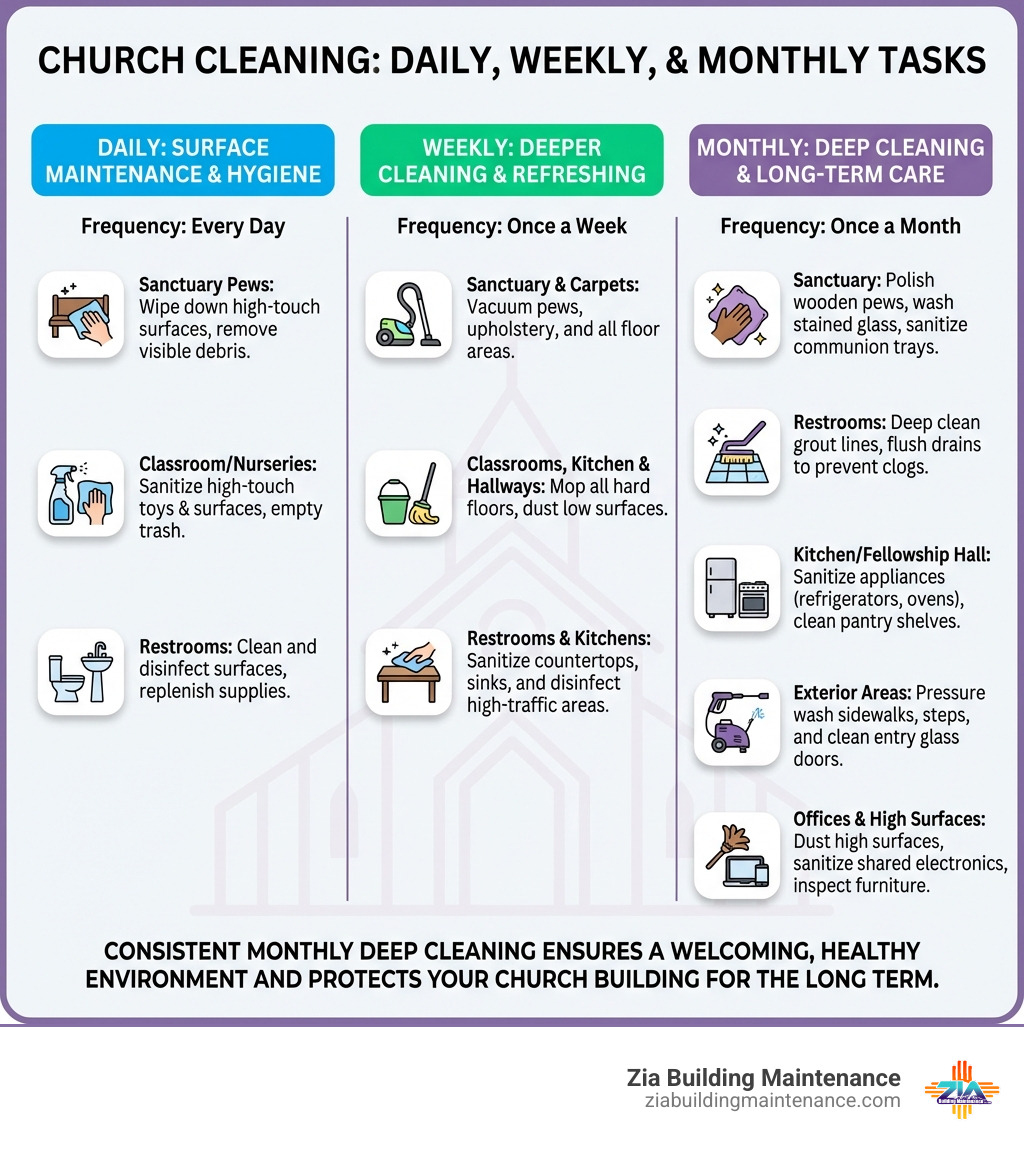
Monthly church cleaning is a structured deep-cleaning schedule that goes beyond daily tidying and weekly upkeep to address areas often forgotten but essential for long-term maintenance, hygiene, and creating a welcoming worship environment.
Key Monthly Church Cleaning Tasks:
- Sanctuary: Polish wooden pews, wash stained glass windows, sanitize communion trays, vacuum upholstery
- Classrooms/Nurseries: Deep clean toys and supplies, sanitize desks and tables, change crib sheets, wipe wall trims
- Restrooms: Deep clean grout lines, check plumbing for leaks, flush drains to prevent clogs
- Kitchen/Fellowship Hall: Sanitize refrigerators and ovens, clean pantry shelves, check appliances
- Offices: Sanitize shared electronics (keyboards, phones), dust high surfaces, inspect furniture
- Exterior Areas: Pressure wash sidewalks and steps, clean entry glass doors, maintain landscaping
Churches are high-traffic spaces used seven days a week. Daily and weekly cleaning handle surface messes, but monthly deep cleaning focuses on the overlooked areas that impact health, safety, and visitor impressions. A clean restroom, dust-free pew, or fresh-smelling carpet can mean the difference between a family returning or looking elsewhere.
Larger congregations naturally generate more wear and tear. More attendees mean heavier use of restrooms, seating, hallways, and entrances—requiring consistent deep cleaning to maintain a truly clean and sanitary space. Regular monthly maintenance also prevents pest infestations, extends the life of furnishings, and reduces long-term repair costs by addressing small issues before they escalate.
I’m Ashley Cordova, and I oversee operations at Zia Building Maintenance, where we’ve helped New Mexico churches maintain clean, welcoming spaces since 1989. Through years of working with houses of worship, I’ve seen how a consistent monthly church cleaning plan protects both the building and the congregation’s experience.
Why a Monthly Church Cleaning Plan is Essential
While daily sweeping and weekly dusting keep the visible areas of your church presentable, they often miss the “hidden” grime that accumulates over time. A dedicated monthly church cleaning plan is essential because it shifts the focus from aesthetics to long-term preservation and deep hygiene.
Think of your church like a home, but one that hosts hundreds—or thousands—of guests every week. High-traffic spaces naturally suffer from more wear and tear. Without monthly deep cleaning, dust settles into high crevices, floor grout begins to harbor bacteria, and upholstery starts to trap allergens that can affect the health of your congregation.
One of the biggest benefits of a monthly schedule is pest prevention. Crumbs from a fellowship meal or a Sunday school snack can attract unwanted visitors if they aren’t thoroughly cleared from behind appliances or under pews. Furthermore, by catching small leaks or wear-and-tear issues during a monthly inspection, we help churches avoid massive maintenance costs down the road.
It is also vital to understand the difference between cleaning, sanitizing, and disinfecting.
- Cleaning removes dirt and organic matter (the first step).
- Sanitizing reduces germs to safe levels (essential for kitchens).
- Disinfecting kills bacteria and viruses on surfaces (critical for high-touch areas).
Following CDC’s cleaning and disinfecting guidelines ensures that your church isn’t just “looking” clean, but is actually a safe environment for everyone, from newborns in the nursery to the most senior members of your flock.
Organizing Your Monthly Church Cleaning Schedule
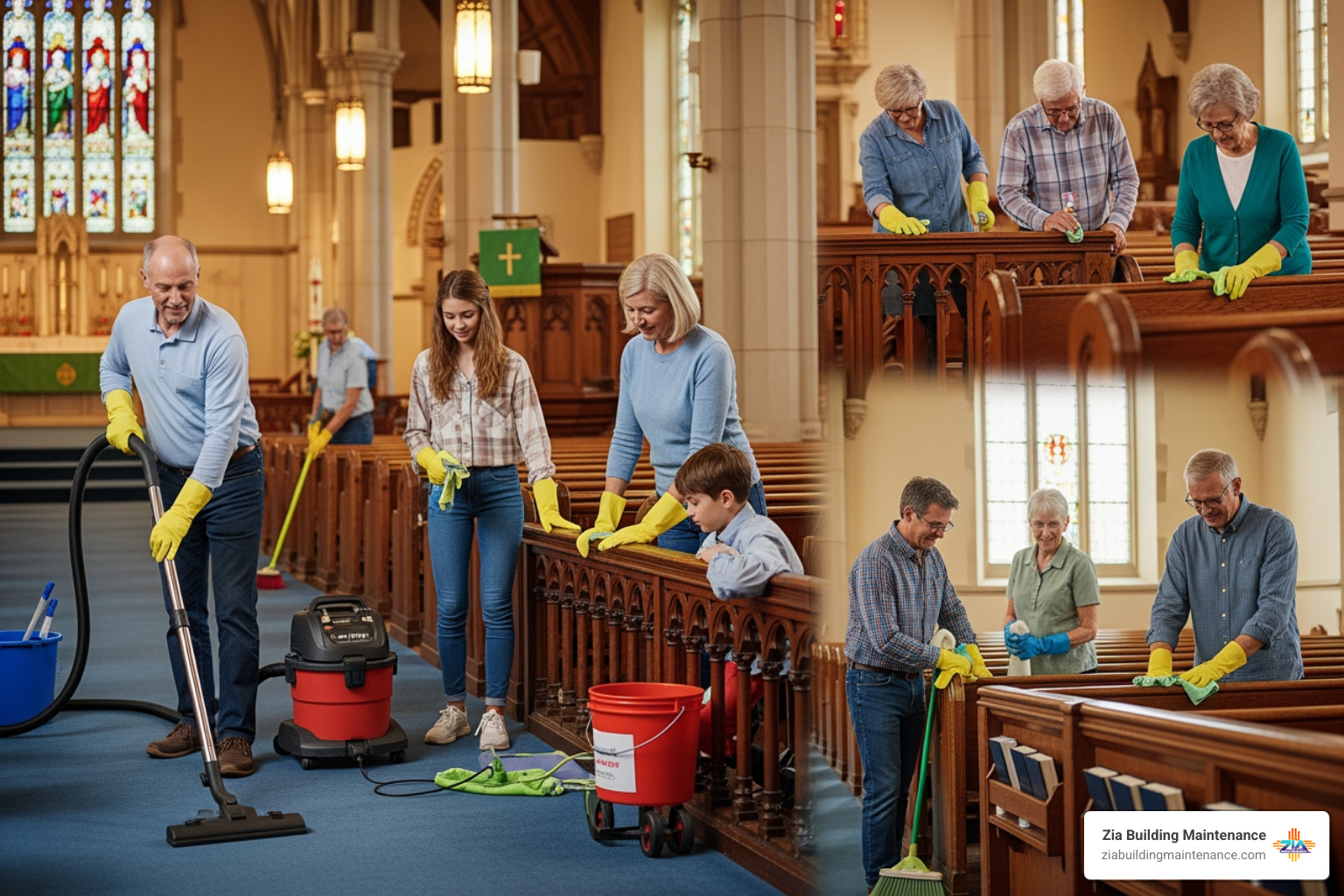
Organizing a monthly church cleaning plan requires more than just a “to-do” list; it requires a strategy. In Albuquerque and the surrounding areas, many churches rely on a mix of staff and volunteers. To keep everyone on the same page, we recommend a “Zone Cleaning” approach.
Responsibility Assignment and Volunteer Management
The key to success with volunteers is clarity. Assign specific zones—like the “Sanctuary Team” or the “Kitchen Crew”—so that responsibilities are clear.
- Rotating Duties: To prevent burnout, rotate the deep-cleaning tasks among different groups each month.
- Monitoring Tools: Use printed checklists or digital apps to track completion. This ensures that the “forgotten” spots, like the tops of ceiling fans or the baseboards in the back hallway, actually get cleaned.
Scheduling Logistics
Schedule your monthly deep clean during a low-activity window. For most churches, a Saturday morning or a weekday evening when no rehearsals or meetings are scheduled works best. Having a set “Cleaning Day” once a month can even become a fellowship opportunity for your members!
Finally, don’t forget the importance of oversight. Why you should have routine cleaning inspections cannot be overstated. A quick walkthrough at the end of the cleaning session ensures that standards are met and that the building is ready for Sunday services.
Prioritizing Monthly Church Cleaning in the Sanctuary
The sanctuary is the heart of your church. It is where your congregation gathers for their most sacred moments, and its condition sets the tone for the entire service.
- Pew Polishing: Over a month, pews collect oils from hands and dust. Use a high-quality wood polish to maintain the finish and prevent the wood from drying out.
- Stained Glass: These are often the most beautiful and delicate parts of a church. Every month, check for dust buildup. (Note: For very old or fragile glass, consult a professional to avoid damage).
- Communion Trays: These should be thoroughly sanitized monthly to ensure they are ready for use, removing any tarnish or residue.
- Upholstery and Musical Instruments: Vacuum pew cushions and chairs to remove allergens. Dust pianos, organs, and drum kits with specialized cloths to prevent scratching.
We often find that high-touch areas often missed during disinfection include the edges of the pulpit, the tops of the hymnal racks, and the communion rail. These need extra attention during your monthly rotation.
Essential Monthly Church Cleaning for Classrooms and Nurseries
Children have developing immune systems, making the cleanliness of their spaces a top priority. A monthly church cleaning routine for nurseries should go much deeper than just picking up toys.
- Toy Disinfection: Every single toy should be cleaned with child-safe, non-toxic products.
- Crib Sheets and Wall Trims: Even if sheets are changed weekly, a monthly deep clean should include wiping down the crib frames and the wall trims (where little hands often wander).
- Safe Products: We highly recommend using green cleaning services or eco-friendly products in these areas. This prevents children from being exposed to harsh chemical residues or fumes.
Deep Cleaning High-Traffic Areas During Monthly Church Cleaning
High-traffic areas like restrooms and kitchens require a level of “scrubbing” that simply doesn’t happen during a weekly wipe-down.
| Area | Daily/Weekly Task | Monthly Deep-Cleaning Task |
|---|---|---|
| Restrooms | Wipe counters, mop floors | Deep clean grout, check for leaks, descale faucets |
| Kitchen | Wash dishes, wipe counters | Sanitize oven/fridge, clean pantry, flush drains |
| Offices | Empty trash, dust desks | Sanitize keyboards/phones, clean under furniture |
| Lobby | Vacuum mats, clean glass | Power wash entry, shampoo high-traffic carpet |
Restrooms and Kitchens
In the restroom, focusing on the grout lines is vital. Grout is porous and can trap odors and bacteria over time. In the kitchen, the refrigerator should be emptied and wiped down to prevent mold and food spoilage. Checking the plumbing under the sinks for slow leaks can save your church thousands in water damage repairs.
Administrative Spaces
Church offices are often overlooked. However, keyboards, phones, and shared printers are magnets for germs. These are some of the most frequently missed areas in office disinfection routines. A monthly wipe-down with appropriate electronic-safe cleaners keeps your staff healthy and productive.
Maintaining Exterior Areas and Monthly Church Cleaning Logistics
The exterior of your church provides the first impression for any visitor. In Albuquerque and Rio Rancho, the wind can blow a lot of dust and debris onto your walkways.
- Pressure Washing: Monthly pressure washing of sidewalks, entry steps, and ramps removes grime and bird droppings, making the entrance safe and inviting. You can find exterior pressure washing tips to help your team get started safely.
- HVAC and Vents: Dusting HVAC vents and ceiling fans monthly improves air quality and prevents “dust bunnies” from falling onto the congregation during a service.
- Product Choice: Always aim for the right products for a non-toxic environment. This protects your landscaping and the health of the people entering the building.
Frequently Asked Questions about Monthly Church Cleaning
Can volunteers handle monthly deep cleaning or should we hire professionals?
Volunteers are wonderful for many tasks, but they may lack the equipment or training for things like high-level dusting, commercial carpet shampooing, or deep-cleaning tile grout. Many churches find a “hybrid” model works best: volunteers handle the sanctuary and classrooms, while a professional service like ours at Zia Building Maintenance handles the heavy-duty floor care and restroom sanitation.
How often should specialized items like stained glass be cleaned?
While a light dusting can happen monthly, a more thorough “wash” usually only needs to happen every 2-3 months. However, if your church is near a busy road in Albuquerque, you might find that the exterior side needs more frequent attention due to soot and dust.
What is the most common mistake churches make in their cleaning schedules?
The most common mistake is neglecting the “invisible” areas—vents, baseboards, and storage rooms. These areas collect dust and allergens that eventually circulate throughout the entire building. Another mistake is using the same mop water for the whole building, which just spreads bacteria from the restroom to the sanctuary!
Conclusion
Implementing a monthly church cleaning plan is an investment in your ministry. It shows your members and visitors that you care about their health and respect the sacred space you share. By organizing your tasks, using the right products, and staying consistent, you can ensure your church remains a guide of light and cleanliness in the community.
At Zia Building Maintenance, we take pride in being a family-owned business that has served Albuquerque, Rio Rancho, and Bernalillo since 1989. We understand that every house of worship is unique, which is why we offer dependable, high-quality Church Cleaning services custom to your specific needs. Whether you need help with a one-time deep clean or a regular monthly maintenance plan, our team is here to ensure your space is professional, sanitary, and welcoming.
Let us handle the heavy lifting so you can focus on your mission. Contact us today to see how we can support your congregation!