

How to Sanitize Your Church Nursery Like a Pro
Why Church Nursery Cleaning Is Critical for Child Safety and Parental Trust
Church nursery cleaning is one of the most important — and most overlooked — responsibilities in any faith community. Here’s a quick overview of what it involves:
Quick Answer: Church Nursery Cleaning Essentials
| Task | Frequency | Purpose |
|---|---|---|
| Wipe high-touch surfaces | After every use | Remove germs and dirt |
| Sanitize toys | After every use | Reduce germs to safe levels |
| Disinfect diaper changing tables | After every use | Kill remaining pathogens |
| Sweep and mop floors | Daily | Remove debris and bacteria |
| Deep clean carpets and soft surfaces | Monthly | Remove allergens and odors |
| Full deep clean of all areas | Monthly | Reset to baseline hygiene |
Babies and toddlers touch everything — and then put their hands in their mouths. That makes nurseries one of the highest-risk spaces in any building for germ transmission. Unlike adults, young children have developing immune systems, making them especially vulnerable to the bacteria, viruses, and fungi that thrive on shared toys, changing tables, and play mats.
And it’s not just about health. When parents walk into a nursery, the first thing they notice is whether it’s clean and organized. A tidy, well-maintained space tells them their child is in good hands. A messy or dirty one — even if the volunteers are wonderful — can shake their confidence.
For churches in Albuquerque and beyond, maintaining a consistently clean nursery is both a health responsibility and a ministry investment.
I’m Ashley Cordova, Vice President of Zia Building Maintenance, a family-owned janitorial company serving New Mexico since 1989 — and church nursery cleaning is one of the specialized services our team handles with extra care and precision. In this guide, I’ll walk you through exactly how to sanitize your nursery like a pro, from daily routines to monthly deep cleans.
The Essentials of Church Nursery Cleaning: Definitions and Safety
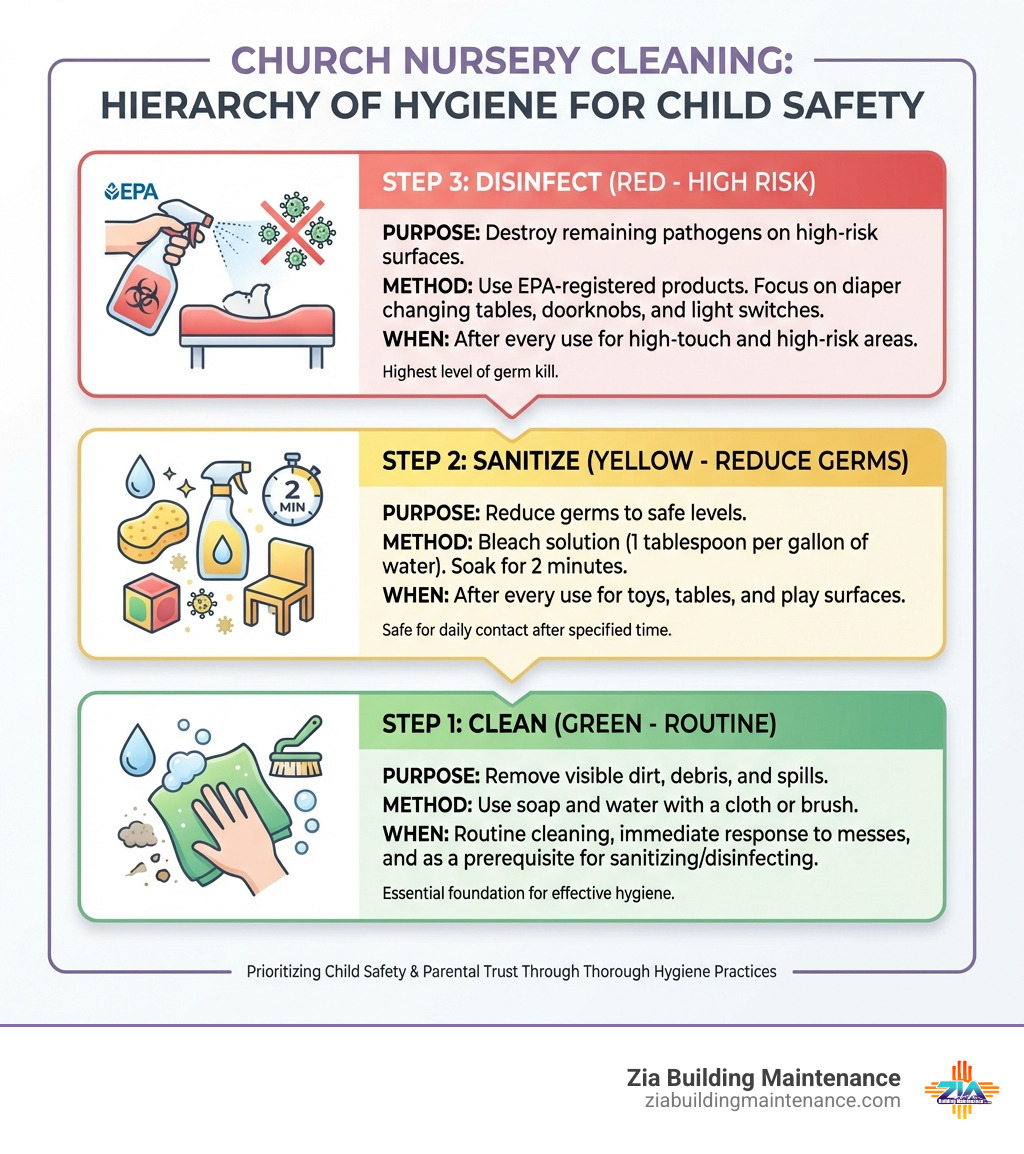
Before we grab the spray bottles, we need to speak the same language. In professional church cleaning, we don’t just “wipe things down.” We follow a specific hierarchy of hygiene. According to the American Cleaning Institute’s guidelines on Cleaning Child Care Facilities, there are three distinct levels of decontamination.
Understanding the Difference: Clean, Sanitize, Disinfect
It is a common mistake to use these terms interchangeably, but doing so can lead to a false sense of security. Here is how we break it down for our teams in Albuquerque and Rio Rancho:
- Cleaning: This is the physical removal of dirt, dust, and organic matter (like cracker crumbs or spilled juice) using soap and water. Cleaning doesn’t necessarily kill germs, but it removes them from the surface. Crucially, you must clean a surface before you can effectively sanitize or disinfect it, as dirt can “shield” germs from chemicals.
- Sanitizing: This reduces the number of germs to a level deemed safe by public health standards. In a nursery, we sanitize things that children might put in their mouths, like plastic blocks or teething rings.
- Disinfecting: This is the heavy hitter. Disinfecting uses chemicals to actually destroy bacteria, viruses, and fungi. We reserve this for high-risk areas like diaper changing stations and restrooms.
| Feature | Cleaning | Sanitizing | Disinfecting |
|---|---|---|---|
| Action | Removes visible dirt/soil | Reduces germs to safe levels | Destroys most pathogens |
| Typical Product | Soap and water | Weak bleach or light spray | EPA-registered disinfectant |
| Nursery Use | Floors, walls, tables | Toys, highchair trays | Diaper tables, toilets |
| Contact Time | Immediate | 2 minutes (usually) | 5–10 minutes (varies) |
One of the most critical concepts in church nursery cleaning is “contact time.” This is the amount of time a disinfectant must remain visibly wet on a surface to do its job. If you spray a doorknob and wipe it dry immediately, you haven’t disinfected it; you’ve just given the germs a bath. For more details, check out our ultimate guide to cleaning and disinfecting high-touch surfaces.
Safety Precautions for Church Nursery Cleaning
When we are working in spaces for infants and toddlers, safety is our North Star. Children are not just “small adults”; they breathe more rapidly and have thinner skin, making them more sensitive to chemical fumes and residues.
- Ventilation is Key: Always ensure the room is well-ventilated when using cleaners. In our arid Albuquerque climate, opening a window (if safe and screened) or running the HVAC system helps clear out VOCs (Volatile Organic Compounds) that can trigger asthma.
- Safe Chemical Storage: This sounds obvious, but it’s easy to leave a spray bottle on a counter during a busy Sunday morning. All chemicals must be stored in a locked cabinet or on a shelf well above a “kid’s eye view.”
- Kid’s Eye View Inspections: We recommend that nursery coordinators literally get down on their hands and knees once a month. From this perspective, you’ll see the dust bunnies under the cribs, the loose outlet covers, or the stray bead that could be a choking hazard.
- Allergen Control: In Albuquerque, dust and pollen are constant battles. We use HEPA-filter vacuums to ensure we aren’t just blowing allergens back into the air where toddlers are crawling.
Step-by-Step Guide to Sanitizing High-Touch Areas
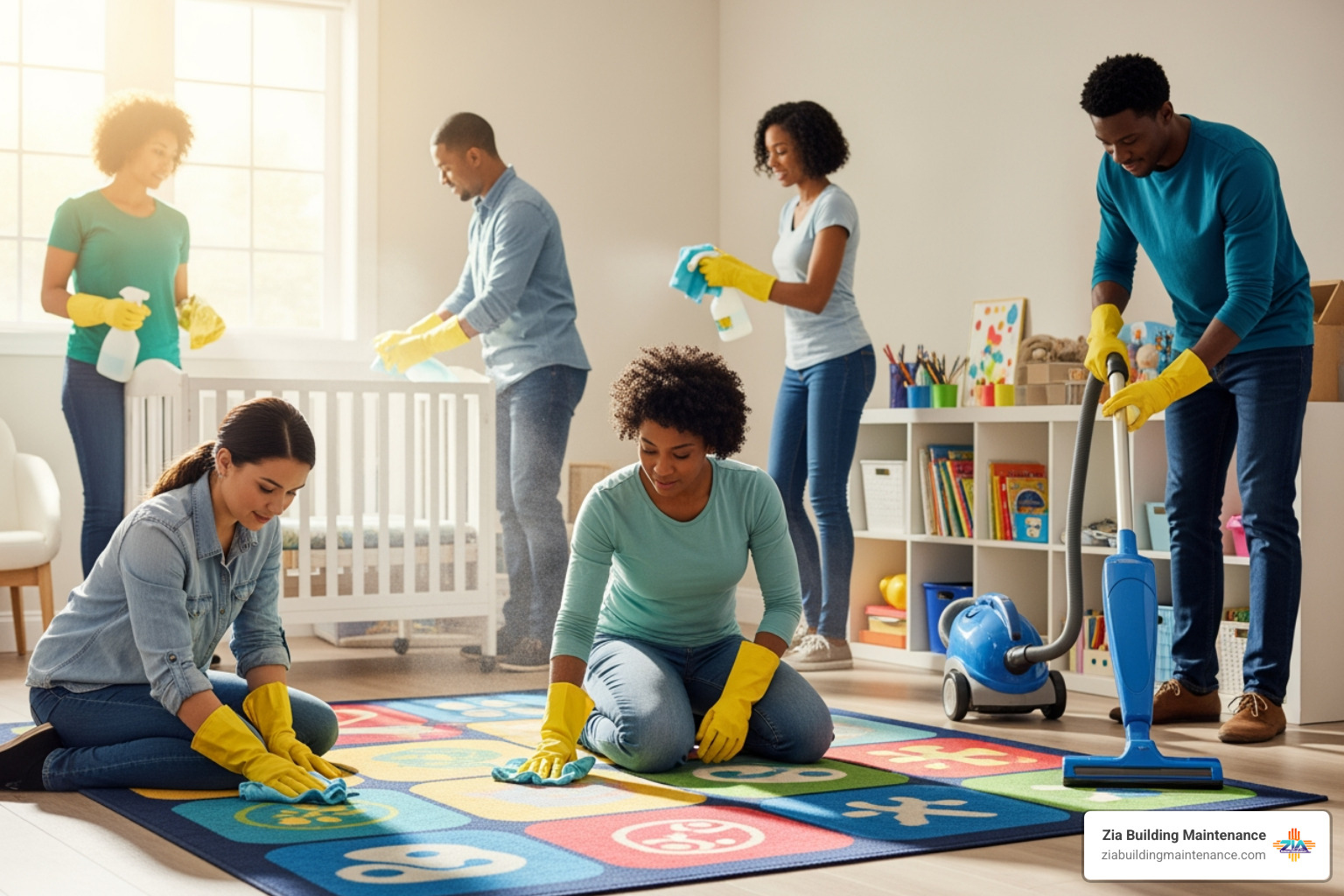
High-touch areas are the “epicenters of cross-contamination.” In a church setting, these include doorknobs, light switches, cabinet handles, and—most importantly—diaper changing tables.
How to Sanitize Nursery Toys and Surfaces
The gold standard for toy sanitization, recommended by the Caring for Our Children guidelines, is a simple, weakened bleach solution. It’s effective, inexpensive, and breaks down quickly into salt and water, leaving no harmful residue if used correctly.
The Pro Recipe for Sanitizing Solution:
- Mix: Combine 1 tablespoon of unscented, liquid household bleach with 1 gallon of cool water.
- Clean First: Wash toys with soap and water to remove any visible “gunk.”
- Soak: Submerge non-porous plastic toys in the solution for at least 2 minutes. Ensure there are no air bubbles trapped inside toys.
- Air Dry: Remove the toys and let them air dry on a clean surface. Do not rinse them; the solution needs to dry to finish the sanitization process.
For larger items that can’t be submerged—like rocking chairs or large play kitchens—use a microfiber cloth dampened with the solution. Microfiber is superior to paper towels because the tiny fibers actually “grab” and lift bacteria off the surface. If you need professional assistance with these types of detailed tasks, you can learn more about our janitorial services.
Note: For electronic toys, never use a bleach soak. Use electronic-safe disinfecting wipes (ensure they are bleach-free if they will be handled by children) and wipe the surface, allowing for the proper contact time.
Managing Biohazards and Waste Disposal
In a nursery, “biohazards” usually mean soiled diapers or the occasional “spit-up” incident. Proper handling is vital to prevent the spread of norovirus and other stomach bugs.
- No-Touch Bins: Use diaper pails with foot pedals so volunteers don’t have to touch the lid with contaminated hands.
- Double Bagging: For particularly messy diapers, double-bagging helps contain odors and leaks.
- Handwashing Protocols: This is the single most effective way to stop the spread of germs. Volunteers should wash their hands for at least 20 seconds after every diaper change, after blowing a child’s nose, and before serving snacks.
- Changing Table Protocol: After every use, the changing mat should be cleaned of visible soil and then sprayed with an EPA-registered disinfectant. It must remain wet for the time specified on the label before the next child is placed on it.
Implementing a Consistent Church Nursery Cleaning Schedule
Consistency is the difference between a “clean-looking” room and a truly sanitary environment. We often help churches develop monthly cleaning plans to ensure nothing falls through the cracks.
Daily and Weekly Maintenance Tasks
If your nursery is used throughout the week for mid-week services or mothers’ groups, these tasks should happen daily. If it’s only used on Sundays, these are your “post-service” essentials.
- Trash Removal: Empty all bins, especially diaper pails, and replace liners. Never leave diaper trash in the building overnight; it attracts pests and creates lingering odors.
- Floor Care: Sweep and mop hard floors. In the Downtown Albuquerque area, where dust can be heavy, a damp mop is better than a broom for trapping particles.
- Surface Wiping: Wipe down all tables, chairs, and “low-zone” walls where sticky fingers tend to travel. This is similar to the high-standard office cleaning services we provide to local businesses.
- Play Mat Cleaning: Large foam play mats should be wiped down with a sanitizer and allowed to dry completely. Moisture trapped under mats can lead to mold growth on the floor beneath.
Monthly Deep Cleaning and Carpet Care
Once a month, the nursery needs a “reset.” This is when we tackle the areas that don’t get daily attention.
- Steam Cleaning: Carpets in nurseries are essentially giant filters that trap skin cells, food particles, and dust. We recommend professional steam cleaning at least quarterly, but monthly vacuuming with a HEPA-filter machine is a must.
- Upholstery: If you have fabric rocking chairs or “soft” toys, they need attention. Use a fabric-safe disinfectant or a steam cleaner to refresh these surfaces.
- Vents and Fixtures: Dust the ceiling fans, light fixtures, and air vents. In Albuquerque, our HVAC systems work hard, and dust buildup on vents can significantly impact air quality for little lungs.
- Supply Audit: Check your first-aid kit, restock sanitizer, and ensure your cleaning chemicals haven’t reached their expiration date (bleach, for example, loses its potency after about six months).
For many churches, these deep-cleaning tasks are best handled by a commercial cleaning partner who has the industrial equipment to truly extract allergens from the environment.
Training Volunteers and Building Parental Trust
You can have the best cleaning products in the world, but if your volunteers don’t know how to use them, the nursery isn’t safe. Church nursery cleaning is a team effort.
- Written Guidelines: Don’t rely on word-of-mouth. Have a clear, laminated checklist posted inside the nursery door. This ensures that whether it’s a veteran volunteer or a first-timer, the standard of care remains the same.
- Wellness Policy: Part of keeping a nursery clean is preventing germs from entering in the first place. A clear wellness policy (e.g., “No children with a fever or runny nose in the last 24 hours”) protects everyone.
- Background Checks and Safety: While not strictly “cleaning,” safety and security are part of the “clean environment” feeling. Ensuring all volunteers are vetted builds massive trust with parents.
- Spiritual Readiness: We often remind church partners that a clean room is a form of ministry. It says, “We value your child.” Taking a moment to pray for the children who will play in the space can transform a “chore” into an act of worship.
A clean nursery doesn’t just prevent illness; it helps your church grow. When parents feel their children are safe, they are more likely to engage fully in the service. This is one of the many benefits of a clean workplace and worship space.
Frequently Asked Questions about Church Nursery Cleaning
What is the safest disinfectant for a church nursery?
The safest disinfectant is one that is EPA-registered and used exactly according to the label. For many, a weakened bleach solution is the best choice because it is effective and leaves no lingering chemical residue once dry. If you prefer commercial sprays, look for “unscented” versions to avoid triggering respiratory issues in sensitive children.
How often should nursery carpets be professionally cleaned?
Because children spend so much time on the floor, we recommend professional hot-water extraction (steam cleaning) every 3 to 6 months. High-traffic nurseries or those in dusty areas like Downtown Albuquerque may benefit from a quarterly schedule to keep allergens at bay.
Are Clorox wipes safe for cleaning nursery toys?
Yes, but with a caveat. Most disinfecting wipes are designed for hard, non-porous surfaces. If the label says “rinse required for food contact surfaces,” you must also rinse any toy that a child might put in their mouth after the wipe has dried. Many pros prefer the bleach-soak method for toys because it’s more thorough and cost-effective.
Conclusion
At Zia Building Maintenance, we believe that church nursery cleaning is more than just a task — it’s a commitment to the families in our Albuquerque community. From the historic churches Downtown to the growing congregations in Rio Rancho and Bernalillo, we understand that providing a safe, sanitary environment is a vital part of your stewardship.
By following these professional steps—cleaning first, then sanitizing or disinfecting—you create a space where children can thrive and parents can worship with peace of mind. Whether you are looking for a reliable partner to handle your weekly janitorial needs or a deep-clean specialist to refresh your carpets and upholstery, our family is here to serve yours.
Ready to elevate the hygiene standards of your facility? Get professional church cleaning help from the experts at Zia Building Maintenance today. Let us handle the grime so you can focus on the ministry.