How to Manage Your Church Building Without Losing Your Soul
What Every Church Facility Manager Needs to Know
Church facility maintenance is the ongoing practice of inspecting, cleaning, repairing, and managing all physical systems and spaces within a church building to keep it safe, functional, and welcoming.
Here is a quick overview of what effective church facility maintenance involves:
| Area | Key Tasks | Frequency |
|---|---|---|
| Roof & Exterior | Inspect for damage, clear gutters | Quarterly / After storms |
| HVAC Systems | Replace filters, service units | Monthly / Annually |
| Electrical & Plumbing | Inspect wiring, check for leaks | Annually / As needed |
| Safety Systems | Test fire alarms, exit lights | Monthly |
| Sanctuary & Interior | Clean, inspect pews, floors, windows | Weekly / Monthly |
| Grounds & Parking | Mow, inspect walkways, lighting | Weekly / Seasonally |
Churches are more than buildings. They are gathering places, historic landmarks, and community anchors — especially here in Albuquerque, where many congregations have served their neighborhoods for generations. But keeping those spaces safe and functional is harder than it looks.
Most churches operate with small budgets, rotating volunteers, and aging infrastructure. Without a clear plan, small problems quietly become expensive ones. Research from Historic England found that acting on minor repairs early can save 15-20% in costs down the line — and that gap grows fast when maintenance gets deferred.
The stakes are real. A flickering light in the sanctuary, a leaking roof after a monsoon, or an HVAC failure on a summer Sunday morning — these are not just inconveniences. They disrupt ministry, erode trust, and drain resources that could go elsewhere.
This guide walks you through a practical, no-overwhelm approach to managing your church building from the ground up.
I’m Ashley Cordova, Vice President of Zia Building Maintenance, a family-owned janitorial company serving New Mexico since 1989, and I’ve spent years helping Albuquerque churches and facilities stay clean, safe, and well-maintained through dependable professional service. Church facility maintenance is one of the areas I care most about, because I’ve seen how the right systems — and the right people — make all the difference for the communities these buildings serve.
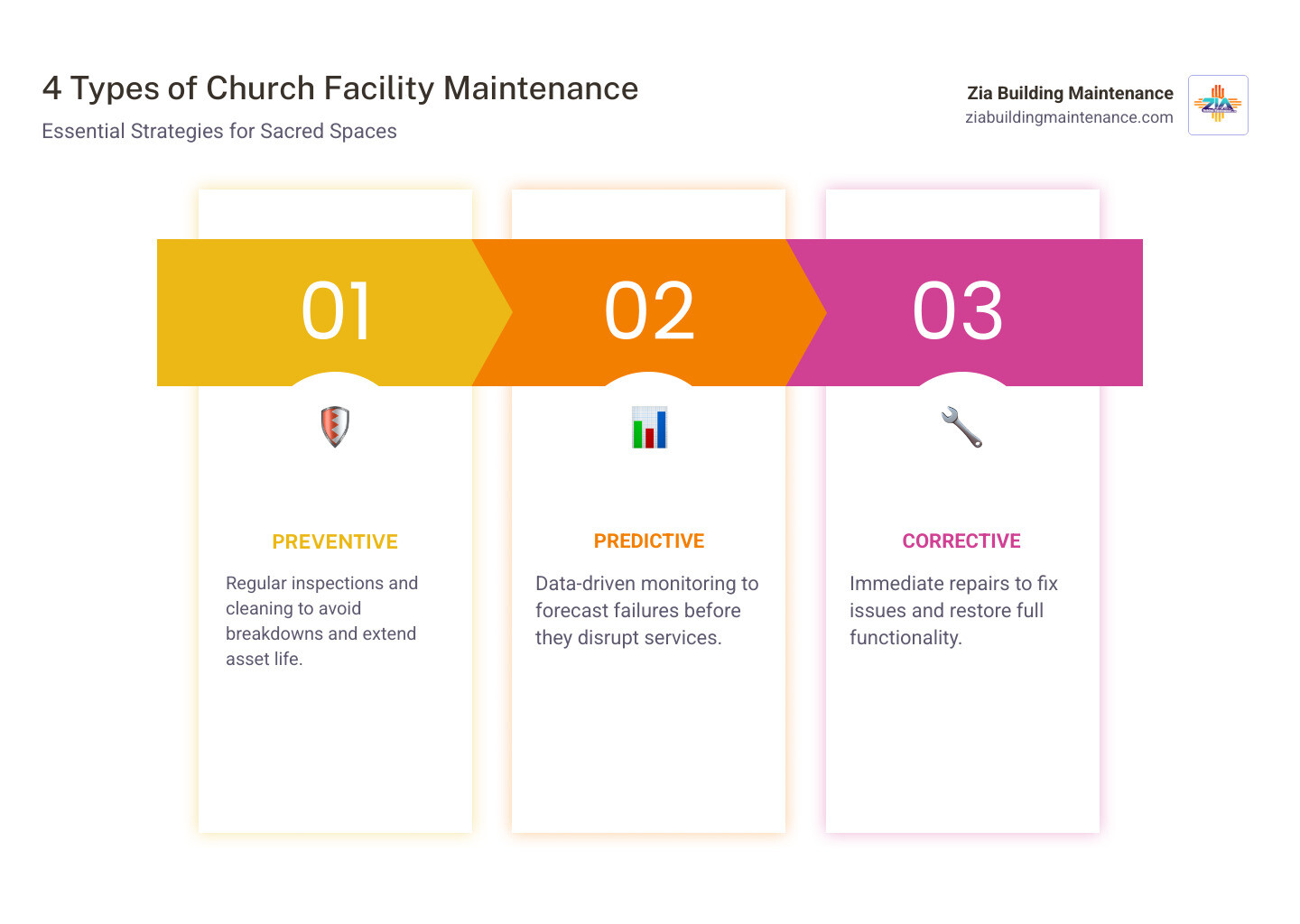
Key terms for church facility maintenance:
The Theology of Upkeep: Why Church Facility Maintenance is Ministry
At first glance, a leaky faucet or a dusty baseboard might not seem like “spiritual” issues. However, we believe that church facility maintenance is a vital form of ministry. Think of it this way: the building is the tool that allows the mission to happen. When the roof is sound and the sanctuary is clean, people can focus on worship and community without distraction.

Demonstrating Stewardship Through Church Facility Maintenance
In a church context, maintenance is the ultimate act of stewardship. We are caretakers of resources provided by the congregation. Preserving sacred spaces and architectural beauty isn’t just about vanity; it’s about honoring the history and the future of the church.
The financial reality is sobering. Research shows that every $1 in deferred maintenance today can lead to $4 in capital renewal needs in the future. Even more startling, if a necessary repair is ignored until it causes a secondary failure, the cost can jump to 30 times the original intervention price. By following stewardship principles and planning, we ensure that more of the church’s budget goes toward outreach and less toward emergency plumbing bills. Research on the value of small repairs proves that a “stitch in time” truly does save nine—or in this case, 15-20% of your total facility budget.
Setting Up Your Church Facilities Management Plan
An effective plan starts with a shift in mindset. We aren’t just “fixing things”; we are creating a culture of care. To start, your leadership should:
- Define Vision and Values: Why do we care for this building? (e.g., hospitality, safety, excellence).
- Establish Goals: Move from reactive “break-fix” work to a system where 75-80% of tasks are planned.
- Assign Responsibility: Don’t leave it to “the trustees.” Assign specific owners to specific tasks.
Essential Areas for Regular Church Facility Maintenance
Maintaining a church in the Rio Grande Valley presents unique challenges, from our intense high-desert sun to the sudden downpours of monsoon season.
Protecting the Heart of the House: Sanctuary and Specialized Systems
The sanctuary is often the most complex area to maintain. Between maintaining church interiors and caring for delicate items, it requires a gentle touch.
- Stained Glass: These are often irreplaceable. Regular inspections for bulging or cracked lead cames can prevent a total collapse.
- Pipe Organs: These require stable humidity and temperature to stay in tune and prevent wood cracking.
- Electrical Safety: Churches, especially older ones in Downtown Albuquerque, need regular electrical safety and PAT testing to prevent fire hazards and ensure the sound system doesn’t pop during a sermon.
Professional Standards for Church Cleaning
Cleanliness is the first thing a visitor notices. High-traffic areas like restrooms, nurseries, and entryways require daily attention. At Zia Building Maintenance, we emphasize church cleaning best practices that go beyond the surface. For example, sanitizing a nursery isn’t just about appearance; it’s about the peace of mind for parents. Proper floor care—whether it’s VCT stripping and waxing or deep carpet cleaning—extends the life of your flooring and keeps the facility looking professional.
| Asset Type | Average Life Cycle | Maintenance Key |
|---|---|---|
| Forced Air Furnace | 15 Years | Monthly Filter Changes |
| Shingle Roof | 20-25 Years | Bi-Annual Inspections |
| Carpet | 10-15 Years | Annual Deep Clean |
| Exterior Paint | 5-7 Years | Power Wash Annually |
Creating a Sustainable Church Facility Maintenance Schedule
A schedule is the backbone of facility stewardship. Without a written maintenance calendar and planning document, tasks will inevitably fall through the cracks.
- Daily: Trash removal, restroom sanitization, visual walk-through for hazards.
- Weekly: Vacuuming high-traffic areas, mowing (in season), checking AV batteries.
- Monthly: Testing exit lights, checking fire extinguishers, roof weatherproofing and inspection.
- Quarterly: Cleaning rainwater goods and drainage, deep cleaning kitchen grease traps.
Using Standard Operating Procedures (SOPs) allows you to empower volunteers. If a volunteer knows exactly how to test the emergency lights because there is a simple 3-step guide, they are more likely to help.
Seasonal Church Facility Maintenance and Local Considerations
In Albuquerque and Rio Rancho, our seasons dictate our maintenance priorities.
- Spring: Check HVAC systems before the first 90-degree day. Inspect the building envelope for cracks that appeared during winter freezes.
- Summer: Monitor irrigation systems closely. Prepare for monsoons by ensuring all external area and churchyard checks are complete, specifically clearing any debris from drainage channels.
- Fall: Clear gutters of falling leaves and pine needles. This is the most critical time for gutter maintenance to prevent ice damming.
- Winter: Insulate exposed pipes. In Downtown Albuquerque’s older buildings, this is vital to prevent mid-winter bursts.
Overcoming Challenges: Budgeting and Technology
One of the biggest hurdles in church facility maintenance is the “budget trap.” When money is tight, maintenance is often the first thing cut. However, churches that implement a systematic management framework achieve 40-50% reductions in emergency repairs.
To get your budget under control, consider these steps:
- Stop Deferring: Acknowledge that deferred maintenance is actually a high-interest debt.
- Calculate ROI: Use an ROI of maintenance management tool to show leadership how much you’re saving by being proactive.
- Use Technology: Mid-sized churches (20,000-75,000 sq ft) often find that investing in a Price Calculator for software pays for itself by preventing just one major HVAC failure.
- Partner for Consistency: Sometimes, the best way to save money is to outsource specialized tasks. Implementing monthly cleaning plans with a professional service ensures the work is done right the first time, reducing the need for expensive “restorative” cleanings later.
Frequently Asked Questions about Church Upkeep
How much should a church budget for annual maintenance?
The average church facility requires approximately $12,000-$18,000 annually in maintenance and operations costs per 10,000 square feet. This should include a mix of routine cleaning, preventive maintenance, and a reserve fund for capital replacements (like a new roof).
How can we recruit volunteers for a maintenance ministry?
The key is “vision casting.” Don’t ask for “janitors”; ask for “facility stewards.” Match skills to tasks—let the retired plumber handle the leaks and the gardener handle the flower beds. Always provide clear SOPs and show appreciation publicly to foster a sense of Kingdom-focused mission.
What are the benefits of using CMMS software for churches?
Computerized Maintenance Management Systems (CMMS) centralize your data. Churches using these tools typically see 35-45% lower operating costs. Most importantly, it preserves “institutional knowledge.” When your head volunteer moves or retires, their knowledge of where the shut-off valves are and when the boiler was last serviced stays in the software, not in their head.
Conclusion
Managing a church building is a marathon, not a sprint. It requires patience, a clear plan, and the right partners. At Zia Building Maintenance, we take pride in supporting our local Albuquerque, Rio Rancho, and Bernalillo religious communities. As a family-owned business since 1989, we understand that your facility is more than just real estate—it’s a home for your heritage and your future.
If you’re looking to elevate the cleanliness and care of your sacred space, we’re here to help with dependable, high-quality service. Explore our Professional Church Cleaning Services today and let us help you keep your focus on your ministry while we handle the maintenance.