

How to Clean Wooden Church Pews Without Damaging the Finish
Why Proper Church Pew Cleaning Starts With What You Know
Church pew cleaning done right means using the correct cleaner for your specific wood finish — and avoiding the products that look helpful but quietly destroy the surface over time.
Here’s the short version:
- Dust weekly with a dry microfiber cloth
- Deep clean monthly using a mild detergent solution (1 tbsp per 3 gallons of water)
- Identify your finish first — hard finishes and oil finishes need different methods
- Disinfect safely with a mix of 2 cups water, 1 cup white vinegar, and 5 drops dish soap
- Avoid lemon oil, silicone polishes, wax, Murphy’s Oil Soap, and bleach
- Polish once a year using a furniture polish compatible with your finish type
Church pews take a beating every week. Hands grip the rails. Arms rest on the backs. Bodies slide in and out. All of that contact leaves behind oils and sweat that slowly break down the protective finish — especially on armrests and handrails. In historic sanctuaries across Albuquerque, including beautifully preserved churches in Downtown Albuquerque, the wrong cleaner applied by a well-meaning volunteer can cause more damage than years of regular use.
This guide walks you through exactly how to clean wooden church pews without damaging the finish — whether you’re managing a small neighborhood chapel or a large congregation.
I’m Ashley Cordova, Vice President of Zia Building Maintenance, a family-owned janitorial company serving New Mexico since 1989, and our team has extensive hands-on experience with church pew cleaning across a wide range of sanctuaries and worship spaces. The steps and warnings in this guide reflect what we’ve seen work — and what we’ve seen go very wrong.
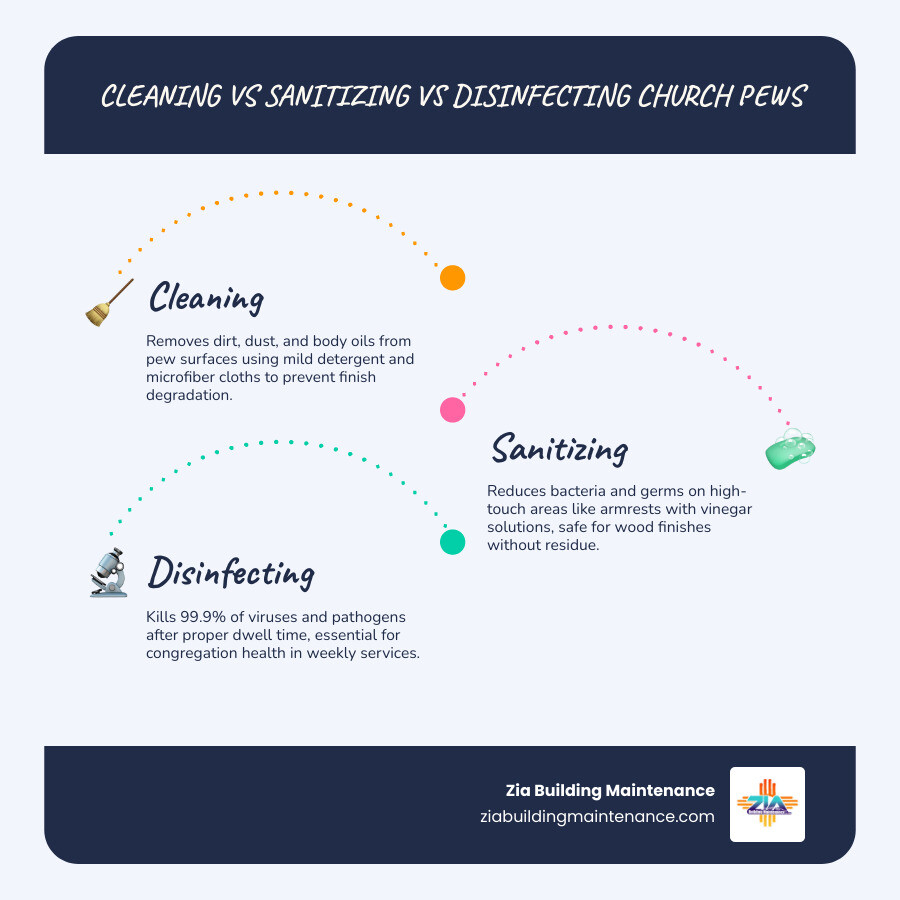
Church pew cleaning terms to remember:
Why Regular Church Pew Cleaning and Maintenance Matters

When we step into a sanctuary in Rio Rancho or Downtown Albuquerque, the pews are often the first thing we notice. They aren’t just seating; they are symbols of community and history. However, because they are high-touch surfaces, they require a specific type of stewardship. Regular church pew cleaning is about more than just aesthetics—it’s about preserving a sacred asset and protecting the people who use it.
Every Sunday, pews accumulate a cocktail of dirt, skin cells, viruses, and allergens. Without a consistent cleaning schedule, these elements don’t just sit on the surface; they can actually bond with the wood finish or sink deep into cushion fibers.
Protecting the Wood Finish from Body Oils
The most common “enemy” of a wooden pew isn’t actually spilled grape juice—it’s human touch. Our hands and arms naturally produce oils and sweat. Over time, the salts and acids in sweat can corrode the protective lacquer or polyurethane finish. This is why you often see “bare spots” or darkened, sticky areas on the handrails and armrests of older pews.
By maintaining a regular cleaning routine, we remove these corrosive oils before they have a chance to eat through the finish. This pH-balanced approach to preservation ensures that the wood remains sealed and protected from the dry New Mexico climate.
Enhancing the Worship Experience
A clean environment directly impacts how a congregation feels. When pews are dusty or the cushions feel “grimy,” it creates a subtle barrier to worship. On the other hand, well-maintained pews highlight the historic charm of the building and signal to visitors that the space is cared for with intentionality.
Furthermore, health is a major factor. Scientific research on oxygen bleach effectiveness has shown that it is significantly safer and more effective for fabric components than traditional chlorine bleach, which can destroy fibers. By using the right products, we reduce germ transmission and allergens, making the sanctuary a safe haven for everyone—from the youngest toddlers to the most senior members of the parish.
For more information on the broader scope of sanctuary care, check out our guide on church cleaning.
Identifying Your Wood Finish and Fabric Type
Before we ever touch a pew with a damp cloth, we must know what we are cleaning. Using a water-based cleaner on an oil-finished pew can cause clouding, while using an oil-based soap on a hard-sealed finish can create a sticky, dust-attracting film.
Testing for Finish Type
Most pews built after 1980 feature a “hard finish,” such as polyurethane or pre-catalyzed lacquer. These finishes create a plastic-like shield over the wood. Older or custom-made pews may have an “oil finish,” which penetrates the wood but leaves it more “open” to the environment.
To identify your finish, find an inconspicuous area (like the underside of the seat or the back of a leg) and try these two tests:
- The Water-Bead Test: Place a tiny drop of water on the wood. If it stays in a tight bead, you likely have a hard finish. If it soaks in or leaves a dark spot, the finish is either oil-based or has worn away.
- The Boiled Linseed Oil Test: Rub a small drop of boiled linseed oil into the wood. If it beads up, it’s a hard finish. If the wood absorbs it, you have an oil finish.
Understanding Upholstery Codes
If your pews have cushions, you must locate the cleaning tag. Cleaning a “Dry Clean Only” fabric with soap and water can cause permanent shrinkage or water spotting.
| Code | Meaning | Cleaning Method |
|---|---|---|
| W | Water-based | Use water-based upholstery cleaner or mild soap foam. |
| S | Solvent-based | Use water-free dry-cleaning solvents only. |
| WS | Both | Safe for water-based or solvent-based cleaners. |
| X | Vacuum Only | Professional cleaning only; no liquids. |
For a deeper dive into fabric care, refer to this water-based upholstery cleaning guide.
Step-by-Step Guide to Deep Church Pew Cleaning
Once you’ve identified your materials, it’s time to get to work. We recommend a tiered approach: weekly maintenance to keep dust at bay, and a deeper monthly clean to remove body oils and grime.
The Weekly Routine
- Dusting: Use a dry microfiber cloth to wipe down all wooden surfaces. Microfiber is superior because it “grabs” the dust rather than just pushing it into the air.
- Debris Removal: Check the “pew pockets” (the racks for hymnals and envelopes) for trash or forgotten items.
- Vacuuming: Use a vacuum with a soft brush attachment for the crevices where the seat meets the back—this is where crumbs and dust bunnies love to hide.
The Monthly Deep Clean
For hard-finished pews, we use the “Triple-Cloth Method” to ensure no moisture is left behind:
- Cloth 1 (The Washer): Dip a lint-free cloth into a solution of mild detergent (1 tablespoon per 3 gallons of water). Wring it out until it is barely damp—never dripping.
- Cloth 2 (The Rinser): A cloth dampened with plain water to remove any soap residue.
- Cloth 3 (The Dryer): A completely dry microfiber cloth to buff the wood immediately.
To stay on top of these tasks, many facilities in Bernalillo and Albuquerque find success by keeping it consistent with a monthly church cleaning plan.
Safe Disinfecting for Wooden Church Pew Cleaning
Disinfecting wood is tricky. Most “off-the-shelf” disinfectants contain high levels of alcohol or bleach, which can soften or peel wood finishes.
The Safe DIY Solution: Mix 2 cups of water, 1 cup of white vinegar, and 5 drops of clear dish soap in a spray bottle. Spray this onto a cloth (not directly on the wood), wipe the surface, let it sit for about 15 seconds (dwell time), and then wipe it dry with a fresh cloth. This follows the spirit of CDC cleaning and disinfection guidelines without the harsh chemicals that damage historic furniture.
Best Practices for Upholstered Church Pew Cleaning
Upholstery acts like a giant air filter, trapping dust and skin cells.
- HEPA Vacuuming: Always use a vacuum with a HEPA filter to ensure you aren’t just blowing microscopic allergens back into the sanctuary air.
- Spot Testing: Always test your cleaner on the back of a cushion first.
- Oxygen Bleach: For stains on “W” or “WS” fabrics, a mist of diluted oxygen bleach is often safer than traditional chemicals. It breaks down organic stains without stripping the color from the fabric.
Products and Methods to Avoid to Prevent Damage
In our 30+ years of serving the Albuquerque area, we’ve seen well-intentioned cleaning crews accidentally ruin beautiful woodwork. Here is our “Do Not Use” list:
The Danger of Silicone and Wax
Many popular grocery-store furniture polishes contain silicone or wax. While they provide an immediate shine, they create a nightmare for the future. Silicone seeps into the wood grain and makes it nearly impossible for a new coat of finish to “stick” later on. If you ever want to refinish your pews, silicone contamination can double the cost of the project.
Wax is equally problematic; it builds up in layers, trapping dirt and eventually turning into a cloudy, sticky film that feels “tacky” to the touch.
Why Bleach is Prohibited
Never use chlorine bleach on wooden pews or upholstered cushions.
- On Wood: Bleach is a harsh base that can chemically “burn” the wood fibers, leading to permanent discoloration and brittleness.
- On Fabric: It destroys the structural integrity of the fibers and will almost certainly void any manufacturer warranties.
Ammonia and Abrasives
Avoid glass cleaners like Windex on wood. The ammonia in these products can strip the top layer of lacquer, leaving the wood looking dull and “cloudy.” Likewise, never use abrasive scrubbers or “magic” sponges, as these act like fine sandpaper and will scratch the finish.
For those looking for professional-grade results without the risk, you can learn more about beyond-the-bells top-tier church cleaning services.
Frequently Asked Questions about Church Pew Cleaning
How often should church pews be cleaned and disinfected?
We recommend the “1-1-1 Rule”:
- 1 Week: Dry dust and remove debris.
- 1 Month: Deep clean with a damp cloth (Triple-Cloth Method) and vacuum all upholstery.
- 1 Year: Apply a high-quality, silicone-free furniture polish to restore luster. During flu or allergy seasons, you may want to disinfect high-touch handrails after every major service.
Can I use household glass cleaners on wooden pews?
No. Most glass cleaners contain ammonia or alcohol, both of which are solvents that can dissolve or soften wood finishes. If you need to clean a sticky mess, stick to the mild soap and water solution mentioned earlier.
When should we hire professional restoration services?
Cleaning can only do so much. You should call in the experts if you notice:
- Deep Cracks or Splitting: These are structural issues that can snag clothing or cause injury.
- Warping: Often caused by extreme humidity changes or water damage.
- Finish Wear-Through: If you can feel the raw wood on the armrests, it’s time for a professional refinishing before the wood itself begins to rot or stain.
- Structural Instability: If the pews “creak” or wobble when people sit down, the joinery may need professional repair.
Conclusion
At Zia Building Maintenance, we understand that church pew cleaning is about more than just a checklist—it’s about preserving the heart of your worship space. Whether you are caring for the historic pews in a Downtown Albuquerque landmark or a modern chapel in Rio Rancho, the key is consistency and the right materials.
As a family-owned business since 1989, we take pride in providing dependable, high-quality janitorial services that respect the unique needs of religious facilities. We treat every sanctuary with the reverence it deserves, ensuring your congregation has a clean, professional, and welcoming environment every time the doors open.
If your church needs a professional touch—from deep carpet cleaning to expert wood care—we are here to help.
Request Church Cleaning Services from Zia Building Maintenance